
The AEO Strategy Nobody's Talking About: Change What AI Says About You (2026)

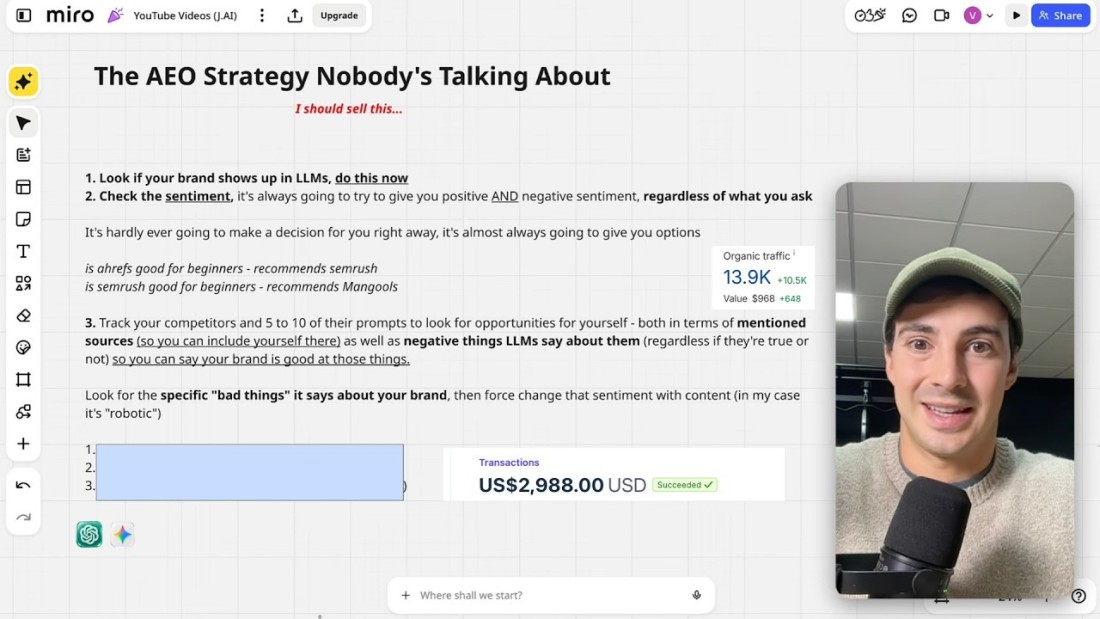
Here is a test you can run in thirty seconds. Open Google, switch to AI Mode, and type "is [your brand] a good [what you sell]". The answer will almost certainly mention you, because the prompt contains your name. It will also list a pro and a con, and somewhere in the con is a sentence you will want to argue with. The AEO strategy in this post starts from that sentence.
What AEO means here
Answer engine optimization, or AEO, is the work of getting an AI answer to name you, cite you and describe you the way you would describe yourself. We cover the definition and how it differs from classic ranking work in SEO vs AEO. Most AEO advice is about page structure: short answers, question headings, schema. This strategy is about something upstream of all that. An AI answer is a summary of sources. If you change the sources, you change the answer.
Two things every AI answer does
1. It always gives you a pro and a con
Ask whether any product is good and you get both sides. For my own company the first line was that Arvow is "highly capable" for bulk automated content "but it falls short if you require high-quality, nuanced writing without human editing". The summary table under it had one strength (an all-in-one pipeline) and one weakness: "Robotic Tone: Content can feel mechanical and trigger AI detectors easily."
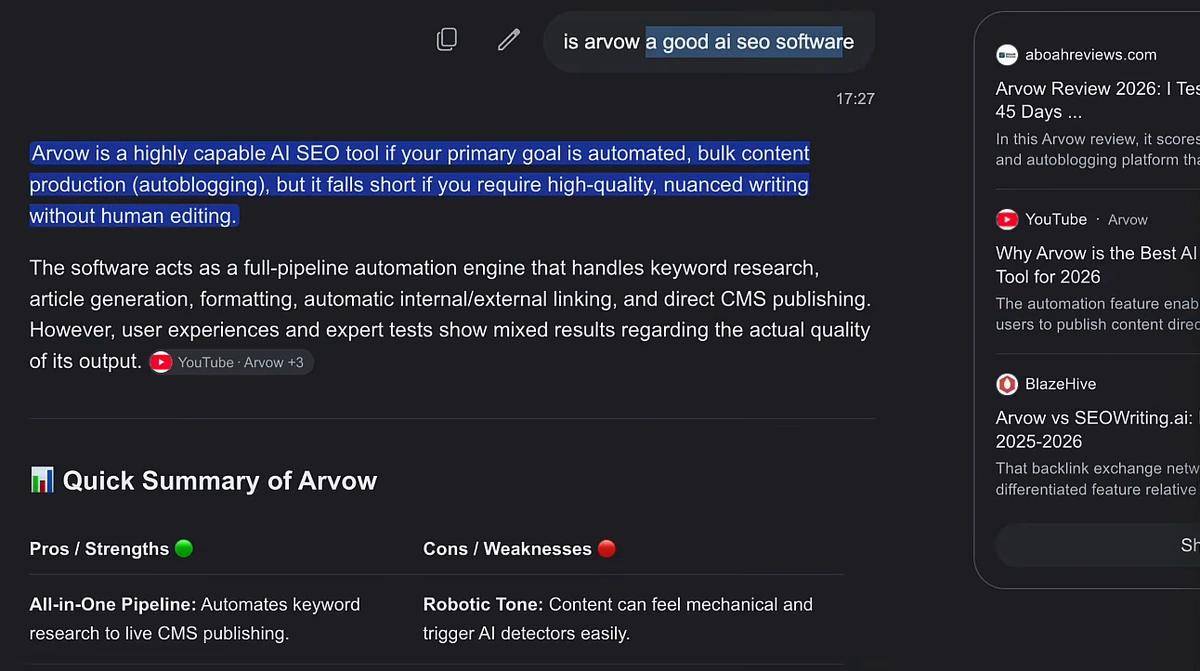
The same shape appears for Ahrefs and for a wallet brand I tried. The model is built to present options, not to close the sale. It is an opportunity if you read the con as a to-do list.
2. It never decides, so it hands you the next competitor
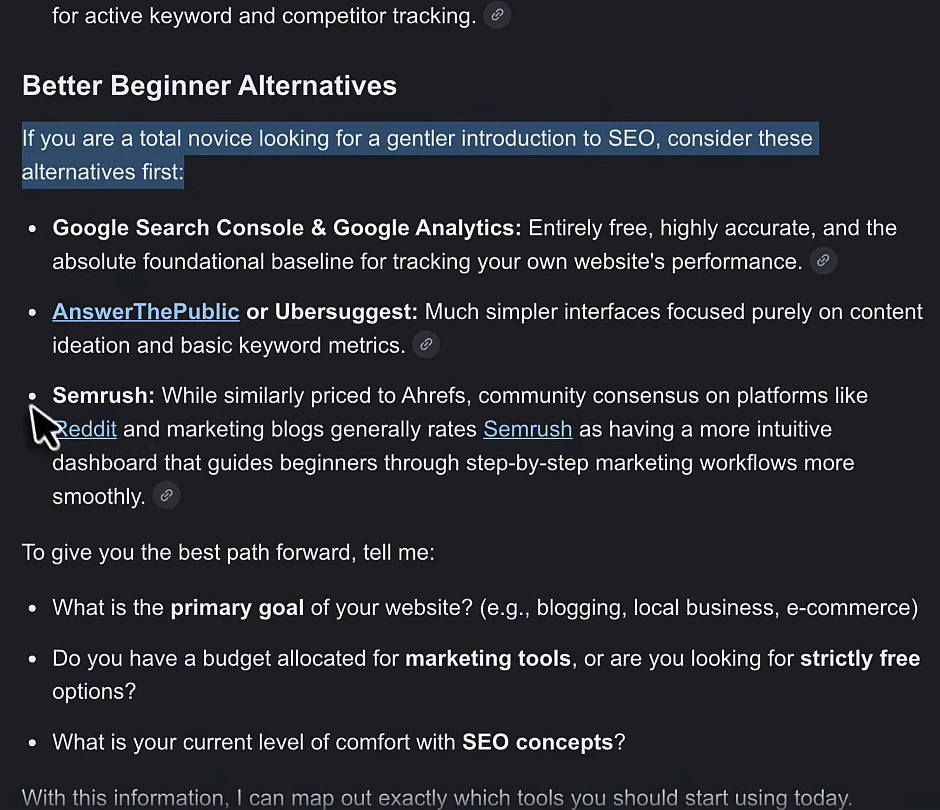
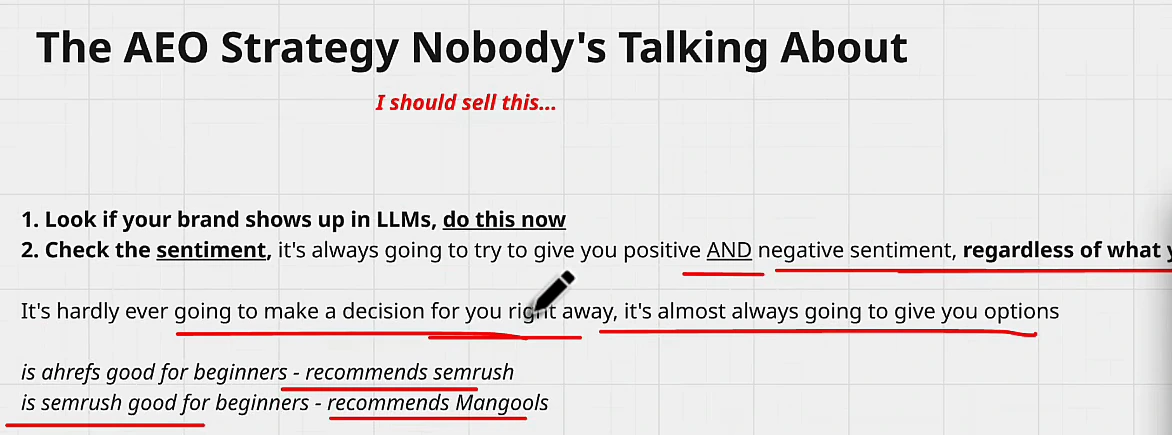
Ask "is Ahrefs good for beginners" and the answer says it can work, then offers "Better Beginner Alternatives": Google Search Console, AnswerThePublic or Ubersuggest, and Semrush, which "community consensus on platforms like Reddit" rates as more intuitive.
Now ask "is Semrush good for beginners". Semrush is called "a double-edged sword for absolute beginners", and the verdict points hobbyists to Google Search Console or "a cheaper minimalist tool like Mangools".
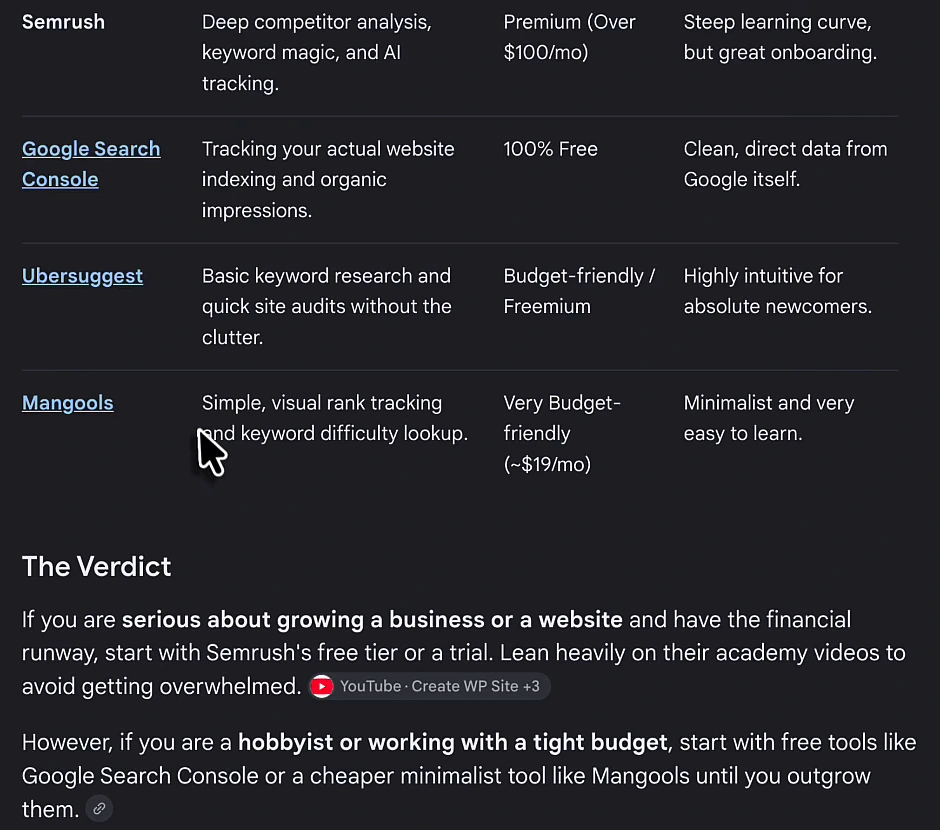
Ahrefs recommends Semrush. Semrush recommends Mangools. On the first and second question the model gives options. Every one of those options is a place where a competitor got named instead of you, and every one has a visible reason.
The reason is always in the sources
Open the sources panel next to any of these answers and you can match sentences to pages. When I asked whether Ahrefs is a good AI SEO software, the verdict ended with: "if you are looking for an all-in-one suite that focuses more on automated content writing and social media AI generation, Semrush or specialist AI tools might fit your workflow better." The sources beside it were a YouTube comparison video, a "Best AI SEO Tools 2026" listicle and a review channel.
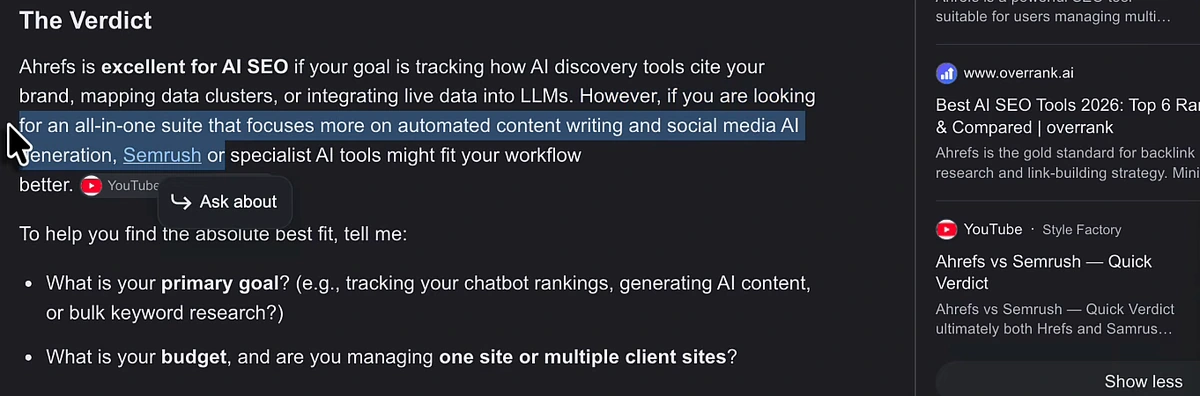
If I were Ahrefs and I also offered those features, the fix would not be a schema change. It would be making sure the pages and videos the model reads say so, and adding new ones that do. The model repeats a weakness it found; the strategy is to find where.
The strategy, in four steps
Step 1: check that you show up at all
Type three or four branded prompts into AI Mode, ChatGPT and one other assistant: "is X good", "would you recommend X", "is X a good agency". If your name is in the prompt you will usually appear. If you do not, that is a bigger problem than sentiment, and the fix is covered in how to get mentioned in AI search.
Step 2: write down the con
Copy the exact negative sentence; you will search for its wording later. Mine was "robotic tone". Note whether it is true today, was true once, or was never true.
Step 3: track competitors and five to ten of their prompts
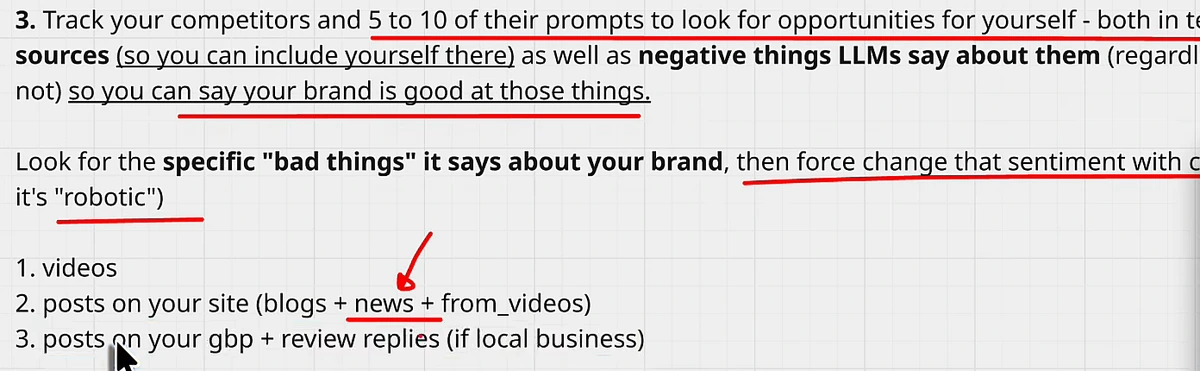
Take the prompts where a competitor is recommended and you are not, open the sources, and record two things: the pages being cited, so you can get onto them or build equivalents, and the negative things the model says about the competitor, true or not, so you can say plainly that you are good at those things. The method for picking prompts worth tracking is in how to find AI search prompts, and the source-mapping routine is in how to increase AI mentions.
Step 4: change the sources, or add new ones
Editing an existing cited source is more effective than publishing a new one, because it is already in the answer. Sometimes it is a reviewer you can email, a Reddit thread you can reply in, or a comparison video where a comment adds the missing fact. When you cannot edit, publish: a page that answers the con directly, with proof.
What I found when I traced my own con
I used the browser's find bar on the answer page and searched for "robot". It appears in a section called "Where Arvow Struggles": on Trustpilot "several 1-star reviews warn that the text sounds highly robotic", and "an SEO specialist who tested the platform for 45 days gave it a 7.5/10". The pricing line says Arvow starts "at $69/month" and names Jasper and RankPilot at $59.
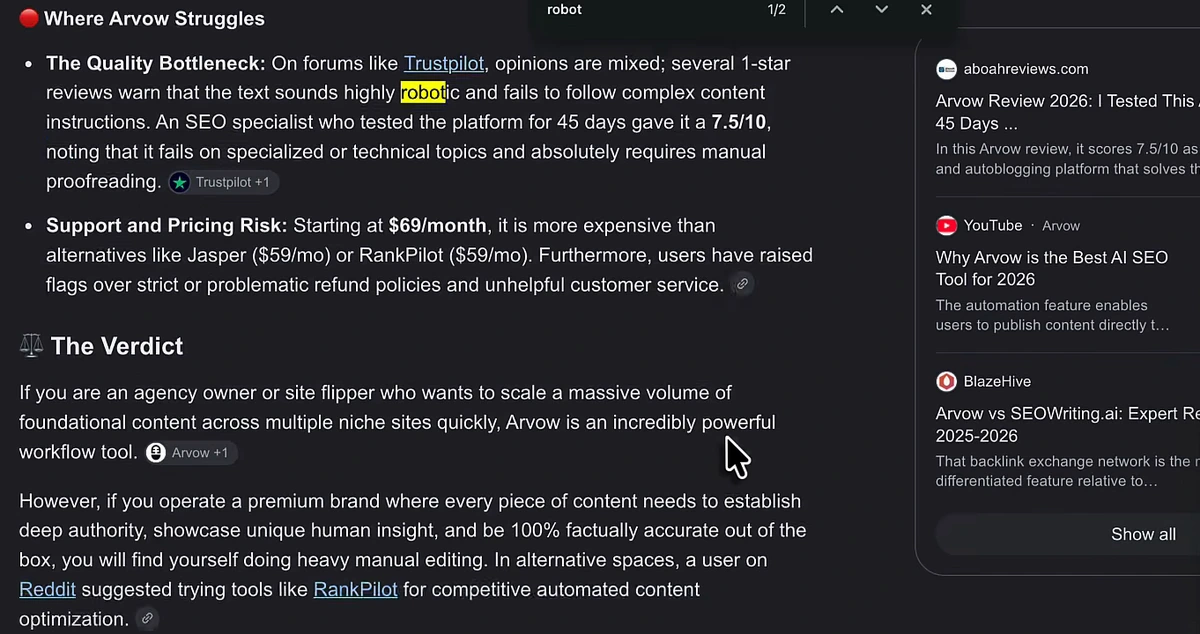
We then opened every source we could reach, the day after recording:
| Cited source | What it actually says (checked 7 November 2026) |
|---|---|
| Trustpilot reviews | The page returns a 403 to automated fetches, so we could not read the one-star reviews. The "robotic" wording is attributed there by the model. |
| 45-day review on aboahreviews.com (18 March 2026) | Scores Arvow 7.5/10. Says the output "will be flagged by most AI detection tools" and needs editing. The word "robotic" does not appear on the page. Its price table lists Solo at $69 monthly and $39 yearly, which matches our live pricing page. |
| "Arvow Review 2026: Features, Pros & Cons" (7 July 2026) | Hosted on rankpilot.com, a competitor that the same answer recommends as a cheaper alternative. Searching the page for "robo" returns zero matches. |
| BlazeHive, "Arvow vs SEOWriting.ai" | The domain now shows a "this domain may be for sale" page. The article the model cites no longer exists. |
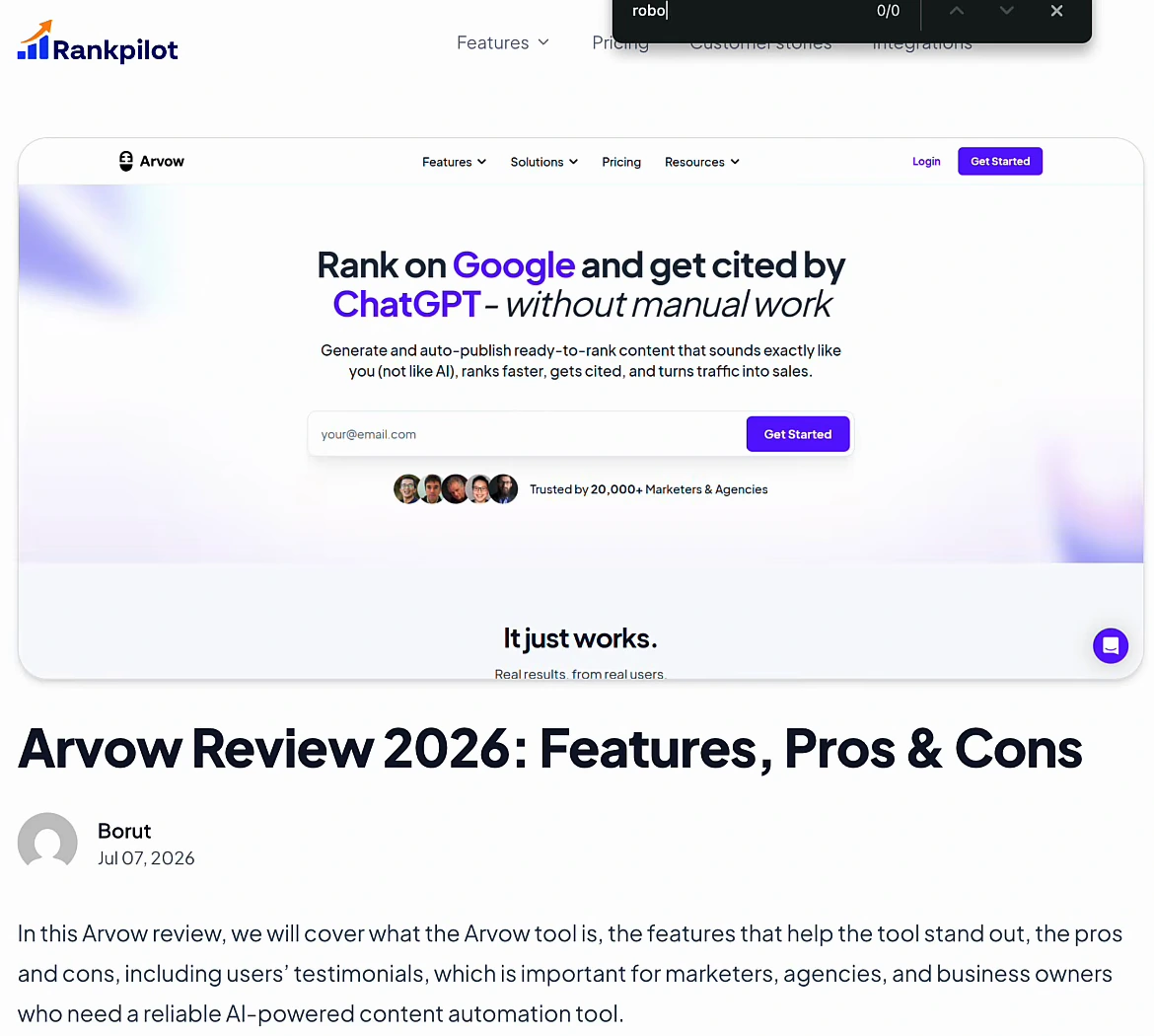
Three lessons. An AI answer can rest on a page that has since disappeared. A competitor's review of you can be one of your sources. And the sentence you object to may be a blend: "robotic" from one place, "AI detectors" from another, joined into a single con. The procedure for disputing a specific sentence, source by source, is in how to fix wrong AI answers about your brand. The honest conclusion for us is that the "robotic" complaint was ours to answer with better public samples, whether or not it is still fair.
Why creating AI content is not enough
Anyone can generate the page. What the models reward is the page that gets ranked and cited, and that is still a skill: choosing the prompt to answer, reading the current answer, writing the one missing fact in a way a model can lift, and getting it onto a site the model already trusts. A thousand generic pages do the opposite; they become the commodity content we warned about in commodity content.
Three kinds of content that move sentiment
Videos, and articles made from them
A video saying "we are the best because X" will rarely be cited on its own. The article version of it can be. This post is an example: it began as a video and now exists as a page a model can quote.
News on your own site
Models lean on recent pages. A news section that publishes short, factual updates in your niche creates a steady supply of citable sources that carry your brand's framing. We documented the setup in how to add an automated news section to your website.
For local businesses: profile posts and review replies
Models read reviews, and they read the owner's replies. For a search like "dallas plumber", the three businesses in the map pack carry roughly 1,300 to 2,000 reviews each, and every reply is text the model can use for context.
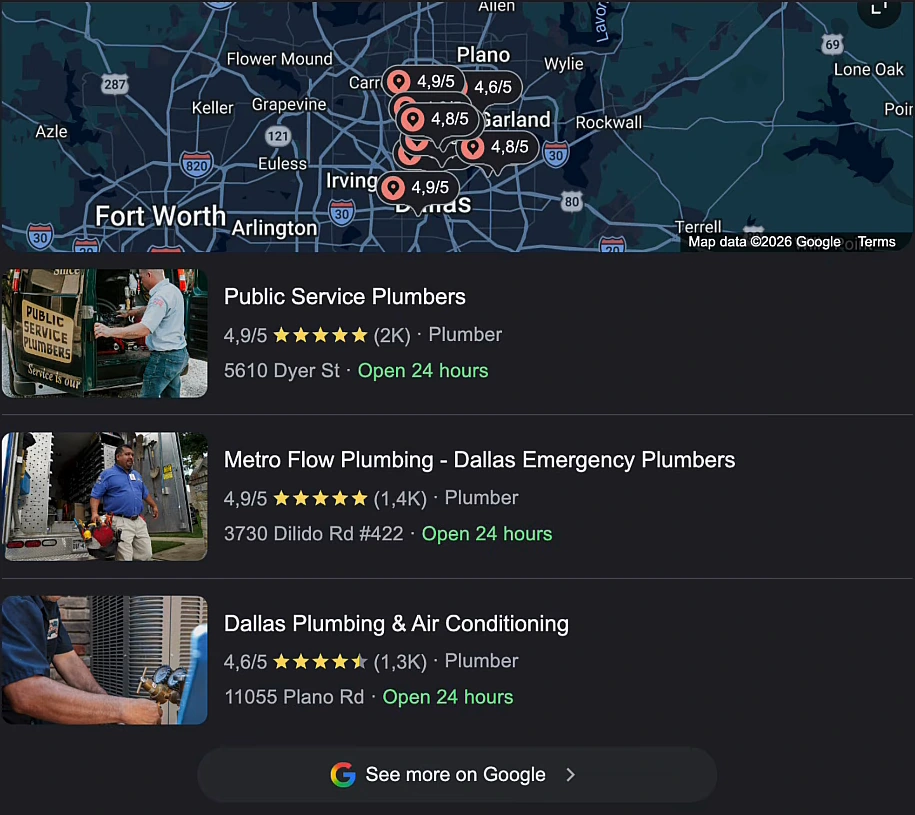
If a review says the food was cold, a reply that calmly states the kitchen's normal practice, plus a dozen other reviews saying the food was hot, buries the negative. The reply formulas are in how to respond to Google reviews, and the wider local playbook is in local GEO.
Track it, and read the per-prompt numbers
You need a record of which prompts mention you, which sources are cited and what the sentiment is, re-run on a schedule. The monitor in the video is our own, and it is a fair illustration of what to look at.
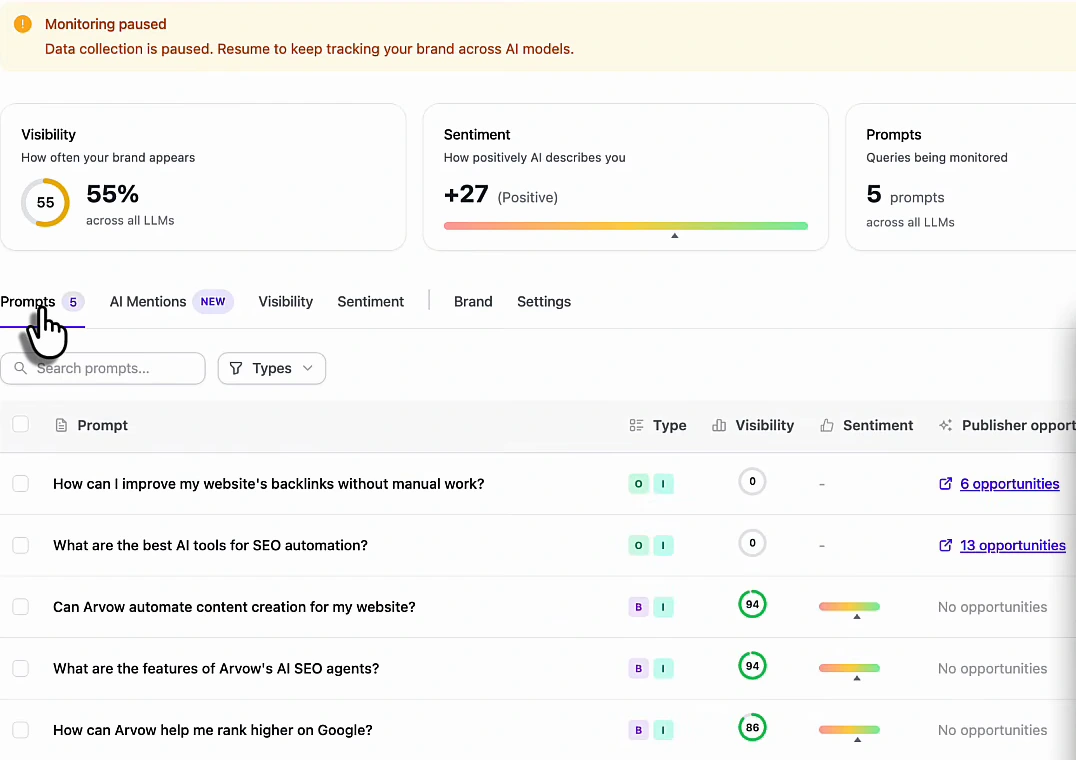
First, the banner says monitoring is paused and the chart is flat, so the numbers are from the last run, not today. Second, the 55% average hides the split that matters: the three prompts with "Arvow" in them score 94, 94 and 86, and the two without it score 0 and 0. Those two rows carry 6 and 13 "publisher opportunities", which is the step-3 source list built for you. The branded rows tell you about accuracy; the unbranded rows tell you whether you are recommended at all.
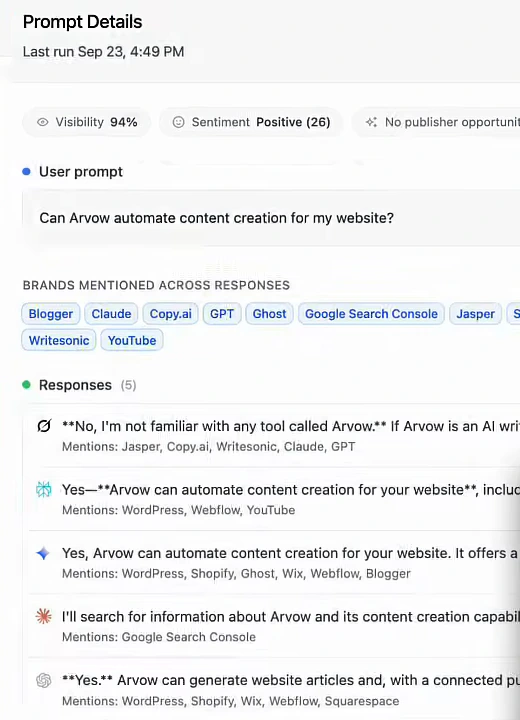
What to do this week
- Run five branded prompts in AI Mode and one other assistant. Copy every con, word for word.
- Open the sources for each con. Note which you own, which you can influence and which are dead.
- Run five unbranded prompts a buyer would ask. List who is recommended and the pages cited for them.
- Fix your own cited pages first. Old pricing and old claims on your site are the cheapest wins.
- Publish one page per con that answers it with evidence, and one news-style update a week.
- Local businesses: reply to every review this month; make the replies factual.
- Re-run the prompts in 30 days and compare the cons, not just the mention count.
FAQ
What is an AEO strategy?
A plan for getting AI answers to mention, cite and describe your brand accurately. This version works on the sources an answer is built from: find the cited pages, correct or add to them, and track the prompts over time.
Does this work in ChatGPT and Perplexity, or only Google AI Mode?
The mechanism is the same everywhere: the answer summarises sources. The sources differ by model, so run the prompts in each one and track them separately.
How long does it take to change an AI's sentiment?
Editing a page that is already cited can show up at the next crawl. New pages have to be found and trusted first. The video title says 24 hours; that is not demonstrated in the video, and a month is a more honest review cycle.
Is AEO different from GEO?
The terms overlap. GEO usually means being cited in generated answers; AEO is often used for direct-answer features too. The source-first method applies to both.
Want the step-3 list built for you? Arvow's LLM visibility tracker runs your branded and unbranded prompts across the major models, keeps every answer and source, and lists the publishers behind the prompts where you are not mentioned yet.
Generate, publish, syndicate and update articles automatically
The AI SEO Writer that Auto-Publishes to your Blog
- Cancel anytime
- Articles in 30 secs
- Plagiarism Free