
How to Get Mentioned in AI Search in 2026 (and Why It Is Only Half the Job)

Everyone wants to get mentioned in AI search. The reasoning is sound — when someone asks ChatGPT, Perplexity, Claude, Gemini or Grok which tool or agency to use, being in the answer brings leads. But a mention is not a recommendation. Ask "is Arvow a good software?" and Arvow is mentioned in 93% of answers across the five models — with a negative sentiment score. That is the whole argument of the video below, made against our own brand with our own tracker: getting mentioned is step one, and on its own it can hurt you. What decides whether the mention brings a customer is what the AI says next.
How to get mentioned in AI search, in one paragraph
The mechanics are not mysterious, and we have written them up before: the models answer from sources, so you get mentioned by being in the sources they pull for the prompts your buyers type — review sites, comparison pages, directories, forums, your own pages — and by publishing content that answers those prompts directly. The step-by-step versions are in how to increase AI mentions and how to get cited by ChatGPT. This article is about what those guides do not cover: what happens after you succeed.
Mentioned is not recommended: the same brand, five sentiments
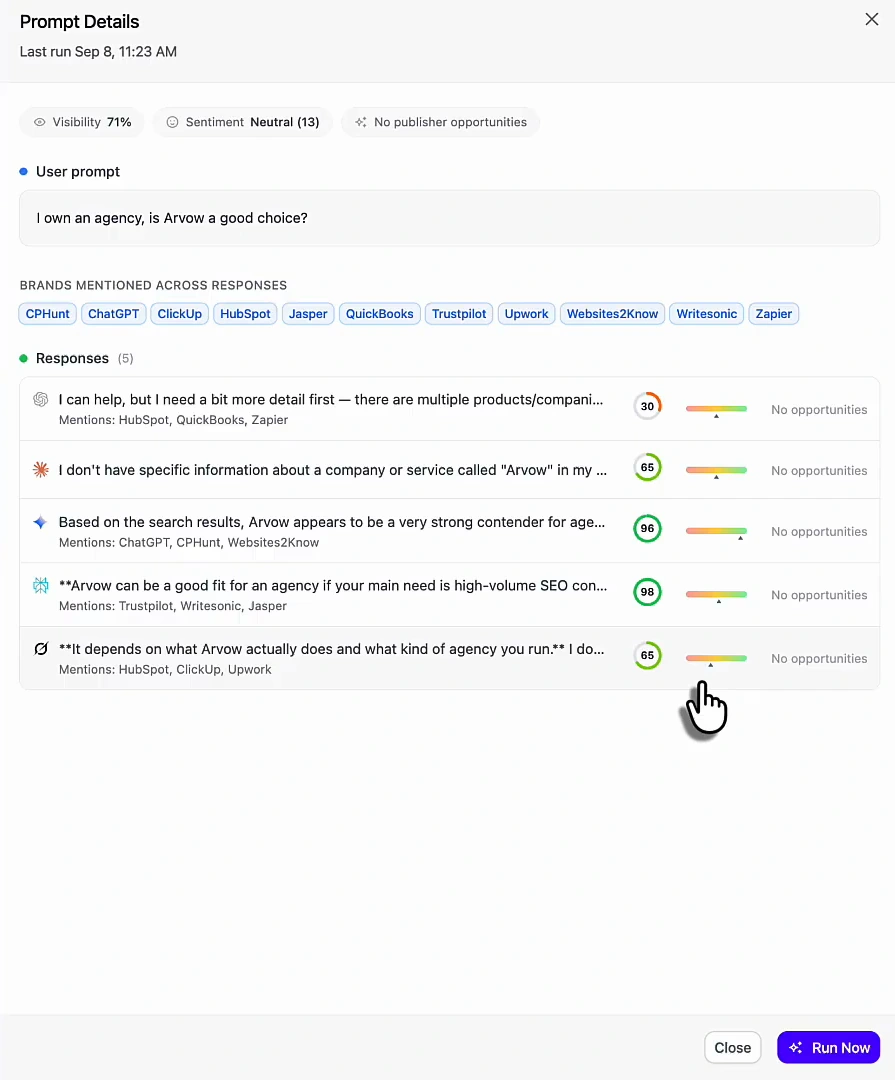
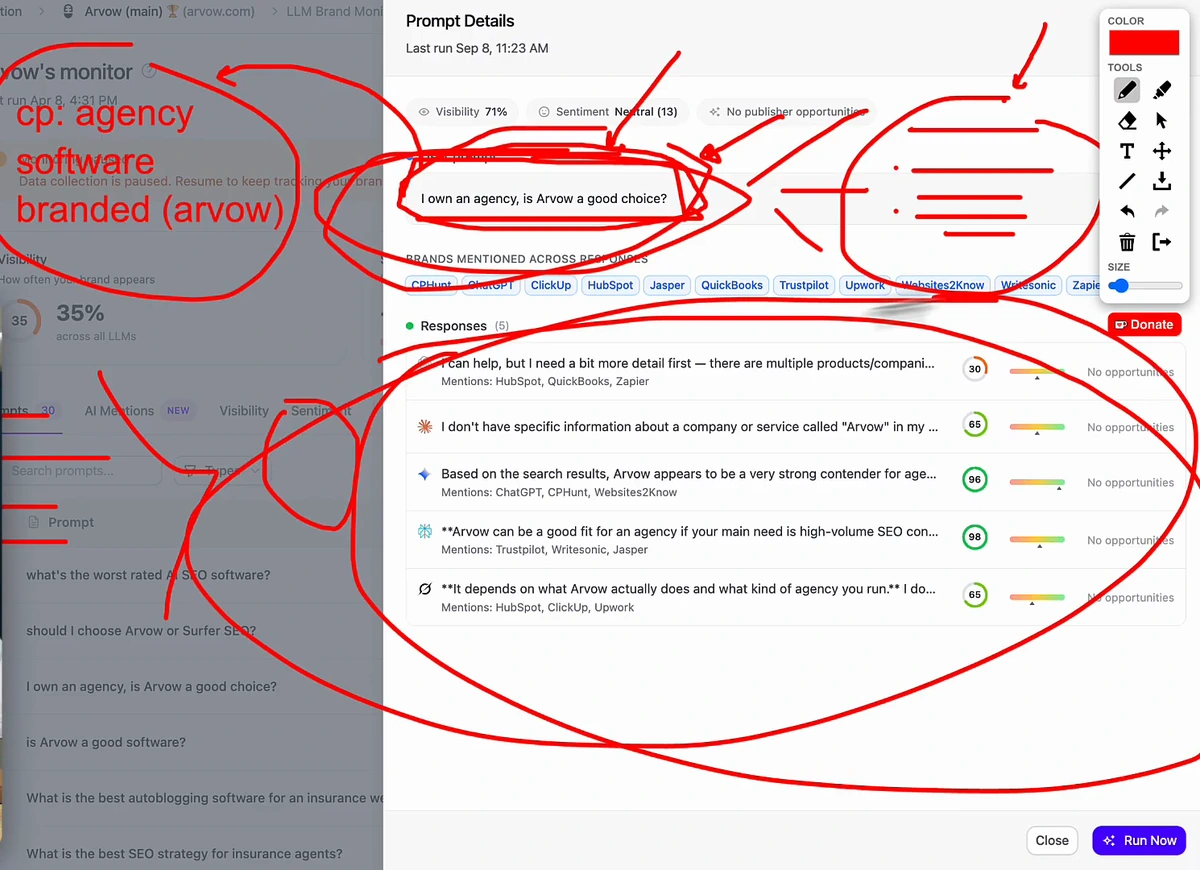
The video's first example is the prompt "I own an agency, is Arvow a good choice?" — a buyer's question from our exact customer profile. Arvow's visibility for it is 71% across ChatGPT, Claude, Gemini, Perplexity and Grok, so by the "get mentioned" standard it is a win. Then he zooms in on the sentiment column. Gemini's answer is very positive. Grok's is negative. Same prompt, same brand, opposite recommendations.
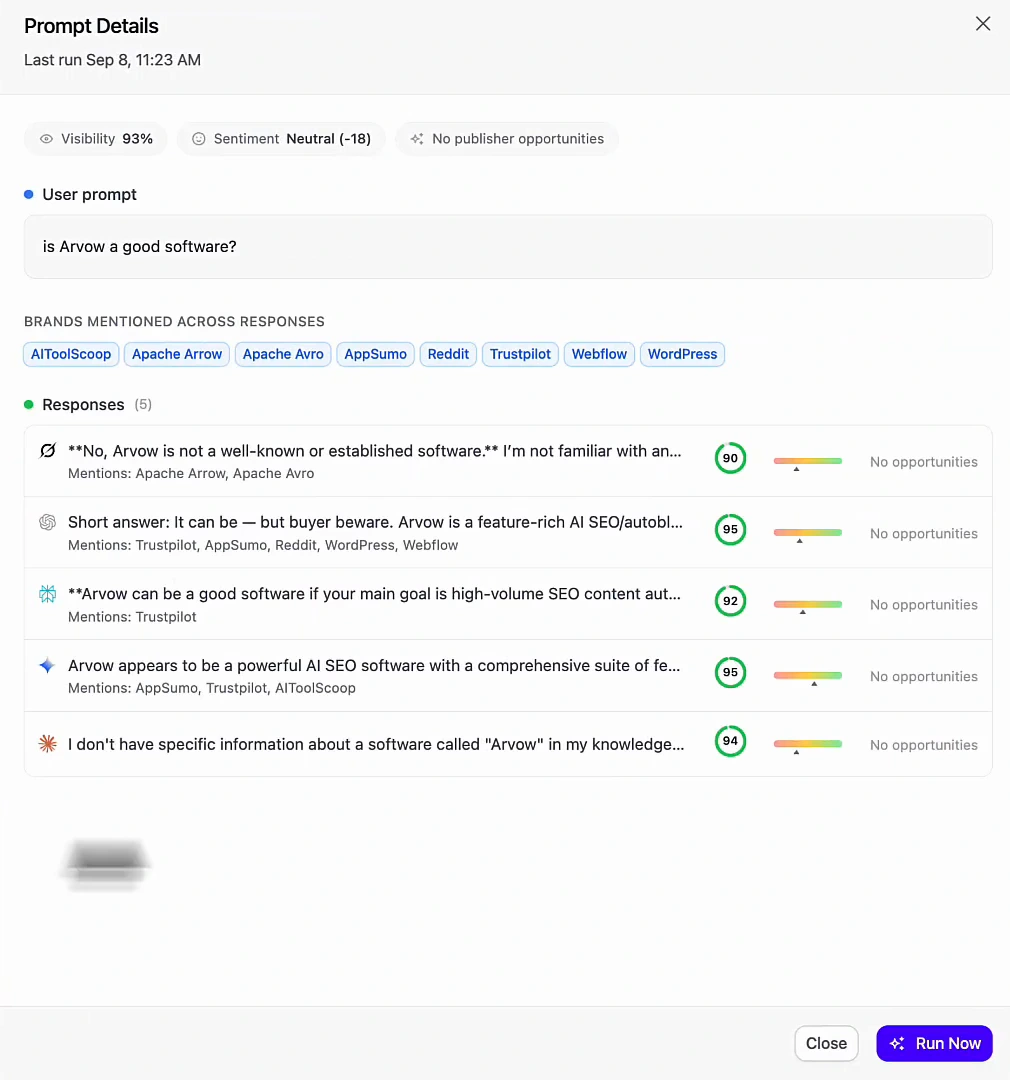
The second prompt is worse. "Is Arvow a good software?" gets a 93% visibility score and a sentiment of −18: negative, negative, neutral, negative, neutral down the list of responses. One model's answer opens with "No, Arvow is not a well-known or established software". Being mentioned in 93% of answers to that question is not something to celebrate.
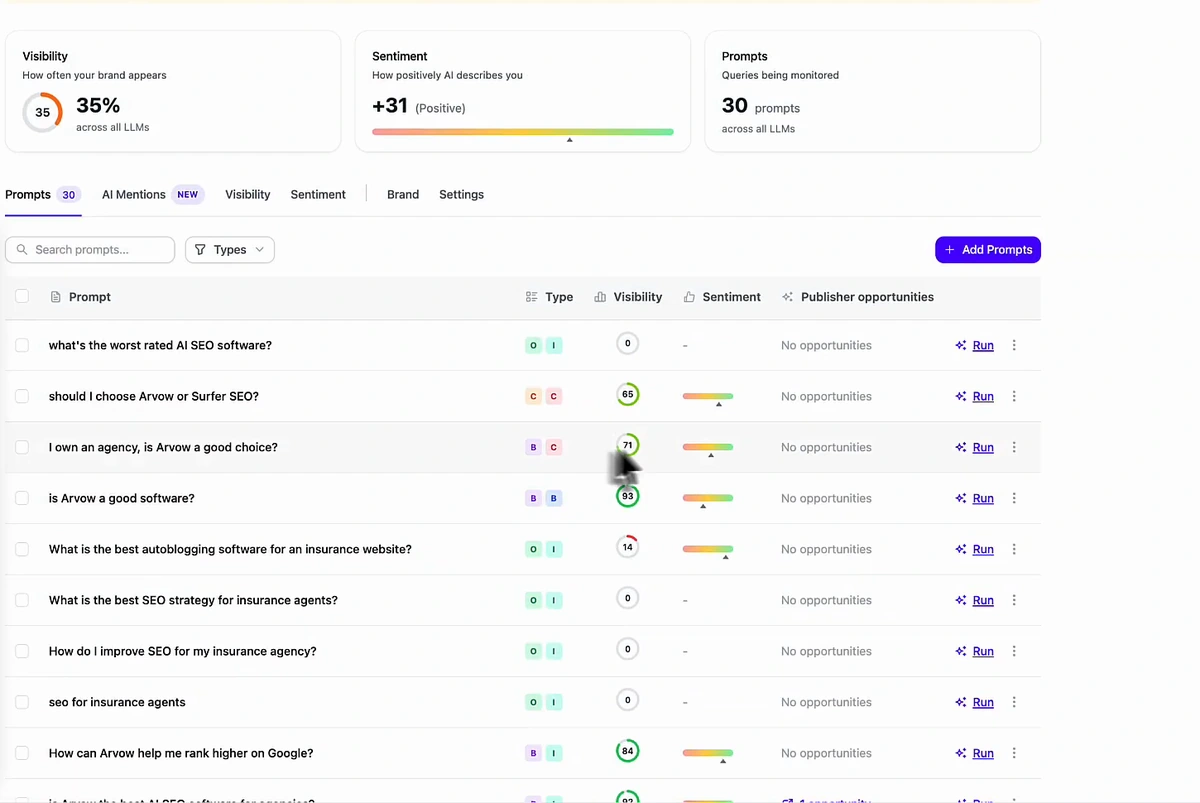
Why do the models disagree? His explanation is bias in sourcing, not in opinion. Grok, owned by X, leans on posts and tweets. ChatGPT, through Microsoft, leans on Bing results. Gemini leans on Google results. Each model pulls a different slice of the web about you, so visibility and sentiment will always differ by model — which is why you have to track sentiment per model rather than a single mention rate. Our own monitor is what is on screen, but as he says twice in the video, any tool that tracks LLM sentiment will do; our guide to AI visibility trackers covers the field.
There is no search volume for prompts — extrapolate intent instead
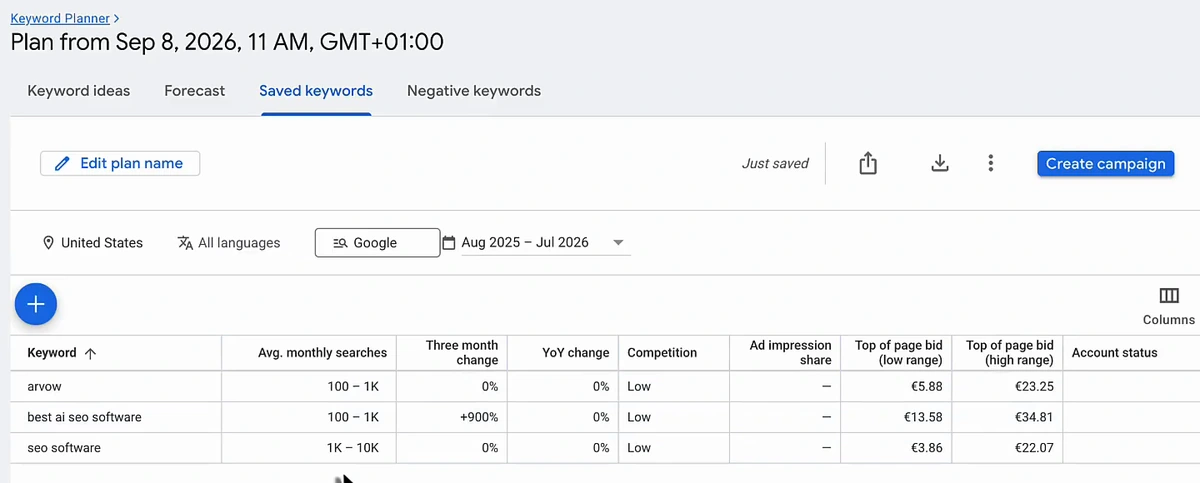
The next objection he raises is one every SEO hits on day one of AI search: how many people actually type "I own an agency, is Arvow a good choice?" Nobody knows. He opens Google Keyword Planner to make the contrast: for "arvow", "best AI SEO software" and "SEO software" Google reports monthly volumes (100–1K, 100–1K and 1K–10K in the plan on screen), because Google shares that data. No LLM shares prompt volumes, and he does not expect them to.
His answer is to stop looking for the number and read the prompt instead. That one prompt tells you three things: the ideal customer profile (an agency), what they want (a software tool), and that it is a branded, transactional question. From there you can extrapolate every other way the same person could phrase it — "is Arvow a good choice, I own an agency", "I'm an agency owner, should I give Arvow a go", "I'm looking for an AI SEO software for my agency, is Arvow any good" — and the point is that the models will answer all of them roughly the same way, because they resolve the prompt to its intent the way Google resolves "how tall is the Eiffel Tower" and "how big is the Eiffel Tower" to the same answer. So you do not need the volume of one prompt; you need the sentiment for the intent, and any phrasing of it will show you that.
How to change a negative AI sentiment
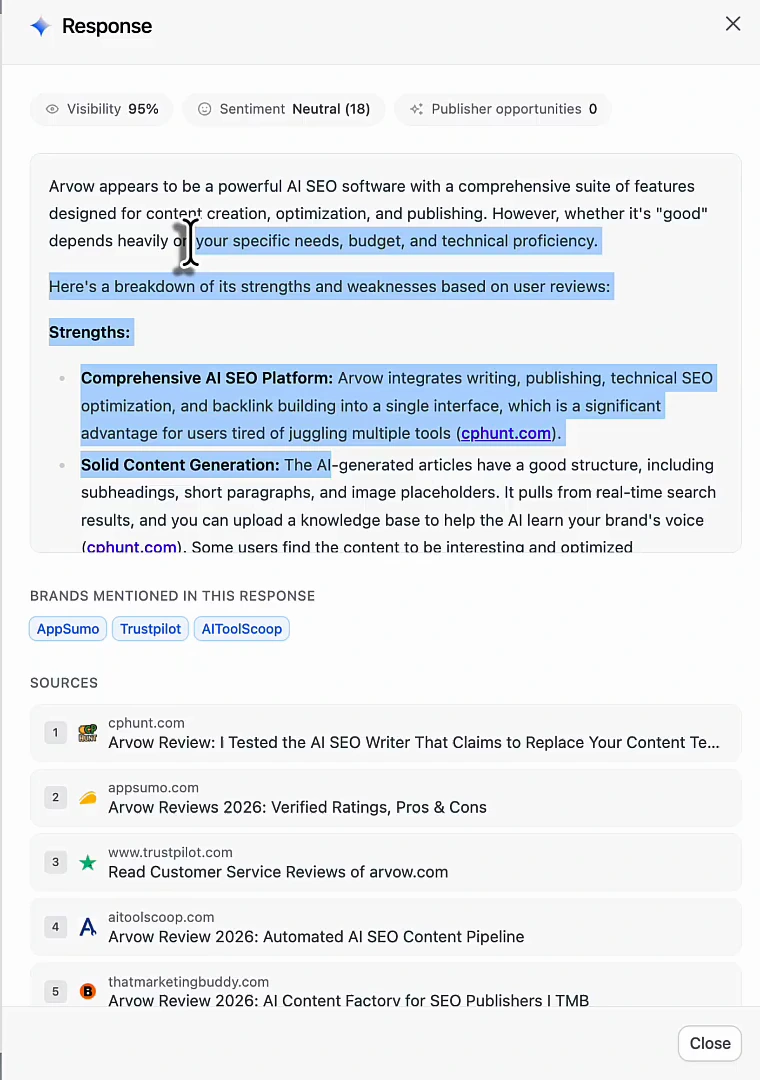
This is the part that makes tracking worth doing, because sentiment can be changed. The models do not invent their opinion of you; every answer has sources. Open the response and the sources are listed. For "is Arvow a good software?" the sources in the video are a product-review post, an AppSumo listing, Trustpilot, and two AI-tool review sites. Read them and you can see where each negative line in the answer came from.
Change the sources that exist
His first play is outreach to the source. If a review page says your product has a certain weakness and you have since fixed it — the missing feature is shipped, the complaints in the negative reviews are resolved — get in touch with the site owner and ask them to update the page. He is direct that this works: they have found prompts where Arvow was mentioned with negative sentiment, contacted the site owners behind the answer, and changed the sentiment. It is the same mechanism as brand mentions being the new backlinks, run in reverse: instead of asking for a mention, you are asking for a correction.
The source you cannot change: our AppSumo deal
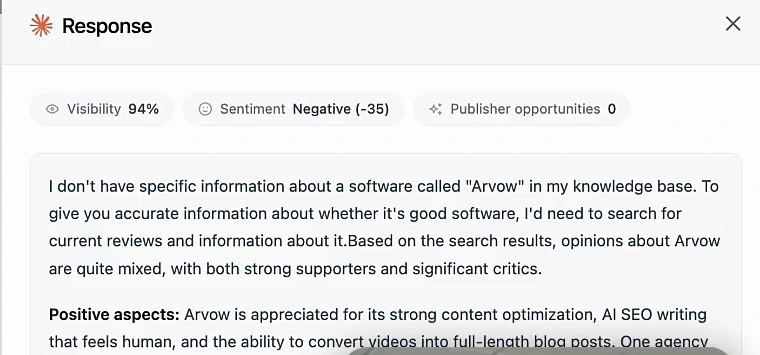
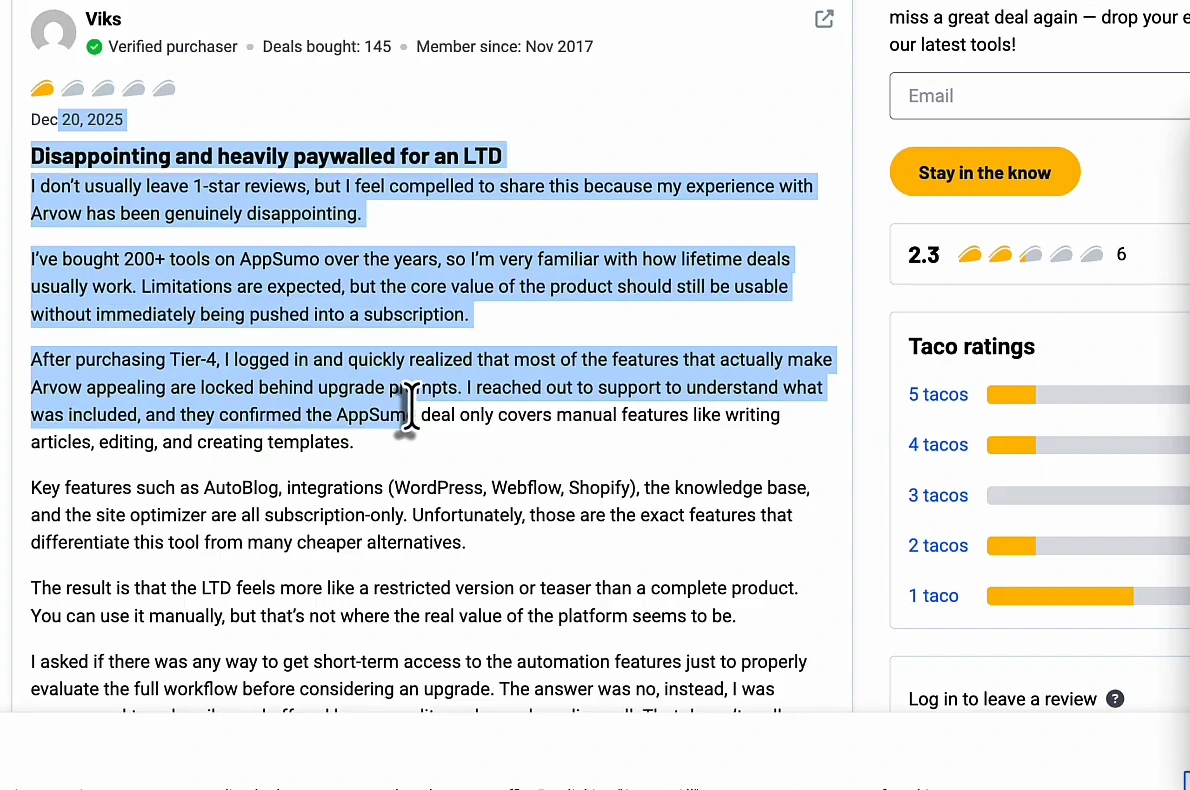
Then he shows the case where outreach does not work, and it is our own. Claude's answer to "is Arvow a good software?" carries a sentiment of −35, and one of its sources is AppSumo, where Arvow's listing has a 2.3 "taco" rating from six reviews and a top review titled "Disappointing and heavily paywalled for an LTD".
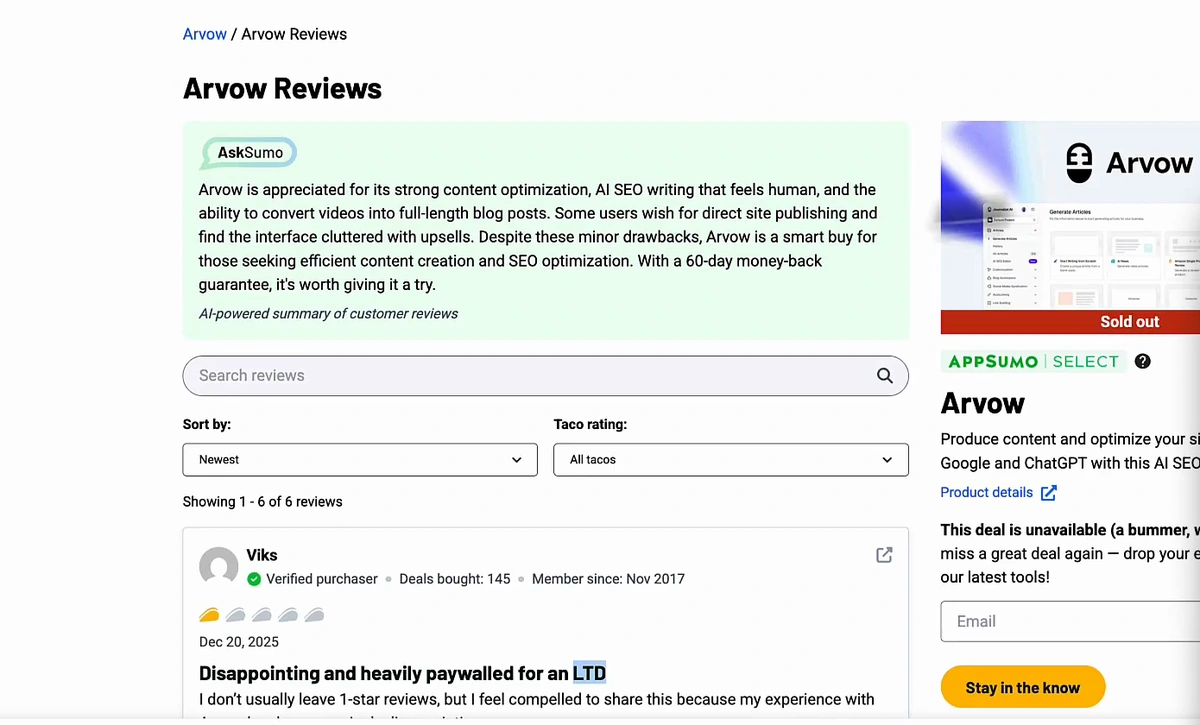
He explains it rather than hiding it. AppSumo is a marketplace built on lifetime deals. Arvow is a software business with recurring costs — every customer costs money every day — so a true lifetime deal was never going to work, and the deal had to be heavily limited. Buyers who expected the full product for a one-off price were disappointed and said so. The reviewer in the top review bought a tier, found most features locked behind upgrade prompts, was told the deal only covered manual features, and asked for a short-term way to test the automation before upgrading. He calls running the deal a mistake, says they will not do it again, and accepts that the reviews cannot be changed: the people who bought it felt what they felt. The listing is old, it does not reflect the product today, and it still gets pulled in as a source.
Create new sources with better sentiment
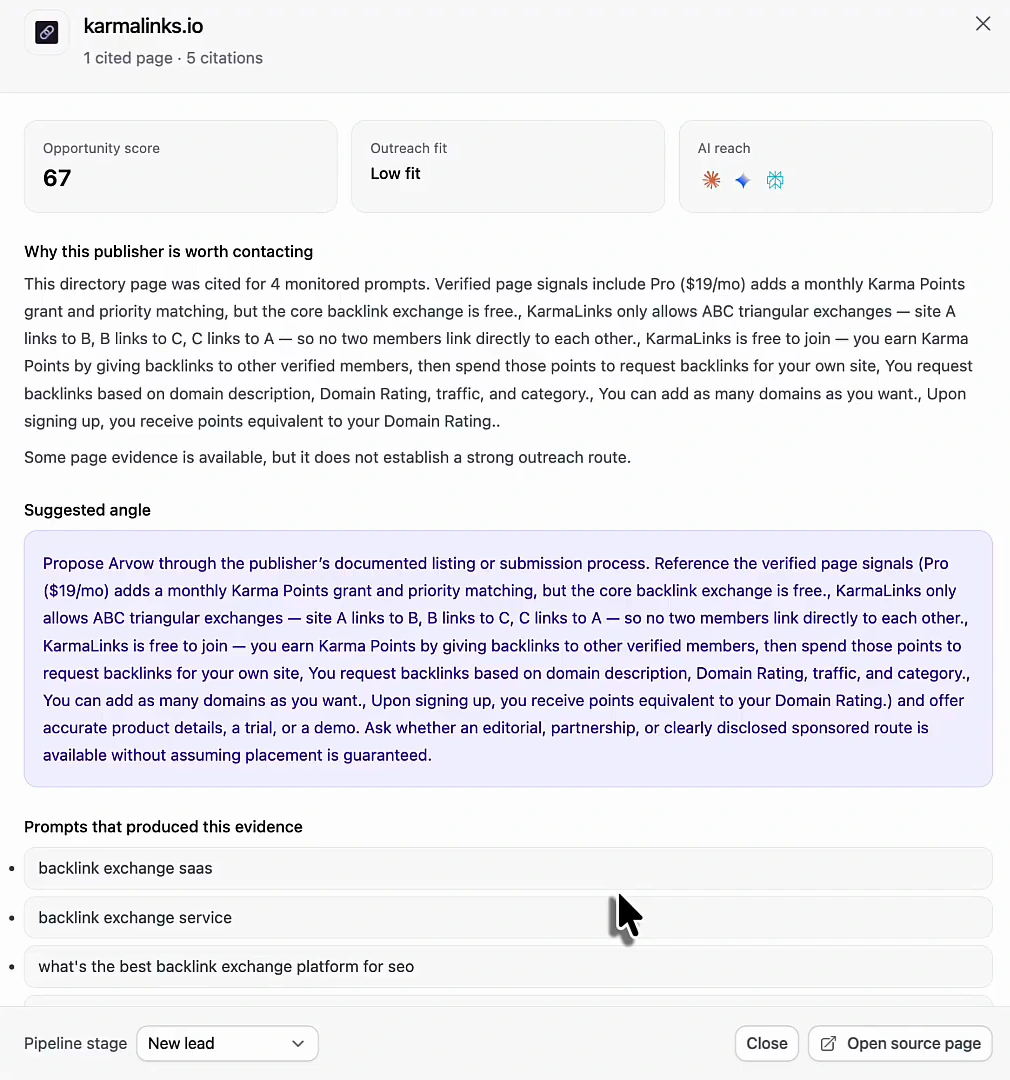
When a source cannot be changed, the remaining move is to outweigh it: create new sources with positive sentiment so that the negative one becomes one voice among many rather than the loudest. The monitor helps find where. The video shows the publisher-opportunities view: for prompts about backlink exchange, a directory site is cited by the models, mentions competitors, and does not mention Arvow — so it gets an opportunity score, a note on why it is worth contacting, and a suggested angle for the pitch. Getting mentioned there, positively, adds a source on your side of the ledger.
What to do in order
- Get mentioned. Be in the sources for your buyers' prompts and publish content that answers them. The playbooks are linked above.
- Track sentiment per model, not just visibility. A 93% mention rate with a negative score is a problem, not a result. Pick any tracker that reports sentiment by LLM — ours is the one in the video.
- Forget prompt volume; read the intent. Extrapolate the phrasings from the customer profile and the question, and check the sentiment for the intent.
- Open the sources behind every negative answer. Where the criticism is out of date, contact the site and ask for the update. This works.
- Where a source cannot change, outweigh it. Find the pages the models already cite that do not mention you, and get mentioned there — positively.
The title of the video calls getting mentioned a waste of time. The precise version is that it is half the job. The mention gets you into the answer; the sentiment decides whether the answer sends you a customer or sends them to someone else.
Arvow's LLM brand monitor tracks visibility and sentiment for your prompts across ChatGPT, Claude, Gemini, Perplexity and Grok, shows the sources behind every answer, and surfaces the publishers the models already cite where your brand is missing — so you can fix the sentiment, not just the mention.

Generate, publish, syndicate and update articles automatically
The AI SEO Writer that Auto-Publishes to your Blog
- Cancel anytime
- Articles in 30 secs
- Plagiarism Free