
How to Increase AI Visibility in 2026: 5 Ways to Get AI to Recommend Your Site

AI assistants don't invent the brands they recommend. When someone asks ChatGPT, Perplexity or Google's AI Mode for the best plumber in Dallas or the best car detailing foam, the model searches the web, reads what it finds, and summarises it. If your business isn't in what it reads, or what it reads about you is vague, you don't get named.
That makes increasing your AI visibility a practical job, not a mystery. In the video below, recorded in October 2026, Vasco walks through the five things he does to get a site recommended more often in AI search, with live examples from an e-commerce store, a local plumber SERP, Arvow's own AI-visibility data and a news site that sells products. This article follows his five steps, with the screenshots that back each one.
The five steps at a glance
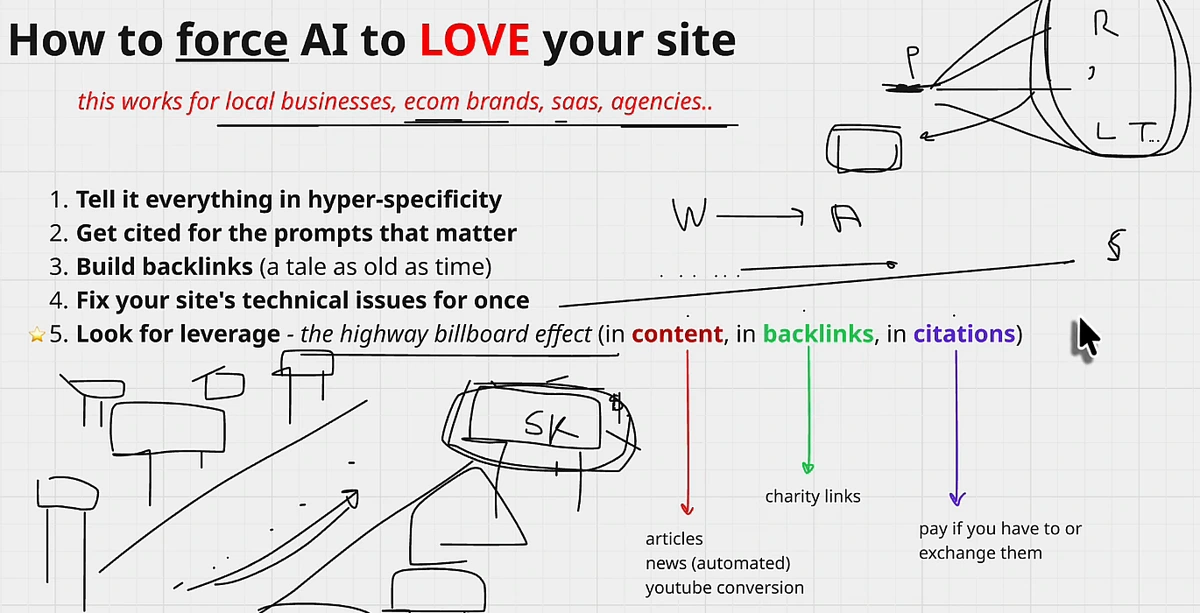
- Be hyper-specific about what you sell, who it's for and what it's made of.
- Target the prompts that matter: high-intent ones, not branded or "how to use" prompts.
- Build backlinks, because Google rankings and AI mentions move together.
- Fix technical SEO, especially speed and meta titles, which AI answers still use.
- Look for leverage: tactics that work now because your competitors aren't doing them yet.
The board says it works for local businesses, e-commerce, SaaS and agencies, and the examples in the video cover all four.
1. Be hyper-specific about everything you sell
People prompt AI far more specifically than they search Google. Nobody typed "best car detailing products for a 2025 BMW 3 Series that stays in a garage all day" into a search box five years ago. People type exactly that into ChatGPT now. The page that gets recommended is the one that answers the specific version of the question, and the model can only match you to details you've actually published.
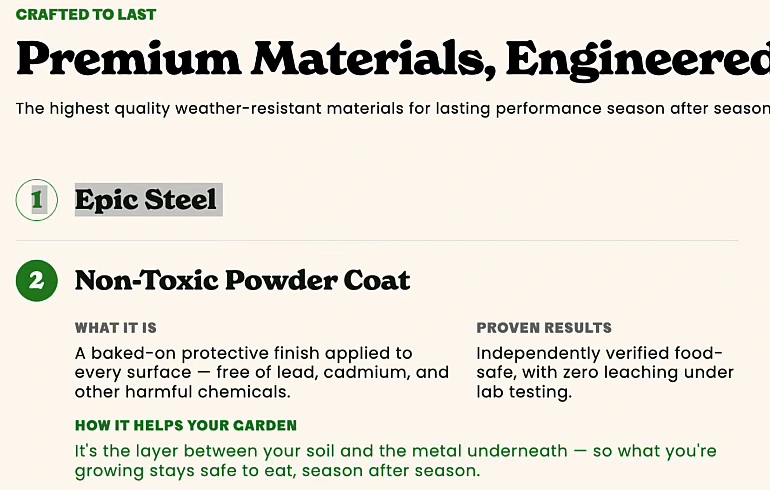
The video's example is Epic Gardening's metal raised garden beds. Most stores stop at photos, a price and an Add to Cart button. This page goes further and explains the materials, including that the powder coat is free of lead and cadmium and independently verified as food-safe.
Vasco then plays out the conversation that makes that matter. A beginner gardener tells an AI that their old wooden beds have rotted and asks what to buy. The AI suggests steel. The gardener says they've heard steel beds can be coated with chemicals that leach into the soil. Now the AI has a reason to recommend one brand by name: the one whose page says its coating is non-toxic and food-safe. A single line of copy turned a generic answer into a recommendation.
The same applies outside e-commerce:
- SaaS: list every feature on a page of its own, and say who it's for and who it isn't for. Vasco's point about Arvow: if a feature page doesn't say it tracks DeepSeek, no model will recommend it for tracking DeepSeek.
- Agencies: "Google Ads agency" is generic. "Google Ads agency for [the verticals you serve], paid on commission" matches a prompt someone will actually type. Be specific about the verticals and pricing models you really offer; don't claim everything.
- Testimonials: a testimonials page where an agency owner says they use your product to rank clients gives the model evidence that you fit agency prompts.
Vasco calls this the most important of the five steps and the one most businesses skip, because it means writing down what you already know. Every detail you leave in your head is a prompt you can't win.
2. Get cited for the prompts that matter
Not every prompt is worth winning, just as not every keyword is. Someone asking "how to use a car detailing foam" probably already owns one. Someone asking "best car detailing foam for SUVs" is about to buy. Focus on prompts with buying intent: "best", "fastest", "cheapest", "for [specific need]".
Two kinds of prompt aren't worth the effort:
- Branded prompts. If your brand name is in the prompt ("where can I buy Ridge products?"), you'll be mentioned anyway.
- Low-intent prompts. Informational how-tos rarely lead to a purchase from you.
The less obvious category is prompts where buyers are leaning away from you, such as "best alternatives to [your brand]". You still want to be a source for those.
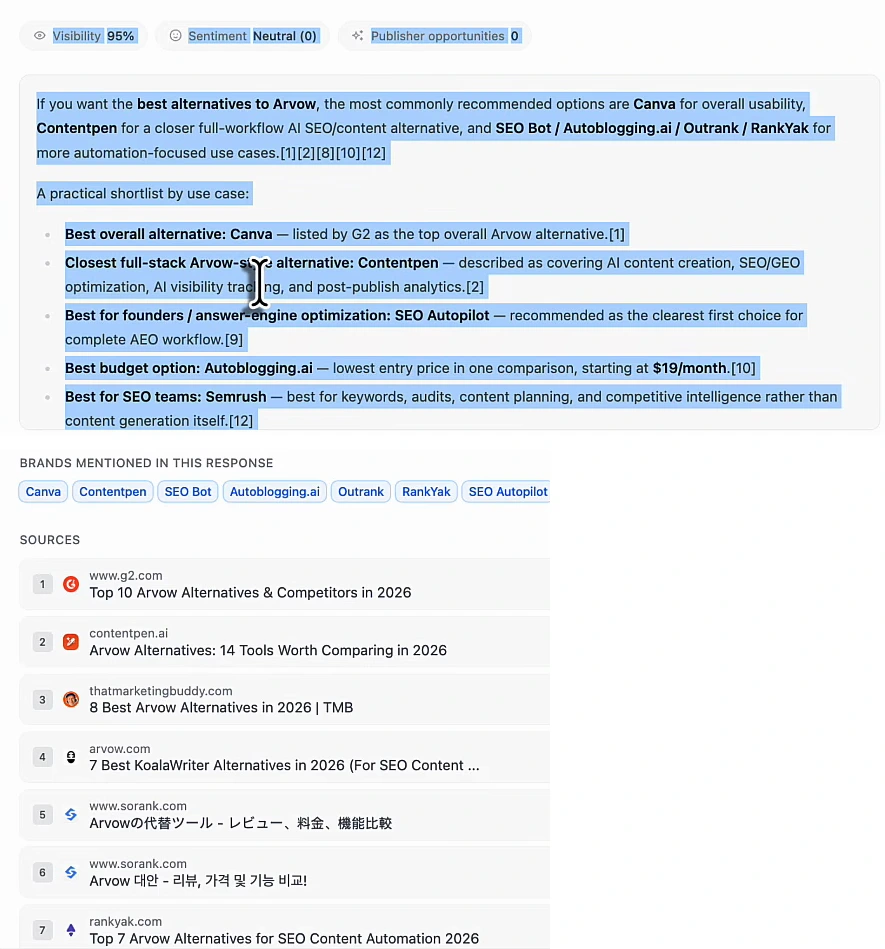
This screenshot is worth reading closely, because it shows how AI answers are assembled. Perplexity's top "alternative to Arvow" is Canva, a design tool, because G2's comparison page lists it first. The answer is only as good as its sources, and the sources here are mostly other vendors' "Arvow alternatives" pages.
Arvow still appears in it, as source 4, because it publishes its own alternatives articles. People do click the sources in AI answers, and someone looking for an alternative who lands on your comparison article is someone you can still win back. Vasco's advice is to write about competitors honestly, say what they're good at, then say where you're better and let the buyer decide.
For how to pick and audit those prompts in more depth, see our guide on how to get recommended by AI.
3. Build backlinks
Backlinks are the oldest signal in SEO, and Vasco's case for them in AI search is simple: there's a correlation between how well you rank on Google and how often you're mentioned in AI answers, and links still move Google rankings. They're a trust signal. If sites Google already trusts link to you, some of that trust passes to you.
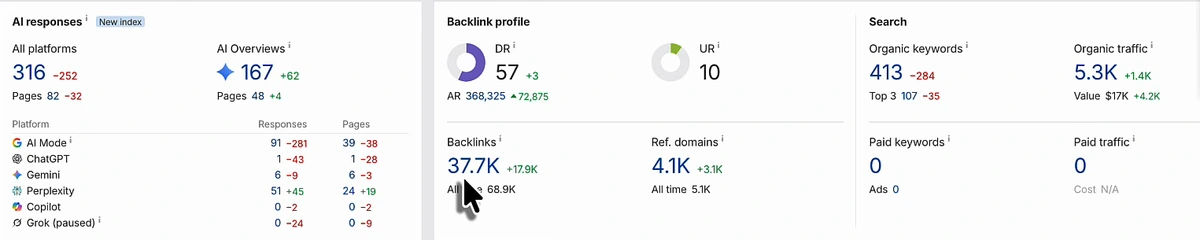
Two honest notes on this screenshot. First, Vasco says a share of those 37.7K backlinks are spam that other people pointed at the site, the usual cost of building in public, and that it hasn't hurt. Domain Rating is a third-party metric that correlates with ranking ability; it isn't something Google uses.
Second, look at the left-hand column. Ahrefs' AI index shows Arvow's response count down over the same six months, with AI Mode and ChatGPT down and Perplexity up. Links help, but they don't guarantee AI mentions on their own. That's why backlinks are step 3 here, not step 1.
If you're not sure links still matter, our breakdown of whether backlinks still work covers the evidence, and these backlink examples show what good links look like in practice.
4. Fix your technical SEO, starting with speed and meta titles
Two technical issues get the most attention in the video.
Site speed. You can rank first or be named by an AI, but if your page takes 10 to 15 seconds to load, people leave before they buy. Test your pages with free tools such as GTmetrix or Google PageSpeed Insights, then fix what they flag, or pay a developer to do it.
Meta titles and descriptions. These matter more in AI search than people assume.
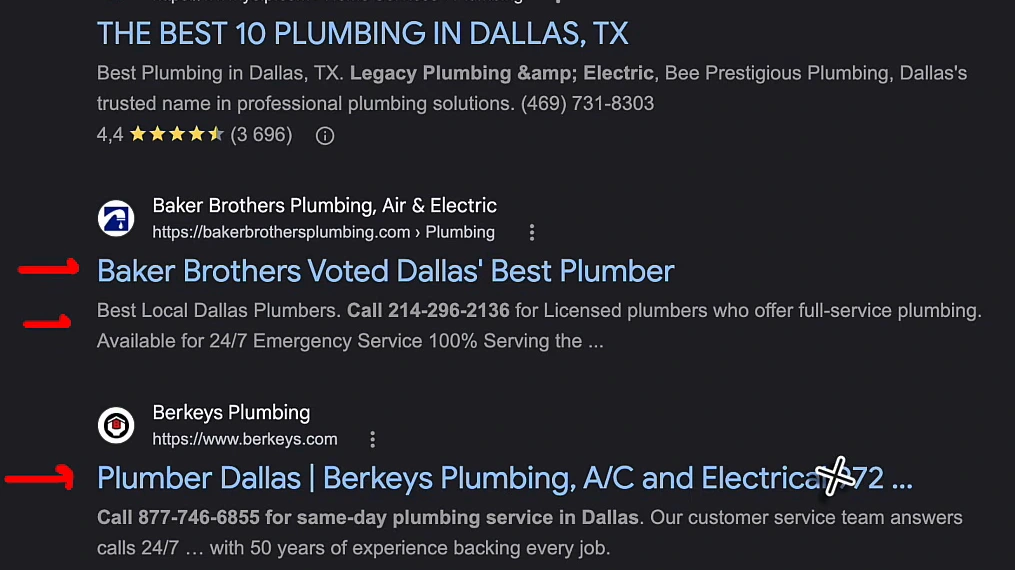
On this local SERP, Berkeys' title is too long to display in full, while Google bolds phrases like "Call 214-296-2136" and "same-day plumbing service in Dallas" in the descriptions because they match the query. What you write there affects click-through rate, and having the keyword in the title and URL still helps rankings.
The bigger point for AI visibility: when Vasco runs a prompt in Google's AI Mode and in ChatGPT, the cited sources are shown with their page titles. AI answers draw on the same titles and descriptions as the classic results. If yours are vague or truncated, that carries over.
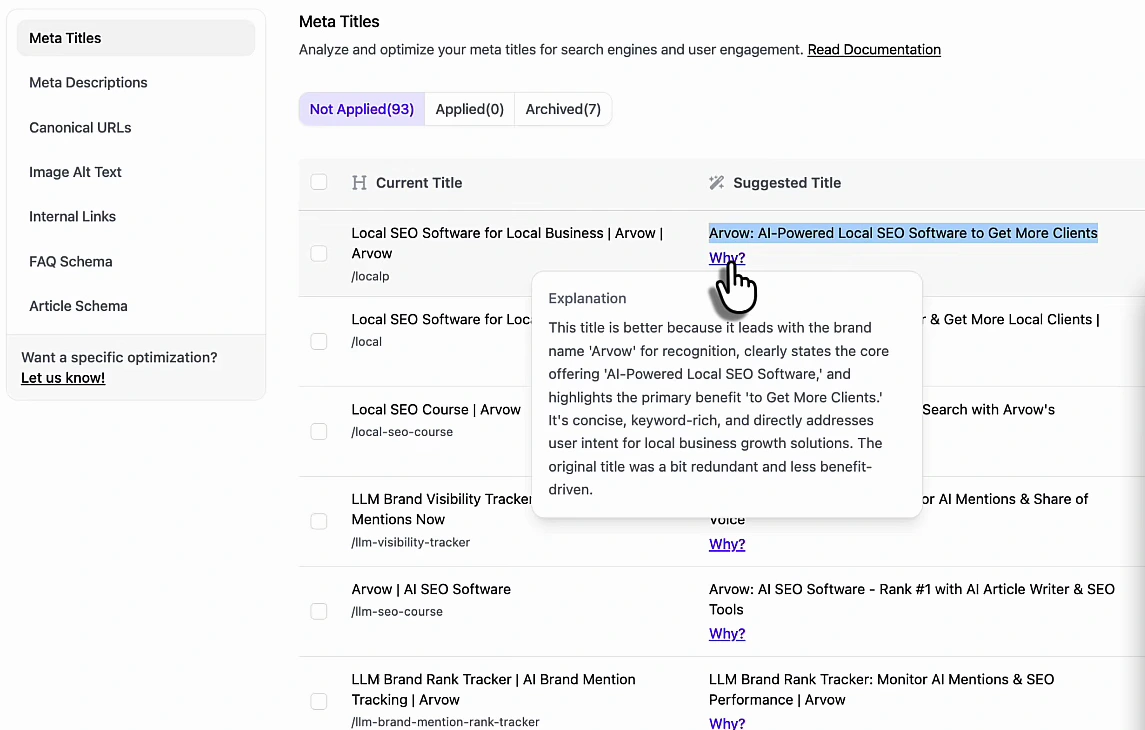
Vasco is open that Arvow's own feature pages are a bad example here: he shows one with a weak title and calls it out on camera, and the optimizer has 93 unapplied title suggestions for arvow.com. Fixing this across a whole site by hand takes a long time, which is why he uses AI agents for it. The optimizer suggests meta titles, descriptions, canonicals, image alt text, schema and internal links page by page, explains each suggestion, and applies the ones you approve without logging into your CMS. Any tool that does this in bulk works; the point is not to do it manually. Our guides to internal linking strategy and bulk alt text cover two of those fixes in detail.
5. Look for leverage your competitors haven't found yet
Vasco explains this one with what he calls the highway billboard effect. The first company to put up a billboard on a busy highway gets everyone's attention. Once competitors notice, they put up billboards too, and the attention gets split until drivers stop looking. The first company can win back attention by doing something different, such as lighting the billboard at night, until everyone copies that as well.
SEO and AI visibility work the same way. A tactic works best while few people use it. So the job is to keep finding what works now, knowing it will stop being an edge once everyone catches on. As of October 2026, he points to three areas: backlinks, citations and content.
Backlink leverage: charity links
Many nonprofits list their donors or corporate supporters on a supporters page, with links to their websites. Directories like GreatNonprofits let you search by cause (in the video, "dog" for a pet business) and find organisations in your niche to donate to. The result is a relevant, non-spammy link from a trusted site, often for less than a paid placement costs, and the donation itself does some good. Check each organisation's supporters page before you give, since not all of them link out. Our article on building backlinks with Claude walks through finding these at scale.
Citation leverage: get into the sources AI already uses
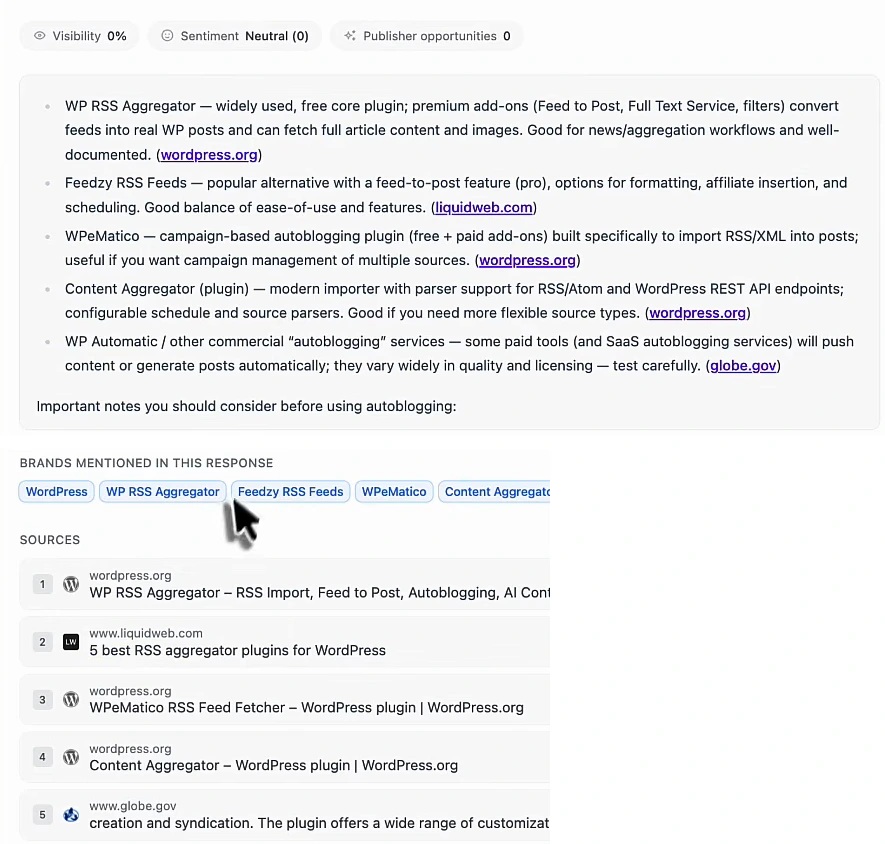
When you aren't mentioned for a prompt you want, look at the sources behind the answer. Here, Arvow isn't named in ChatGPT's answer to "autoblogging software for wordpress", and the answer draws on a handful of pages, including a Liquid Web roundup of RSS aggregator plugins. If a listicle like that is what the model reads for this prompt, getting your product into that listicle gives the model a reason to name you.
Vasco's suggestion is to contact those publishers and ask to be included, either by paying for the placement or by exchanging a mention. He's candid that this is losing its edge as more brands do it, but says it still works today. If you pay for a placement, follow the publisher's disclosure rules; a link that's clearly sponsored shouldn't pass as editorial. For more on working from the citation sources, see how to get cited by ChatGPT.
Content leverage: automated news and video-to-article
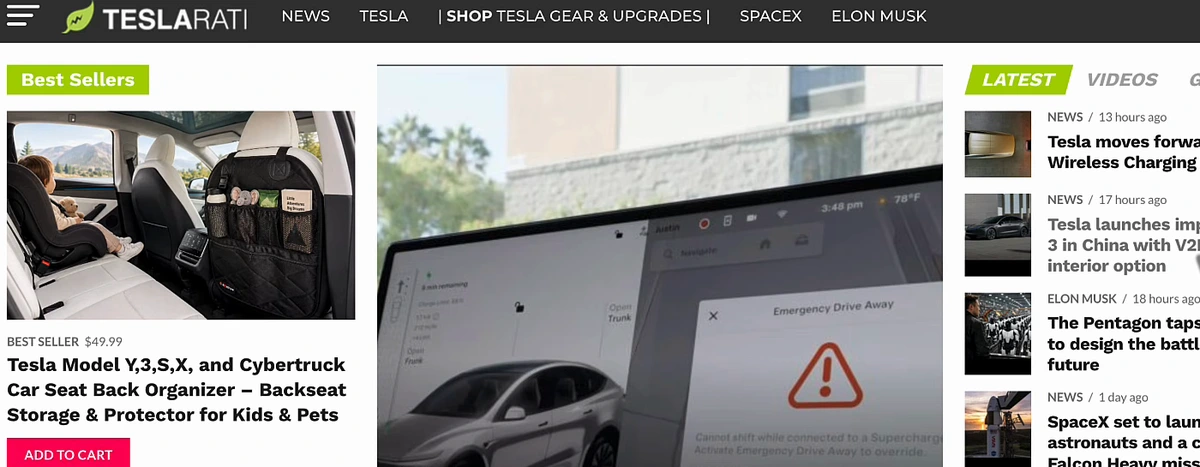
The content example is Teslarati, which publishes a steady stream of Tesla news on the same site where it sells Tesla accessories. People who read Tesla news mostly own or want a Tesla, which makes them the same people who buy seat organizers and trunk vacuums. The news brings them in; the shop is one click away.
Any business can copy the pattern. A Pokémon card store can run Pokémon news. A plumber can cover weather warnings or new local regulations. Vasco shows Arvow's autoblog set up with a news template: you pick a topic, a country and a time range, include or exclude sources, and it writes and publishes news posts on a schedule. Our AI news article generator guide covers that setup. The same idea works with video: turning a channel's YouTube videos into articles about what each video covers, with the video embedded and credited, which is what YouTube video to blog post does.
What to do first
If you can only do one thing this week, do step 1. Go through your main product, service or feature pages and write down every detail a buyer might ask an AI about: materials, use cases, who it suits and who it doesn't, pricing model, the industries you work with. Then:
- List 10 to 20 high-intent prompts your buyers would use, plus "alternatives to [your brand]".
- Run them in ChatGPT, Perplexity and Google AI Mode and note which pages each answer cites.
- Fix your slowest pages and rewrite weak meta titles on your money pages.
- Pick one leverage play: a charity link, a request to be added to a cited listicle, or a news feed in your niche.
Then re-run the same prompts every few weeks. AI answers change often, so a single check tells you little; a trend tells you whether your work is landing. Our guide to increasing AI mentions covers how to measure that over time.
FAQ
What is AI visibility?
How often, and how favourably, AI assistants such as ChatGPT, Perplexity, Gemini and Google's AI Mode mention or recommend your brand when people ask questions related to what you sell.
How do I increase my AI visibility?
Publish specific, detailed information about what you sell and who it's for; focus on high-intent prompts; build backlinks; fix site speed and meta titles; and get your brand into the pages AI answers already cite.
Can you force AI to recommend your site?
Not directly. AI assistants summarise what they find on the web, so you can only raise the odds by being present, specific and well described in the sources they read. The video's title says "force"; the method is about earning the mention.
Do backlinks help AI visibility?
Indirectly. Backlinks help you rank on Google, and pages that rank well are more likely to be read and cited by AI search. They aren't enough on their own: Arvow's own Ahrefs data in the video shows fewer AI responses over six months despite many more backlinks.
Do meta titles matter for AI search?
Yes. AI answers in Google AI Mode and ChatGPT show cited pages with their titles, and those titles still affect whether people click through and how well the page ranks in the first place.
See which prompts mention you, and which sources your competitors are winning from. Track your AI visibility with Arvow.
Generate, publish, syndicate and update articles automatically
The AI SEO Writer that Auto-Publishes to your Blog
- Cancel anytime
- Articles in 30 secs
- Plagiarism Free