
Do Backlinks Still Work in 2026? 13 Links Took One Client to 6x Traffic

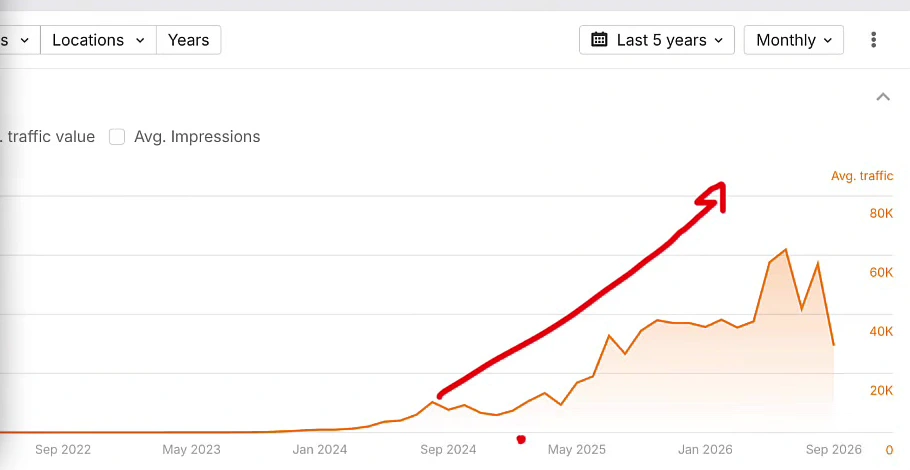
"Do backlinks still work?" gets asked every year, usually right after an algorithm update or an AI-search headline. Here's the 2026 answer in one client's Ahrefs chart: first backlink built in December 2024, roughly 9–10K monthly organic visits at the start, a peak above 60K by mid-2026.
This walkthrough is unusual because it's not a stranger's case study — it's our own client, shown from inside the operation: the order tracker, the deliverables, and the Ahrefs profiles of the actual domains the links came from. Here's the whole picture, including the parts a tidier case study would leave out.
The question itself is reasonable in 2026. AI Overviews answer queries without clicks, Google ships spam updates every few months, and half of SEO Twitter declares links dead on schedule. But every one of those shifts changed which links count, not whether they count — Google still scores prominence through who references you — every serious dataset in our link building statistics roundup says the same — and AI answer engines lean on the same authority signals when they pick which brands to cite. The case below is what that looks like when it's done with real domains on a real site.
The facts of the case, up front:
- Client: one site, worked continuously since December 2024
- Links built: 13, across three orders (3 + 5 + 5), spaced over weeks
- Baseline: roughly 9–10K organic visits/month before the first link
- Peak: above 60K/month by mid-2026 (with a pullback from peak since — shown, not hidden)
- Also true: the content library kept growing too (~120 pages at campaign start → a peak near 280); links get ~80% of the credit in Vasco's own estimate, not 100%
What was actually built: 13 links, spaced out
Across three orders — one of 3 backlinks, two of 5 — 13 backlinks were built to the client's site, spaced across multiple weeks (plus, in Vasco's words, "maybe a couple more via email"). Not hundreds. The client's Ahrefs profile shows about 2.2K live referring domains (4.7K all-time), a large share of them spam the client never built; the campaign itself was a small, deliberate addition of real links.
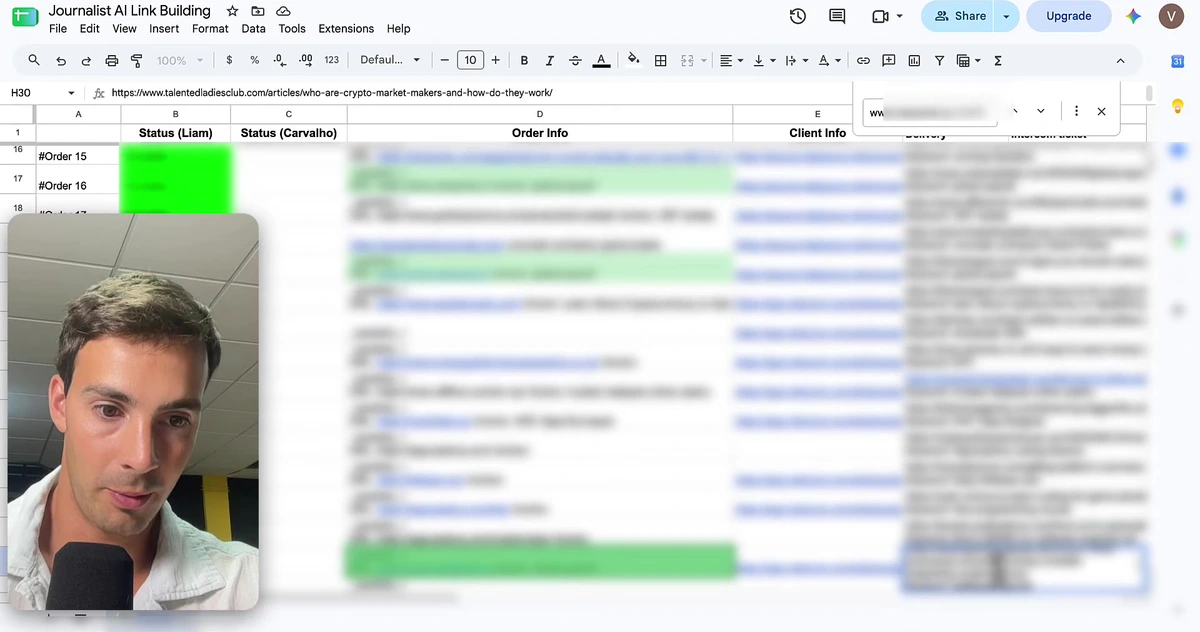
Each delivered link comes with the page it was placed on and the target URL — the sheet is the paper trail, and the deliverables list — placement page plus target URL — is exactly what the client receives. One example pulled up on camera: a placement on a DR61 domain, one of many used across the three orders.
The honest attribution: links didn't do this alone
The claim in the video is deliberately not "backlinks did 100% of this." Vasco's own estimate on camera is around 80% — because the client kept publishing throughout. Their organic pages climbed from about 120 when the first link landed to a peak near 280 — and had already quadrupled from ~70 since 2022:
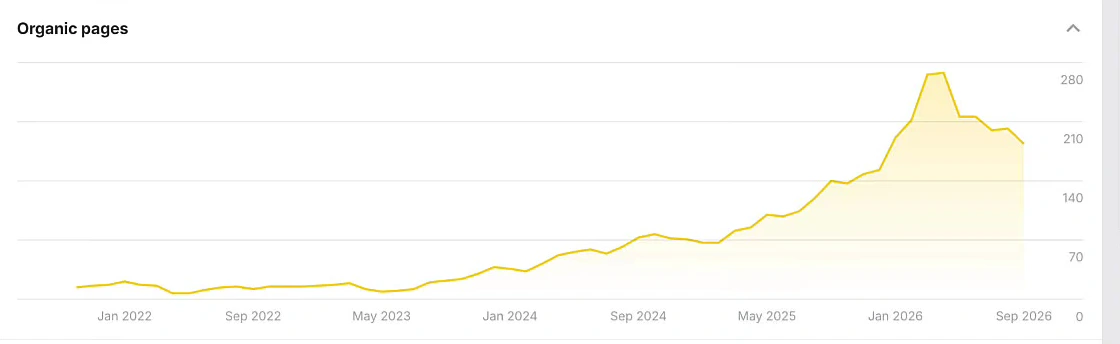
That's the realistic model: "if you just build backlinks it won't move you anywhere — you need content as well, and technical SEO." Links multiplied what the content earned; neither works alone. It's the same conclusion our data-driven look at how many backlinks you actually need lands on: quality and context beat raw count. Worth stating plainly too: the chart isn't a straight line up — traffic peaked in mid-2026 and has pulled back from that peak since, which is what real SERPs look like. Versus the December 2024 baseline, it's still roughly a 6x.
What the linking domains look like
The claim that makes or breaks any backlink case study is domain quality, so the walkthrough opens the deliverable domains in Ahrefs on camera. The DR61 example:
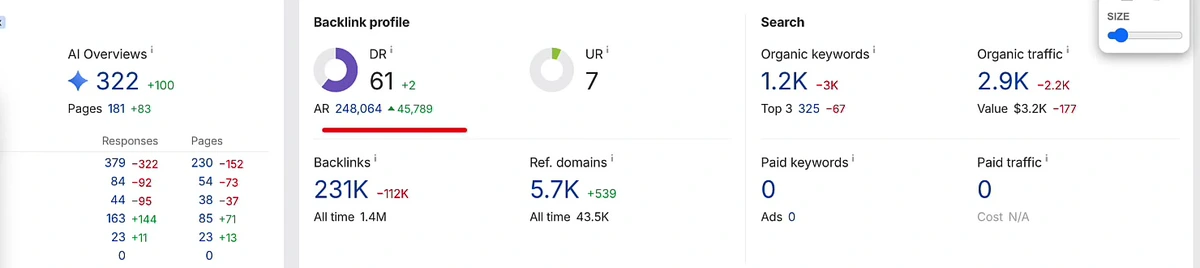
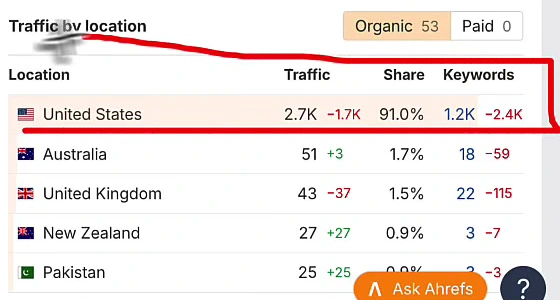
91% US-based traffic and over a thousand organic keywords — the opposite of the DR-padded ghost towns that make cheap link packages worthless. That distinction is the entire difference between this chart and the horror stories; we've broken down what a $500 backlink actually gets you before, and domains like this are the version that's worth paying for. A bonus effect the video calls out: the client's brand now shows up in mentions across large language models — real links on real sites feed AI search visibility too.
How fast did it move?
The title's "24 hours" is the YouTube version of the story; the chart tells the durable one. The first link went live in December 2024 against a site that had been flat for two years. The curve inflects within the following months — visible acceleration through 2025 — and compounds as the second and third orders land and the content library grows. That's the honest expectation to price in: individual placements can move specific keywords quickly, but the site-level payoff builds over months, because authority accumulates per referring domain, and Google revisits your pages on its own schedule. Anyone promising the chart above in a week is selling the ghost-town version.
So — do backlinks still work in 2026?
Yes — with the two qualifiers this case study demonstrates. They work when the linking domains are real (real traffic, real keyword footprints, niche fit), and when the site has content worth ranking. Skip either half and you get the null result that fuels the "links are dead" takes. If you want to compare the route taken here against every other way of getting links, our ranking of 13 backlink building methods covers the field.
Build them yourself, or have them built
The video points at both doors. DIY: two full tutorials — an hour-long manual walkthrough and a version where Claude Code runs the outreach research. Done-for-you: the same links from this case study, as a service — DR40+ domains with real organic traffic, built manually by the team. Vasco's line on automation is worth quoting: "If I could use AI for this, I would, but we still can't." Real outreach to real sites is still human work.
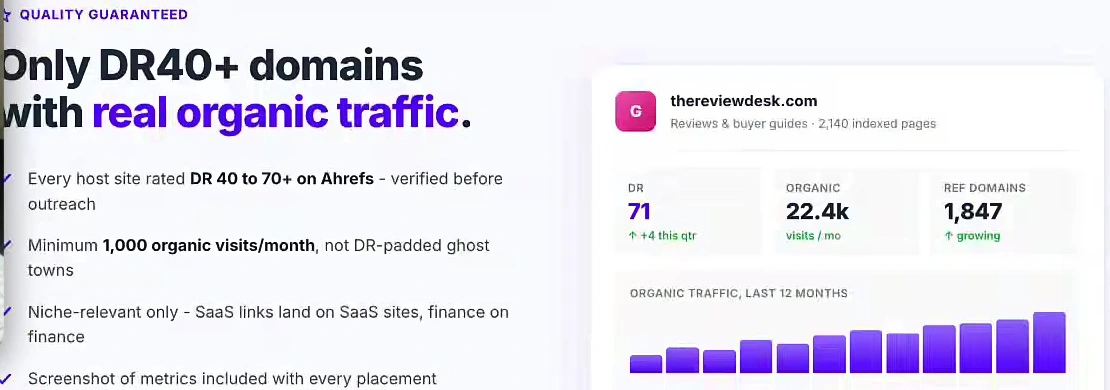
Packages run $450 for 3 backlinks, $750 for 5, and $1,500 for 10 — the same 3-and-5 link orders, spaced over weeks, that produced the chart at the top of this page.
Want the same links pointed at your site? Arvow builds them for you — DR40–70+ domains with real organic traffic, manually pitched and placed, with the delivery sheet as your receipt.
Generate, publish, syndicate and update articles automatically
The AI SEO Writer that Auto-Publishes to your Blog
- Cancel anytime
- Articles in 30 secs
- Plagiarism Free