
How to Build Backlinks with Claude in 2026 (My $128 DR77 Link)
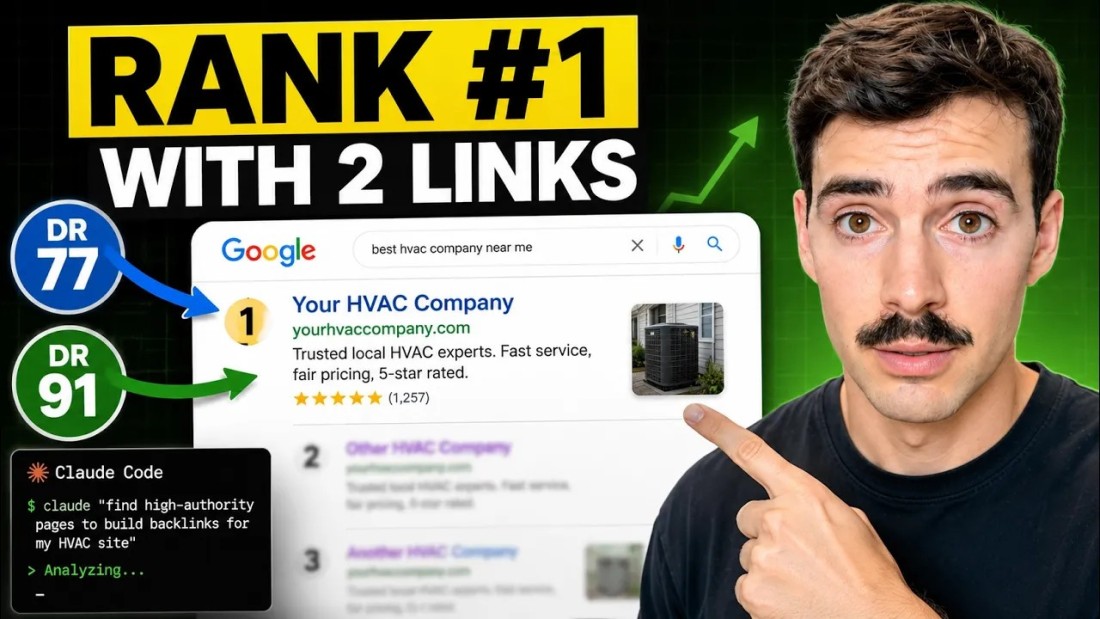
I built a Claude Code skill that found me a DR77 backlink for $128. If you have ever priced backlinks, you know how absurd that is. At Arvow's link building service we charge around $150 per link for domains in the DR40–70 range — and that is a fair market rate. Here, Claude surfaced a stronger domain, with real US-based traffic, for less than that.
The trick is not a secret marketplace. It is a category of link almost nobody researches properly: charity and NGO sponsor links. Many nonprofits publish a public sponsors page that links back to every donor. Finding the good ones takes hours by hand; Claude does it in one prompt. Here is exactly what I ran, what came back, and how to reproduce it for your own domain.
The find: a DR77 link that costs $128
The nonprofit in question is Software Freedom Conservancy, a .org domain with a backlink profile most SaaS companies would kill for: DR77, hundreds of thousands of backlinks, thousands of referring domains, and organic traffic concentrated in the United States.
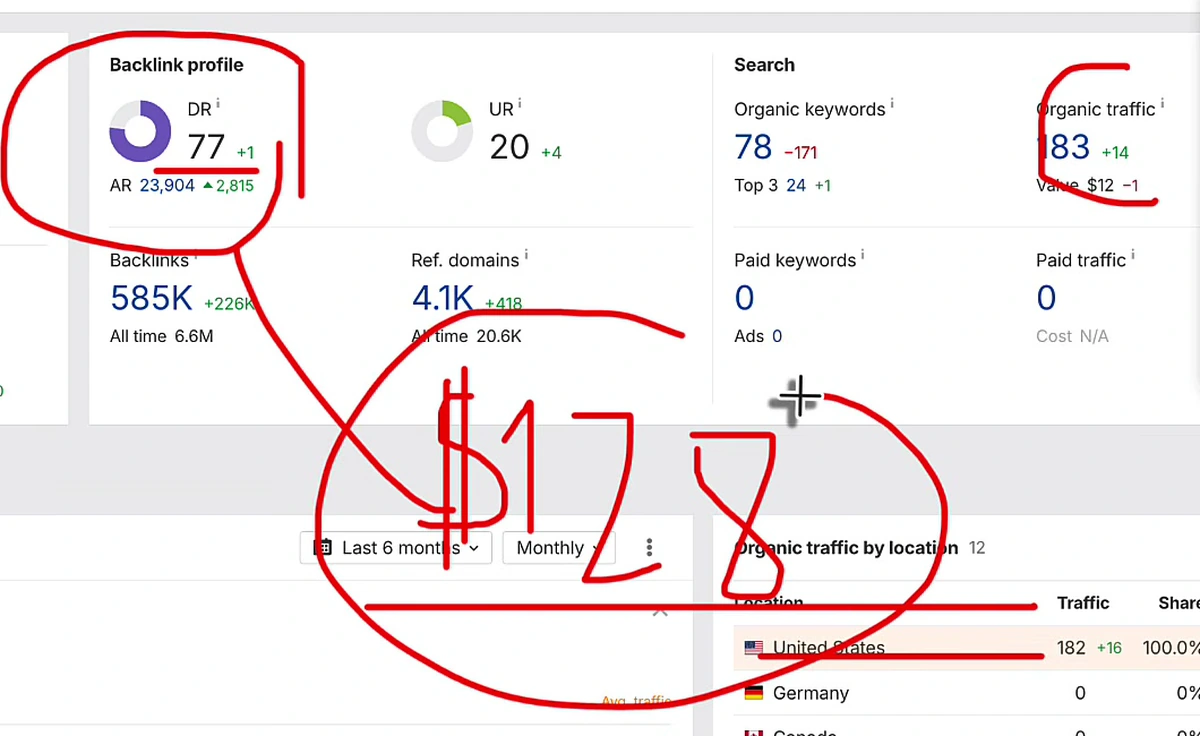
Their sustainer program is the mechanism. Donate $128 or more annually and you are listed on the public sustainers page — the same page that carries Mozilla and Google. The listing links out, which is the entire point.
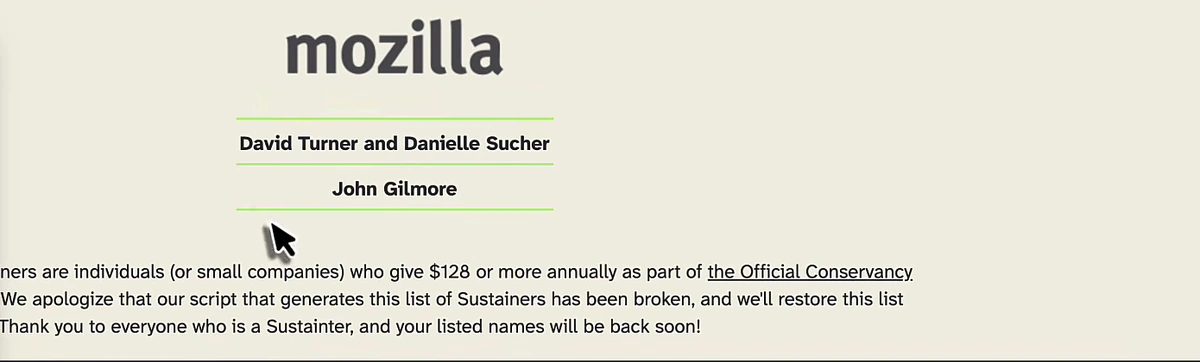
Compare that with what agencies charge. Around $150 for a DR40–70 link is normal — it is what we charge, and we are on the cheap end because we build links at scale through a backlink exchange. A DR77 for $128 is simply below market, and it comes with two bonuses no marketplace link has: the donation is a tax write-off, and it is an actual good deed.
Why NGO sponsor links work so well
Three properties make this link type unusually strong:
- Authority. Nonprofits accumulate links naturally for decades — press, government sites, universities. That is how a .org you have never heard of ends up at DR77.
- Niche relevance. NGOs tend to be hyper-specific. A dog rescue foundation links dog businesses; a software freedom nonprofit links software companies. You appear exactly where your category already lives.
- Legitimacy. You are not renting a link from a broker. You are a documented donor on a public sponsors page.
There is one hard requirement, and it is where most manual attempts waste their time: the nonprofit must have a publicly facing supporters page, and the logos on it must actually hyperlink out. Plenty of charities accept donations but never publish donors anywhere. Plenty more publish a “supporter wall” where every logo is a dead image with no link. Donating to those does nothing for SEO — and filtering them out is exactly the verification step I built into the prompt.
What the Claude Code skill returned
I asked Claude Code, in plain language, to find NGO charity links for arvow.com. It searched the web, pulled candidate nonprofits, fetched their sponsor pages, and verified each one before recommending it. The final output: six verified charity-link opportunities, each confirmed to have both a donate page and a public supporters page where logos hyperlink out.
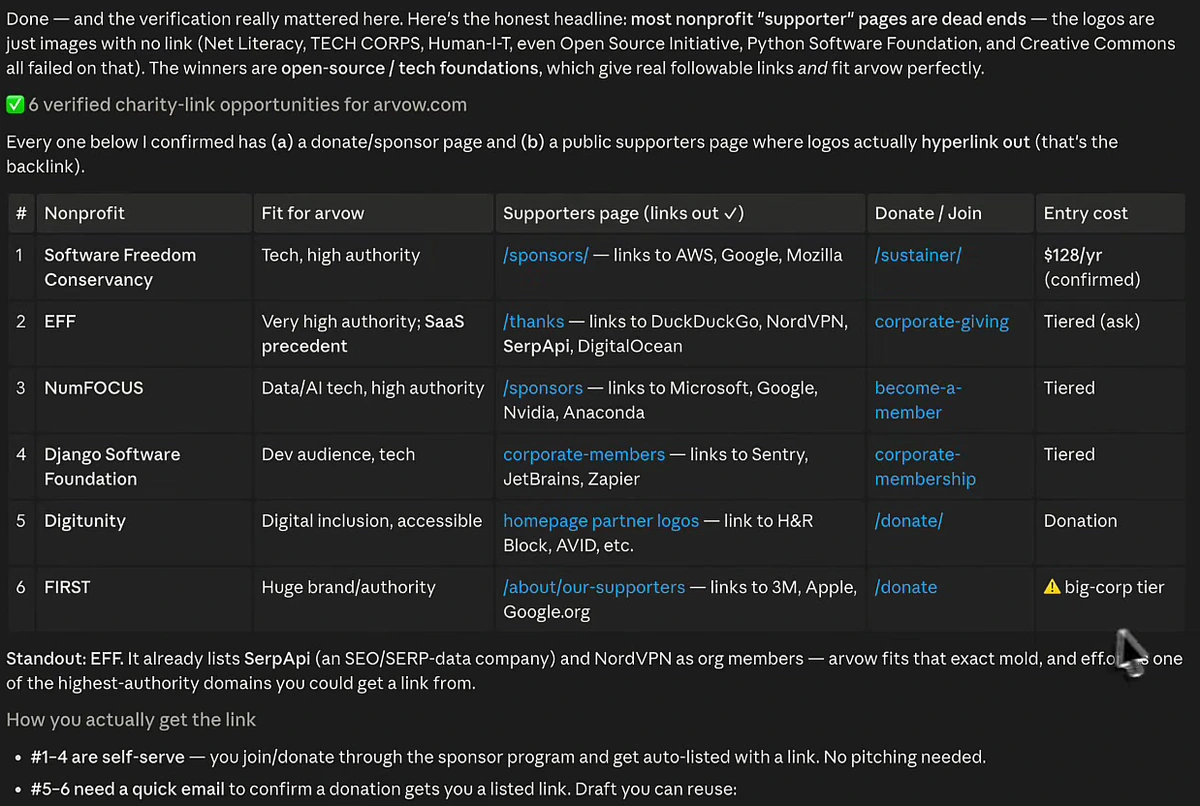
The verification pass mattered more than the discovery pass. Claude found that most nonprofit “supporter” pages are dead ends — several well-known organizations it checked display supporter logos as plain images with no links. The winners were open-source and tech foundations, which almost always list sponsors as real followable links. I would not have known to look for that pattern without burning hours on manual checks first.
One more thing worth stressing: these six are fits for my domain. The skill reads your business first and searches your niche. Run the same prompt for a dog grooming brand or a dental practice and you get a completely different table.
The manual process this replaces
You can do all of this without AI, and it is worth seeing the manual loop once to understand what Claude automates. In the video I walk it live: search a nonprofit directory like GreatNonprofits for your niche keyword, open a candidate, then check whether the domain is worth anything.
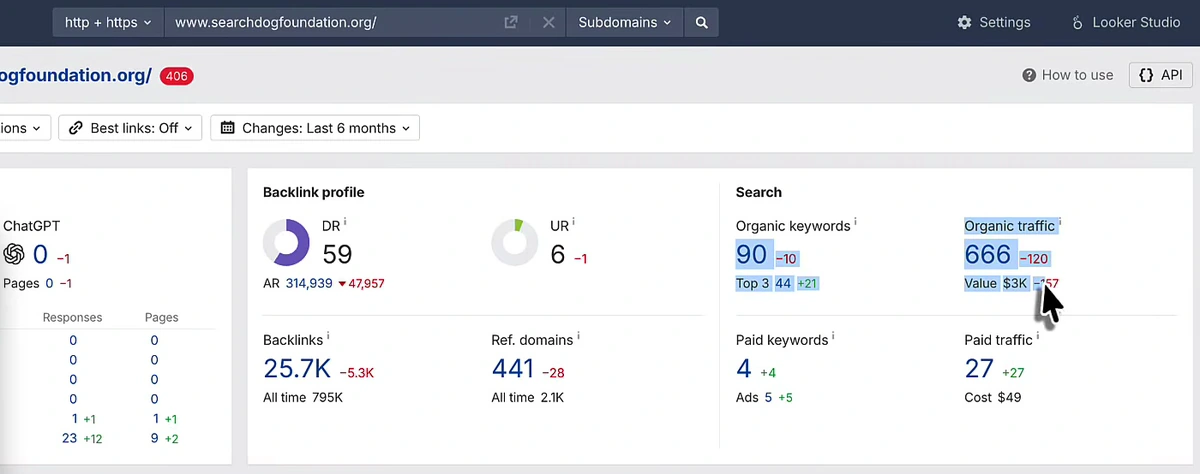
Then comes the slow part: digging through the site for proof that donors actually get listed. For the Search Dog Foundation I eventually found a corporate partners page — business name, logo, link out. That confirms the pattern: donate, get listed, get the link. But it took clicking through half the site, for one candidate. Multiply that by a shortlist of thirty nonprofits and you see why nobody builds these links: not because they are weak, but because the research is miserable. That research is exactly what AI is good at — the same logic behind my unlimited backlinks with AI workflow, pointed at a more defensible link type.
The DR91 opportunity: when the ceiling gets high
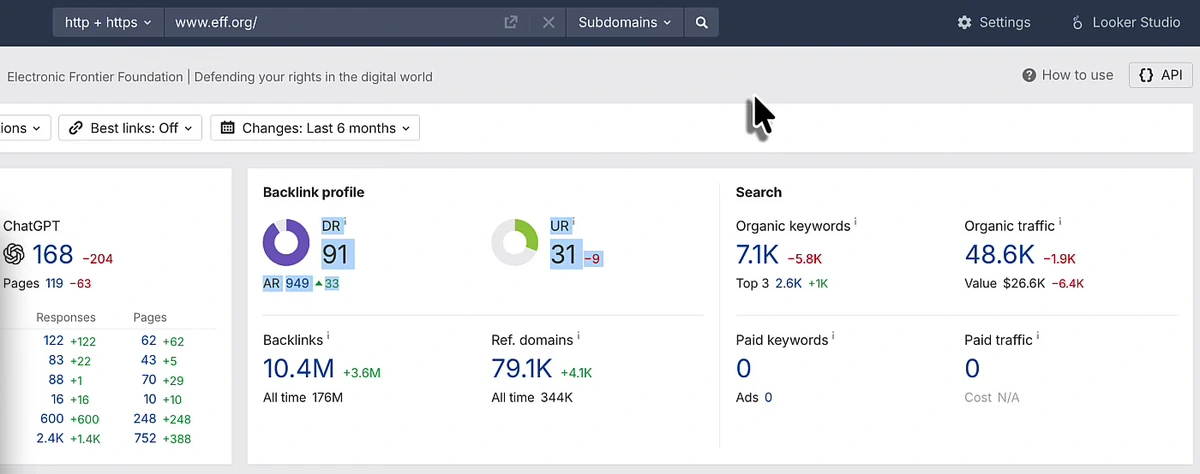
The list did not stop at DR77. One of the six was the Electronic Frontier Foundation — and the Ahrefs numbers on eff.org are on another level: DR91, 10.4M backlinks, 79.1K referring domains, 48.6K monthly organic visits.
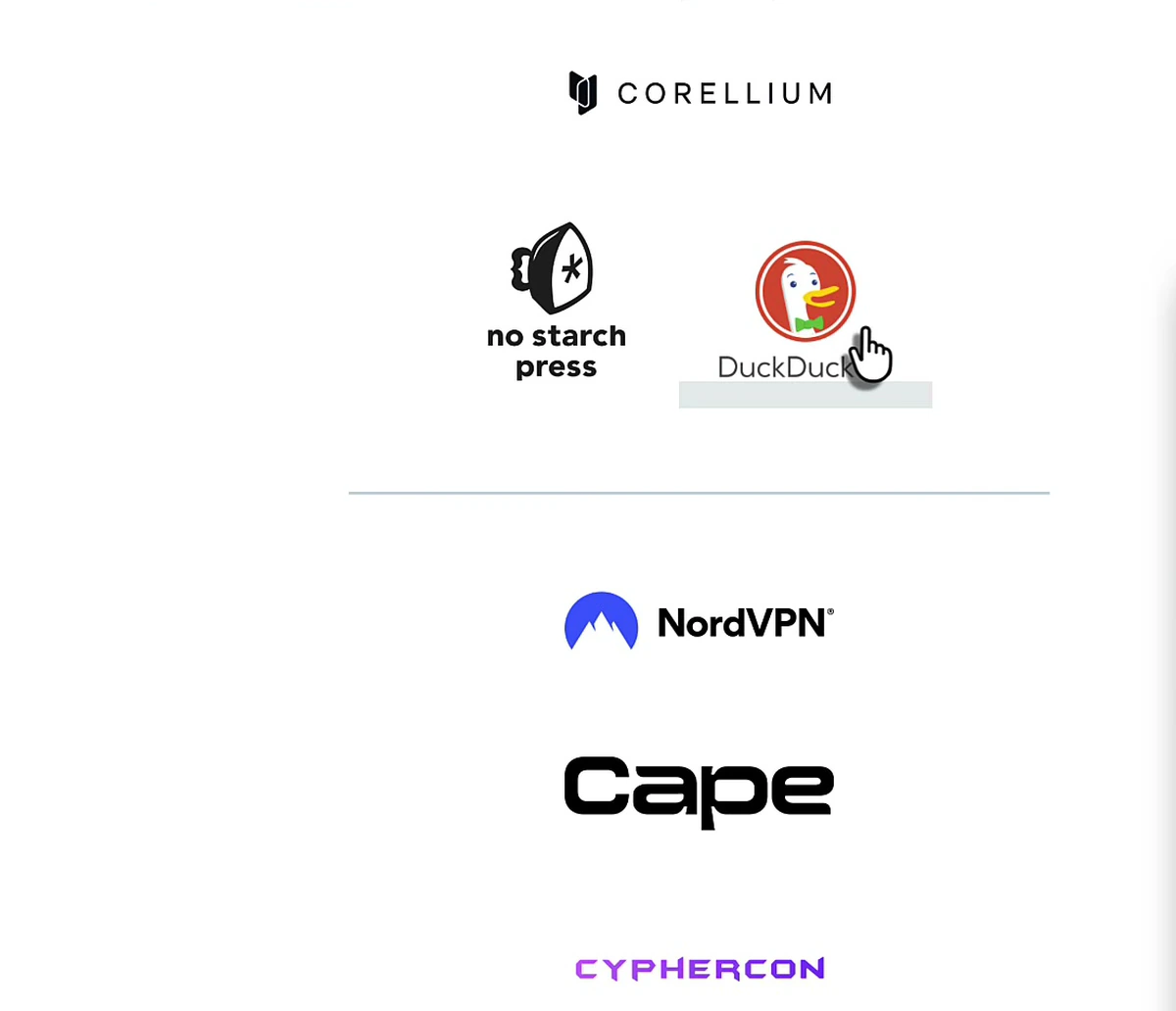
And the supporters page confirms who already understands this play: DuckDuckGo, NordVPN, no starch press, Corellium — privacy and software brands listed as organizational members and donors.
Is EFF right for every business? No — it fits companies in digital privacy, security, and software. Niche fit is the question you still answer yourself for each opportunity; the AI shortlists, you decide where the donation budget goes.
How to run this yourself in Claude Code
The workflow takes two minutes to set up. If you have never touched Claude Code before, my Claude Code SEO guide covers the basics; for this specific play you only need four steps:
- Create a new folder on your desktop.
- Drop the prompt file into it. I send the NGO charity links prompt to anyone who comments “prompt” on the video.
- Open Claude Code and select that folder. Once the session is scoped to it, Claude can read the prompt file inside.
- Ask in natural language: “find me some NGO links for yourdomain.com”. That is all the syntax required.
The prompt sets Claude up as an SEO link building assistant for your business, with one goal: a list of nonprofits you can donate to in exchange for a link from their donor or sponsor page. It forces real data — live web searches, fetching each supporters page, confirming the links exist — and rejects anything it cannot verify. Expect the run to take a while; mine chewed through dozens of web searches and page fetches before compiling the final table.
If you have used my ChatGPT backlink workflow, the difference here is agency: ChatGPT gives you a research brief, while Claude Code goes out, fetches the sponsor pages, checks the outbound links, and comes back with verified rows only. For this use case, verification is the product — a beautiful table of dead-end supporter walls is worthless.
Where this fits in a real link building strategy
NGO sponsor links are a batch, not a pipeline — you might find six great fits for your niche, donate to three, and that is the play for the year. For ongoing volume you still want a repeatable system underneath: content-driven links, exchanges, and the other methods I ranked in my 13 backlink building methods comparison. Treat charity links as the high-authority spikes on top of that baseline.
FAQ
Are charity and NGO backlinks white-hat?
They sit in a gray zone that leans white. You are making a real donation to a real nonprofit that publicly documents its supporters — the same thing Mozilla, Google, DuckDuckGo and NordVPN do on those exact pages. Donor listings existed long before SEO. Pick nonprofits genuinely aligned with your niche and the link is defensible.
How much do NGO sponsor backlinks cost?
In the batch Claude found for my domain, entry points ranged from a confirmed $128 per year for a DR77 domain to tiered corporate memberships. For context, agency-built links in the DR40–70 range typically run around $150 each, so a DR77+ domain at $128 is below market — and unlike an agency link, the donation is usually tax-deductible.
Can I do this with Claude instead of Claude Code?
The chat version of Claude can brainstorm nonprofit categories, but this workflow depends on agentic verification: fetching each supporters page and confirming the logos hyperlink out. Claude Code runs those web fetches itself over multiple rounds, which is what turns a list of guesses into a table of verified opportunities. Use Claude Code, scoped to a folder containing the prompt file.
How do I find these links without AI?
Search a nonprofit directory like GreatNonprofits for your niche keyword, open each candidate, check its domain rating and traffic in an SEO tool, then hunt the site for a donors, sponsors, or corporate partners page with real outbound links. It works — I demo it in the video — but budget 10–15 minutes per candidate, and expect most candidates to fail the linked-sponsors-page test.
Do nonprofits mind being used for link building?
You are donating through their official sponsor program, which exists precisely to attract corporate supporters. The nonprofit gets funding; you get the listing their program advertises. The one thing I avoid is pitching charities to create sponsor pages they do not have — if there is no public, linked supporters page, I move to the next candidate.
Will one DR77 or DR91 link actually move rankings?
A single high-authority, niche-relevant link can move things noticeably for small and mid-sized sites, but I would never sell it as a guaranteed rank-one button. The realistic frame: these links are among the highest leverage-per-dollar available, and they compound with consistent content and a broader link base rather than replacing them.
Want the links without running the prompts yourself? Arvow builds DR40+ backlinks for you — real domains with real organic traffic, manually pitched by humans — and the AI SEO agent handles the content side so the links have something worth ranking.
The meta-lesson is bigger than charity links: entire categories of backlink stay unbuilt not because they are weak, but because the research is tedious. Hand the tedium to an agent that verifies instead of hallucinates, and a “too much work” link type becomes a checkbox. Comment “prompt” on the video and run it on your own domain.
Generate, publish, syndicate and update articles automatically
The AI SEO Writer that Auto-Publishes to your Blog
- Cancel anytime
- Articles in 30 secs
- Plagiarism Free