
How to Get Recommended by AI in 2026: Intent, Evidence, Sources

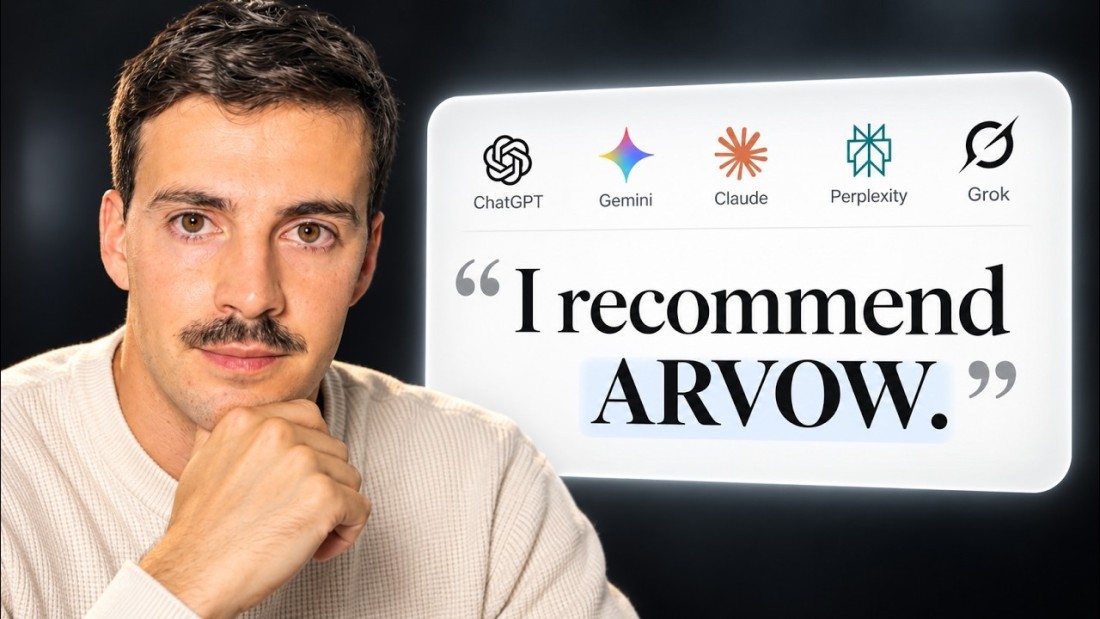
Open ChatGPT, type the question your best customer would type, and look at the three companies it names. The useful question is not "why am I not there?" It is "what did those three have on their websites that I don't?" In the course below, that question gets answered on camera — a live prompt, the answer it produced, and then the actual pages the answer was built from. Every claim the model made turns out to be sitting on a page you could have written yourself.
There is no keyword. There is only intent
Start with the thing that makes AI search different from Google. A person looking for an agency might type best Google Ads agency for an ecom brand doing 2m a year in the Australian market. Or recommend me a Google Ads agency for my ecom store in Australia doing 2m a year. Or they might arrive in three steps — ask for agencies, then say they want Australian ones, then mention they are under A$2M a year — refining until the answer fits.
Those are not different searches. They are one intent, worded three ways, and the model answers the intent rather than the string. There are effectively infinite phrasings of the same need, which is why chasing the exact wording is a waste of effort. What you can do is make sure that when a model assembles an answer for that intent, the facts it needs are somewhere it can retrieve them.
The prompts people write are also far more specific than the keywords they used to type. Nobody tells Google their revenue, their country and their business model in one query. Everybody tells an assistant. Specific questions get answered with specific evidence, and that is the whole opening.
Why those three agencies got named
Here is the answer that prompt produced.
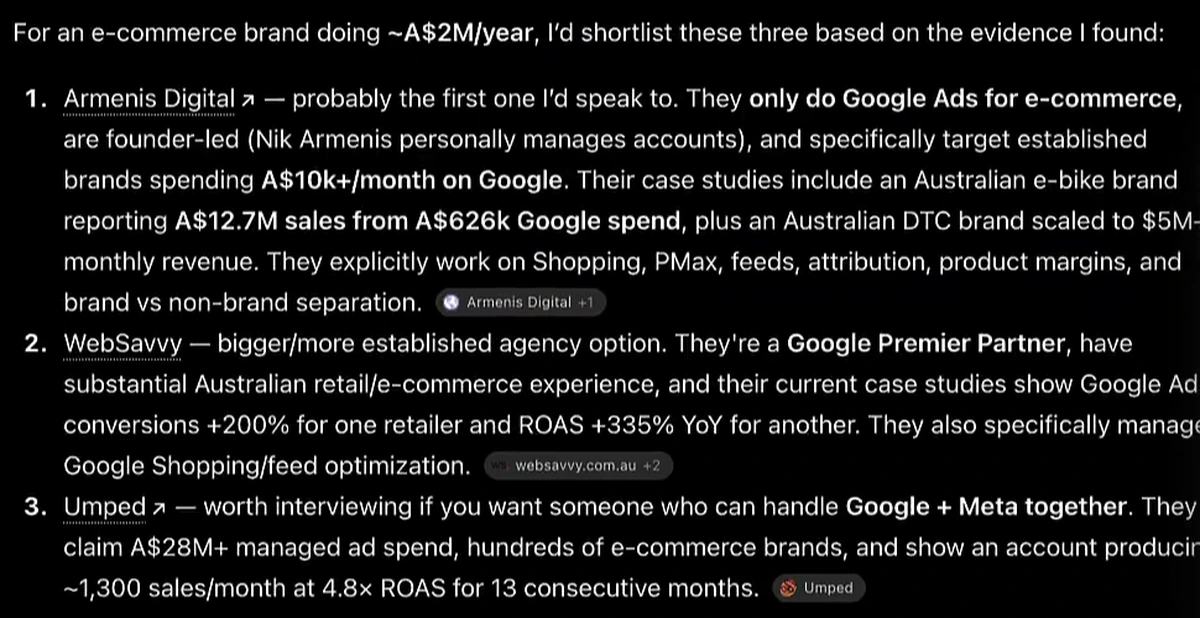
Read what the model actually asserted about the first one: it only does Google Ads for e-commerce, it is founder-led, it targets brands spending A$10k+/month, and its case studies include an Australian e-bike brand reporting A$12.7M in sales from A$626k of Google spend. That is not a vibe. Those are four retrievable facts.
Now the agency's own case studies page:

The model did not infer that. It read it. Same for the second agency's "+200% conversions, +335% ROAS", and the third's "A$28M+ managed spend, ~1,300 sales/month at 4.8× ROAS for 13 consecutive months" — all published claims on their own pages, all specific enough to be quoted back.
Which gives you the rule the rest of this article is about: a model can only recommend you for things you have said, in a form it can retrieve. If those agencies had not written "Google Ads" on their services page, they would not have appeared for a Google Ads prompt — Australian or not, case studies or not.
Write for the reader who is a machine
The uncomfortable implication is that pages nobody reads still matter. A detailed case study page, a specification block, a long FAQ — these can earn their keep even if a human visitor never scrolls that far, because the model does, and then it relays the relevant part to a human who never visits at all.
That is not an argument for padding. It is an argument for specificity: the more precisely your pages state what you do, for whom, with what result, the more distinct intents you can satisfy.
E-commerce: the product page as a fact sheet
The best worked example in the video is a raised garden bed product page. Most e-commerce product pages stop at a photo, a price and three bullet points. This one keeps going, and the structure is worth copying exactly — each material gets what it is, proven results, and how it helps.
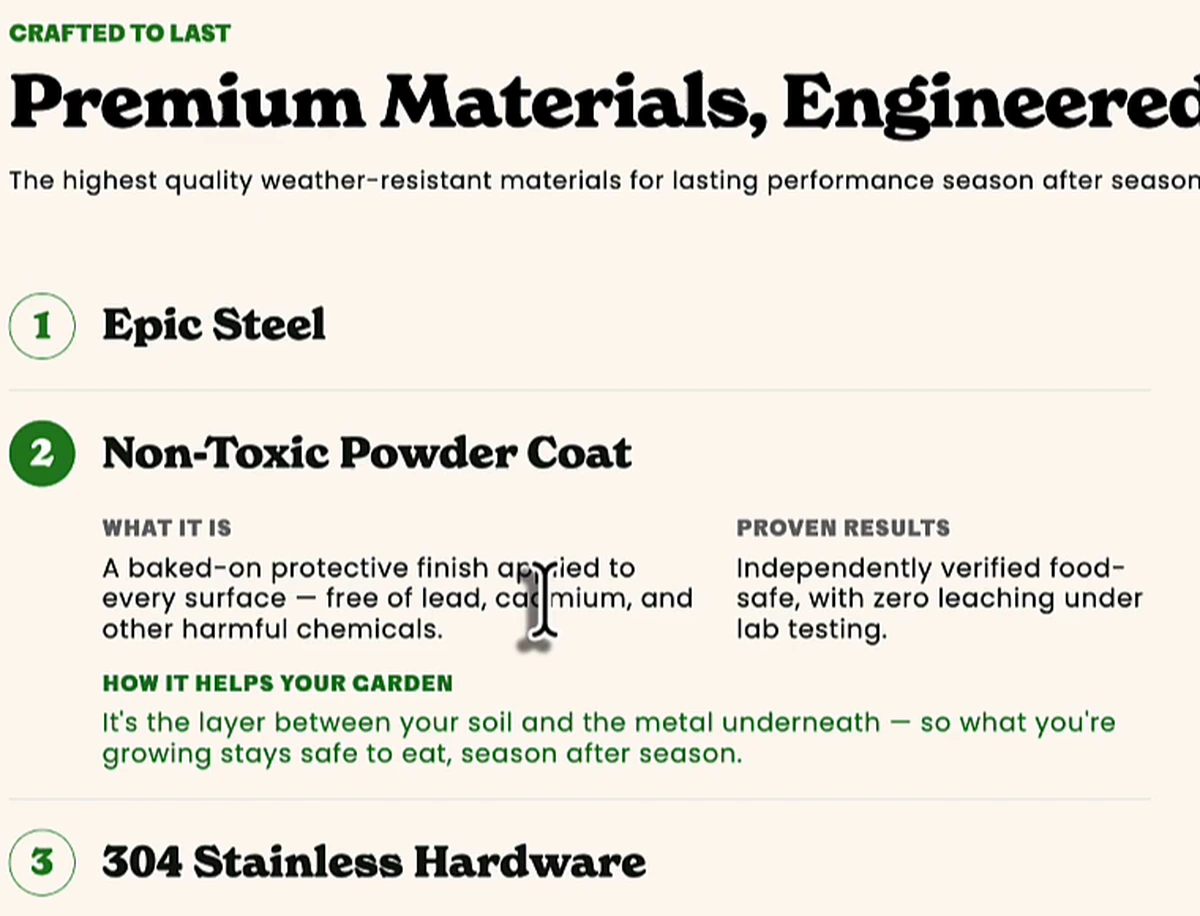
Follow the chain. Somebody asks an assistant to recommend steel garden beds, gets four brands, and then asks a follow-up: I've heard the metal ones have toxic coatings that leach into the vegetables. Only one of those four brands has published the sentence that answers it — non-toxic powder coat, free of lead and cadmium, independently verified food-safe, zero leaching under lab testing. That brand survives the follow-up. The other three do not, and no amount of keyword targeting would have saved them.
The page also publishes the proof in numbers rather than adjectives.
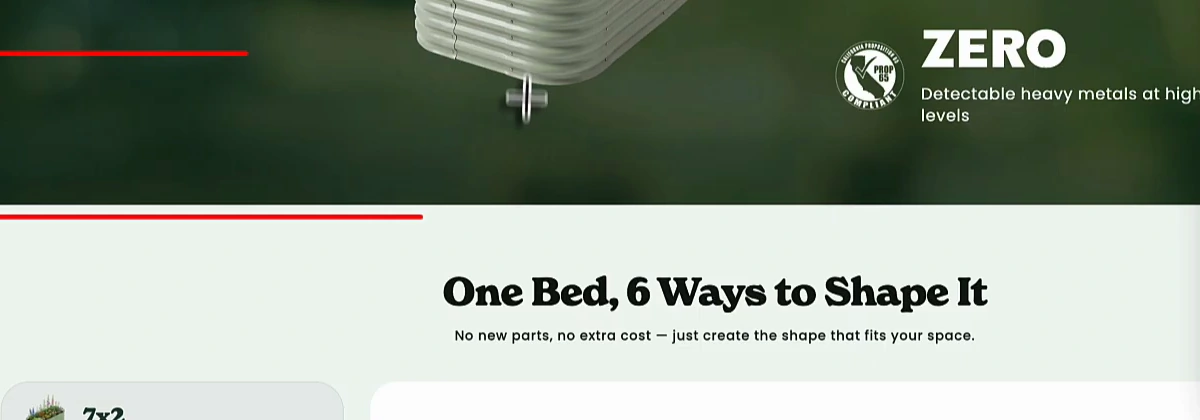
Objections are the highest-value content you can publish, because objections are exactly what people type into assistants on the second turn. Write the answer to the thing your customers worry about, put a number and a verification method next to it, and you have built the sentence that wins the follow-up.
Local: your review replies are published facts
The local example is the one most businesses can act on this afternoon. A Dallas plumbing company with a 4.9 rating and around two thousand reviews gets a detailed five-star review — a difficult leak at the edge of a foundation, diagnosed and fixed the same day. And this is the reply:
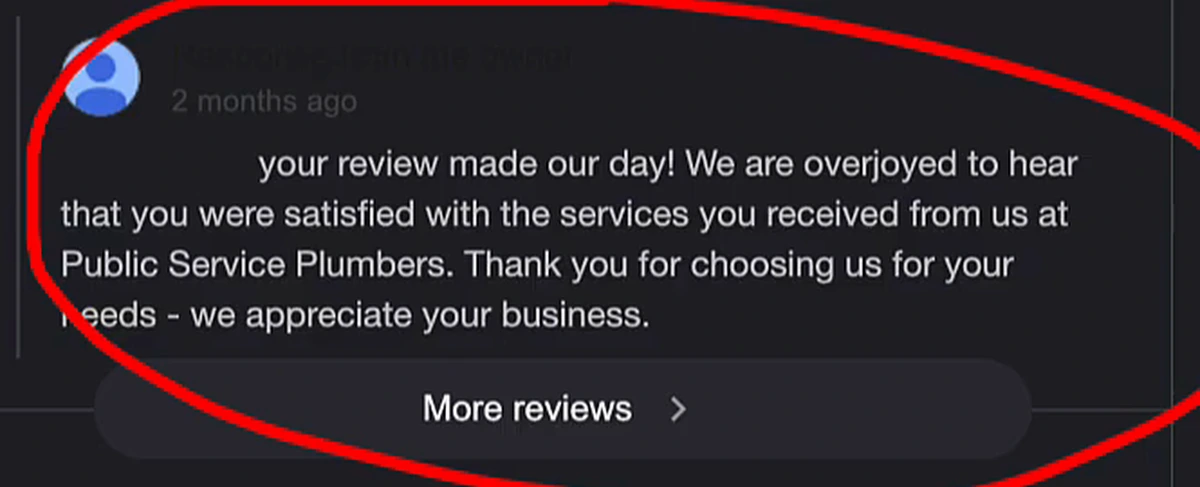
Nothing in that reply can ever be used to recommend the business. The presenter's version would read more like: thank you — the team at [brand] came out to your place in Dallas at 1am, arrived in 20 minutes, cleared the line in two hours and charged $100. Same courtesy, but now the reply contains a city, a service, a response time, an out-of-hours proof point and a price.
Because somewhere, at 1am, somebody is typing my toilet is clogged, I need someone in Dallas who can come now. The business whose review replies mention late-night call-outs and twenty-minute arrivals has published the evidence for that intent. The business that wrote "thanks for choosing us" two thousand times has published nothing. This sits alongside the rest of the profile work in Google Business Profile and AI search.
Finding the prompts worth caring about
You do not need a tool for the first pass, and the video is explicit about it: you know your customers better than any software does. Describe your business and your ideal customer to an assistant and ask what someone in that position would type. Write the list down.
Then accept a genuine limitation. There is no search volume for prompts. Google gives you keyword volumes; no assistant publishes how many people asked a given question, and since the same intent has infinite phrasings, the number would be hard to define anyway. So a prompt you rank beautifully for may have an audience of nobody — branded prompts are the obvious trap, since asking an assistant about your brand by name will always mention your brand. Judge prompts by commercial logic instead: anyone typing what's the best AI software for SEO agencies runs an agency and is shopping. That is worth pursuing whether or not you can count it.
Diagnosing a prompt you don't win
Take one of those prompts and look at it properly. Here is that exact query, tracked across five engines.
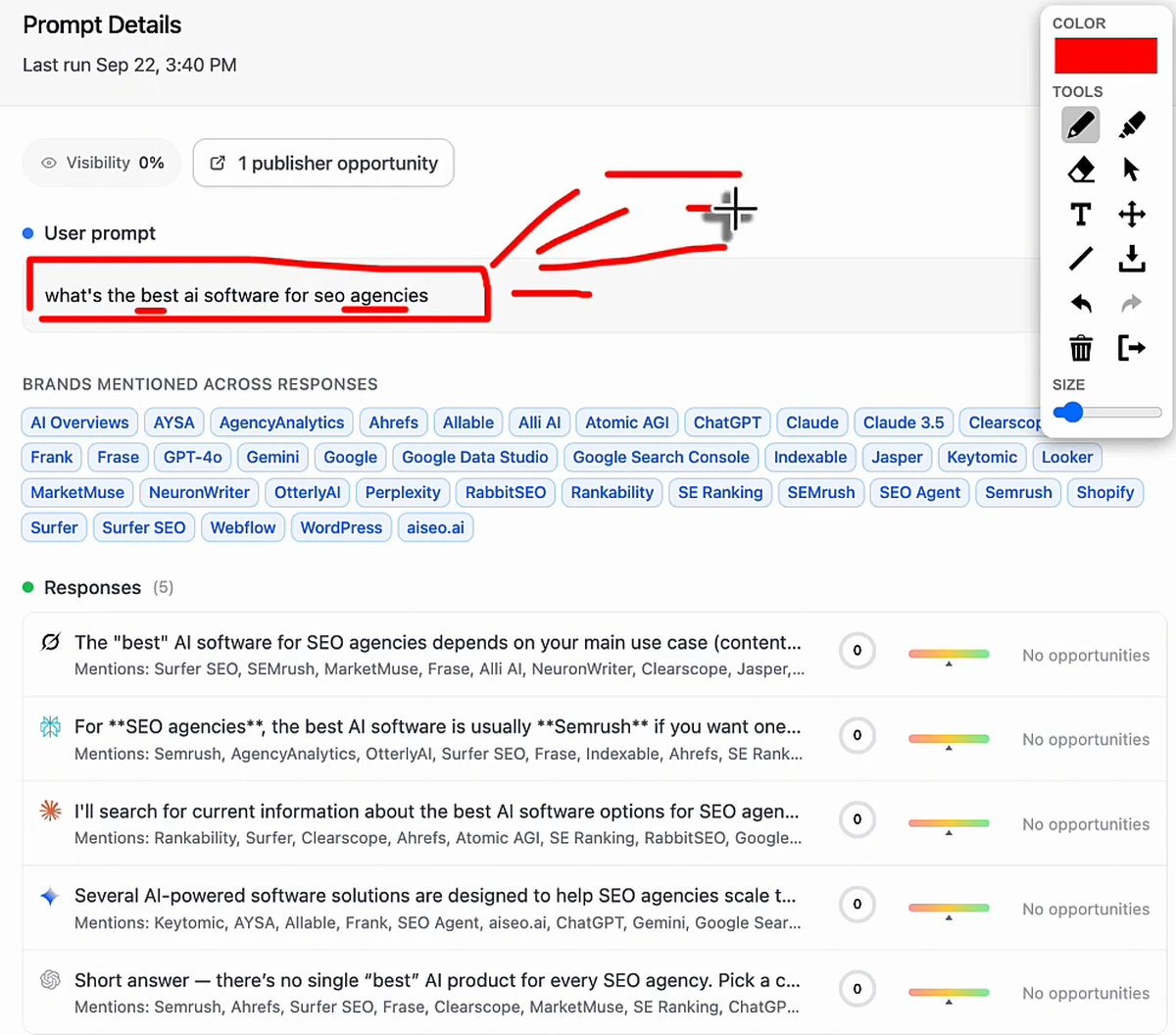
Zero per cent is a useful number, but the list underneath it is the actionable part: those are the brands the models reach for on this intent. The next question is where they got them.
Brands are not sources
This is the mechanic most people miss, and it changes what you go and do.
When a model answers a comparison question, it is usually not reasoning from its own knowledge of every vendor. It is reading a handful of pages and summarising them. Open any response and the two lists are separate: the brands it named, and the sources it read.
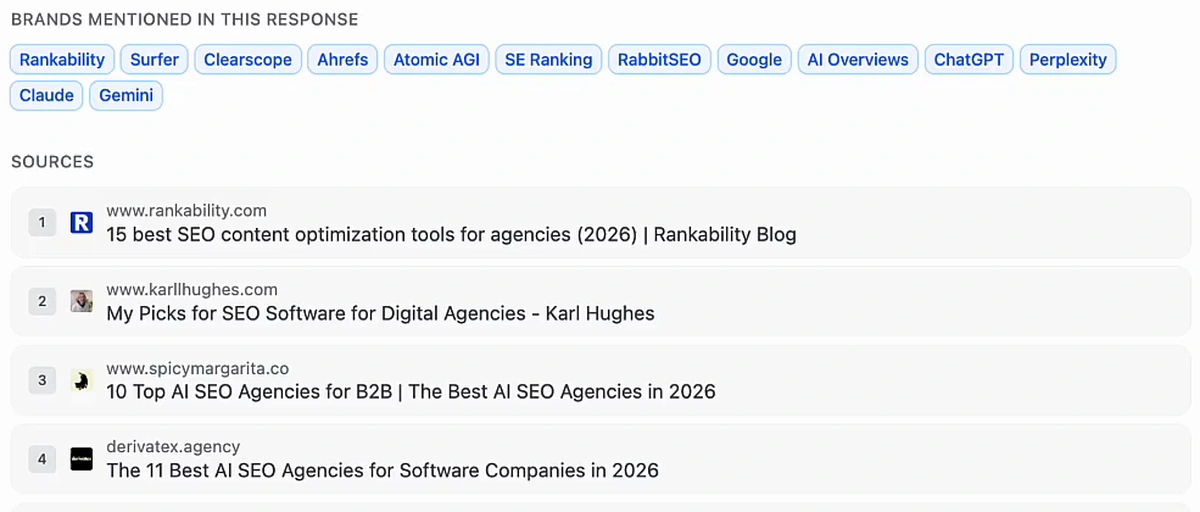
None of those sources is a vendor's own homepage. They are roundups. And the brands in the answer are, overwhelmingly, the brands inside those roundups. Open one and you can see the machinery directly — a comparison table of providers, what each is best for, key features, a score and a price.
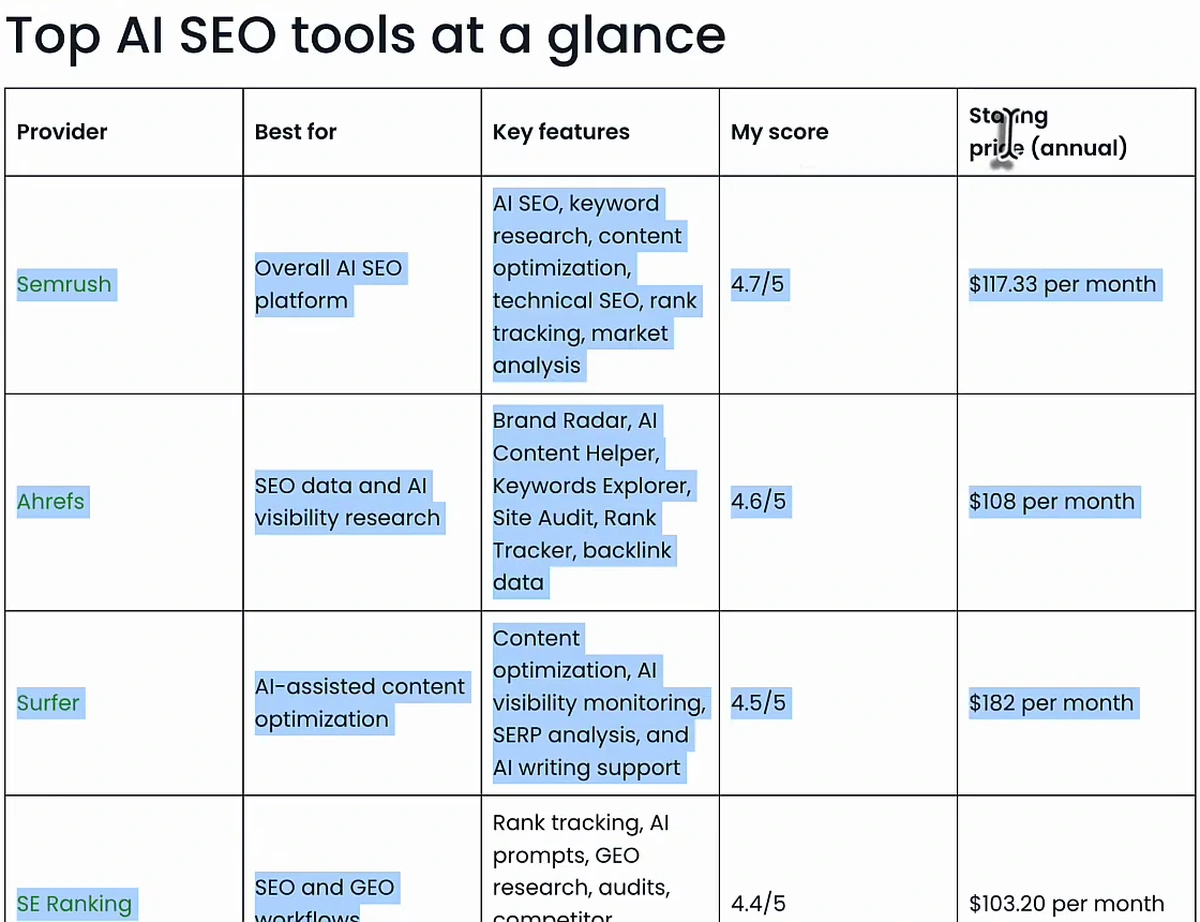
So "how do I show up for this prompt?" becomes two concrete questions, and both have addresses attached:
- Can I get into the sources that already rank? Someone owns that page and can edit it. A listicle that reviews tools and omits yours is an email you can send.
- Can I create a better source? If the cited page is a nine-item roundup from 2026, a more complete and more current one has a real chance of being read instead — and yours can include you.
Both routes are the same shape as classic digital PR, which is why getting cited by ChatGPT and old-fashioned link building keep converging. The video's closing note makes the same point: backlinks still matter, because being on more pages means being in more source sets.
Turning it into a worklist
Once you are thinking in sources, the work becomes a queue: which publishers are being cited for your prompts, and which of them have left you out.
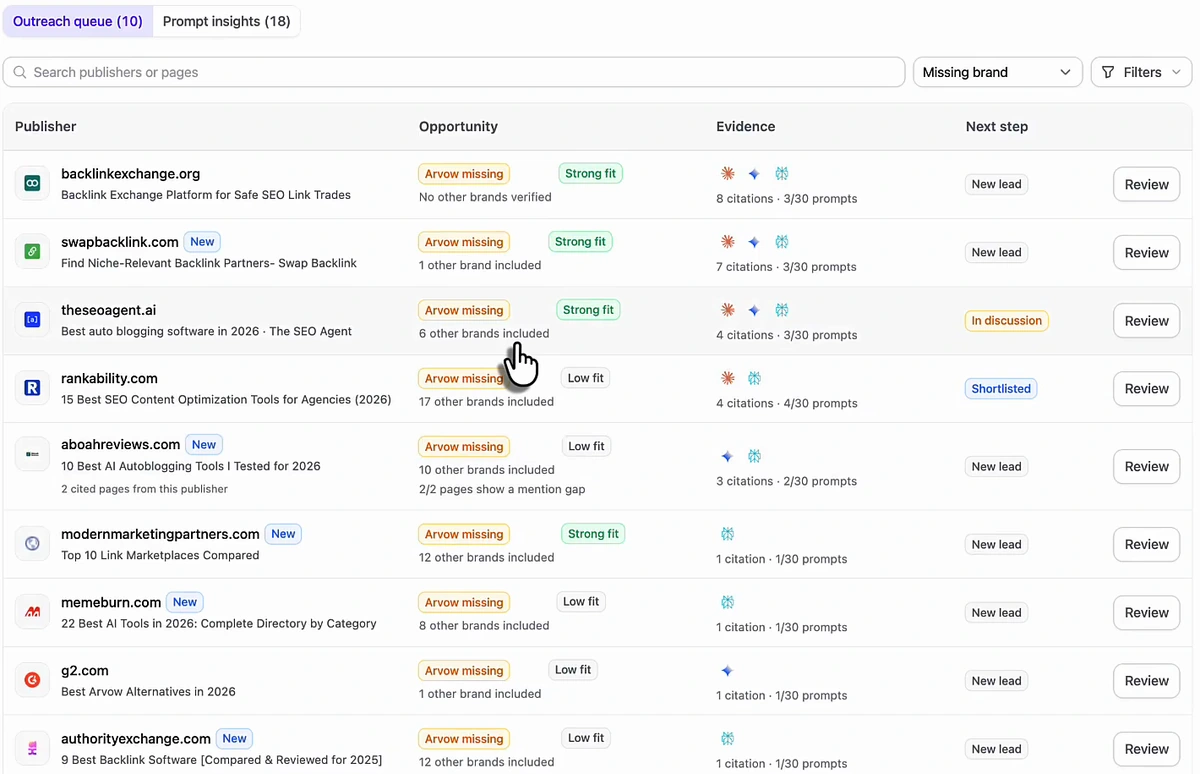
Two columns do the prioritising. Citations tells you how much traffic a source carries inside the answers — a page cited for 4 of your 30 prompts is worth more than one cited for 1. Other brands included tells you how hard the ask is: a roundup that already lists seventeen tools has an obvious slot for an eighteenth; a page with no other brands is a different conversation.
You can build this by hand and the video says so plainly — run your prompts through each assistant, note the brands, open the sources, keep a spreadsheet. It works; it just does not scale past a handful of prompts, which is what tools like Arvow's LLM visibility tracker automate. The presenter discloses the conflict on camera: it is his product, he makes money if you buy it, and you can do the same job manually for free. That is the right framing, and the manual version is a perfectly good place to start.
The other half: what they say about you
Being recommended and being described well are two different problems. The same tracking shows sentiment per prompt, and the video finds at least one engine answering "no" to a direct head-to-head against a competitor — a mention that actively costs a sale. Sources cut both ways: if a page is shaping how models describe you, changing that page changes the description.
That half of the job — measuring sentiment across models and fixing the sources behind a negative one — is covered in how to get mentioned in AI search. If you want the volume side instead, how to increase AI mentions walks through a case study.
What to do this week
- Write down ten prompts a buyer would actually type — specific, with the constraints they would include. Ignore branded ones.
- Run each one through two or three assistants. Note which brands come back and which sources are cited.
- Audit your own pages against the answers. For every reason the model gave a competitor, ask whether the equivalent fact about you exists anywhere on your site in retrievable form.
- Fix the specificity. Services pages that name the service. Case studies with numbers. Product pages with what-it-is / proven-result / why-it-matters for every claim. FAQ answers to the objections that come up on turn two.
- Fix your review replies if you are local. City, service, timeframe, price, anything unusual. From today forward, not retroactively.
- Pick three cited sources that left you out and contact them — then plan one source of your own that beats the weakest of them.
None of this is a trick, and none of it is new in kind: it is the same work as making yourself easy to understand, done for a reader that cannot ask you a clarifying question. The broader picture — content, technical work and links together — is in our guide to AI SEO.
Arvow's LLM visibility tracker runs the loop in this article on a schedule: your prompts across ChatGPT, Claude, Gemini, Perplexity and AI Overviews, the brands and sources behind each answer, and a queue of the publishers that cited a source but left you out.
Generate, publish, syndicate and update articles automatically
The AI SEO Writer that Auto-Publishes to your Blog
- Cancel anytime
- Articles in 30 secs
- Plagiarism Free