
Self-Promotional Listicles: ChatGPT Now Warns Buyers About Vendor-Written "Best Tools" Lists (2026)

In one week in October 2026, three things happened to self-promotional listicles, the "best X tools" pages where a vendor ranks its own product first. ChatGPT started appending a caveat to answers built on them. A study of 18,084 software questions measured how much of AI search runs on them. And DeepSeek shipped a search engine that says it filters "GEO manipulation".
I run Arvow, and we have those pages. Our best SEO software for agencies list puts Arvow first, and it is one of the reasons ChatGPT names us. So this is not about other people's tactics. It is what changed, what I tested live, and what I am keeping.
What the warning label actually says
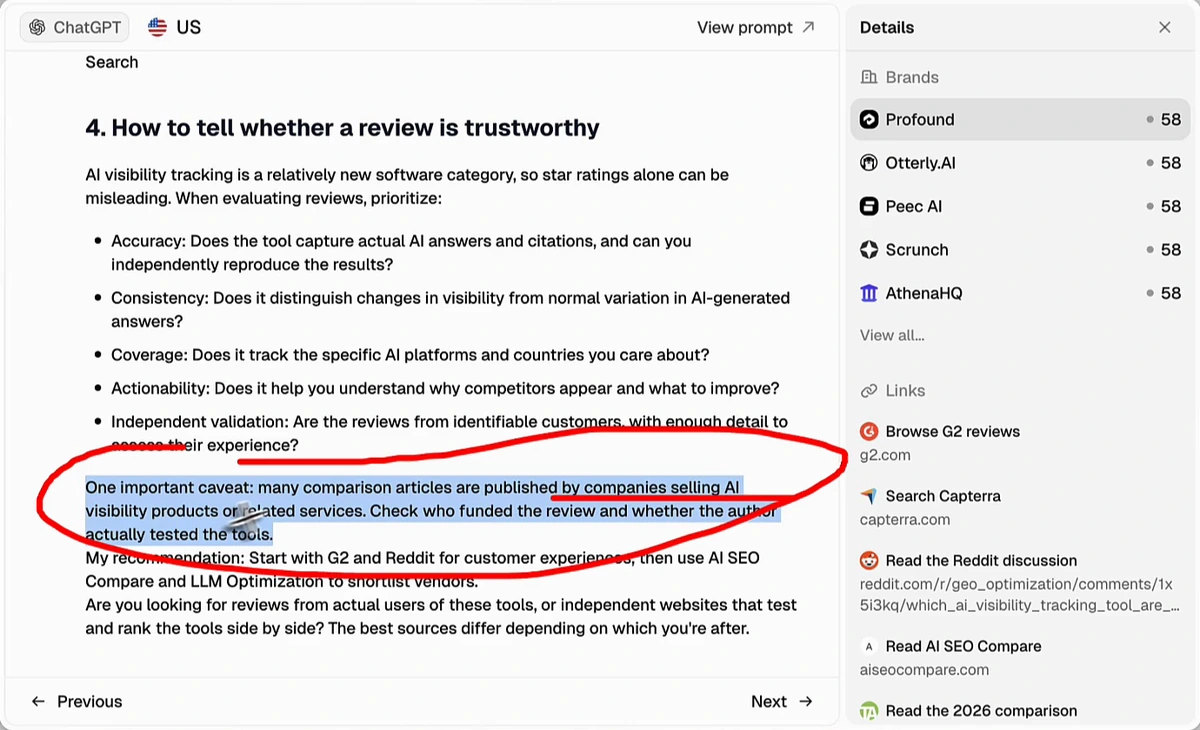
The screenshot that started this was posted by Lily Ray on October 18, 2026, credited to Peec AI's prompt tracking: a ChatGPT answer about AI visibility tools. After a section headed "How to tell whether a review is trustworthy", the answer adds: "One important caveat: many comparison articles are published by companies selling AI visibility products or related services. Check who funded the review and whether the author actually tested the tools."
Lily Ray followed up the next day with numbers from her own tracking: of roughly 700 ChatGPT answers to B2B software prompts, 82 included some kind of disclaimer in the past week, and 19 specifically warned users about who writes the rankings and reviews ChatGPT draws on. The things ChatGPT now cautions about describe the whole category: vendors ranking themselves in their own comparison pages, publishers affiliated with a brand they review, sponsored placements, affiliate-driven recommendations.
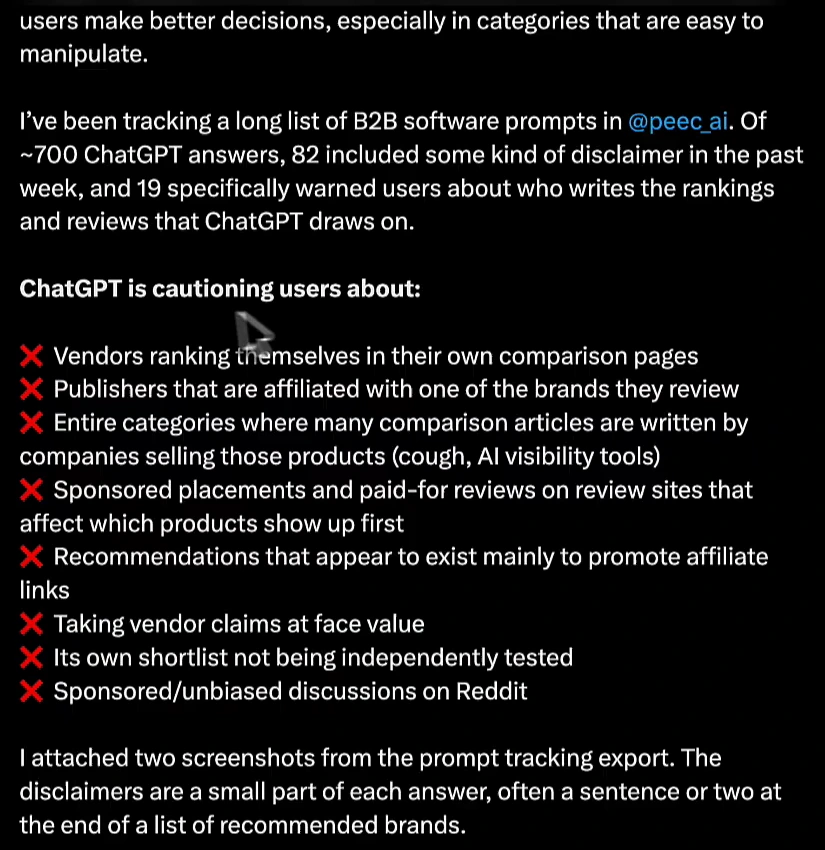
Her conclusion, which I share, is that the disclaimers are a temporary bandaid while the AI companies work out better ways to surface objective answers. The note I wrote for the video says the same thing from the vendor's side:
If you have a "best X tools" page where you rank yourself number one, ChatGPT has started telling your buyers not to trust it. Here's the problem: you'd never know, because it's one sentence at the end of the answer. Is it a big problem? Not really, for now. But it's a starting point showing these tools are starting to judge who wrote the sources they cite.
I ran the prompt live: what ChatGPT cites for "best AI SEO tool for agencies"
I asked ChatGPT "what's the best AI SEO tool for agencies?" on camera. The answer: "For SEO agencies in 2026, my top picks are Semrush, Arvow, and SE Ranking", with Arvow as "best for automating SEO delivery", Semrush as the research platform at $199/month, and SE Ranking for budget-conscious agencies. That answer carried no caveat; it ended with a question back to me.
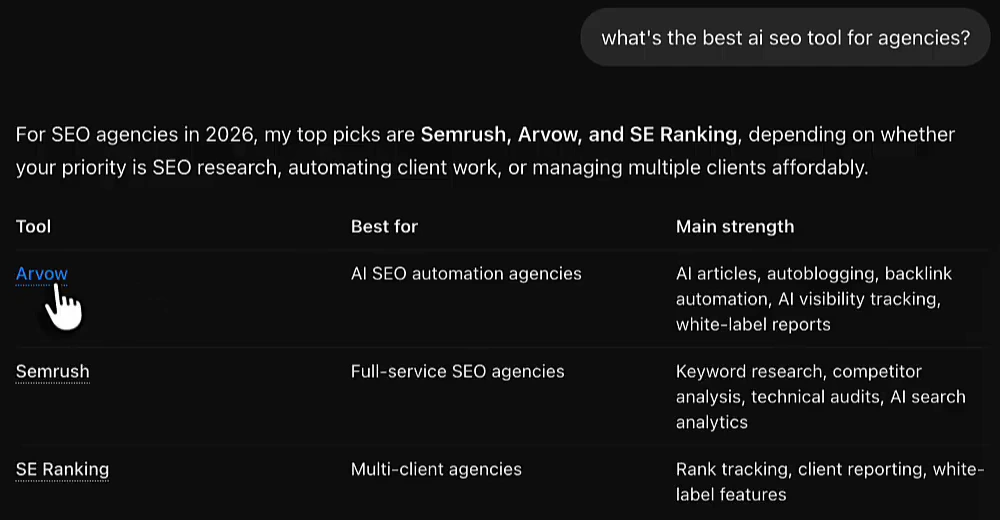
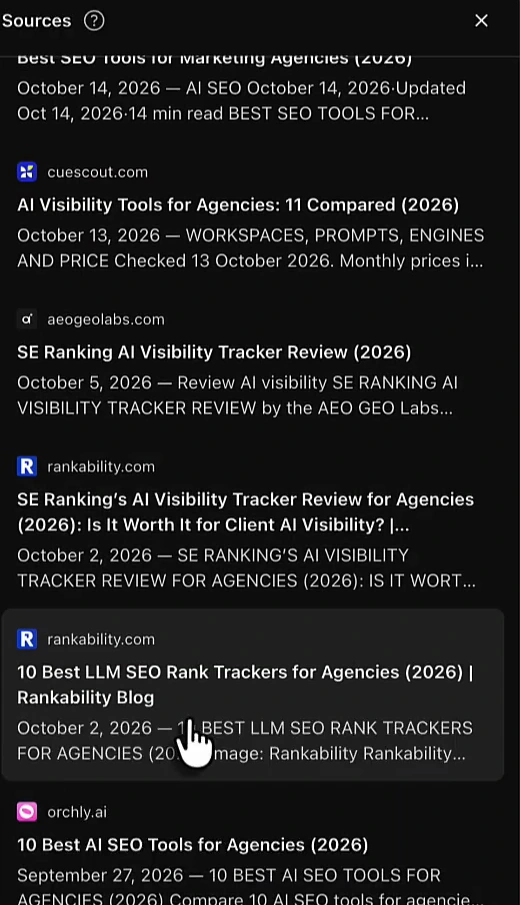
Then I opened the sources panel. The pages behind that answer are almost all lists published by companies that sell what the prompt asks for: a CueScout comparison of 11 AI visibility tools, an SE Ranking review on AEO GEO Labs, two Rankability pages, Orchly's "10 Best AI SEO Tools for Agencies", our own homepage and Semrush's pricing page. TechnologyAdvice is the one trade publication.
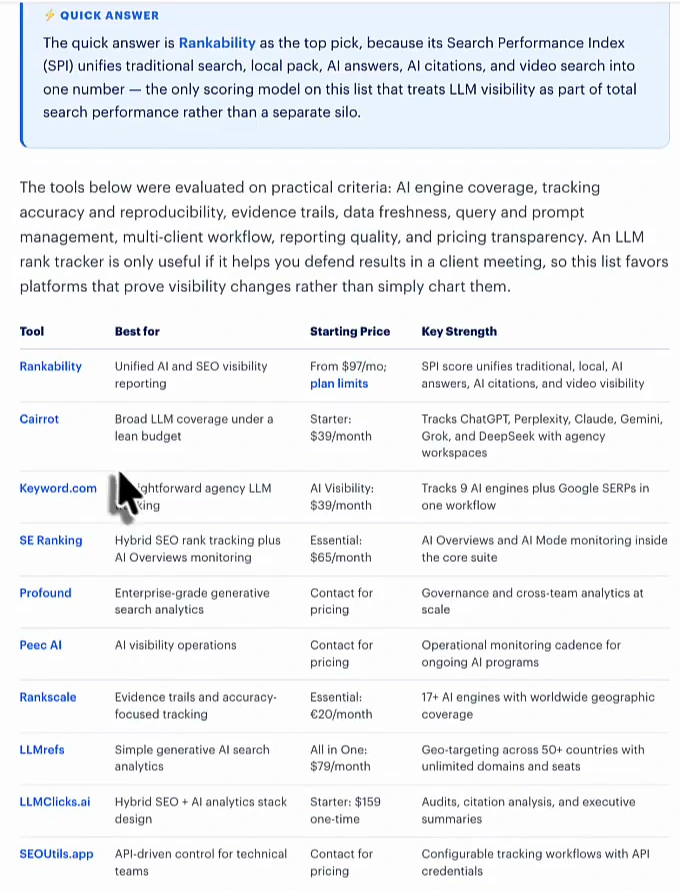
Rankability's list opens with "The quick answer is Rankability as the top pick" and puts itself first in the table, from $97 a month. Orchly's opens with Orchly at $125 a month. That is the pattern the study below measures.
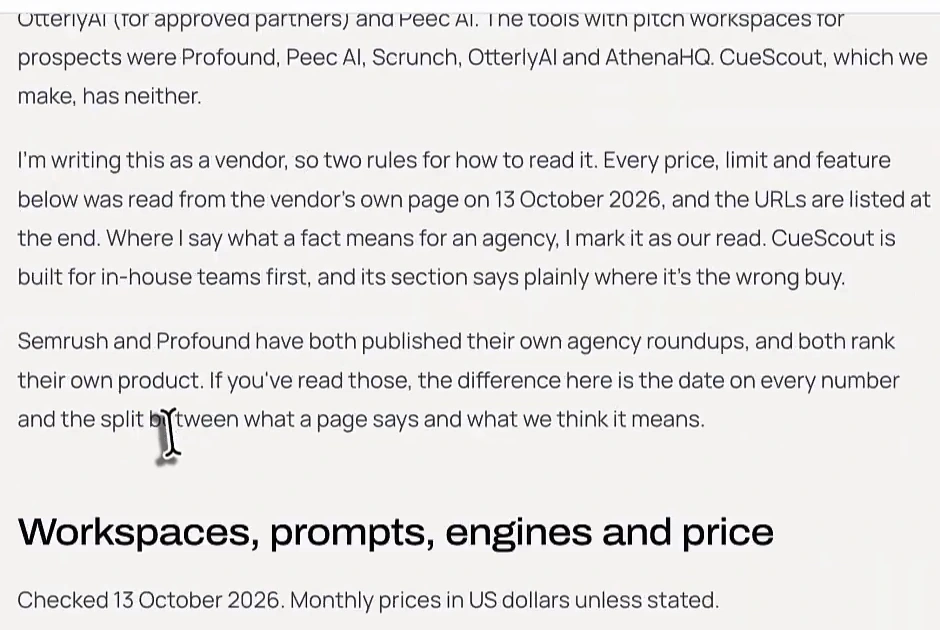
Two of the cited pages show what disclosure looks like. CueScout's comparison says in its second paragraph: "I'm writing this as a vendor, so two rules for how to read it," dates every price to October 13, 2026, and says where its own product is the wrong buy. It also notes that Semrush and Profound have both published agency roundups ranking their own product.
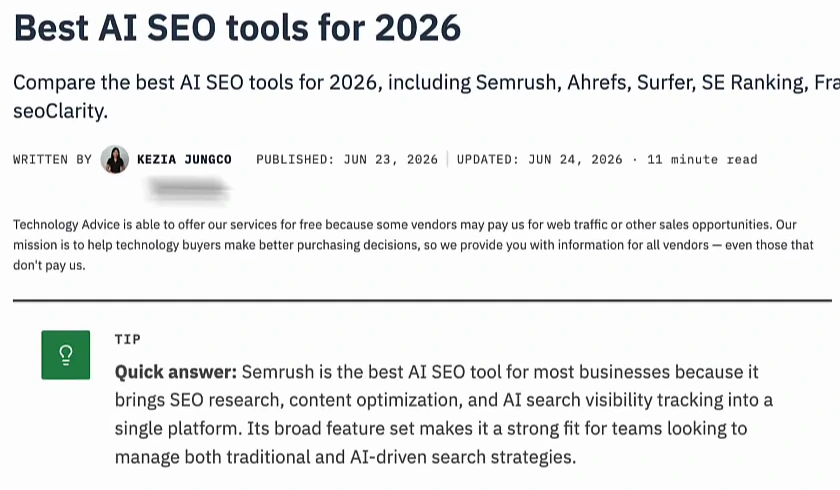
TechnologyAdvice's "Best AI SEO tools for 2026" is the journalist version: a named author, a June 2026 date, a disclosure that vendors may pay the site for traffic, and Semrush as the quick answer. Arvow is not on it; I searched the page on camera and got zero matches. Nothing stops me from contacting that publisher and paying to be the seventh option, which is the uncomfortable point of this whole topic: the independent-looking list is also for sale, it just gets labelled.
The study: 34% to 47% of cited listicles are the vendor's own
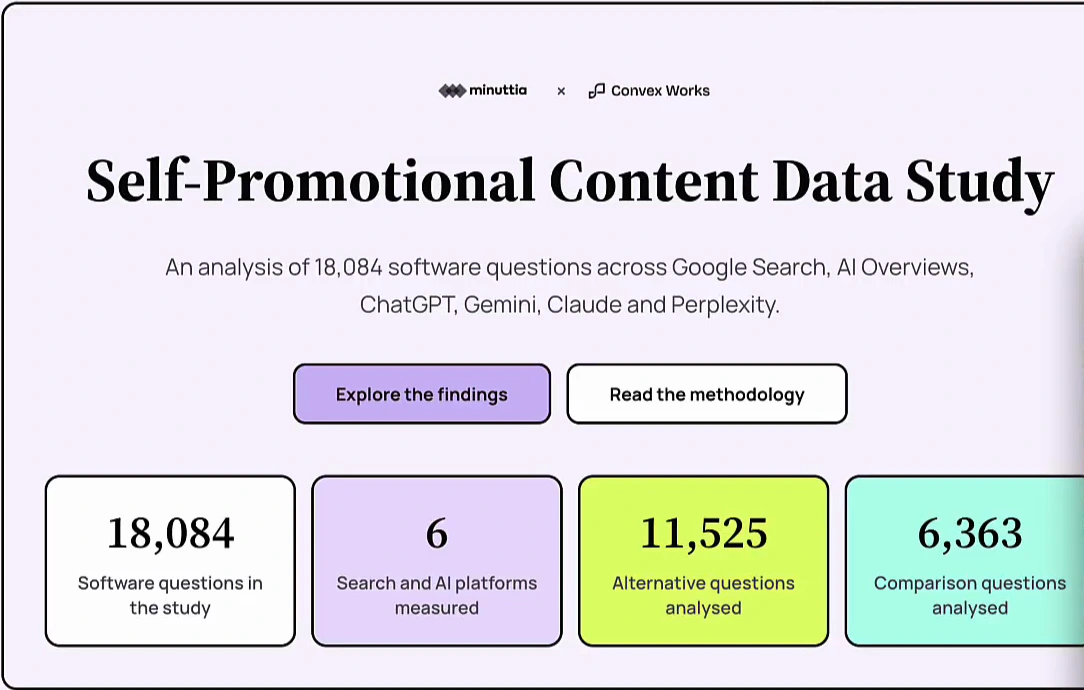
The data behind the week is the Self-Promotional Content Data Study by Minuttia and Convex Works: 18,084 software questions asked across Google Search, AI Overviews, ChatGPT, Gemini, Claude and Perplexity, split into 11,525 "alternatives to X" questions, 6,363 "X vs Y" comparisons and 196 "best tools for" questions. The ChatGPT data was collected in August 2026, with the comparisons re-run in October. Its definition is the useful part: "A self-promotional listicle is a software vendor's list of the best tools in its own category that includes its own product."
| Platform | Share of cited listicles that are self-promotional |
|---|---|
| Google Search | 47% |
| Gemini | 47% |
| Perplexity | 43% |
| AI Overviews | 43% |
| Claude | 36% |
| ChatGPT | 34% |
Across all categories the share is 43%, ranging from 12% to 76% by software category, and higher on comparison questions, 56% to 65%. Of the self-promotional lists checked, 93% highlight the vendor's own product, 87% list it first, and 16% disclose that the vendor wrote the page. The top 20 of 9,091 vendors hold 6% of these citations. The study calls its shares a floor, because pages it could not read were counted as not self-promotional.
Two things to keep in mind when you quote it. ChatGPT is the lowest of the six, consistent with it being the first to add caveats. And the denominator is "cited listicles", not all citations; Peec AI's own analysis of 232,000 citations in the software-review niche put self-promotional listicles at roughly one citation in ten. Our GEO statistics report collects the other published studies on where AI answers get their sources.
DeepSeek says it filters "GEO manipulation"
On October 17, 2026, DeepSeek's API changelog announced that its in-house search engine, which powers its web and API search, is open to developers. One sentence in that entry is why SEOs shared it: "It filters SEO spam, GEO manipulation, and low-quality AIGC through strict detection mechanisms, ensuring authoritative and trustworthy information for users and LLMs."
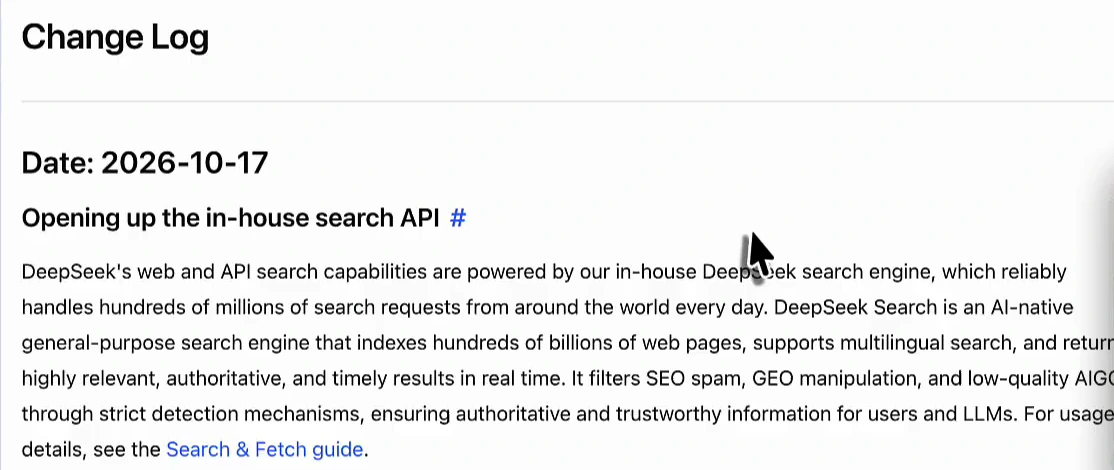
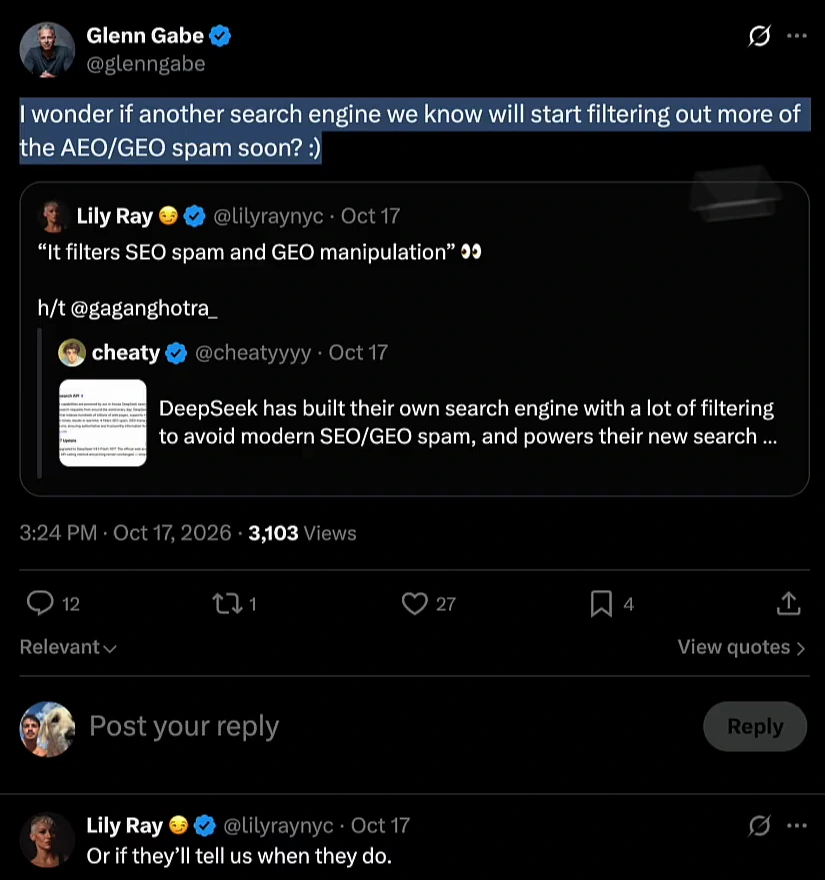
That is the entire public description; DeepSeek has not said what counts as GEO manipulation or how the detection works. Glenn Gabe wondered "if another search engine we know will start filtering out more of the AEO/GEO spam soon", and Lily Ray replied "Or if they'll tell us when they do." Google has fought manipulation for twenty years and people still rank by building links and content, so I would not expect a filter to end anything. I would expect it to raise the cost of the lazy version.
Will this kill listicle SEO?
Not now. A caveat at the end of an answer, after the brand names, is not something most buyers read; they scan the three picks and click. What has changed is the direction: the models have started judging who wrote the source, and that signal tends to get stronger. Strategies stop working when everyone does them, and 87% of vendors is everyone.
I am not deleting our lists. The version that survives is the one the caveat describes as trustworthy: tested tools, real pros and cons, dated pricing, and a page that says who wrote it. Our agency list has no disclosure line today, which puts it with the 84%. I would rather be in the 16%. If you draft comparison pages with our AI listicle generator, the testing and the disclosure are still your job, and they are now what keeps the page citable.
The strategy that still works: get into the pages AI already cites
What I do not expect to change is what I called citation injection in the video. For any prompt you want to be mentioned for, the AI answer is built from a handful of third-party pages. If your competitors are in those pages and you are not, you lose the mention. The fix is to get onto those pages: a backlink, applied to AI answers. The outreach half is in our how to rank #1 on Google and AI search guide; here is the finding half.
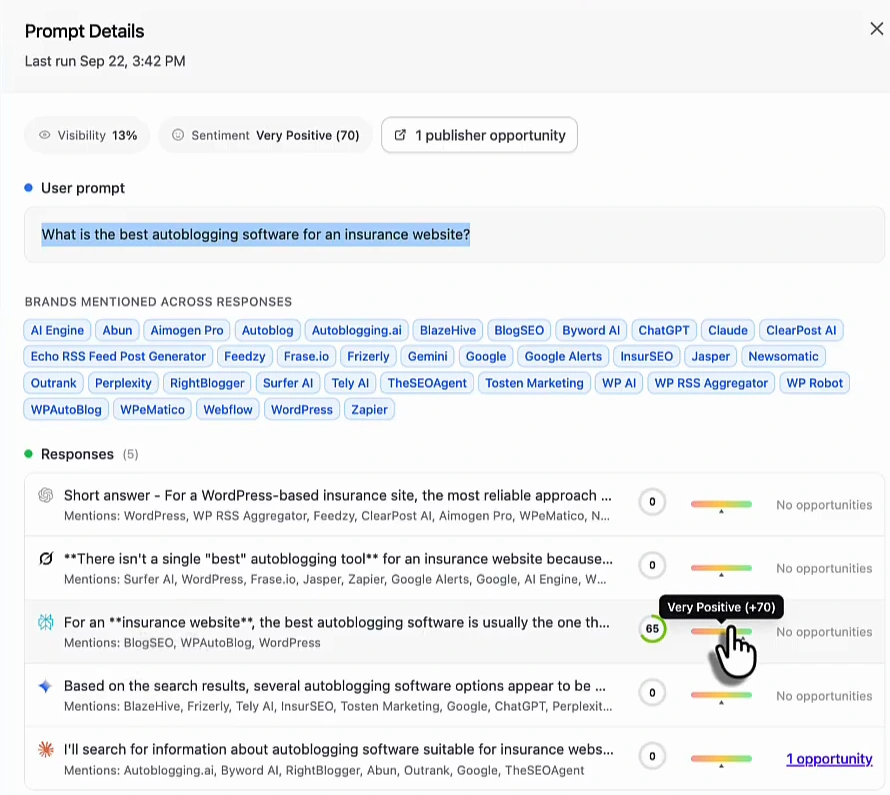
Arvow's own LLM brand monitor tracks 30 prompts. In the run shown, last executed September 22, 2026, Arvow was visible in 36% of responses across all models, with a +25 sentiment score. The useful column is "Publisher opportunities": the cited pages that do not mention us yet.
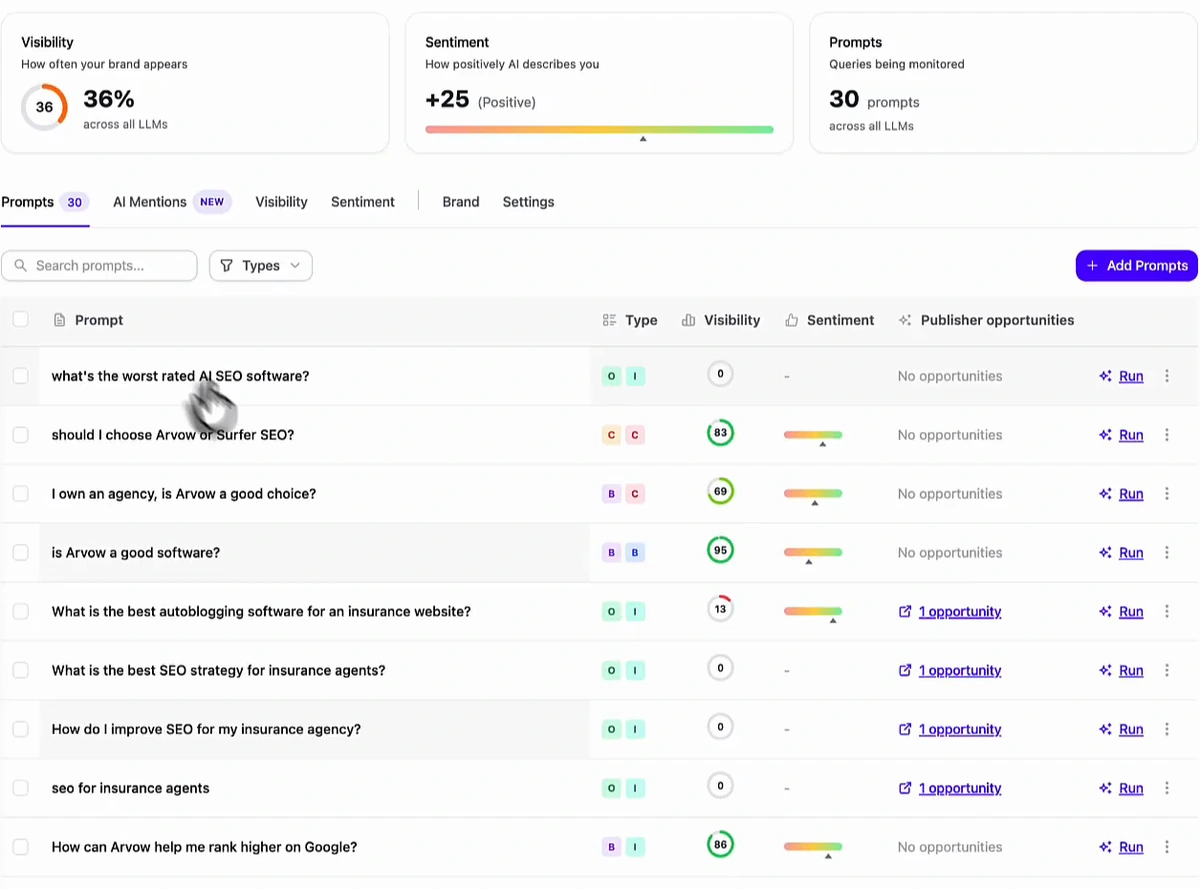
Take "What is the best autoblogging software for an insurance website?". Arvow is mentioned in one of the five model responses, for 13% visibility, with one publisher opportunity flagged. Open the ChatGPT response, where we are at 0%, and the sources are a WordPress plugin page, a copyright.gov page, a Themeisle plugin comparison, WPBay's "Best WordPress Autoblogging Plugins in 2026", Aboah Reviews' "13 Best WordPress Autoblogging Plugins" and a Wikipedia entry.
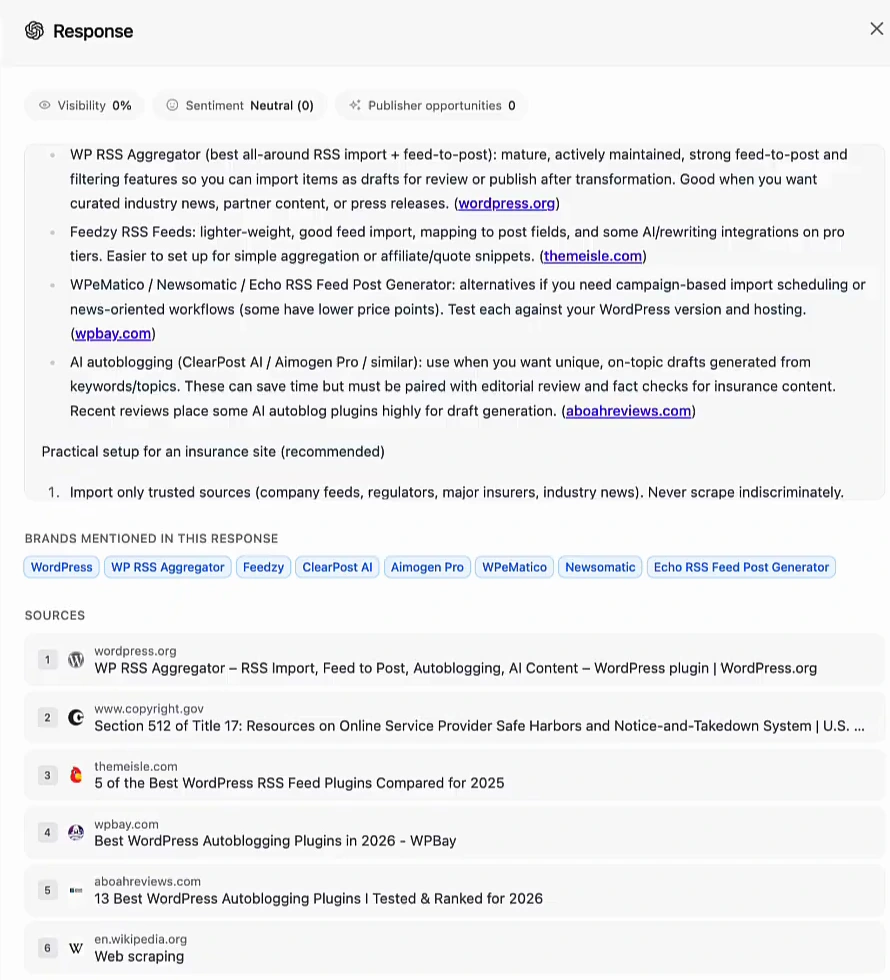
Two of those six are "best plugins" lists. Nothing stops me from asking their publishers what it costs to be the fourth option, or offering a mention on one of our pages for one on theirs. We do this, and it works. The caveats are the same as for links: if you pay, the publisher should label it, and an exchange should be a genuine, relevant mention. The warning label does not touch this, because the page citing you is a third party, which is what ChatGPT now tells buyers to prefer. See how to increase AI mentions and brand mentions are the new backlinks.
Use the same tracking for reputation
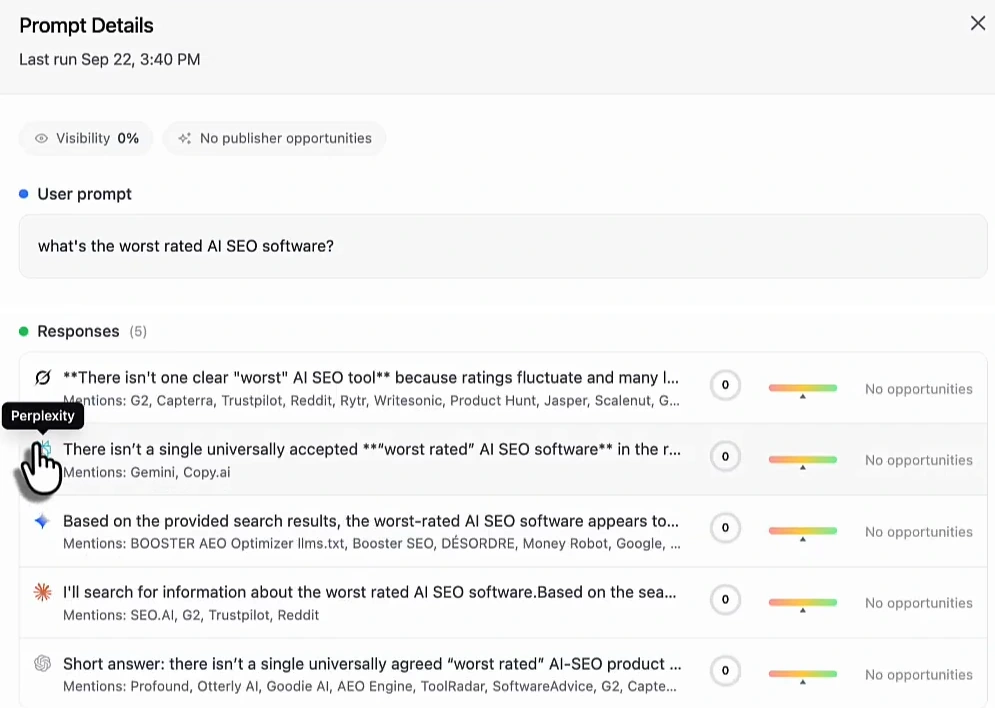
The monitor runs in both directions. One of our tracked prompts is "what's the worst rated AI SEO software?". Arvow's visibility for it is 0%, and all five responses open with some version of "there isn't one clear worst". That is the result I want, and I want to know the day it changes, because then there is a source to find and a publisher to talk to.
Add a competitor's URL to a monitor and you get the lists they are on and you are not. An LLM visibility tracker makes this a monthly check instead of re-asking every prompt on every model by hand.
Want the prompts, the publisher opportunities and the sentiment tracked for you, with the outreach list ready? See Arvow's LLM visibility tracker.
What I am changing on our own pages
- Keep the lists, fix the page. Tested, pros and cons for every tool including ours, dated pricing, a named author.
- Add a disclosure line. One sentence saying Arvow makes one of the tools on the list. It is the exact thing the caveat tells buyers to check.
- Shift effort to third-party lists. The pages the models cite for our prompts, found through the monitor, then outreach, paid and labelled where needed.
- Track monthly. Which prompts we appear for, which sources changed, and whether the caveat reaches our prompts. The AI search mentions guide covers the starting prompt set.
FAQ
What is a self-promotional listicle?
A vendor's list of the best tools in its own category that includes its own product, usually ranked first. The Minuttia study found 87% list the vendor first and 16% disclose who wrote the page.
Does ChatGPT penalise vendor-written comparison pages?
Not by dropping them. In the examples shown, ChatGPT still cites them and names the vendors; it adds a sentence telling the reader to check who funded the review and whether the author tested the tools. My live test in October 2026 returned no caveat at all.
Should I delete my "best tools" page?
No. Make it the page the caveat describes as trustworthy: real testing, pros and cons, dated prices, a disclosure. Then spend the saved effort getting onto the third-party lists AI answers already cite, which no warning label affects.
Generate, publish, syndicate and update articles automatically
The AI SEO Writer that Auto-Publishes to your Blog
- Cancel anytime
- Articles in 30 secs
- Plagiarism Free