
How to Rank #1 on Google and AI Search in 2026: 3 Leverage Plays


Nobody can guarantee you the number one spot on Google. What you can do is stack the odds, and the most reliable way to do that is to do something your competitors aren't doing. Search is a competition for a fixed number of positions: for one page to rank first, every other page has to rank lower. If you're using the same tactics as everyone else, you're splitting attention with all of them.
That's the idea behind this video from Vasco, recorded in early October 2026. He calls it leverage, and he applies it to three areas that move rankings on Google and mentions in AI search: content, backlinks and AI citations. This article walks through all three, with the screenshots from the video and a few things we checked ourselves.
The short version
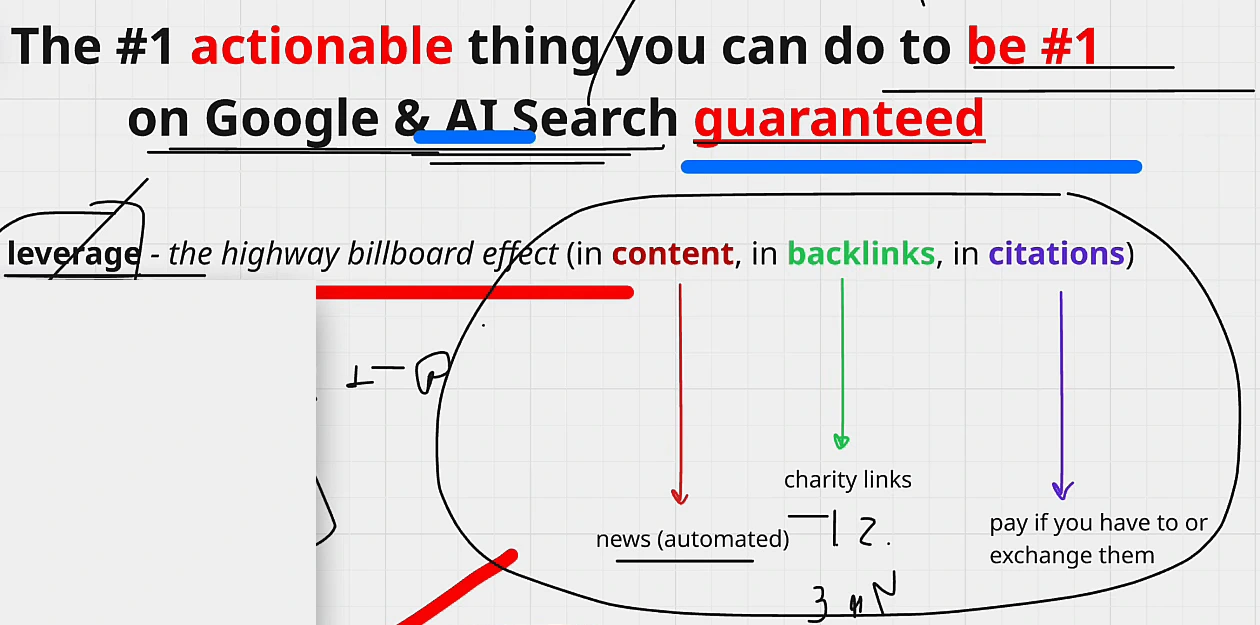
To rank first on Google and get mentioned in AI search, find the tactics that work in your niche and that few of your competitors use, then commit to them before they catch on. In the video, those are:
- Content: an automated news section about your niche, published daily.
- Backlinks: charity links, from nonprofits in your niche that list their supporters.
- AI citations: getting your brand into the pages AI answers already cite, by paying for a placement or exchanging a mention.
None of these is a secret, and none of them is a button. That's the point: they take work, so most of your competitors won't do them.
Why "guaranteed" really means leverage
Vasco explains leverage with what he calls the highway billboard effect. Picture a busy highway with one billboard on it. Plenty of drivers look at it, and a small share of them become customers. Then a competitor notices and puts up a second billboard next to yours. Now attention is split. Once every business in the category has a billboard on that stretch of road, drivers stop looking at any of them.
Every marketing channel goes through that cycle, and SEO is no exception. Direct mail worked until mailboxes filled up. Cold email worked until inboxes needed spam folders. A ranking tactic works best while few sites use it, and stops being an edge once everyone does. As he puts it, for him to rank first, you have to rank second.
So the honest version of "guaranteed" is this: if you do something that gives you an edge your competitors don't have, you raise your chances of ranking above them. It's a probability, not a promise. Vasco is open that these three tactics will stop working as an edge once enough people copy them. His bet is that most viewers won't follow through, so they'll keep working for the people who do.
If you're wondering how long any of this takes to show up in rankings, our guide on how long it takes to rank first on Google covers realistic timelines.
1. Content: run an automated news section for your niche
Most businesses publish the same kind of blog content as their competitors: how-to guides, listicles, product comparisons. A news section is different, and very few small and mid-sized sites run one.
The example in the video is Teslarati, which publishes a steady stream of Tesla and electric-vehicle news on the same site where it sells Tesla accessories.
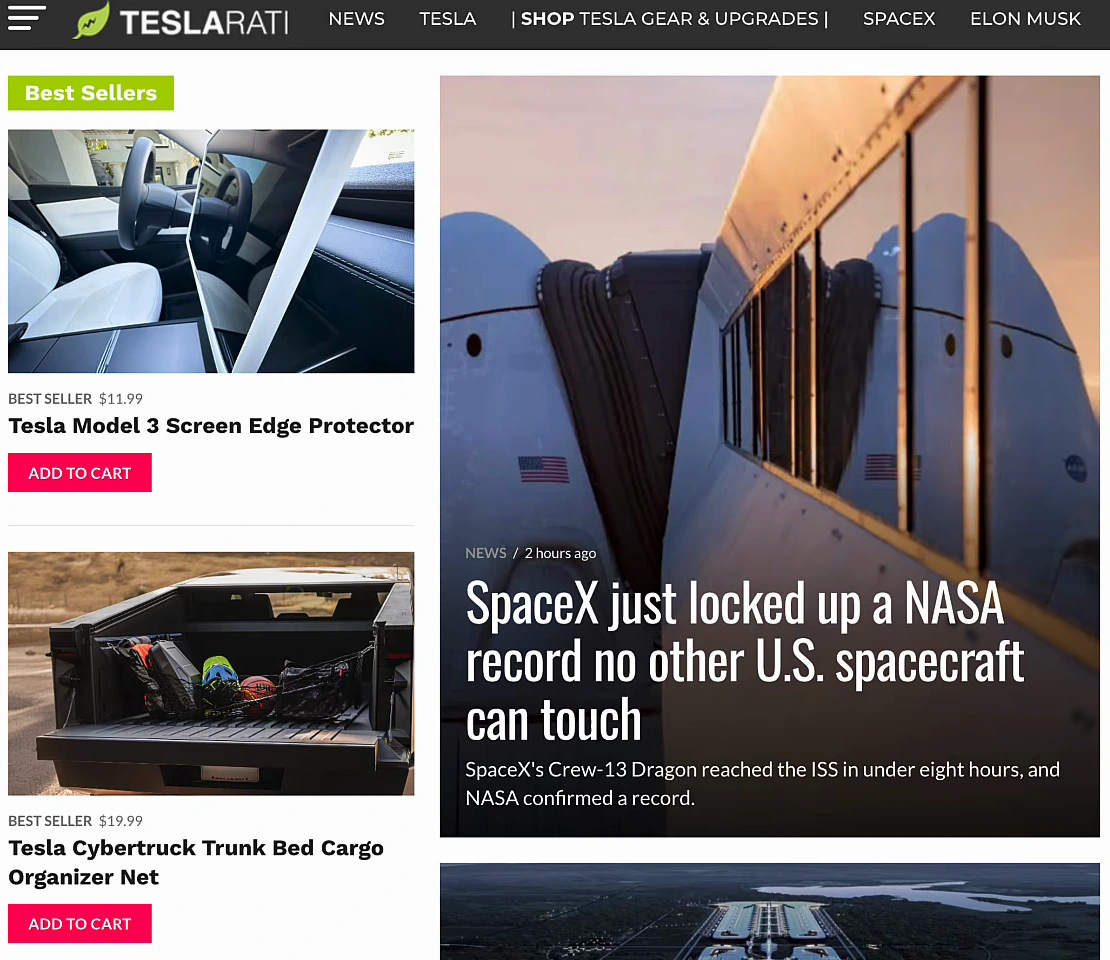
The logic is simple. People who read Tesla news mostly own a Tesla, want one, or know someone who does. Those are exactly the people who buy screen protectors and trunk organisers. The news attracts them; the shop sits one click away. You're not fighting for the same "best Tesla accessories" keywords as every other store; you're bringing in your ideal customers through a door most competitors haven't opened.
It works outside e-commerce too. Search Engine Land, which Vasco shows next, is an SEO news site; as he points out, publishers like it sell courses, software and services to the same people reading the news. A Pokémon memorabilia store could run Pokémon news. A Google Ads agency could cover changes to ad platforms, such as ChatGPT introducing ads, and point readers to its services. News pages can also surface in Google News and get shared on social media, which brings in more of the same audience.
How to automate it
Writing daily news by hand isn't realistic for most businesses, which is part of why so few do it. In the video, Vasco sets it up with Arvow's AutoBlog: connect your site under Destinations, add a recurring article, choose the news template, enter your niche and preview the stories it finds.
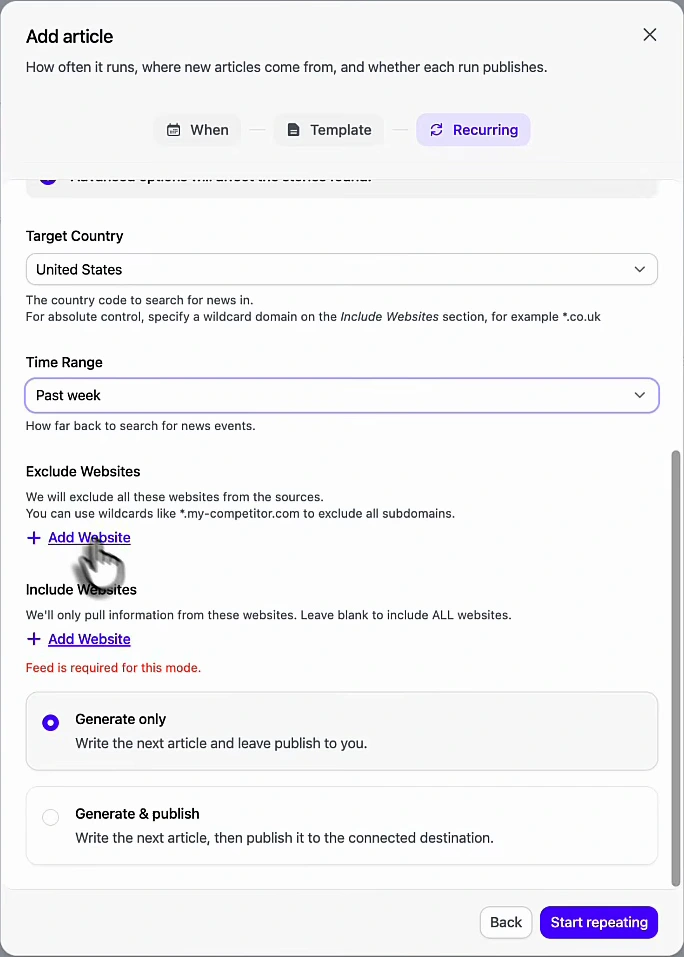
The settings that matter most:
- Target country and time range decide which news it looks for. "Past week" keeps it current.
- Exclude websites lets you keep competitors out of the sources, with wildcards such as *.my-competitor.com.
- Generate only vs generate and publish. Start with "generate only" so you can review the first batch before letting it publish on its own.
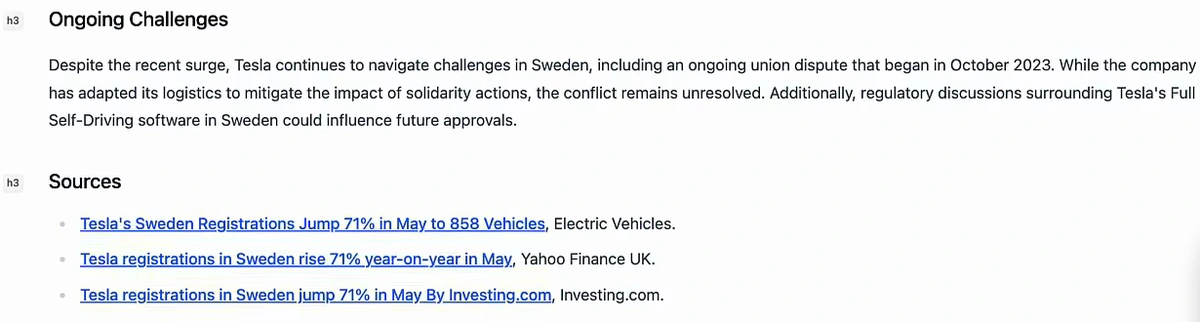
Each run reads coverage of the story from several outlets, writes its own article and lists the sources at the bottom.
Vasco says his team runs this for three clients in three different niches, and that it's working well for them. He doesn't show their numbers in this video, so treat that as his account rather than a case study. He also points out that the gap is even wider outside English: you can run the same news section in Spanish, Portuguese, Italian or Thai, where almost nobody is doing it.
Any tool that researches, writes and publishes news on a schedule will do the job. For a step-by-step setup, see how to add an automated news section to your website, and for why it builds authority in your niche, how a niche news blog builds topical authority.
2. Backlinks: charity links from nonprofits in your niche
Links still move Google rankings, but most link types give you no edge because everyone can buy them. Vasco mentions that PBN links can give leverage precisely because most people are afraid of them. We don't recommend them: a private blog network is a link scheme under Google's rules, and a penalty costs far more than the edge is worth. The tactic he actually recommends here is white hat: charity links.
Many nonprofits thank their donors and corporate supporters on a page of their site, often with a link to each supporter. If you support a nonprofit in your niche, you may get listed. Vasco gives three reasons it's worth doing: it does some good, it's often tax-deductible, and the link comes from a real, niche-relevant site.
How to find them
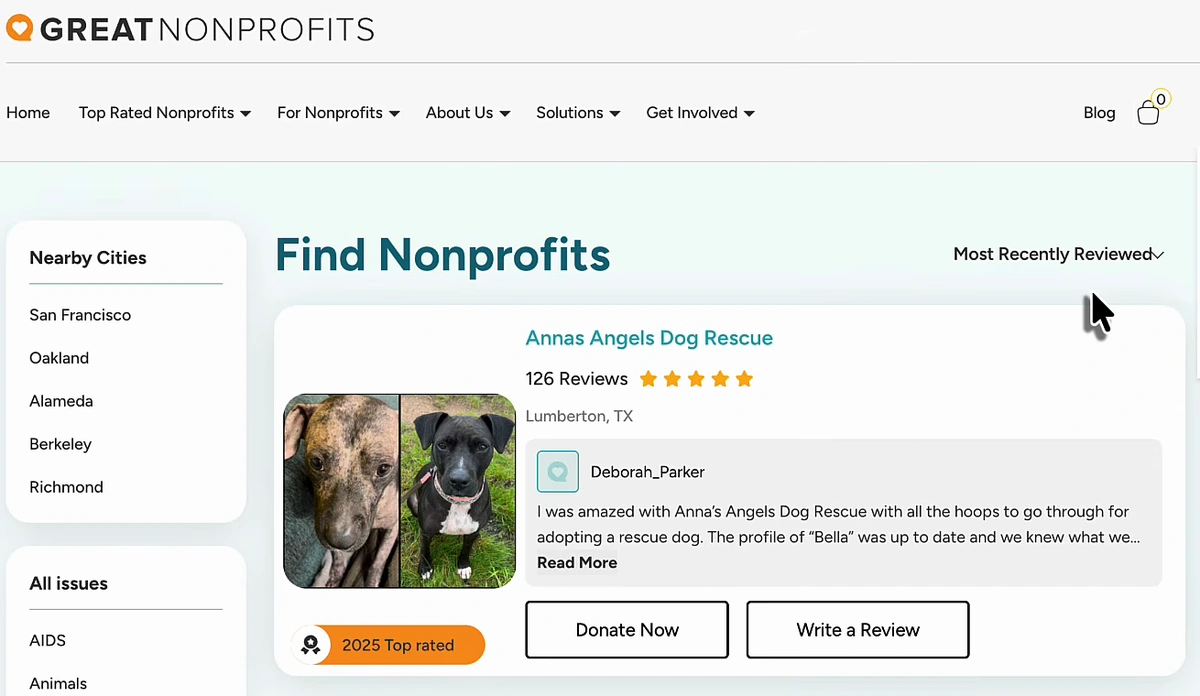
- Go to a nonprofit directory such as GreatNonprofits and search for your niche. Vasco uses "dog", as if he ran a vet clinic or sold dog toys.
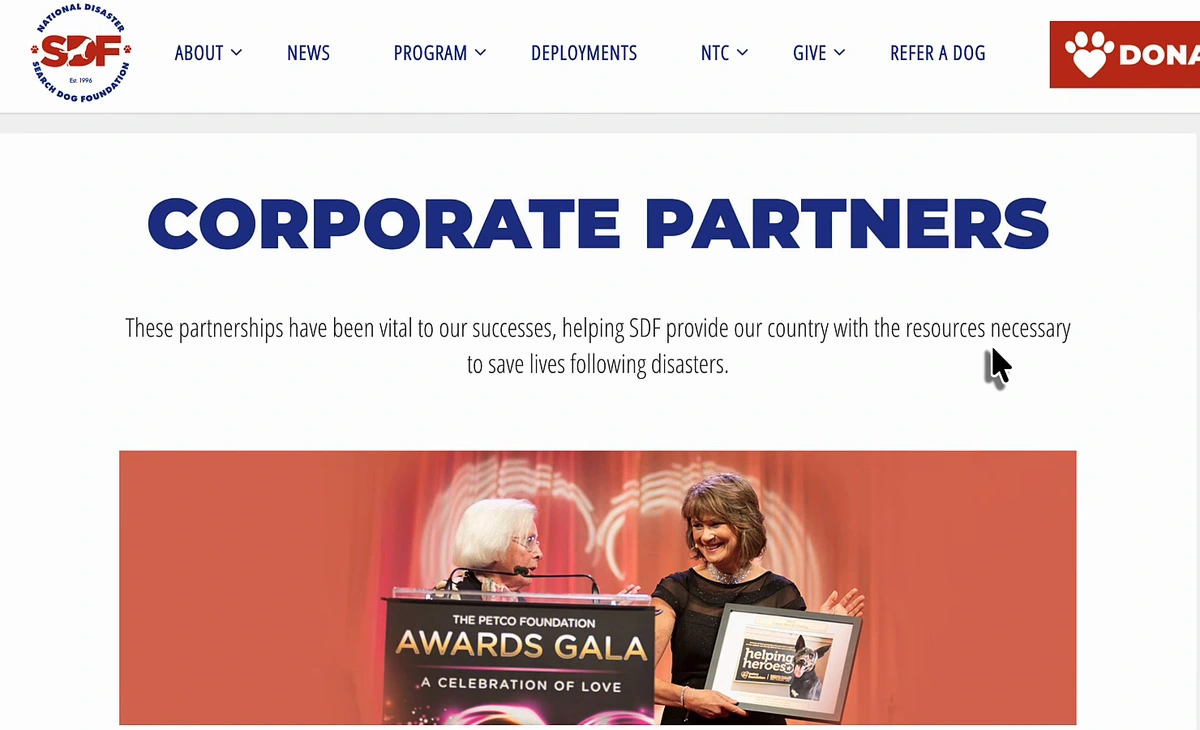
- Open the nonprofits' websites and look for a page listing supporters: "Donors", "Supporters", "Corporate partners" or "Sponsors".
- Check that the page actually links out to its supporters, and what it takes to get listed.
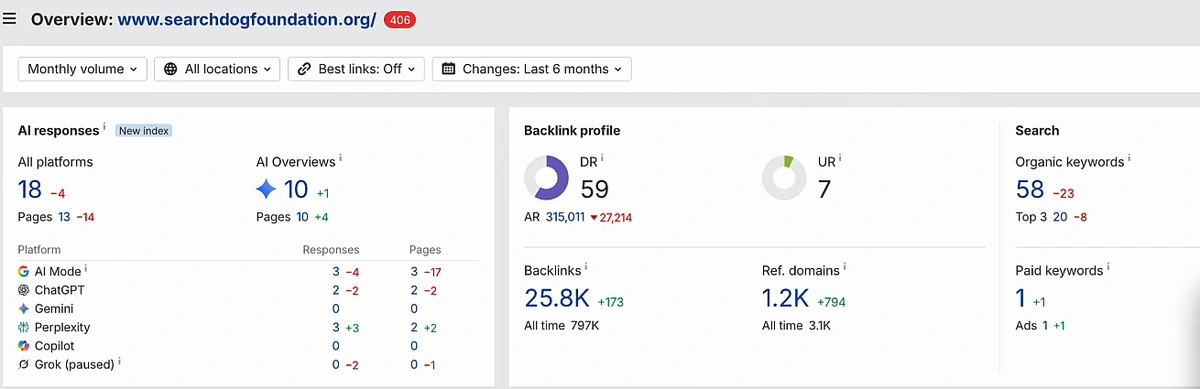
- Check the site's authority and traffic in a tool such as Ahrefs before you give.
What we checked before recommending it
The tactic is sound, but the example needs some context, and Vasco says himself that he's working "off the cuff" here.
- Not every supporter page lists every donor. When we looked on 7 October 2026, the example's Corporate Partners page linked out to just three partners, among them Petco Love and the Rachael Ray Foundation. Those are major partnerships, not small donations. Vasco floats "$50 for a DR 59 link" and then says he has no idea whether a $50 donor would be listed; it may take $500 or more. Find out before you give, and look for nonprofits that list supporters by tier.
- Domain Rating isn't traffic. The domain is DR 59, but the screenshot shows about 625 organic visits a month estimated by Ahrefs, and the partners page itself would carry far less authority than the homepage. That's still a relevant, real-world link; just judge it on more than one number.
- Treat it as support first. Google's spam policies count exchanging money for links as a link scheme when the aim is to manipulate rankings. Give to causes you'd support anyway, don't ask for a particular kind of link, and accept the listing as the nonprofit chooses to give it.
For more ways to find links like these at scale, see how to build backlinks with Claude, and for what a good link looks like in practice, our backlink examples.
3. AI citations: get into the pages AI answers already use
The third area is AI search. When ChatGPT, Perplexity or Google's AI Mode answers a question, it reads a handful of web pages and summarises them. If your competitors are named in those pages and you aren't, they get mentioned and you don't.
Vasco shows this with a prompt Arvow wants to be mentioned for, "backlink exchange saas", tracked in Arvow's LLM brand monitor.
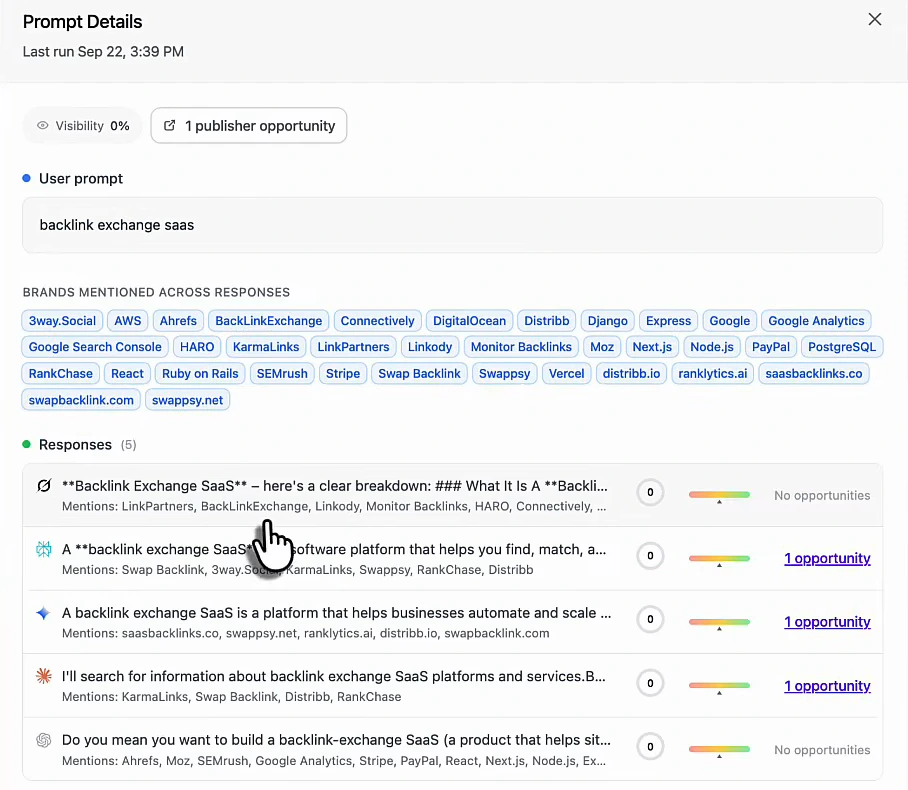
Arvow's visibility for that prompt is 0%, even though Arvow has a feature that does exactly that. Other brands are named because they appear in the pages the AI models read. Vasco's fix: find those pages and get your brand onto them.
Pay if you have to, or exchange
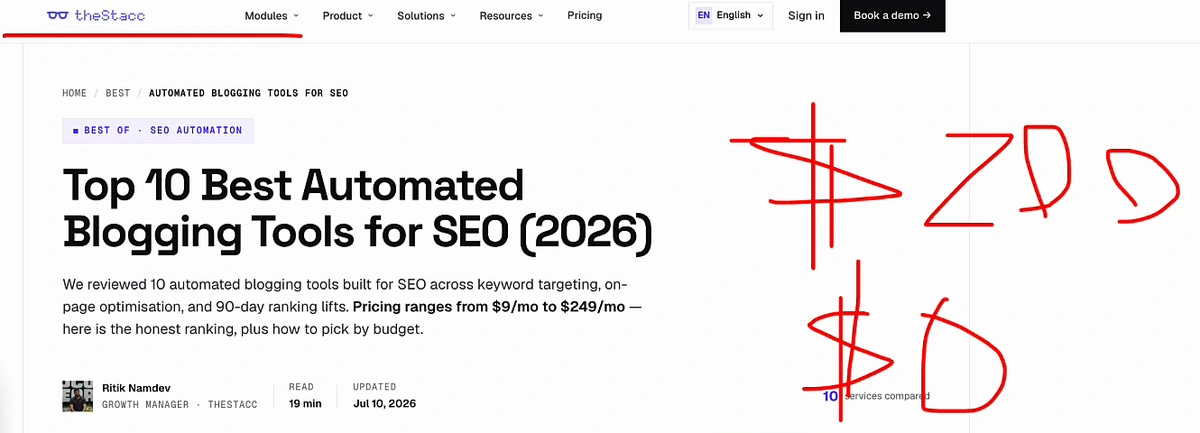
When a listicle such as "Top 10 best automated blogging tools for SEO" is what the AI reads for your prompt, contact the publisher and ask to be included. Most will want payment. If the price is too high, offer an exchange: they add your brand to their page, and you mention theirs on one of yours. Vasco calls this a mention exchange, the modern version of a backlink exchange. He's open that most of these placements end up paid.
Two things keep this clean. If you pay for a placement, the publisher should disclose it as sponsored. And keep exchanges to genuine, relevant mentions; trading links at scale is the kind of thing Google treats as a link scheme. Our guide to link swaps covers where that line sits.
Finding the opportunities
You can do this by hand. Ask ChatGPT, Perplexity or Gemini the questions your buyers ask, note which brands come up, open the sources and see which pages name your competitors but not you. Then repeat it for every prompt you care about, every few weeks, because AI answers change.
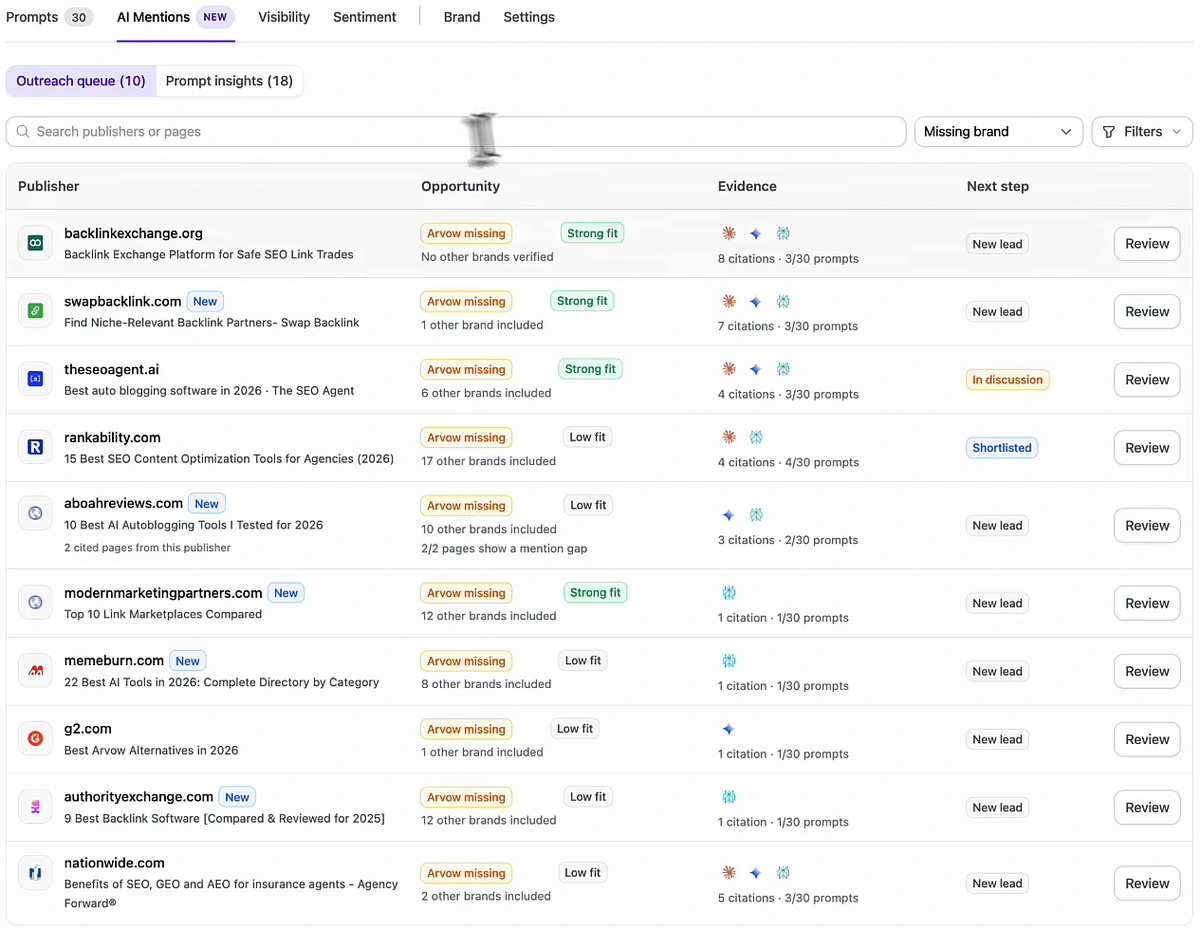
A tracking tool speeds it up. Arvow's queue lists the publishers that AI answers cite for your tracked prompts, flags where your brand is missing, and shows how many citations and prompts each one covers, so you can start with the pages that matter most. One is already marked "In discussion" and another "Shortlisted". Any AI-visibility tracker that shows cited sources will give you the same starting list.
This is leverage for the same reason as the other two: it takes work. You have to choose prompts, track them, find the sources, contact publishers and negotiate. If it were a button, everyone would press it. For a deeper look at choosing prompts and reading the sources, see how to get recommended by AI, and for the wider playbook, how to increase AI visibility.
Which one to start with
Vasco's closing advice is to pick one and actually do it, rather than nodding along to all three. A simple way to choose:
| If you... | Start with | First step this week |
|---|---|---|
| Sell to a clear niche with regular news | Automated news | Set up one recurring news feed on "generate only" and review the first articles |
| Need authority and links in a niche with nonprofits | Charity links | Find five nonprofits in your niche that list supporters, and check what it takes to be listed |
| Already rank but aren't named by AI | AI citations | Run 10 buyer prompts and list the pages cited that mention competitors but not you |
Whichever you choose, the test is the same: is this something most of your competitors aren't doing? If it is, you have leverage. If everyone in your niche is already doing it, you're just one more billboard on the highway.
FAQ
How do I rank #1 on Google?
Publish content that answers what searchers want better than the current results, earn links from relevant sites, and fix technical issues. To beat competitors who do all of that too, add something they don't do, such as a niche news section, nonprofit links or placements in the pages AI answers cite.
Can anyone guarantee a #1 ranking on Google?
No. Google doesn't sell rankings, and results change constantly. What you can do is raise the odds by doing things your competitors aren't. The video's title says "guaranteed"; what it actually describes is a way to gain an edge.
How do I rank on Google and AI search at the same time?
Mostly with the same work. AI search tools read pages that rank and pages that are widely cited, so strong rankings and links help both. On top of that, get your brand into the specific pages AI answers cite for your target prompts.
Are charity backlinks safe?
They're widely used and come from real sites, but a donation made only to get a link is in the territory Google calls a link scheme. Support causes you'd back anyway, don't ask for a specific type of link, and check whether and how the nonprofit lists supporters before you give.
Does automated news content rank?
It can, if it covers your niche, cites its sources and gets reviewed. Start with the "generate only" setting, check the quality, and only switch to automatic publishing once you trust the output.
Run a news section, find citation gaps and build links from one place. Try Arvow's AI news article generator.
Generate, publish, syndicate and update articles automatically
The AI SEO Writer that Auto-Publishes to your Blog
- Cancel anytime
- Articles in 30 secs
- Plagiarism Free