
Brand Mentions Are the New Backlinks in 2026 (How I Get 50 a Week)

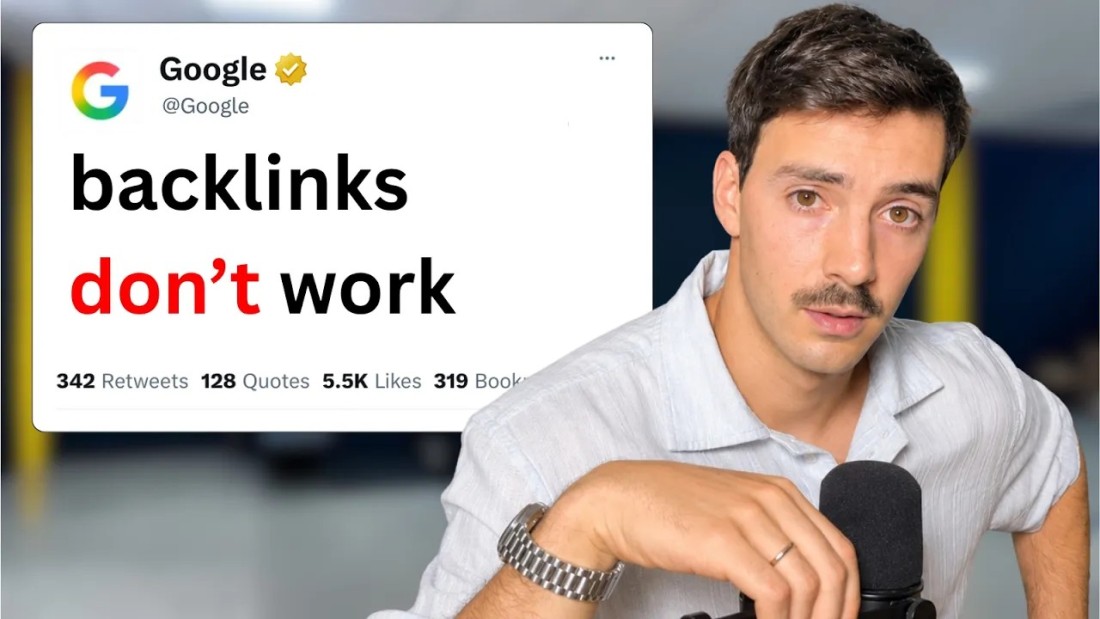
Do backlinks still matter, or is it all about brand mentions now? I keep running into the same scene: I ask ChatGPT for the best rank tracking software, it hands me a shortlist of brands, and when I open the pages it cites as sources, a lot of them contain no links to those brands at all. No external links to Semrush, none to Ahrefs, none to anybody. Just names on a page. And that page is still one of the sources deciding who gets recommended.
That observation is the whole thesis of this piece: unlinked mentions are starting to do for LLM recommendations what links did for Google rankings. Below is the evidence I walked through on camera, and the exact loop we run at Arvow to keep collecting new mentions every week.
What I found inside ChatGPT's sources
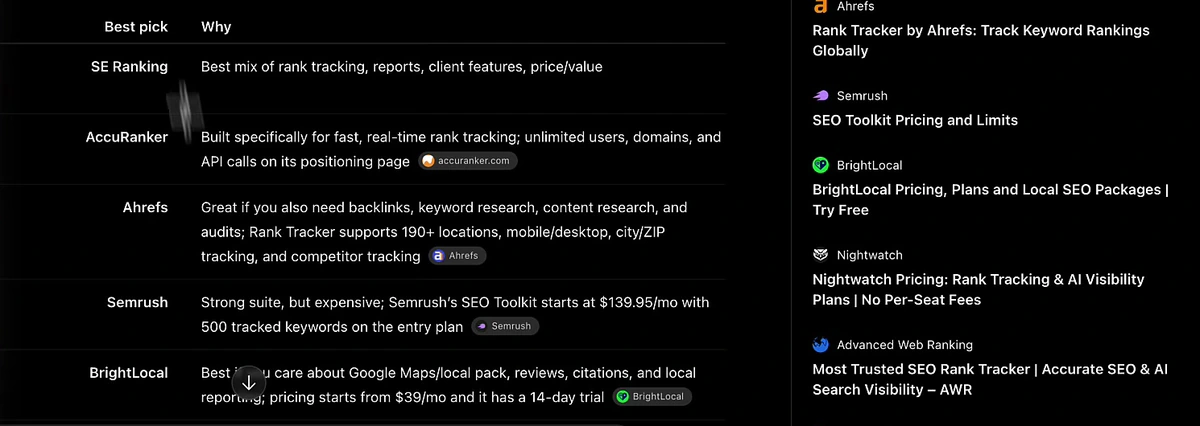
Start with the prompt "best rank tracking software." ChatGPT thinks for half a minute, reads a sources panel over 150 pages deep, and returns a tidy table of picks: SE Ranking, AccuRanker, Ahrefs, Semrush, BrightLocal, with a reason attached to each one.
Now open one of those cited pages. It is a comparison table on an agency's blog, ranking the same tools. Here is the part that matters: the brand names in that table are plain text. I selected them one by one on camera to prove it — no external link to Nightwatch, none to Ahrefs, none to Semrush. The only links on the page are internal.
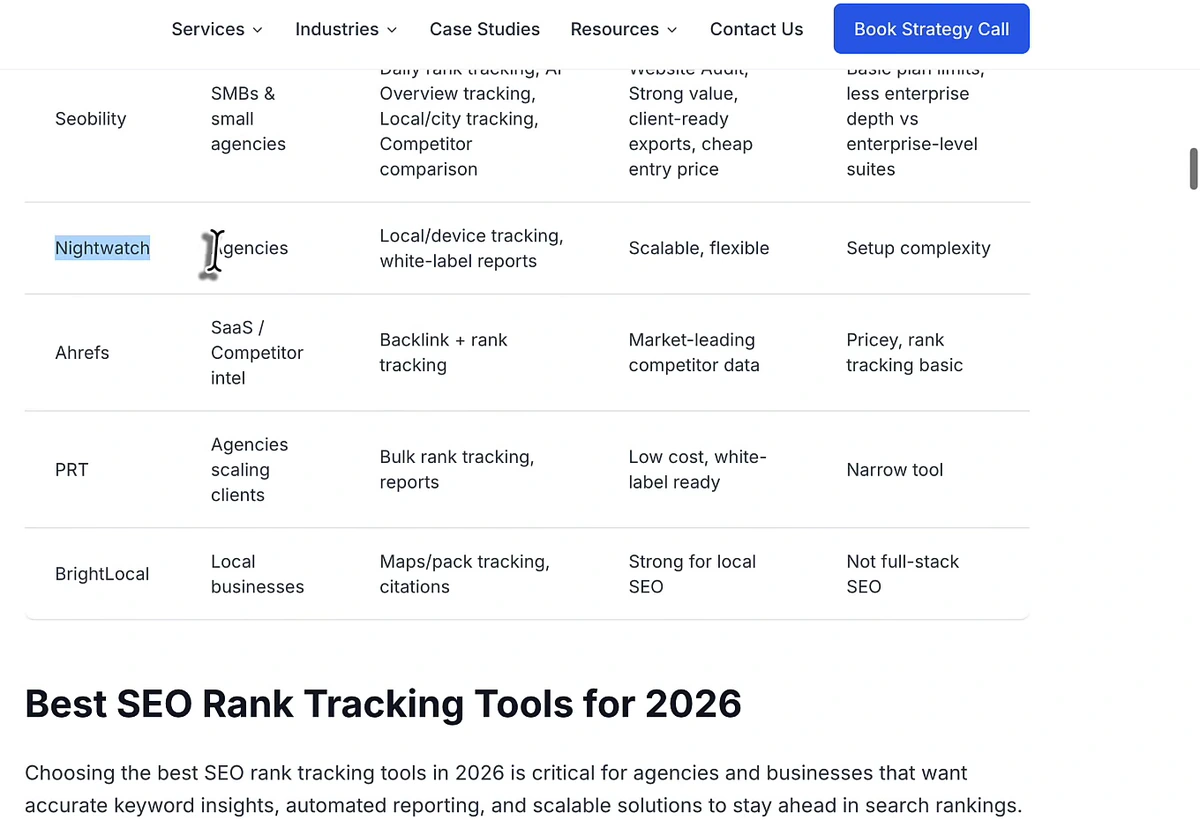
Under the old model, a page like this passes nothing — no link, no PageRank, no value. Under the new one, it is doing exactly what a backlink used to do: telling a trust-building machine which brands belong in the answer. If you want to see which pages are doing this for (or against) you, that is precisely what an LLM visibility tracker is for.
Why links carried trust, and why mentions now carry it too
The logic of link building was always about borrowed trust. Google trusts Forbes: huge site, high DR, strong brand. If Forbes links to you, some of that trust flows to you, and you rank higher. Stack enough links from trusted places and your whole site lifts. That mechanism worked for two decades, and to be clear, it still works — backlinks are still very much alive.
But notice what a backlink actually is: a brand mention and a link fused together. When the anchor text is your brand name, you get both signals at once. When the anchor is a keyword — I showed an example on my own site where the anchor "auto blog" points at an Arvow page — you get a link with no mention. And a bare mention gives you the half that language models can read. LLMs are not crawling link graphs when they compose an answer; they are reading pages and noticing which names keep appearing next to which problems.
That is why I think the outreach conversation is about to flip. Site owners who charge real money for a backlink will often add an unlinked brand mention for a fraction of the price, simply because most of them have no idea yet what that mention is worth. That arbitrage will not last forever.
Authority is losing to relevance
The other half of the thesis is that the "powerful sites win" rule is weakening even inside Google itself — which I covered in more depth in a separate video about search intent.
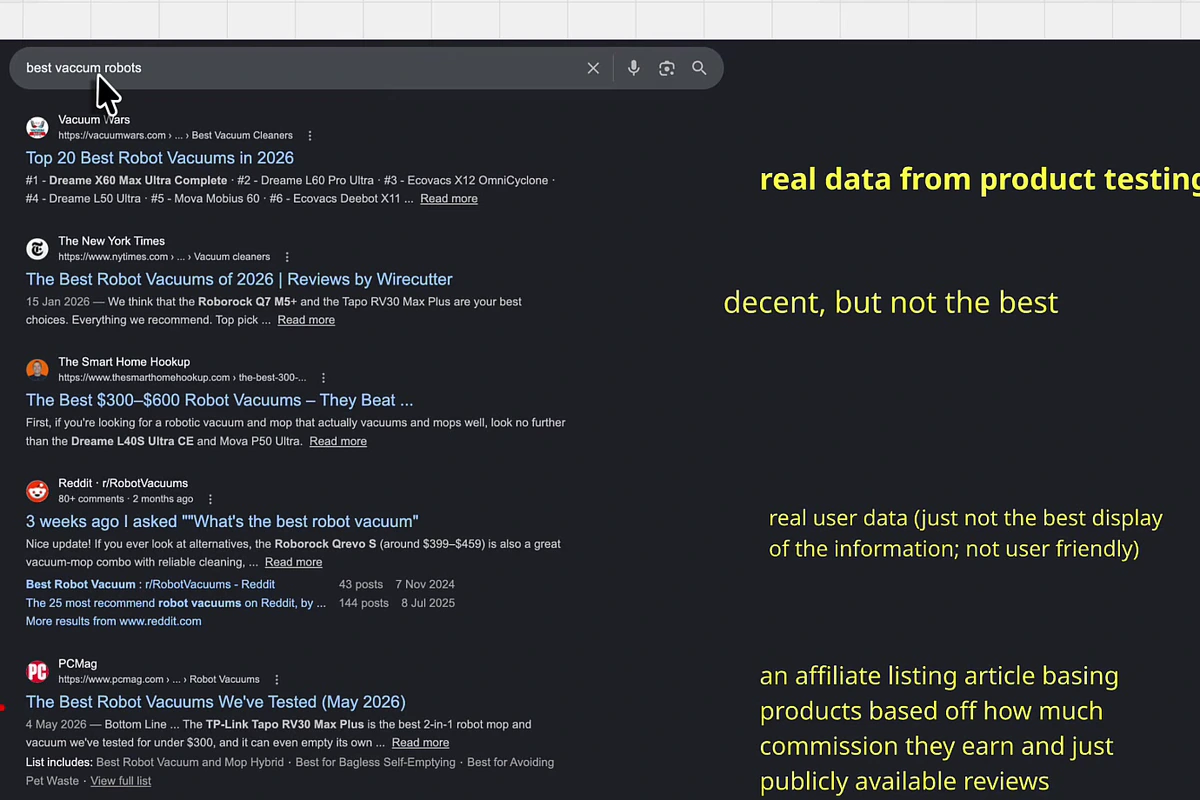
For "best robot vacuums" — a transactional keyword if there ever was one — the top result is Vacuum Wars, a niche site with a DR around 55 by the numbers I pulled up on screen. It sits above The New York Times at DR 94, above Reddit at DR 91, above Amazon itself. Half the authority, better position. Why? Because it is the most relevant answer: real product testing, purpose-built for exactly that query, while some of the bigger pages are affiliate roundups assembled from publicly available reviews.
Inside LLM citations this pattern is even stronger. A scrappy site can get cited, a giant can get cited, anything can get cited — what the model cares about is whether the page satisfies the intent behind the prompt. DR is drifting toward vanity-metric territory; the metric that would actually make sense is how well your site satisfies the search intent of the keywords you want, which is something we are actively working on measuring.
The loop I run to keep the mentions coming
None of this is theory for us — it is the weekly routine, and at the pace we are running it the new mentions have been arriving on the order of fifty a week. Here is the loop.
1. List the prompts you want to be the answer to. We track 21 of them in our own monitor: some we already show up for, like "best AI SEO software for agencies," and some we currently score zero on, like the cluster around backlink exchange software.
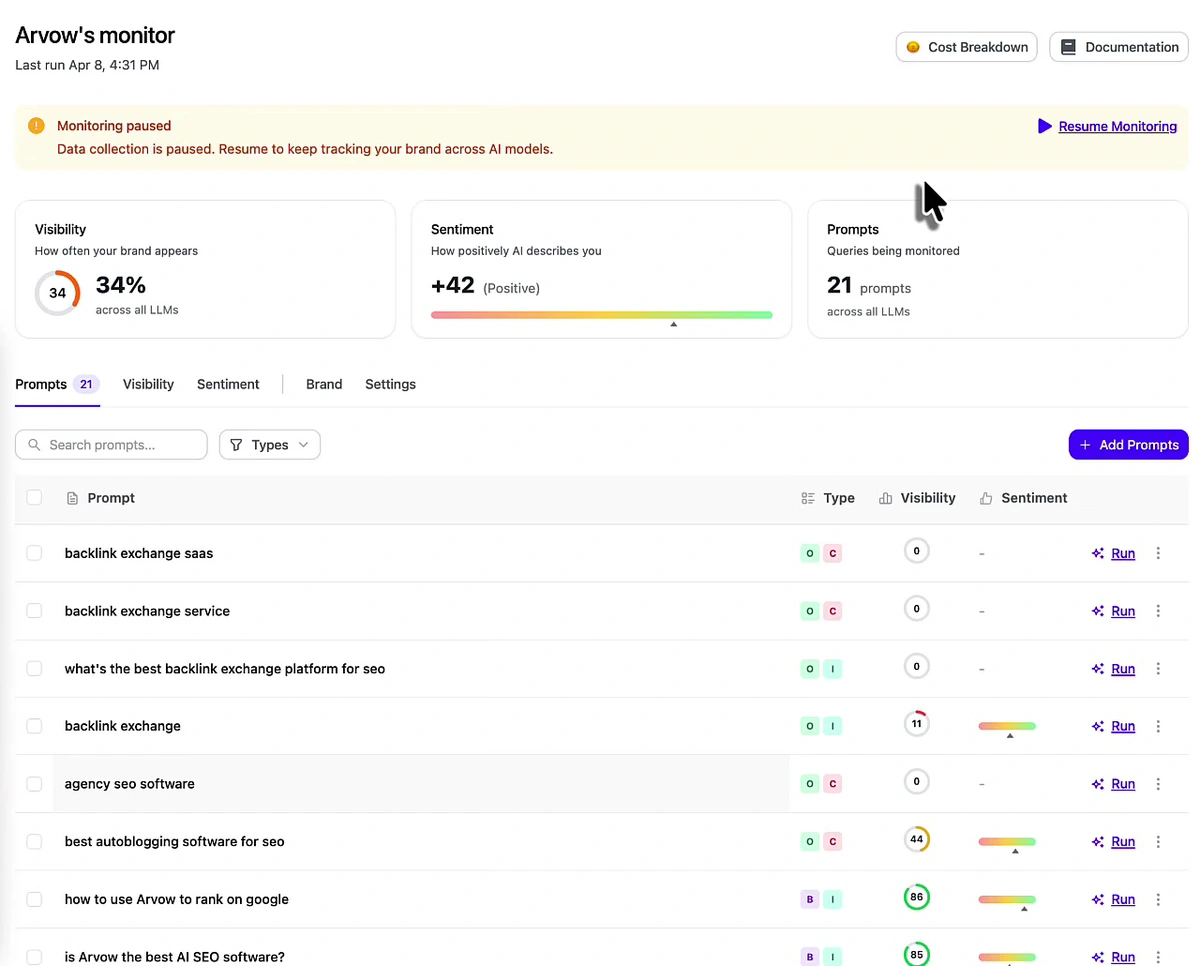
2. Run each prompt and read the answer like a map. For every prompt where we are absent, the response tells me exactly who is being mentioned instead, and the citations tell me exactly which pages taught the model those names.
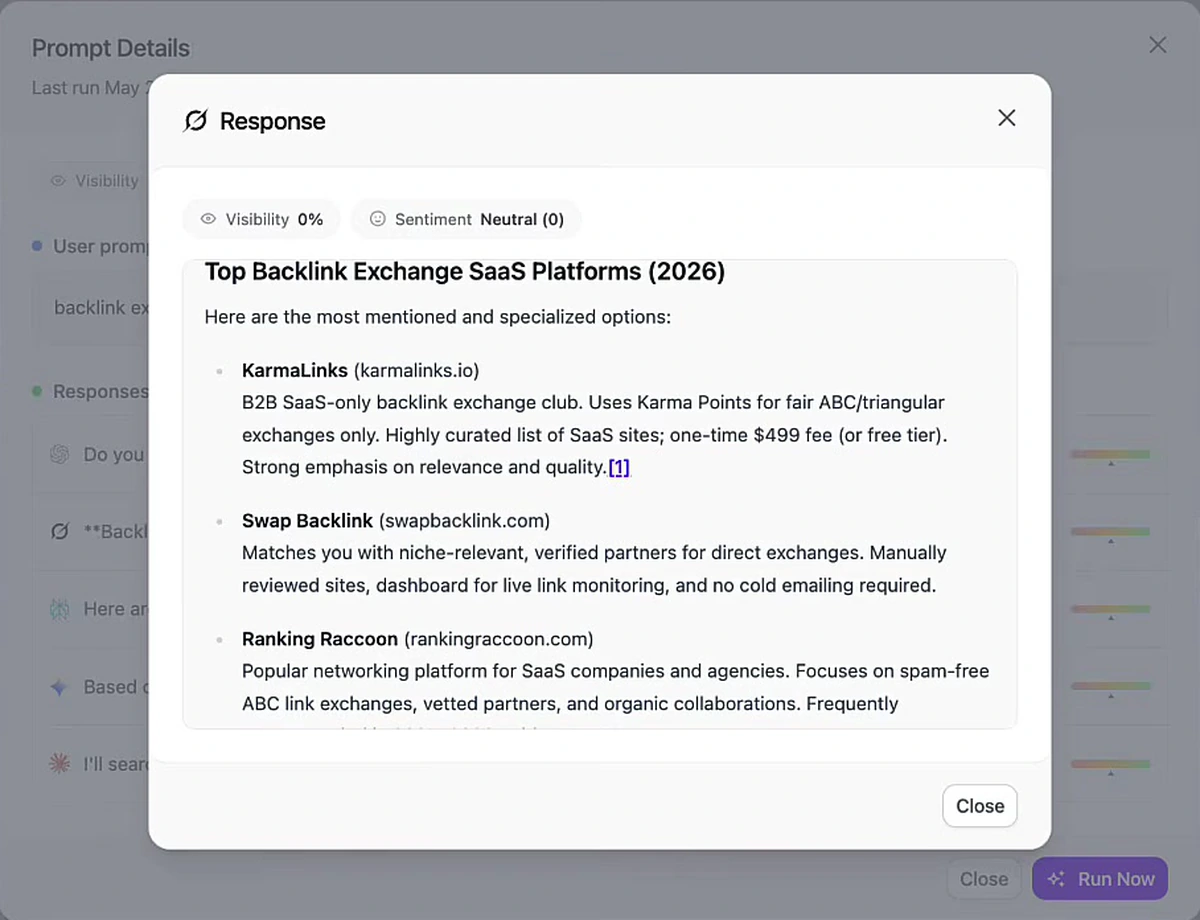
3. Force your way into the cited sources. Where in that piece of content are those brands mentioned, and can we get included there too? Sometimes that is an email, sometimes a comment, sometimes a paid placement that costs far less than the same site's backlink rate.
4. If you can't get in, clone the format. The model has already shown you what kind of page it trusts for that prompt. Produce similar sources — same shape, same depth, your brand present — and give it more of what it already likes to cite.
5. Watch the sentiment, not just the count. A mention is not automatically a win. A model can name you and then say "just don't use it" — in which case the mention is working against you, and the fix is changing or outnumbering the sources that taught it that tone. I broke down that side of the game in the AI brand monitoring guide, and there's a ChatGPT-specific walkthrough in how to track ChatGPT brand mentions.
Why the window is open right now
SEO is a marketing strategy, and all marketing is leverage. Picture one billboard on an empty road: everyone driving past reads it. Then a second one goes up, then ten, and within a month the road is wallpapered — now nobody reads any of them. The leverage was never the billboard; it was being the only one.
Backlink outreach is the wallpapered road. Every site owner knows the price of a link, every inbox is full of the same pitch. Brand mention outreach is still the empty road: most people do not know it matters, so it is cheap, and the few of us asking for it get odd looks and easy yeses. When everyone does something, it stops working — which is exactly why the time to collect mentions is before your competitors learn what they are worth.
FAQ
Are backlinks dead in 2026?
No. Backlinks still pass trust and still move rankings, and I still build them. The change is that they are no longer the only citation that counts: unlinked brand mentions now influence what LLMs recommend, so a complete strategy chases both instead of treating the link as the only prize.
Do unlinked brand mentions actually affect AI recommendations?
Based on what I see in the sources LLMs cite, yes. Pages with zero external links — just plain-text brand names — routinely appear among the citations behind ChatGPT's product recommendations. The model reads the names on trusted pages; it does not need an anchor tag to learn who you are.
How do I find out which prompts my brand appears in?
Track them directly: add the prompts you care about to a brand monitor, run them across ChatGPT, Claude, Gemini, Perplexity and Grok, and read the responses and citations. You can start with a free LLM brand mention tracker and add your competitors' domains to see which prompts they win that you don't.
Is a brand mention cheaper than a backlink?
Usually, for now. A backlink is effectively a mention plus a link bought together, and it is priced accordingly because every site owner knows its value. Most site owners have not priced unlinked mentions yet, so asking for "just the mention" often gets you a heavy discount — a blue-ocean situation I do not expect to last.
Does the sentiment of a mention matter?
As much as the mention itself. A model saying "this brand exists but isn't good" is worse than silence, because it repeats that verdict to every user who asks. Track how you are described, not just whether you appear, and go edit or outnumber the sources behind any negative read.
Want to see which prompts mention your brand — and which pages are teaching the AIs to recommend your competitors? Run your prompts through the Arvow LLM visibility tracker and start working the citation list.
For twenty years the game was getting trusted sites to link to you. The game now is getting trusted pages to say your name — ideally kindly — because that is what the machines writing the recommendations actually read. Same leverage, new citation. Collect it while it is still cheap.
Generate, publish, syndicate and update articles automatically
The AI SEO Writer that Auto-Publishes to your Blog
- Cancel anytime
- Articles in 30 secs
- Plagiarism Free