
Can You Rank Without Backlinks? What a New Site Can and Can't Do (2026)

Can you rank without backlinks? Yes, for some searches, and no for others, and the useful part of the answer is knowing which is which before you spend six months finding out. A November 2026 video on the Nex Gen AI channel works through a Reddit thread where a new site owner asked exactly this, then adds one rule of thumb from SEO tester Kyle Roof: three internal links can do roughly the work of one backlink. We read every card on the presenter's board, traced the rule to its source, and checked the thread's advice against what Google has said and what the largest public study shows. The short version: a new site can rank with no links where the current results are weak, internal links are the lever you fully control, and the "3 to 1" figure comes with a condition that is easy to miss.
The short answer
| Situation | Can a page rank with zero backlinks? | What decides it |
|---|---|---|
| The top results do not really answer the search | Often yes | Whether your page answers it better |
| Long, specific, low-volume searches | Often yes | Match to intent, internal links from related pages |
| Local searches with weak competitors | Sometimes | Relevance and the rest of your local presence |
| Head terms where strong sites already have good pages | Rarely | Links and site strength start to decide ties |
That table is the Reddit thread compressed. The rest of this article is the reasoning, the evidence and the plan.
The question, as asked on Reddit
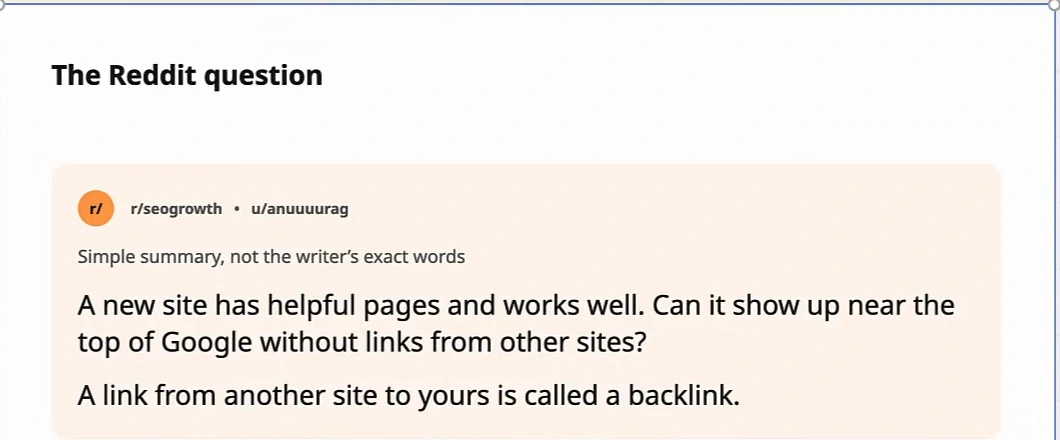
Four replies get a card each, and they agree with each other more than Reddit threads usually do:
- Yes, for some searches. A new site can do well when other sites have not made a page that answers the question. It gets harder when the top pages have lots of strong links.
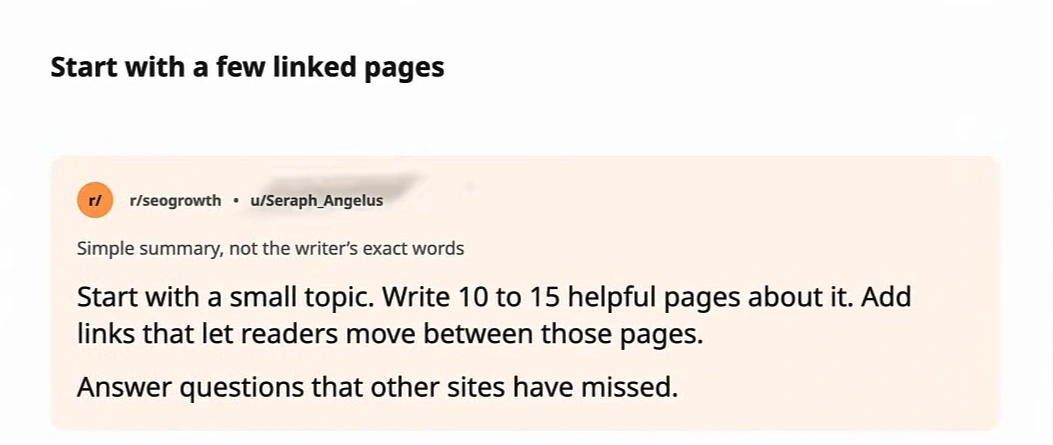
- Start with a few linked pages. Pick a small topic, write 10 to 15 helpful pages about it, and link them so readers can move between them.
- Useful, experienced, well explained. A site can do well if its pages show real experience. Where many strong sites want the same spot, links from other sites still help.
- Start small and see what works. Use Google Search Console to see which pages start showing up, then decide where to spend time getting links.
What Google has said about needing links
The thread's "yes, sometimes" matches what Google's own people have said in public, though mostly in conference remarks relayed by attendees, so read these as reported.
- In September 2023, Google's Gary Illyes was reported from a Pubcon Q&A as disagreeing that links are a top-three ranking factor, adding that they had not been for some time.
- In April 2024 he was reported from a conference in Bulgaria as saying Google needs "very few links to rank pages". He later replied that he should not have said it, which is not the same as saying it was wrong.
- Google's documentation still says it "uses links as a signal when determining the relevancy of pages", and that it finds new pages both by following links and from sitemaps you submit.
So links are a signal, they are no longer described as the signal, and a page with no external links can be found and indexed. None of that says a linkless page will beat a linked one.
What the data says
The largest public number we know of is from Ahrefs. In a study of about 14 billion pages published in December 2023, it reported that 96.55% of pages get no traffic from Google at all. Of roughly 20 million pages with no referring domains, it found 2,997 getting more than 1,000 search visits a month. That is about one in 6,700.
Two readings of that, both true. Ranking well with no backlinks is rare across the whole web. And it does happen, thousands of times, which fits the thread: the winners are pages that found a search nobody else had answered properly. The study is a correlation and its traffic figures are estimates, so it cannot tell you links were the cause in either direction. For the wider question, see do backlinks still work.
Step 1: pick searches you can win
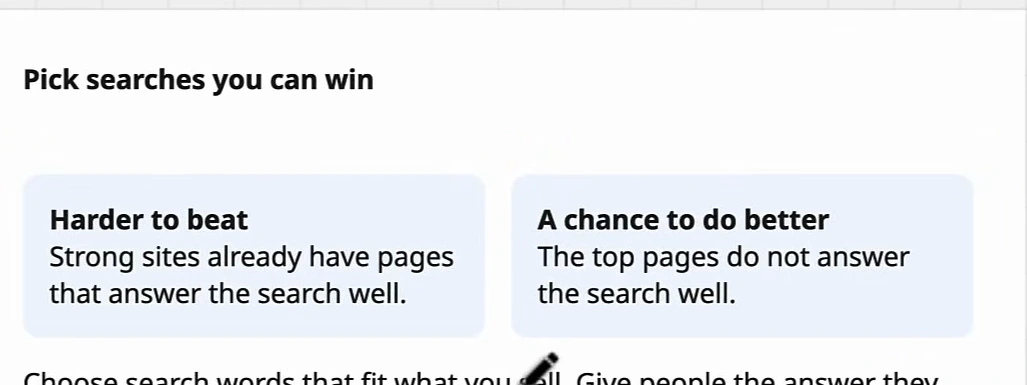
The presenter's method is manual and it works: write down the searches your customers make, run them, and read what ranks. You are looking for results that are off-topic, out of date, thin, or written for a different kind of searcher. A forum thread or a generic listicle in the top three is a good sign. A page from a strong site that answers the question completely is a sign to move on.
Longer, more specific searches are where these gaps are. We have a full process for finding them in how to find low competition keywords.
The other half of this step is the page itself. Where AI can produce an acceptable answer in seconds, an acceptable answer is no longer an advantage. What the thread calls "real experience" is the part a competitor cannot copy: your prices, your photos, what went wrong on a job, what customers ask on the phone. That is the argument of commodity content, and it matters most for a site with no links, because the page has nothing else going for it.
Step 2: link your pages together, and to the page that sells
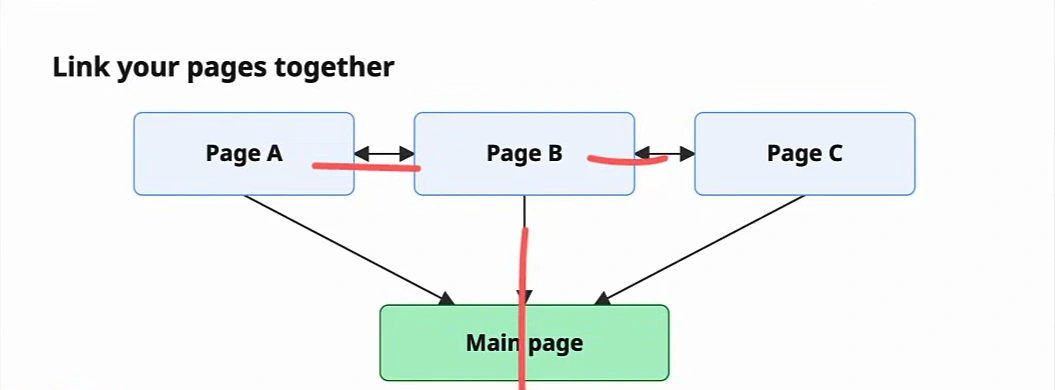
This is the part of the answer that is entirely in your hands. The 10 to 15 pages from the Reddit reply are not 15 separate bets. Each one links to its neighbours where a reader would want the next answer, and each one links to the main page: the service page, the product page, the booking page. The main page links back to them.
The board adds a point that is easy to skip: add the link "when the product fits what the reader needs". A helpful article that sends the reader to a page where they can buy is doing two jobs, passing internal strength and converting the visit. For anchors, placement and a test with numbers, see internal linking strategy.
Kyle Roof's 3-to-1 rule, and its fine print
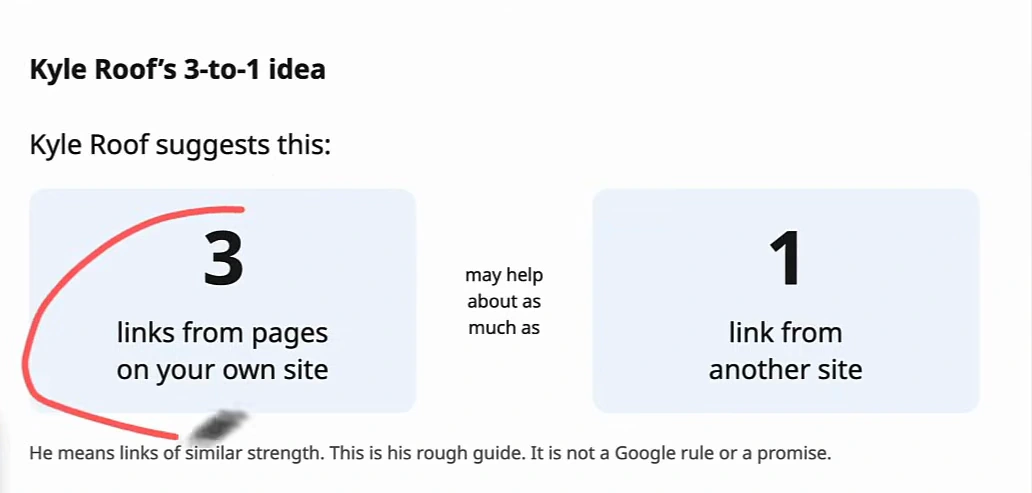
The rule comes from Kyle Roof, known for running controlled SEO tests. The closest written source we found is an article by Edward Sturm dated 8 November 2026, reporting what Roof said on his podcast about ten days earlier: about three internal links "of the same value" equal one external link of that value. The example given is a site with a strength of 30, where three internal links equal one backlink of strength 30.
Three things follow from the wording.
- It is about equal value. Three links from pages that nobody visits and nothing links to are not worth one link from a strong outside page. On a brand new site every page starts near zero, so three times very little is still very little. The rule gets more useful as your pages start to rank and earn their own strength.
- It is a rule of thumb. No test data or Google statement is cited for the ratio. The board says so itself, and so should anyone repeating it.
- It still changes the plan. The presenter's takeaway is that you should work on internal links as hard as you work on getting backlinks. That holds whatever the exact ratio is, because an internal link costs you five minutes and a good backlink can take weeks.
Step 3: when you do need links, get the practical ones
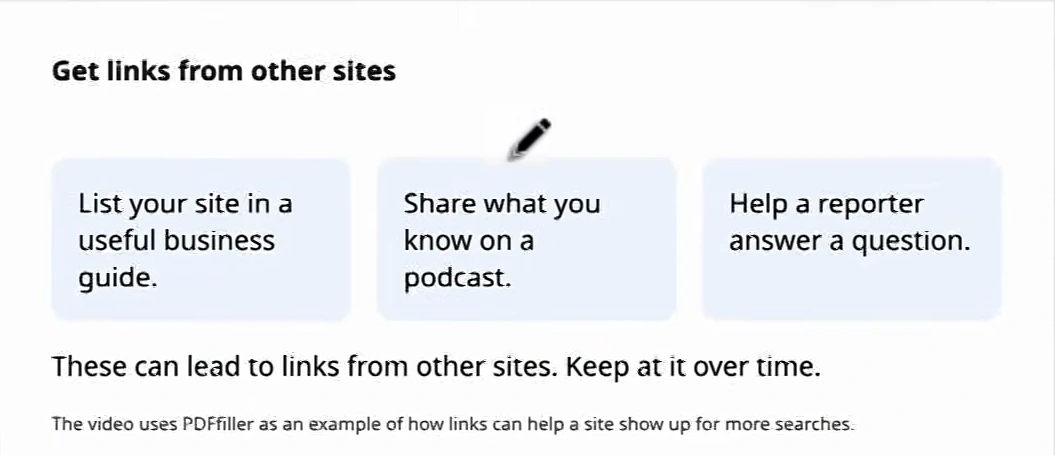
Nobody in the thread says links do not matter. They say links are for the searches where good pages are already competing. The Search Console advice gives you the order of work: publish the cluster, wait, and look for pages sitting on page two for searches that matter. Those are the pages where a handful of links can change the result, and that is where link effort should go first.
The sources the video lists are the low-cost ones: relevant directories and business guides, podcast appearances, answering reporters' questions, guest posts, the places your competitors are listed, and sponsoring a local charity. We have covered the free routes in how to get free backlinks and the last one in donation backlinks. If you want a number to aim at, how many backlinks do you need shows how to read it off the pages you are trying to beat.
A 90-day plan for a new site with no backlinks
| When | What to do | What to check |
|---|---|---|
| Weeks 1 to 2 | Pick one topic tied to one thing you sell. List 10 to 15 specific searches where the current results are weak. | You have read the top results for each one |
| Weeks 2 to 6 | Publish the pages. Put first-hand detail in each. Link each page to its neighbours and to the main page, and the main page back. | Sitemap submitted; every page reachable in two clicks |
| Weeks 6 to 10 | Watch Search Console. Note which pages get impressions and at what position. | Which pages sit between positions 8 and 20 |
| Weeks 10 to 13 | Improve those pages, add internal links to them from new posts, and start on directories, podcasts and reporter requests for the ones that stall. | Movement on the stalled pages after each change |
If you are earlier than this and have no site structure yet, start with how to start SEO from scratch.
Where the tools come in
The second half of the video is a tour of Arvow on the presenter's demo project, and the relevant part is narrow. The work in Step 2 is repetitive: every new article needs links to the right older pages and to the money page. Arvow's article templates take a sitemap and add those internal links as each article is written, and the knowledge base lets you feed in your own case studies and prices so the output is not the generic version. The presenter also points to two prompts on Arvow's prompts page, including the money page architecture framework, which lays out the main-page-plus-supporting-pages structure for a given business.
None of that replaces Step 1. A tool can link 15 pages together in an afternoon. Choosing 15 searches you can win, and having something real to say on each, is still the job.
Want the internal links handled as you publish? Arvow writes articles from your own knowledge base and links each one to your existing pages from your sitemap.
FAQ
Can a brand new website rank without backlinks?
Yes, for searches where the existing results do not answer the question well, which usually means longer and more specific searches. For competitive head terms where strong sites already have good pages, a new site without links will rarely break through.
Are three internal links really worth one backlink?
That is Kyle Roof's rule of thumb, and it applies to links of the same value. It is not a Google rule and no data is published for the ratio. Treat it as a reason to take internal linking seriously, not as a formula.
How many pages do I need before it works?
The Reddit advice in the video is 10 to 15 helpful pages on one small topic, linked together. The number matters less than the pages covering one topic thoroughly and each answering a search other sites have missed.
When should I start building backlinks?
When Search Console shows pages getting impressions but stuck on page two for searches that matter to you. That is the point where links are most likely to be the missing piece.
Generate, publish, syndicate and update articles automatically
The AI SEO Writer that Auto-Publishes to your Blog
- Cancel anytime
- Articles in 30 secs
- Plagiarism Free