
How to Start SEO From Scratch in 2026 (The 3 Pillars That Actually Matter)

A few weeks ago I was scrolling an SEO subreddit and one question had blown up: "If you were starting SEO from scratch today, what would you focus on first?" Two days old, 50 replies. I read every single one, and most of the advice was the recycled 2018 playbook — pick a niche, do manual keyword research, grind out content, watch another hundred hours of tutorials.
Almost nobody mentioned the thing that actually changed: AI now sits on both sides of the equation. It is a new traffic channel you can rank in, and it is a workforce that can do most of the SEO labor for you. So this is my full answer to that question, laid out as a beginner path you can follow this week.
The question everyone answered like it's 2018
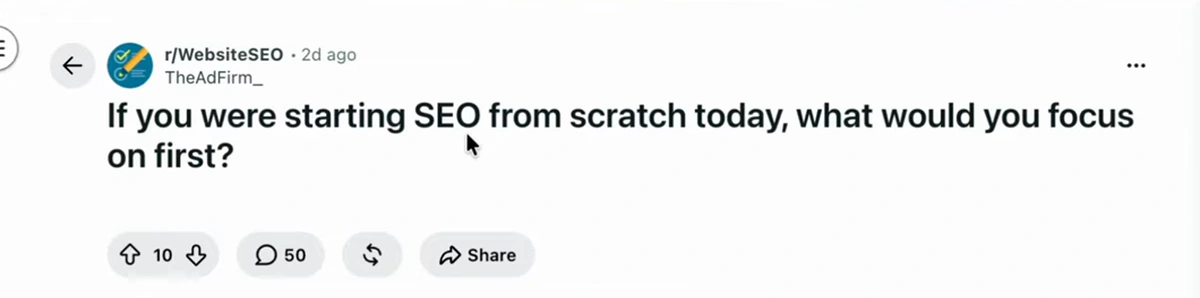
The replies fell into three buckets. "Pick one niche and rank your own site" — fine, but that's a starting pistol, not a strategy. "Pull up a SERP scraper before writing anything" — that's 2018 workflow. And my favorite: "focus on technical SEO basics first," as if hand-crawling your own site is a good use of a beginner's time when AI can audit the whole thing and apply the fixes automatically.
None of them were wrong about SEO mattering. They were wrong about where the leverage is now.
SEO is not dead — it grew a second search engine
The most common non-answer in the thread was "SEO is dead, don't bother." It isn't. A second surface appeared next to the classic ten blue links: AI answers. When Google shows an AI Overview, that answer is stitched together from source links — and those links point at websites. ChatGPT, Claude, Gemini and Perplexity work the same way. Every citation is a new way for someone to land on your site.
So a beginner in 2026 is optimizing for two channels: classic rankings and AI citations. And you don't need an established site to get cited — fresh sites show up in AI answers once the models pick them up. I've collected the numbers on how fast this channel is growing in my GEO statistics roundup.
Proof this works from zero: an e-commerce store, three months in
Talk is cheap, so in the video I opened Ahrefs on a store that started from absolute zero in March. This is what it looked like when I recorded:
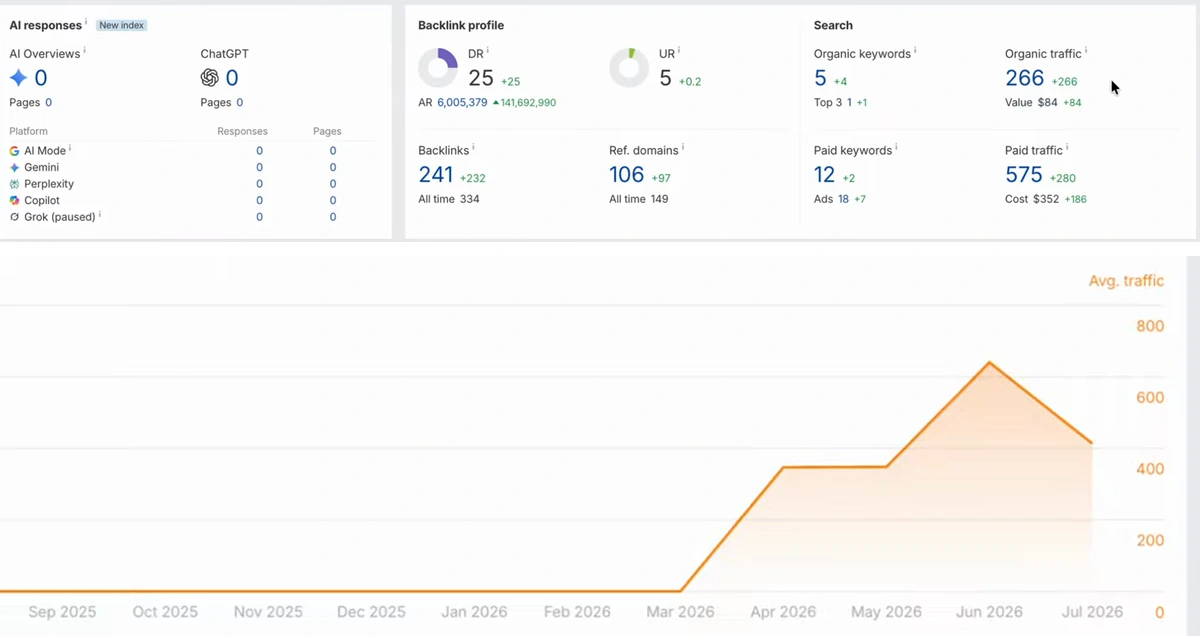
Read the deltas, because they tell the story: DR went from nothing to 25, backlinks grew by +232 to 241, referring domains by +97 to 106. Organic traffic climbed from zero to around 300 visits in the early months, peaking around 600 by June — the July dip is just an unfinished month at recording time. Ahrefs values that traffic at $84 per month, money they'd otherwise hand to Google Ads.
Notice the AI responses panel still reads zero — the site is too young for the models to have picked it up. That's normal: backlinks and DR compound first, AI citations follow once there's some authority. The point is the trajectory: three months, from scratch, with nobody writing articles by hand.
Before you buy anything: just talk to Claude
Here's what I wish someone had told me when I started doing SEO: you can now learn and even execute SEO by having a conversation with an AI. Open Claude or ChatGPT, show it your website, explain what you're trying to achieve, and ask for help. AI genuinely understands SEO — it can crawl your site, tell you what's broken, and explain every concept the moment you hit it.
So cut the ritual of watching endless beginner tutorials. Videos earn your time when they show a specific strategy; they waste it when they re-teach basics an AI can explain about your site in thirty seconds. To see how far this goes, I wrote up my whole workflow in the Claude Code SEO guide.
The three pillars you're actually managing
Pillar 1: Technical SEO
Meta titles, meta descriptions, image alt text, internal links, schema, crawlability. This used to be the "hire a developer" pillar. It no longer is — AI can crawl your pages, find what's missing and fix it. My honest take from the video: technical SEO deserves a tiny fraction of your effort in 2026, precisely because it's the most automatable pillar of the three.
Pillar 2: Content — but not commodity content
Content is still what ranks. But Google has started actively going after what it calls commodity content: articles that add nothing new and just remix what's already on the web. If you publish generic AI output, you'll stay stuck at zero. The workaround is context — feeding the AI your product data, your niche knowledge, your actual differentiators, so every article says something only your business can say. Writing manually works too; it's just brutally slow, and paying ghostwriters makes little sense when AI with the right inputs produces articles that rank.
Pillar 3: Off-page SEO — backlinks
Backlinks are other sites linking to yours. They're how Google decides you're an authority, they drive your domain rating, and higher DR means higher rankings on everything you publish. Beginners either ignore this pillar or pay an agency — and here's the uncomfortable truth from the video: most agencies automate this with AI anyway and charge you a premium for it. You can run the same play yourself; I've ranked the approaches in my backlink methods breakdown.
Setting up all three pillars in one sitting
The tool I use to run all three pillars end-to-end is Arvow. It looks feature-heavy, but a beginner needs exactly five steps.
1. Create the project and connect your site
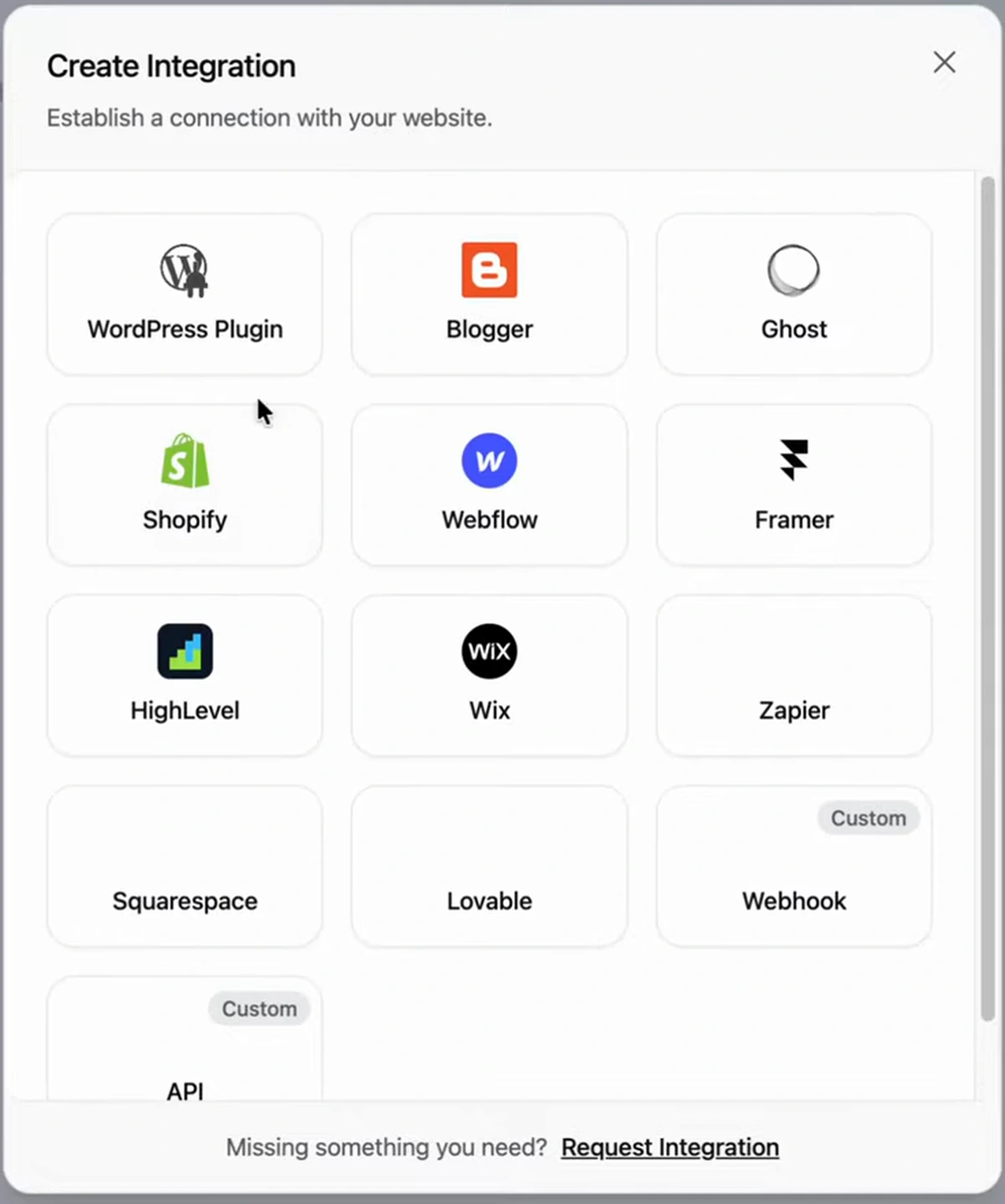
Drop in your website URL, pick your target country and language, and generate a brand brief from your site so the AI has context about your business. Then connect your website so articles publish automatically — the integration picker covers WordPress, Shopify, Webflow, Wix, Framer, Ghost, HighLevel, Squarespace, Lovable, Zapier, or a plain webhook and API if you run something custom.
2. Feed the knowledge base
This is what separates your content from commodity content. Upload PDFs, spec sheets, product pages, URLs, or paste text about your business. The AI retrieves these assets while writing, so articles come out tailored to your brand instead of generic — same process for SaaS, e-commerce, services or local.
3. Start the content engine
Create a campaign, choose Full AutoBlog, and configure the keyword feed with your website, a few seed keywords and some competitors. It then hunts for low-difficulty keywords — the low-hanging fruit a fresh site can actually win. Pick where to publish, set how many articles per day, and start it.
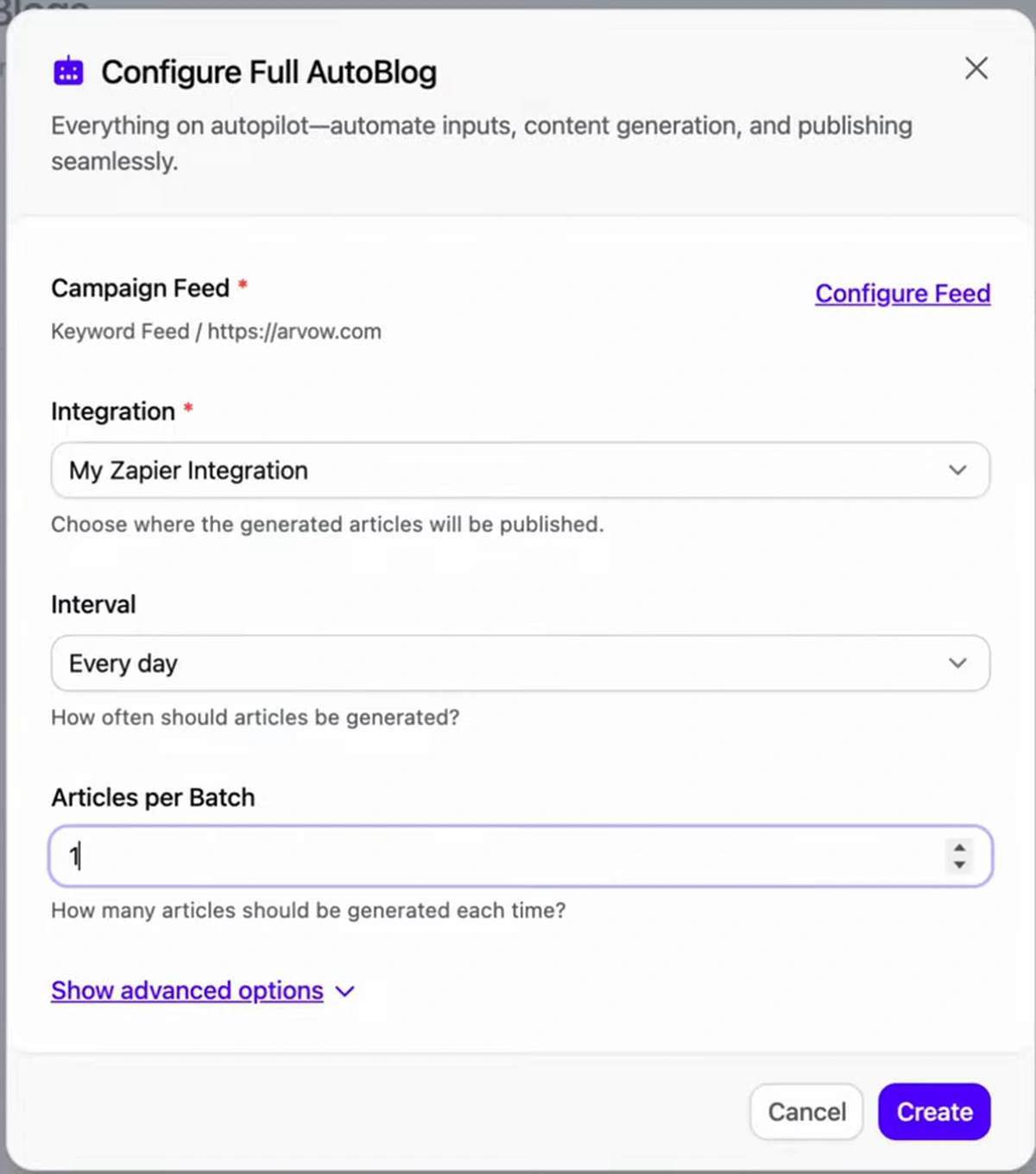
My recommendation from the video: one to three articles a day, no more. You can also tune the article template — images per article, tone, formality, CTAs, embedded YouTube videos, and your sitemap for automatic internal linking.
4. Put technical SEO on autopilot
Open Site Optimizer, crawl your site, and it flags what's wrong across meta titles, meta descriptions, canonical URLs, image alt text, internal links and schema. Then — this is the part that kills the "learn technical SEO first" advice — you apply the fixes live to your site from the dashboard. No code, no developer.
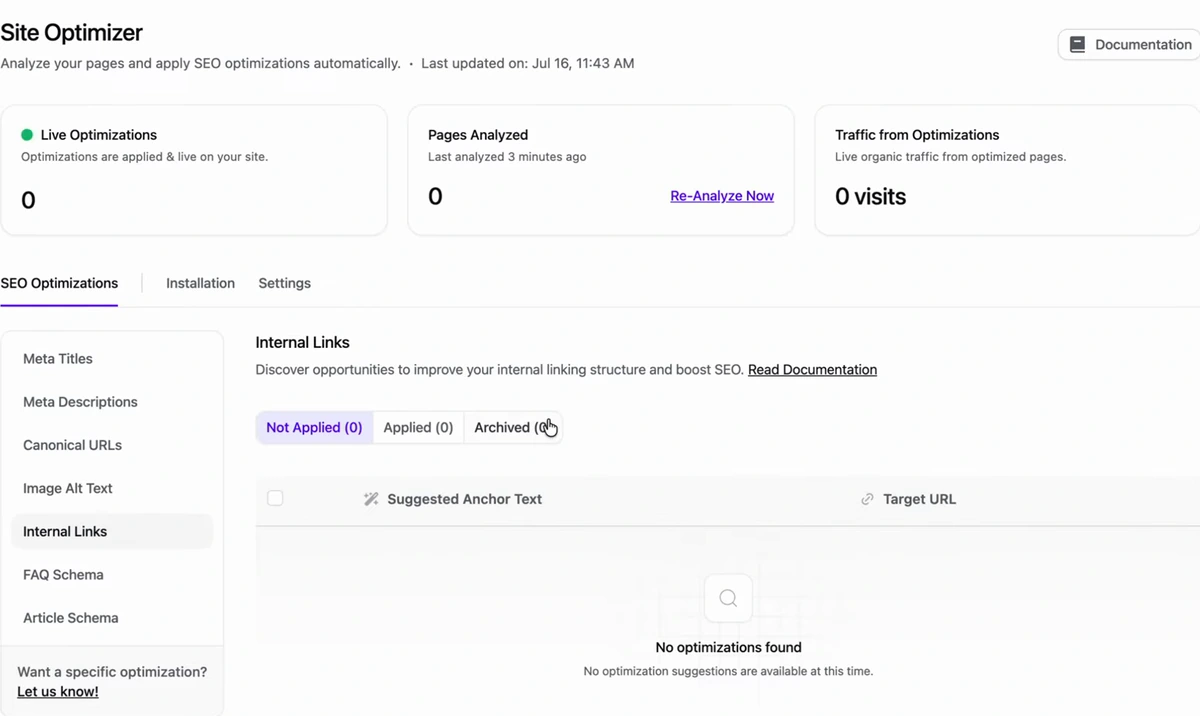
5. Turn on automatic backlinks
Your site joins a network where backlinks get placed automatically as other users publish relevant articles. A free account earns one backlink per day, and you can raise the daily cap from there. The setting that matters is the receiving preference:
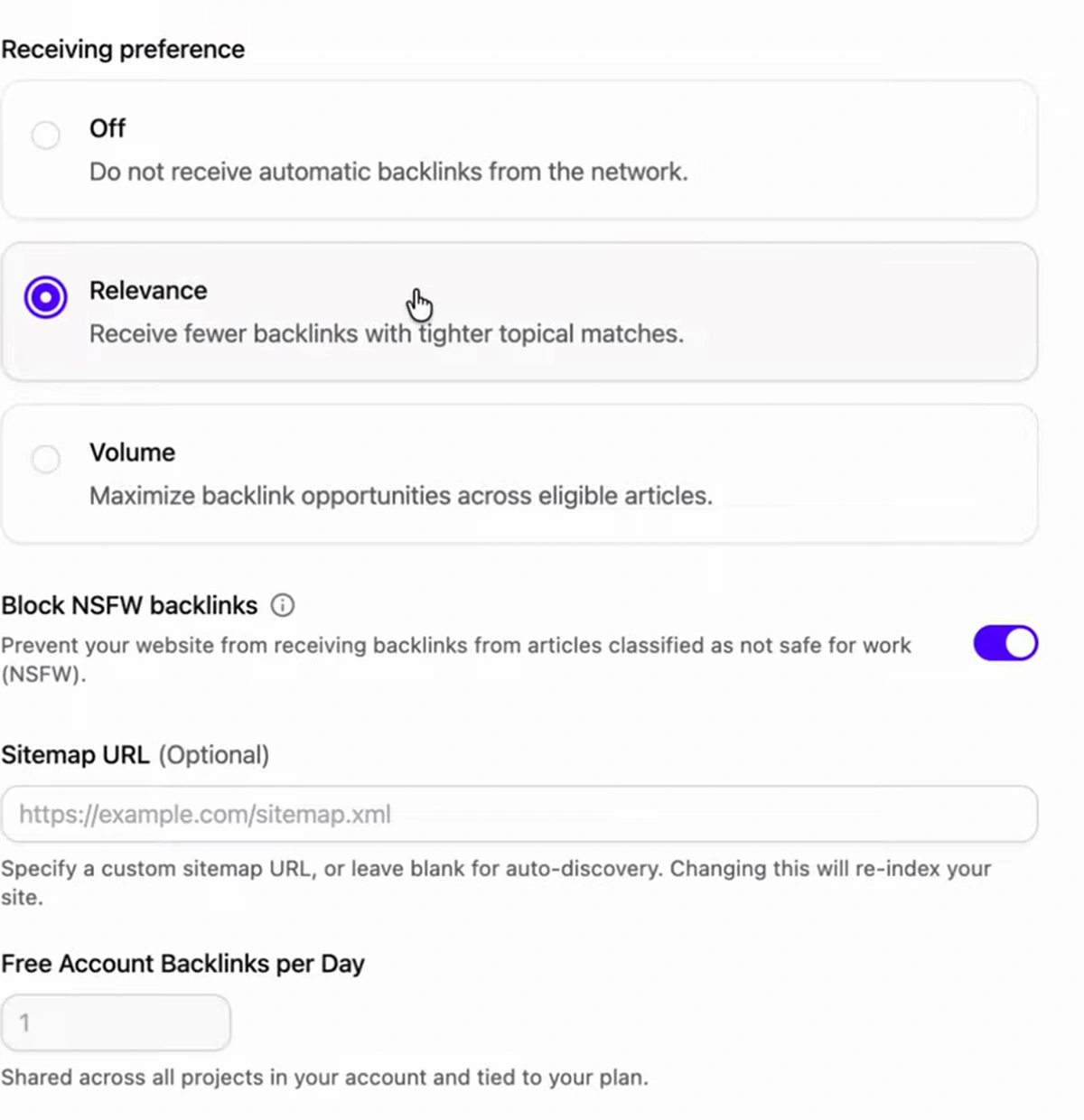
My rule of thumb: starting from zero, choose Volume — you want the backlink profile and DR compounding as fast as possible. Once you have meaningful traffic and want tighter topical matches, switch to Relevance. That's the whole strategy, and you can read how the network works on the automatic backlink exchange page.
Then measure — including whether AI mentions you
Connect Google Search Console and Ahrefs to SEO reports and you get one view of how the site is growing. And because AI answers are now a real channel, set up prompt tracking too: add the prompts your customers would ask, and see whether ChatGPT, Claude, Gemini, Perplexity and Grok cite you in their answers — that's what the LLM visibility tracker does. It closes the loop on the exact channel most of that Reddit thread didn't know exists.
FAQ
Is SEO still worth starting in 2026?
Yes. SEO is not dead — it expanded. Alongside classic Google rankings there is now a second channel, AI citations, where models like ChatGPT and Google's AI Overviews link to source websites. New sites can win in both channels, and traffic from them replaces ad spend you'd otherwise pay for.
What should a complete beginner focus on first?
Cover the three pillars in this order of effort: content first (with real business context so it isn't commodity content), backlinks second (to build domain rating), and technical SEO last — it matters, but AI tools can audit and fix it automatically, so it deserves the least of your manual attention.
How long until a brand-new site sees results?
In the example I walked through, an e-commerce store went from zero to a few hundred organic visits a month in about three months, reaching roughly 600 monthly visits by month four with DR 25 and over 100 referring domains. Expect roughly a quarter of consistent publishing and link building before the curve turns.
Can AI really do SEO for me?
Yes, for most of the work. AI can crawl your site and fix technical issues, generate and publish content on a schedule, and automate backlink placement. Your job shifts to strategy: feeding it the right context about your business and checking the results.
Should I choose relevance or volume for automatic backlinks?
Starting from zero, choose volume — the priority is growing your backlink profile and domain rating quickly. Once your site has traffic you want to protect, switch to relevance so you only receive links that closely match your niche.
Want the full beginner path with nothing skipped? I put the complete system — content engine, technical fixes, backlinks and AI citations — into a free AI SEO course. It's the answer I wish that Reddit thread had gotten, in course form.
I ended up posting my answer back into that thread, because people deserve better than 2018 advice. The gap between people doing SEO manually and people running it with AI is already showing up in the traffic charts — pick the right side of it early.
Generate, publish, syndicate and update articles automatically
The AI SEO Writer that Auto-Publishes to your Blog
- Cancel anytime
- Articles in 30 secs
- Plagiarism Free