
How to Get Free Backlinks in 2026: 9 Methods That Work (Plus One Automated)

Backlinks are still the hardest part of SEO to get and the part that still decides the tiebreaks. The usual answer is to buy them, and we have written about what that actually gets you — a $500 backlink, a $5 Fiverr one. This article is the other route: nine ways to earn backlinks for free that a real business can start on today, plus one automated method as a bonus, taken from the walkthrough below. Every method comes with the same worked example — a roofing company — so you can see what "publish original research" or "build a linkable asset" actually means for a local business rather than for a SaaS with a content team.
The nine free backlink methods at a glance
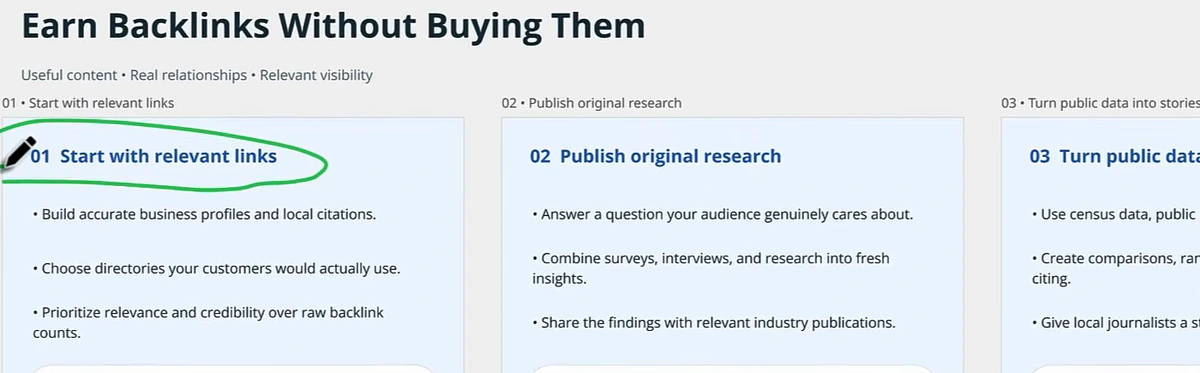
The whole system fits on one board, and the subtitle on it is the point: useful content, real relationships, relevant visibility. None of the nine methods involves paying a site for a link. All of them give another site a reason to link to you on its own.
| # | Method | What the roofer does |
|---|---|---|
| 1 | Local citations and business profiles | Joins the chamber of commerce directory, Yelp and ~10 local directories with matching NAP |
| 2 | Original research | Surveys 100 homeowners about the first signs of a roof leak, offers the report to journalists |
| 3 | Public data turned into stories | Turns storm records into a five-year hail-event comparison by county |
| 4 | A niche benchmark | Audits 500 roofing websites for published warranty terms |
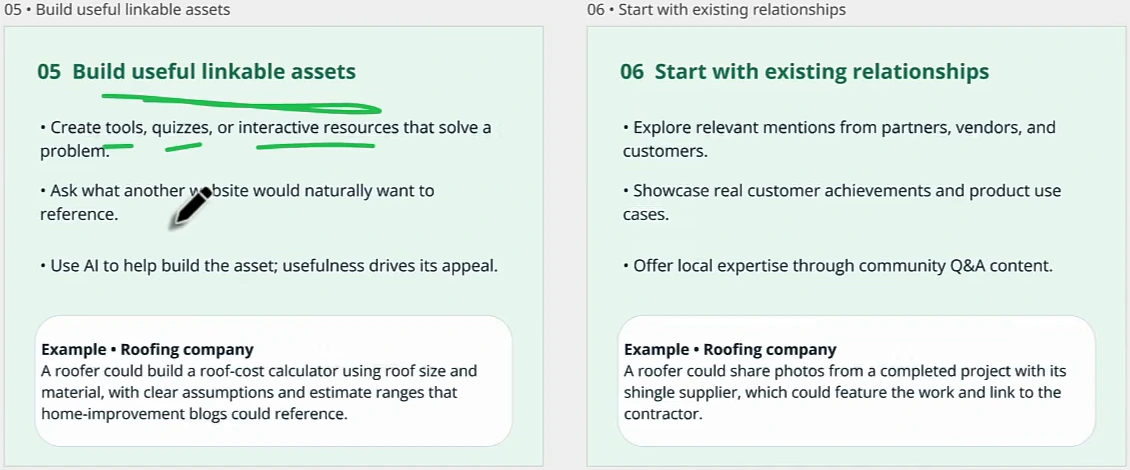
| 5 | A linkable asset | Builds a roof-cost calculator that home-improvement blogs can reference |
| 6 | Existing relationships | Shares a finished project with its shingle supplier, who features it |
| 7 | Goodwill | Donates a repair to a shelter and shares the before/after story |
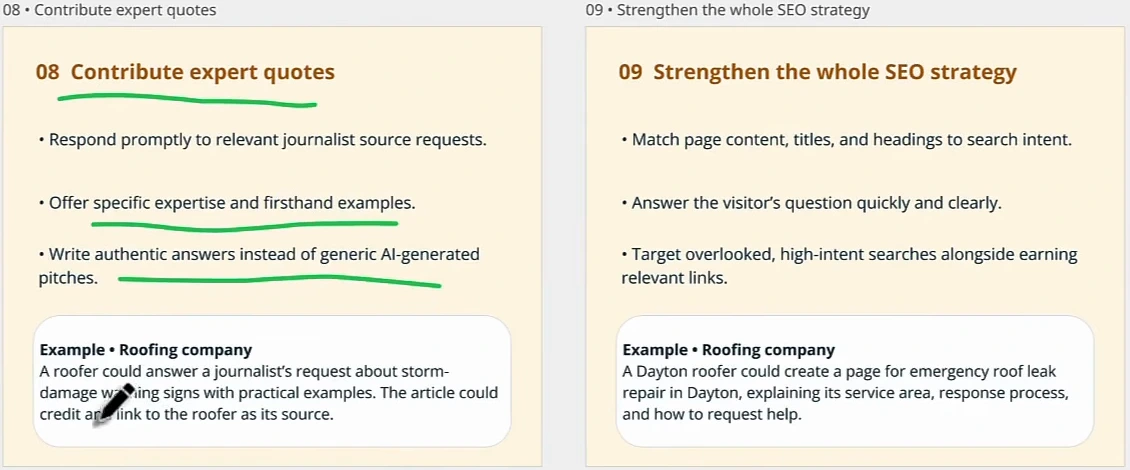
| 8 | Expert quotes | Answers a journalist's storm-damage request with firsthand examples |
| 9 | A stronger SEO strategy | Publishes an emergency-roof-leak page that matches search intent so people cite it |
| +1 | Automation | Joins a backlink network that places links from other members' articles |
1. Start with local citations and accurate business profiles
The first method is the least glamorous and the one most businesses do half of. Set up your Google Business Profile, then search for every local directory and business index you can join and add the business to it — with the name, address and phone number identical on every listing. The board's third bullet is the one to remember: prioritise relevance and credibility over raw backlink counts. A roofer joining the local chamber of commerce and adding its website to the member directory gets a link from a site with very high credibility and, as the presenter notes, a high domain rating; it costs a membership fee, but Yelp and the ten-or-so other local directories a quick search turns up cost nothing. This is the same foundation our Google Business Profile SEO guide starts from, and it is the easiest set of links on the list.
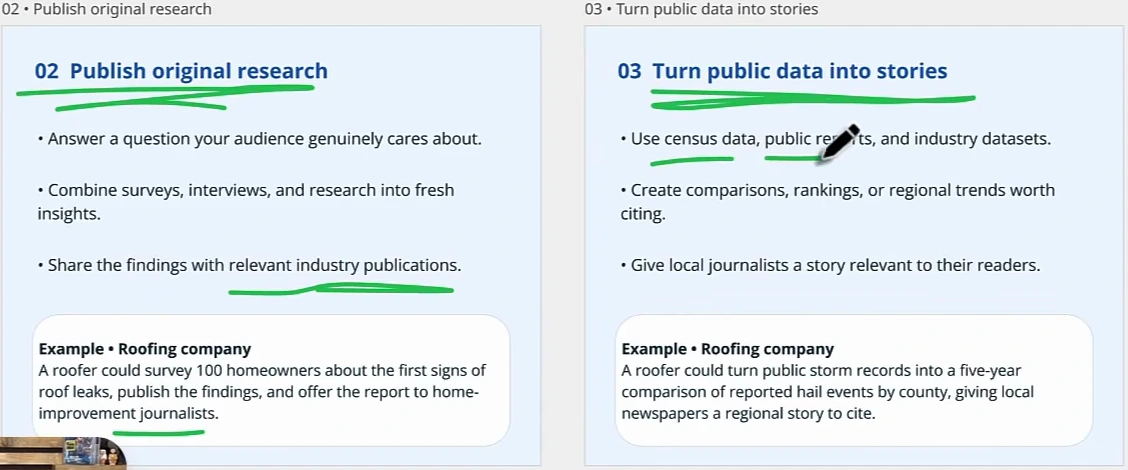
2. Publish original research
Answer a question your audience genuinely cares about, combine surveys, interviews and research into a fresh finding, and share it with the industry publications that write about your niche. The roofing example is a survey of 100 homeowners about the first signs of a roof leak, published as a report and offered to home-improvement journalists. The presenter's practical point is that many businesses already hold this data: an intake questionnaire that asks every new customer what they noticed first is a survey, and its answers are original research nobody else can publish.
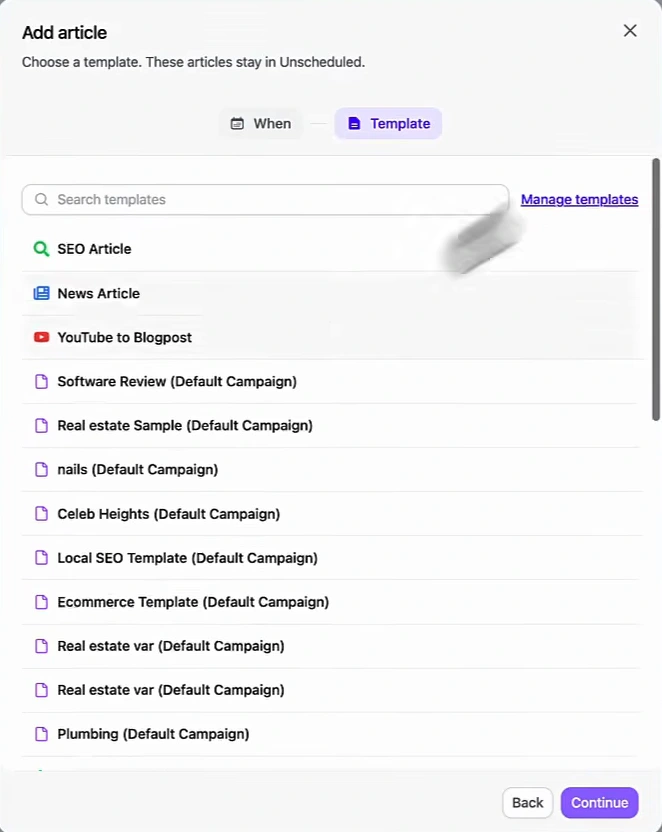
The reason he leans on this method is that research articles are non-commodity content — the kind both Google and the AI models prefer to cite. In the video he shows how he produces them inside Arvow: the AutoBlog template picker holds his own templates (software review, local SEO, e-commerce, real estate, plumbing), each built from a generation prompt and a markdown outline, so a research article is a matter of choosing the template and adding the data points.
3. Turn public data into stories
The third method needs no survey at all. Census data, public reports and industry datasets are free, and a comparison, ranking or regional trend built from them is something a local journalist can run as a story. The roofing version: take public storm records and turn them into a five-year comparison of reported hail events by county, then offer it to local newspapers and regional sites. The story is relevant to their readers, it is sourced, and the roofer is the byline.
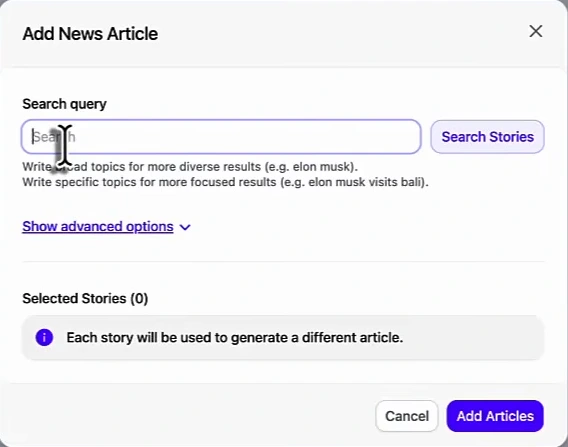
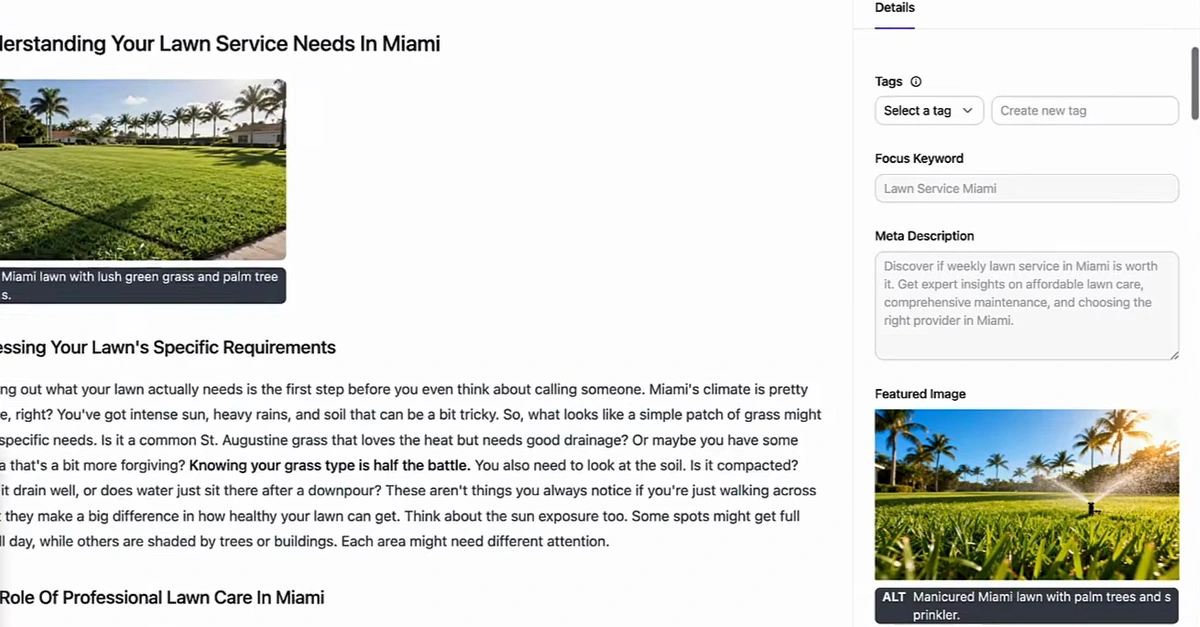
The video's shortcut for the writing half is Arvow's news-article mode. You type a search query — "local weather Miami" is his example — it pulls the stories currently showing up for it, and each selected story becomes its own article. His caveat is worth repeating: the point is not to publish AI slop, which will not get indexed, but to publish a properly structured piece — headings, alt text, internal links to your own pages — that a newspaper is comfortable citing.
4. Create a niche benchmark
Pick one topic people in your industry argue about, measure it, and publish the number with its sample size, collection date and methodology — and an honest note on the limits of what you measured. The roofing example is an audit of 500 roofing websites for published warranty terms, released as a percentage with the date and sampling method attached. A benchmark like that gets cited every time someone in the niche needs a number, and the methodology section is what makes journalists and other sites comfortable linking to it rather than a competitor's guess.
5. Build useful linkable assets
Tools, quizzes and interactive resources that solve a problem get linked because they are useful, not because anyone asked. The test on the board is the right one: ask what another website would naturally want to reference. For a roofer, that is a roof-cost calculator that takes roof size and material and returns an estimate range with its assumptions stated — exactly the thing a home-improvement blog links to when it needs to say "costs vary". Two practical notes from the video: you can have AI build the asset (he says "vibe code it"), and the calculator should end in an opt-in form or a phone number, so the same asset that earns the link also books the appointment.
6. Start with existing relationships
Partners, vendors and customers already have websites, and most of them would feature you if asked. A roofer that shares photos of a completed project with its shingle supplier gives the supplier a case study to publish — and the case study links to the contractor. The same works in reverse for customers with a public presence, and for community Q&A content where you supply the local expertise. These are the warmest links on the list because there is a real relationship behind them; nobody is being cold-pitched.
7. Earn attention through goodwill
Support a community need with your skills or services, document the real benefit to real people, and share the story with the relevant organisations and local media. The roofing example is donating a repair to a community shelter and publishing the before-and-after; the shelter or the local paper may mention the business. The presenter adds the simpler version: many local organisations that accept donations feature their donors on their websites by default, so a donation to a charity can come with a link without anyone having to write a story about it.
8. Contribute expert quotes to journalists
Journalists need sources, and they credit and link the ones they use. Respond promptly to relevant source requests, or — when something is trending in your niche — go to the journalists yourself. His example is a hurricane: a roofer that reaches out that week with a quote on the situation, or answers a request about storm-damage warning signs with practical examples, gets credited as the source. The board's third bullet is the one most people get wrong: write authentic answers with firsthand examples, not generic AI-generated pitches. Journalists can tell, and the generic ones go in the bin.
9. Strengthen the whole SEO strategy
The ninth method is the one that makes the other eight compound. Match page content, titles and headings to search intent; answer the visitor's question quickly; target the overlooked, high-intent searches — the bottom-of-funnel questions — alongside the link work. A Dayton roofer publishing a page for emergency roof leak repair in Dayton, with its service area, response process and how to request help, is publishing a page that gets indexed and that other people link to on their own because it is the useful answer. Structured, technically sound, helpful pages attract links without outreach; that is the whole argument of our piece on backlink quality vs quantity, and it is why link building and content strategy are not separate jobs.
Bonus: automate backlinks with a network
The tenth method is the one that is not free in the same sense — it comes with the tool — but it runs without you. Arvow's automatic backlink network works like this: every user submits their site, the tool reads the sitemap, and when any user generates an article it checks the pool for relevant pages and links to them naturally from the content. Your articles link out to other members; other members' articles link back to you. Only relevant matches are used, and the domain rating of each link is shown so you can judge the quality yourself. The mechanics and a 24-link case study are in our backlink exchange guide.
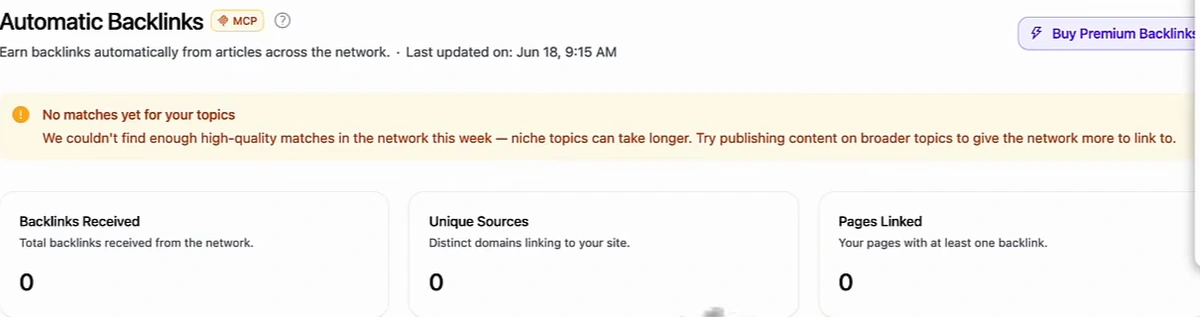
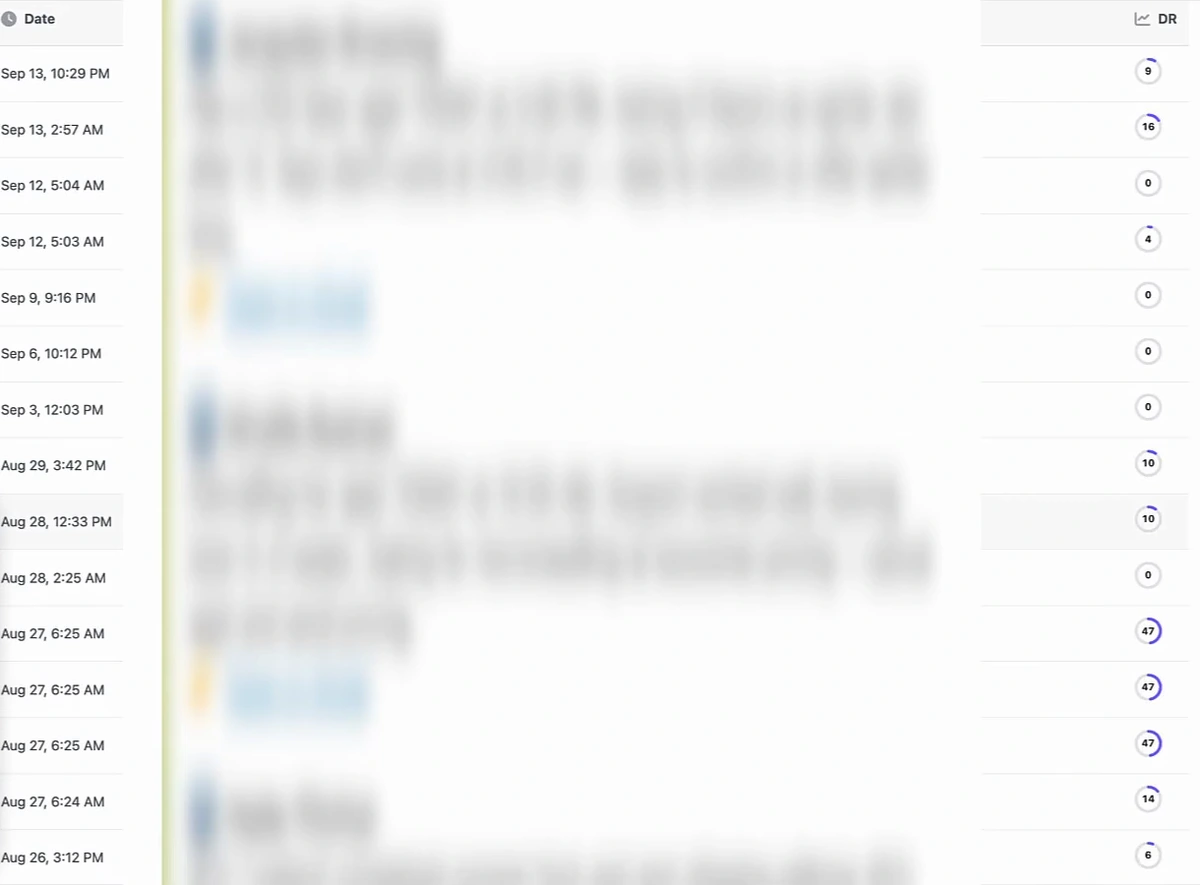
Two things in the video are worth being straight about. First, the demo project he opens has received zero backlinks — the panel says matches take time and niche topics take longer, and suggests publishing on broader topics so the network has more to link to. Second, he then switches to an established account's link list to show what the network delivers. The list is blurred, because the domains are private to the account, but the dates and domain ratings are visible: fifteen links between August 26 and September 13, with DR scores of 47, 47, 47, 16, 14, 10, 10, 9, 6, 4 — and six at DR 0. He calls out the 47s and says the network has delivered DR 60–70 links; the frame also shows that not every placement is a strong one. That matches what we found in our own comparison of automated agents vs doing it manually: automation gives you volume on autopilot, and you still read the DR column.
Where to start
- Do method 1 this week. Google Business Profile, chamber of commerce, Yelp, and every local directory a search turns up — same name, address and phone on all of them.
- Pick one asset method (2, 3, 4 or 5) and build a single thing worth citing: a survey from data you already collect, a public-data story, a benchmark, or a calculator.
- Work the relationships (6, 7, 8) in parallel: supplier case study, one donation, and a quote to a journalist the next time your niche is in the news.
- Fix the pages people would link to (9), so the links you earn land on something that ranks.
- Add automation last, as a floor under the manual work — and check the DR of what it brings in.
None of these is faster than paying, and all of them outlast it. If you want to see how the free methods compare with the paid ones on cost and durability, our ranking of 13 backlink methods puts them side by side.
Arvow writes the research articles, public-data stories and intent-matched pages these methods depend on — with headings, alt text and internal links already in place — and its automatic backlink network links your pages from other members' articles while you work the free methods. See how the backlink network works.
Generate, publish, syndicate and update articles automatically
The AI SEO Writer that Auto-Publishes to your Blog
- Cancel anytime
- Articles in 30 secs
- Plagiarism Free