
How to Clone a Competitor's SEO Strategy With Claude and Arvow (2026): The IQ Test Site Making $3K a Month in Traffic

Afonso Carvalho's claim is simple: find a site that already makes money from organic traffic, hand its URL to Claude with one prompt, and get back the content plan that built it, ready to load into an autoblog. The site he picks is an IQ test app that Ahrefs values at $3.3K a month in traffic. This is a walk through what the prompt actually produced, what the screens show that the voiceover skips, and what the site looks like three months later.
What "$3K a month" means in the title

The number is Ahrefs' traffic value, the Google Ads spend needed to buy the same visits; Carvalho says so on camera. It is not revenue. The site, cognitivemetrics.com, sells a 30-minute IQ test; he puts the price of a result at $17.99 to $27.99 from memory, and no checkout is shown.
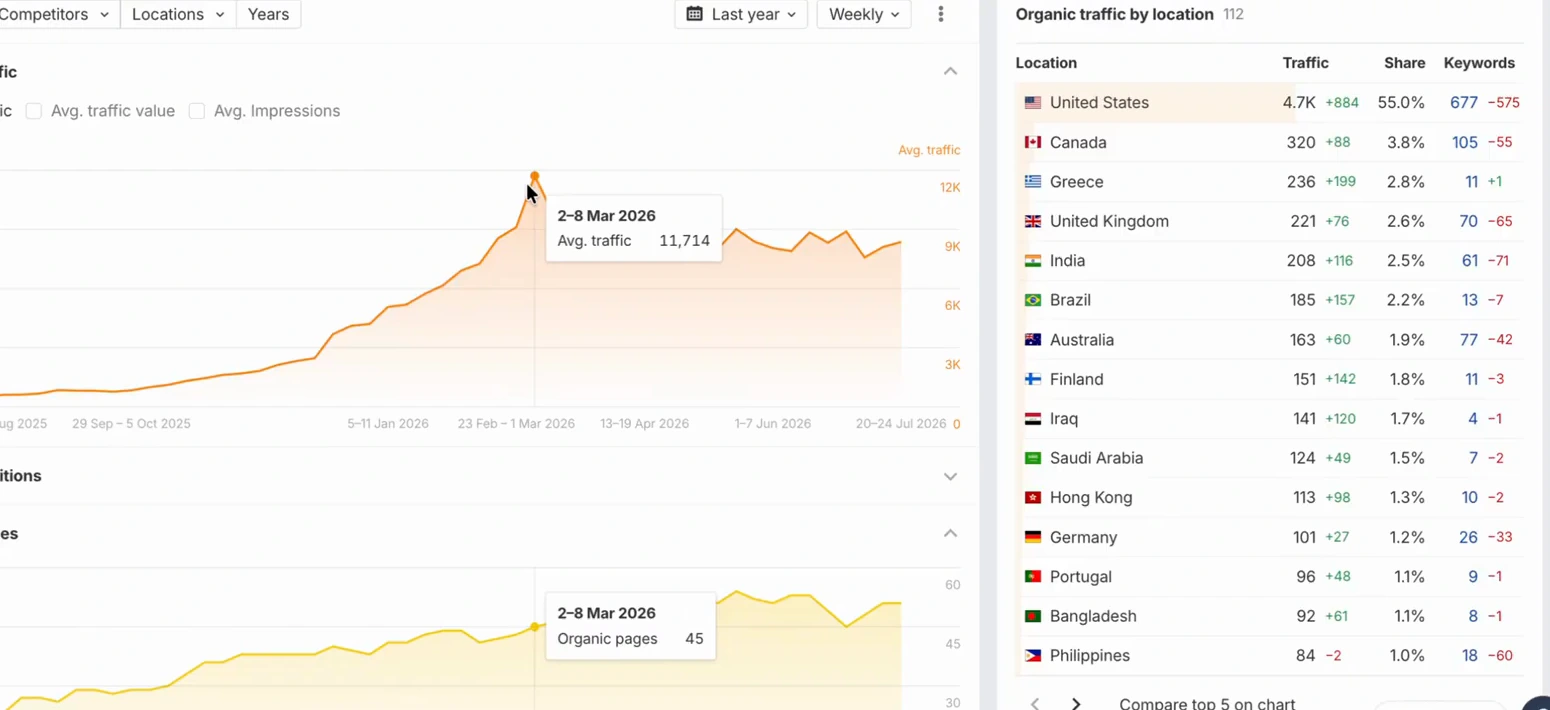
The chart carries the detail the voiceover compresses: 1,310 visits a week in late October 2025, a peak of 11,714 in the first week of March 2026, roughly 8.5K by the recording, on about 45 organic pages, 764 keywords, DR 27 and 890 referring domains. The United States sends 55% of visits.
The site being cloned


The funnel is an IQ test app with a blog attached. The blog has five posts, two named authors and three categories, and that is the opening Claude finds within a minute: "Only 5 blog posts, big opportunity." You do not need the app first: the prompt takes any URL as its benchmark, so it can run against a competitor before your own site exists.
The prompt, and what it runs in
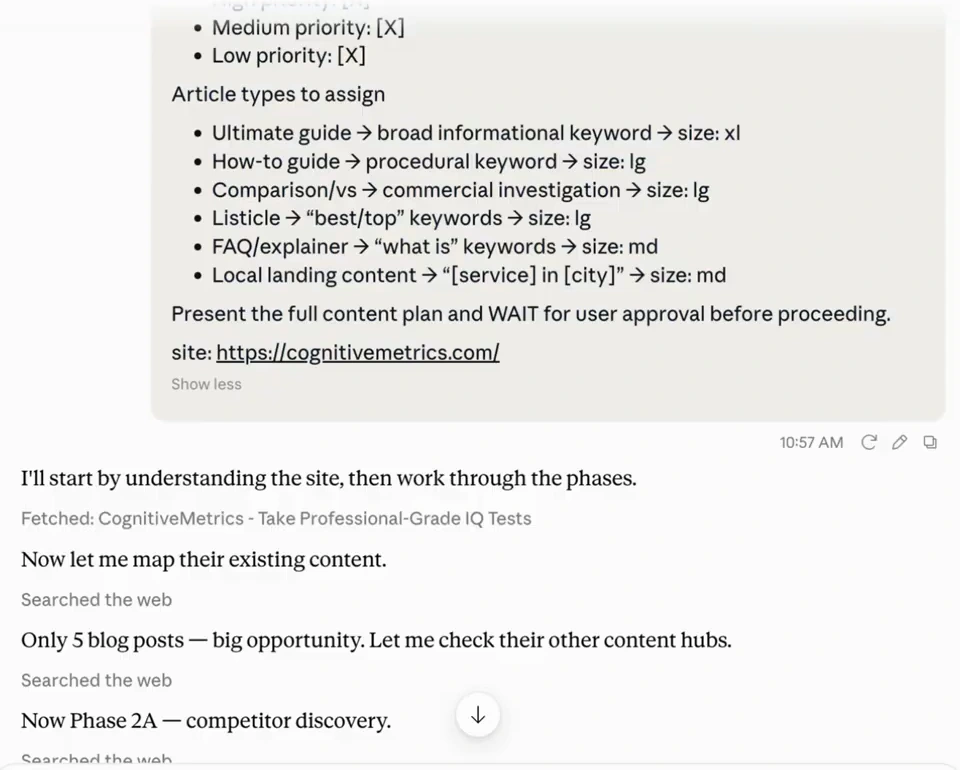
The prompt is the Claude Code SEO Workflow published on arvow.com, pasted in full from a tldraw board. It is a four-phase skill: site analysis, competitor discovery and gap analysis, SERP reverse-engineering with outlines, then publishing. Two things to know before copying it. The title says Claude Code, but the recording runs the prompt in the Claude app with Opus 4.8 selected; the planning phases only need web search and text. And the prompt's last line tells Claude to wait for approval after the content plan, which is why the run has a human checkpoint in the middle.
Step 1: the competitor content map
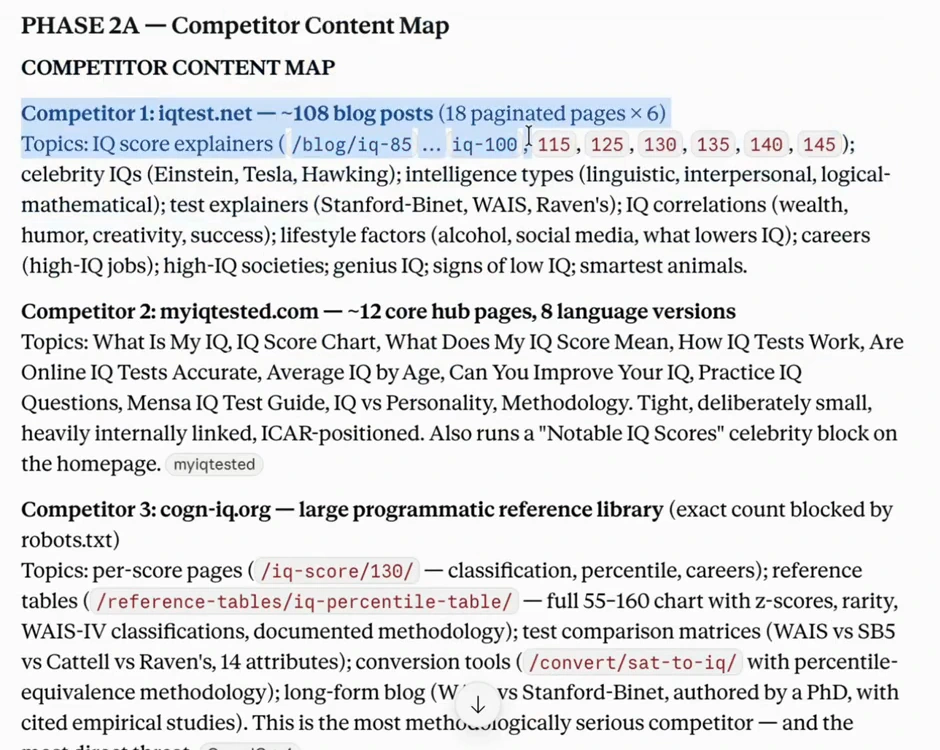
Claude picked four primary competitors and eight secondary ones and described what each publishes: iqtest.net has roughly 108 posts built around per-score explainers and celebrity IQs; myiqtested.com runs a tight hub of about 12 pages in eight languages; cogn-iq.org is a programmatic reference library with per-score pages, percentile tables, test comparison matrices and conversion tools, which Claude calls "the most methodologically serious competitor".
Step 2: the gap analysis
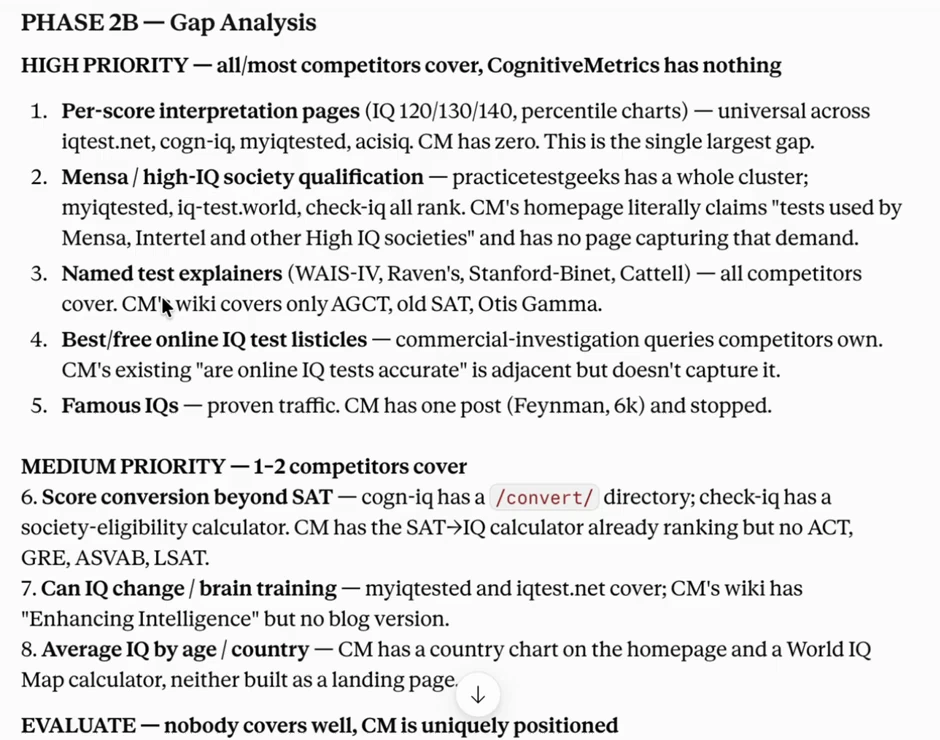
The prompt's priority rule is mechanical and useful: a topic every competitor covers and you do not is high priority, because demand is proven; a topic one or two cover is medium; a topic nobody covers needs a second look. Applied here it produced five high-priority gaps, led by per-score interpretation pages ("what does an IQ of 130 mean") that four competitors own and the target has zero of. The famous-IQ gap comes with evidence: the site's one post on the topic, the Feynman piece, is its third most-viewed. The proof of demand is the competitors' sitemaps rather than a difficulty score, the same logic as finding low competition keywords.
Step 3: the content plan
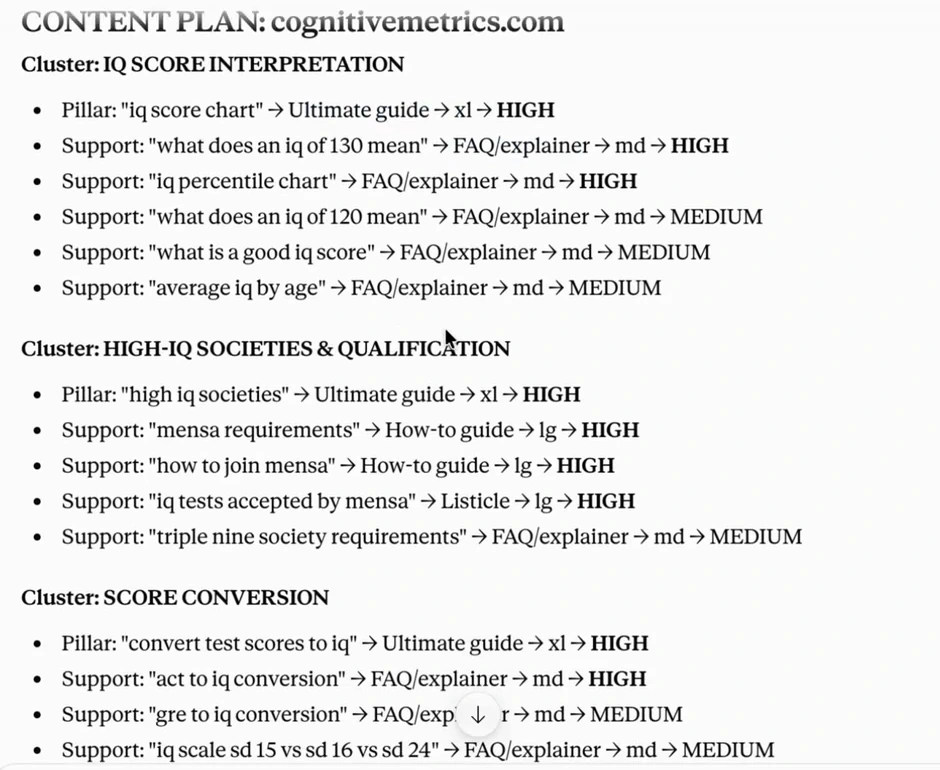
Eight clusters came back: score interpretation, high-IQ societies, score conversion, standardised test explainers, online test credibility, famous IQs, cognitive architecture (which Claude labels the site's moat), and changing IQ. Each keyword carries an article type and size: an "ultimate guide" pillar is XL, a "what is" support is medium. Claude flags two clusters that risk cannibalising each other and asks which to keep, drop or reweight. Carvalho types "yes keep going".
Step 4: SERP reverse-engineering
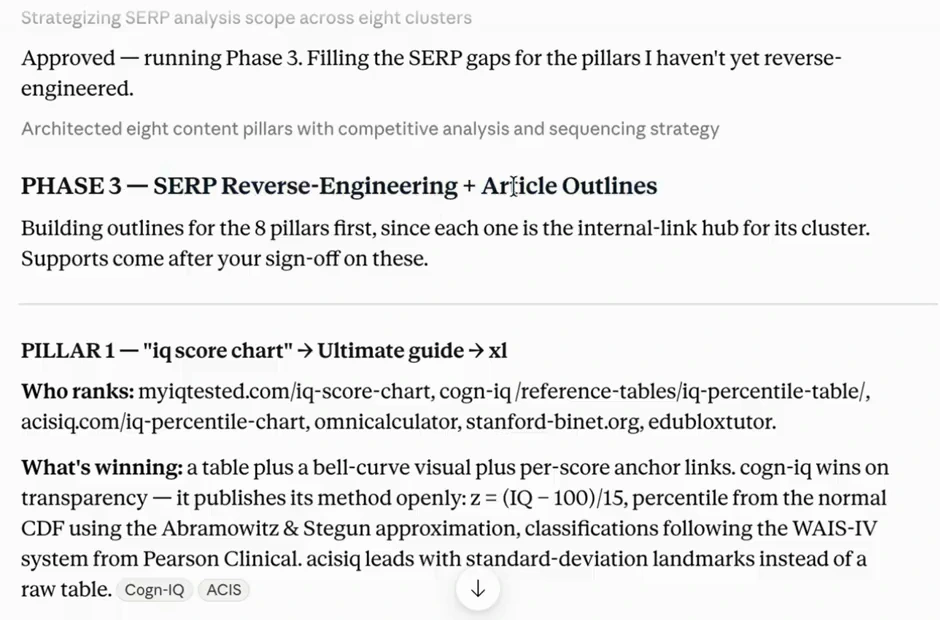
For the eight pillars Claude lists who ranks, what the winning pages share (for "iq score chart": a table, a bell-curve visual, per-score anchor links, and a published method), the exploitable weaknesses, and an outline with H2s. It then proposes a build order in three waves, pillars first, because each pillar is the internal-link hub for its cluster. That ordering is what makes the internal linking work later.
The advice the video does not read out
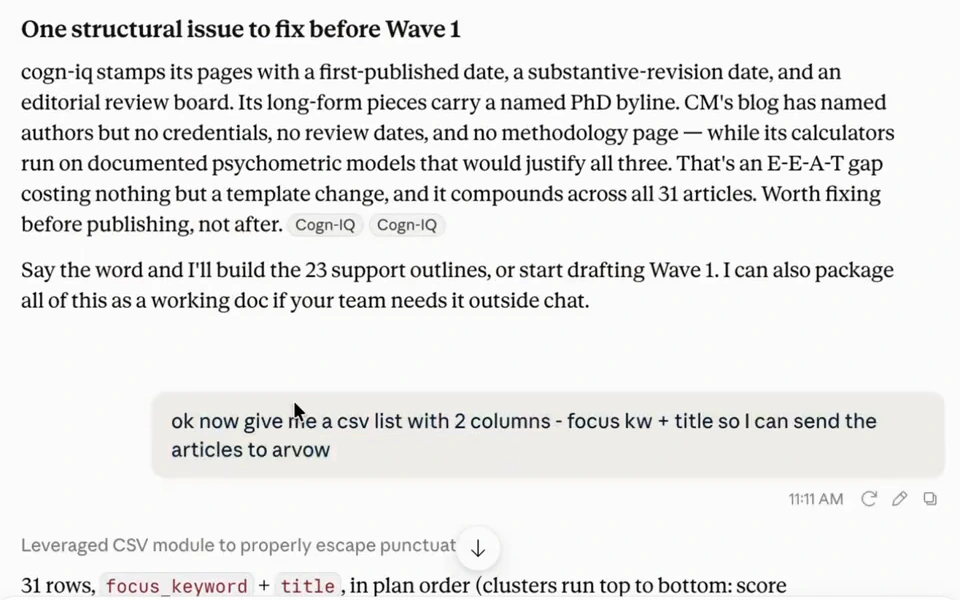
Three recommendations sit on screen and get no airtime. Claude notes the target's blog has named authors but no credentials, no review dates and no methodology page, while its strongest competitor stamps every page with all three, and calls it "an E-E-A-T gap costing nothing but a template change" that compounds across all 31 articles. After the export it adds that the eight pillars should be generated and published as a first batch so the 23 supports have live URLs to link to, and that two rows, "best online IQ test" and "highest IQ in the world", need custom instructions or they become "another list of fake 276s". None of those three steps is taken in the demo. If you run this, take them.
The export: 31 rows
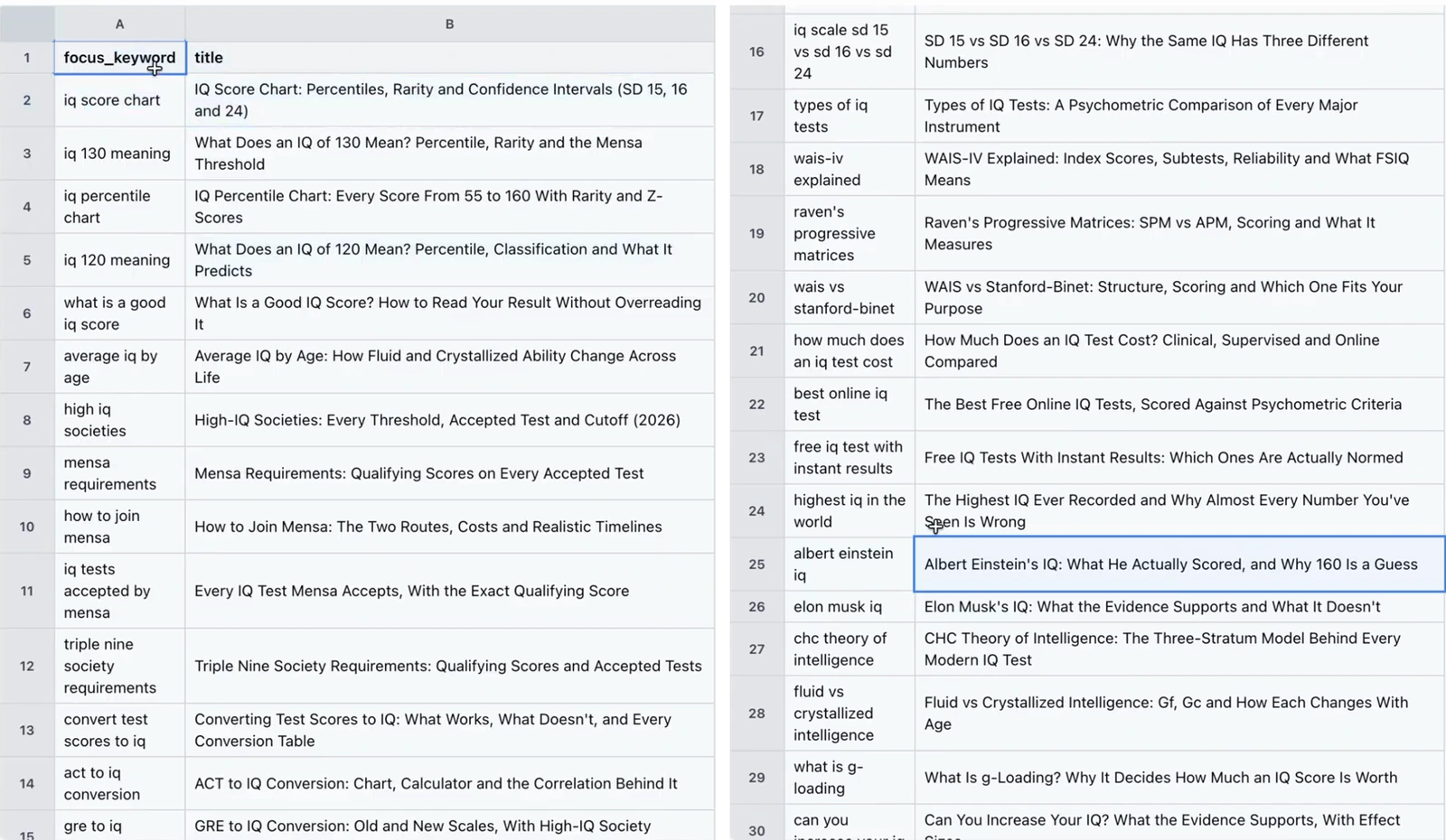
One message asking for a two-column CSV, focus keyword plus title, turns the plan into an import file. The titles are already SERP-shaped: "IQ Score Chart: Percentiles, Rarity and Confidence Intervals (SD 15, 16 and 24)", "How to Join Mensa: The Two Routes, Costs and Realistic Timelines", "Albert Einstein's IQ: What He Actually Scored, and Why 160 Is a Guess". Carvalho's favourite cluster is the celebrity one, "because people are nosy". Thirty-one rows is a month of content at one a day.
Into Arvow: six screens
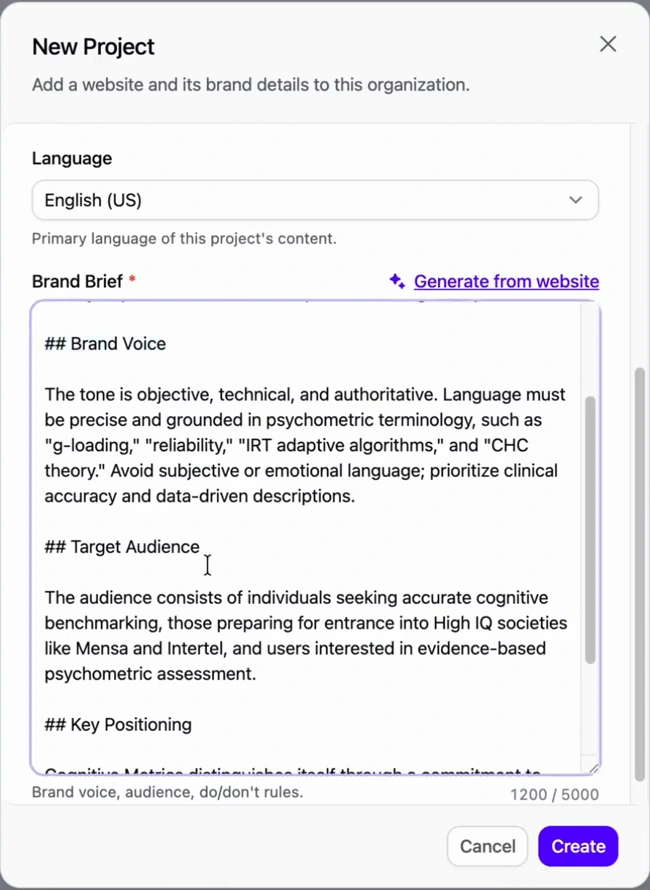
The Arvow half is a fresh project set up with the benchmark site's URL, a demo of the mechanics rather than the owner's account. The brief Arvow generates from the homepage picks up the site's vocabulary (g-loading, reliability, CHC theory) and audience (people preparing for Mensa and Intertel), which keeps 31 generated articles on-brand.
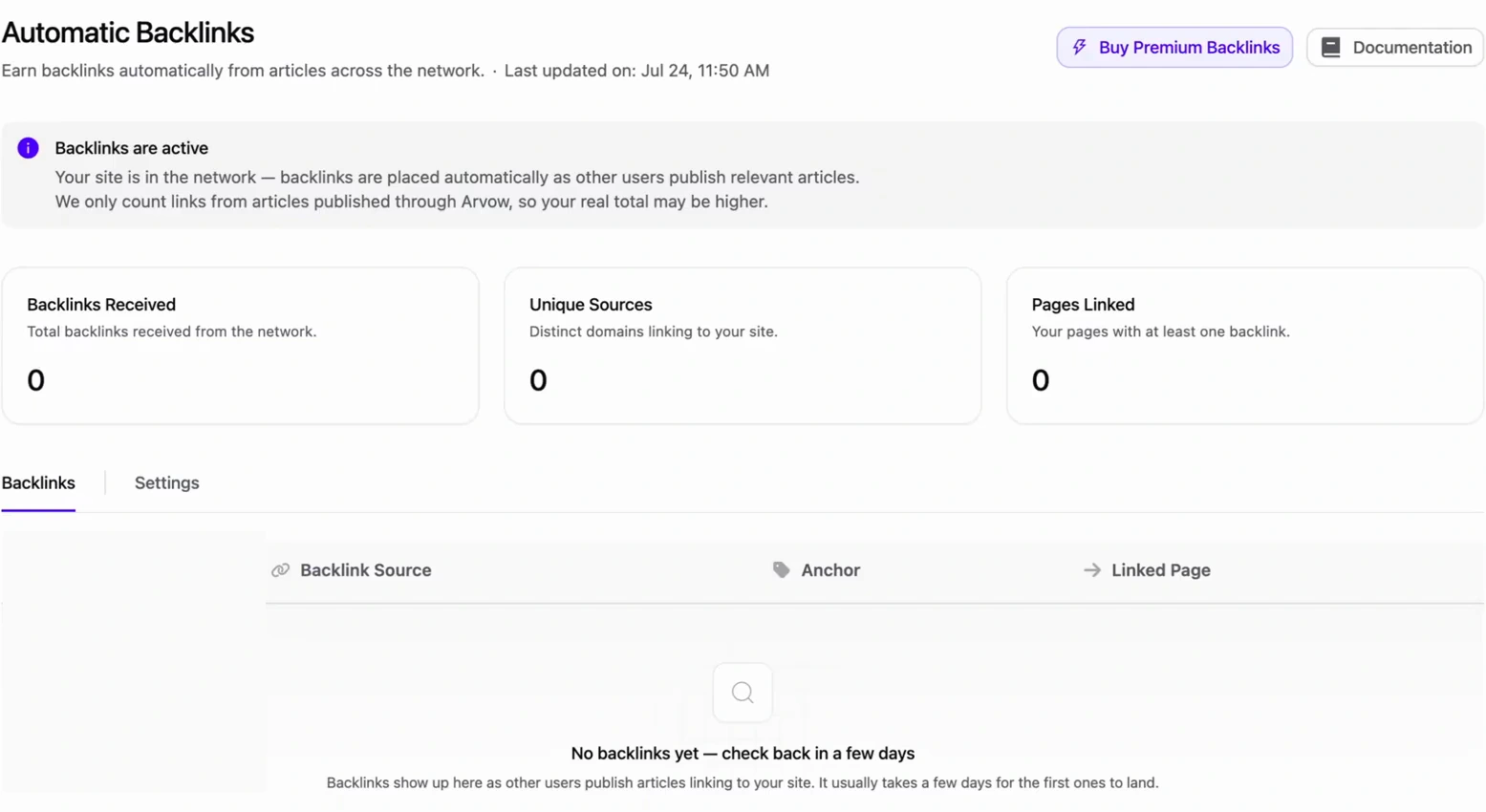
Carvalho presents the automatic backlinks as the first thing a new project gets. The screen is honest about timing: "No backlinks yet, check back in a few days". The links come from other users' articles in the same niche, so a brand-new IQ test site starts at zero and depends on how many relevant publishers are in the pool.
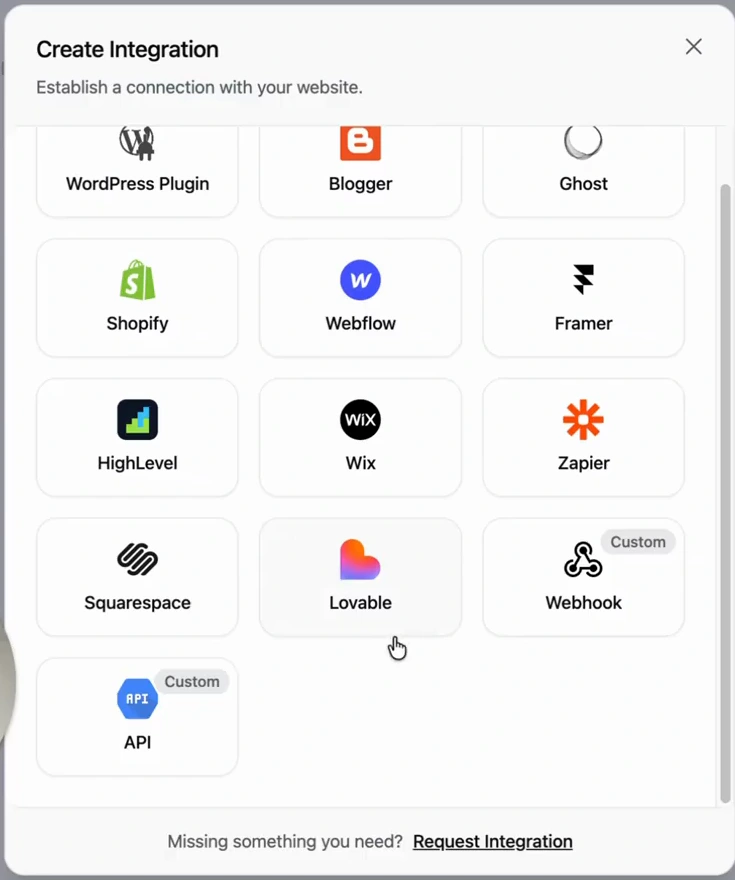
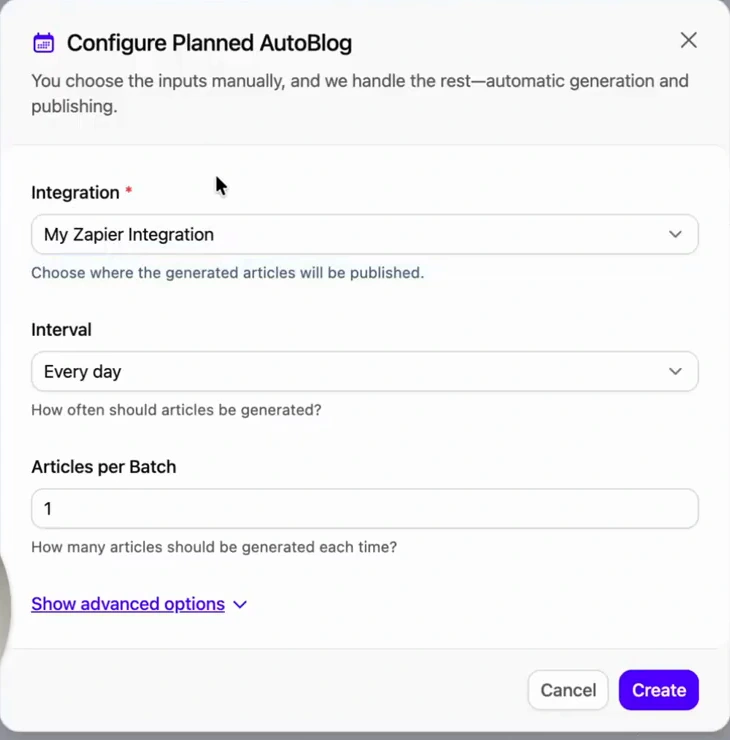
The campaign is a planned autoblog: you supply the inputs, Arvow generates and publishes on a schedule, here one article a day. The CSV imports in one go through Add SEO Articles, or rows can be typed by hand; he types the "elon musk iq" row to show the fields. The import side is covered in AI programmatic SEO.
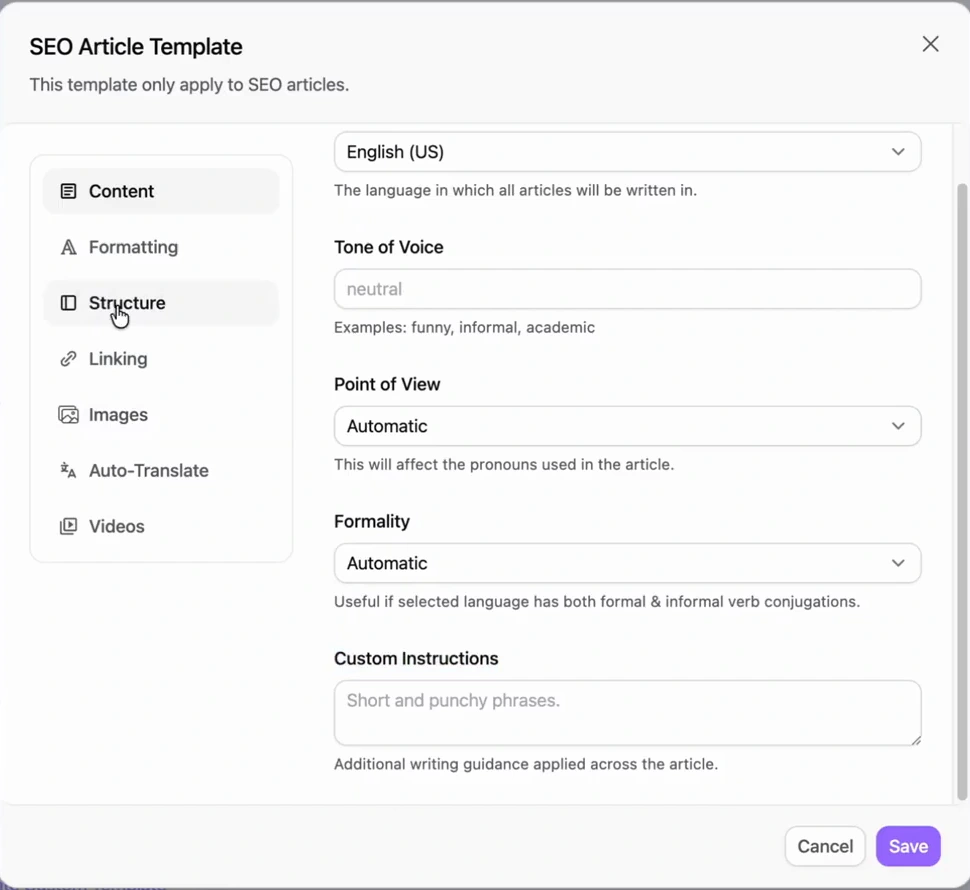
Two template settings carry the strategy: a call to action pointing at the test, and the site's URL under Linking so the generator places internal links to existing pages. He turns AI images on and videos off ("I don't want people to get distracted").

The Elon Musk piece opens with a takeaways block and argues that viral IQ screenshots are "almost universally statistically illiterate", the debunking angle Claude asked for, with a table, internal links and an FAQ. Whether it ranks depends on what every AI-written page depends on, which our case studies cover: what it adds beyond the competitors' versions.
What we checked on 30 October 2026
The video is from 24 July 2026, so we opened the target site again. Four findings.
- The blog has not moved. It still lists exactly five posts, the newest dated 13 February 2026. None of the 31 titles exists on cognitivemetrics.com. The gap Claude found is still open for anyone who wants it.
- The app has grown anyway. The homepage badge now reads "Join 200,000+ active users" against 160,000+ in July, with the same 4.4-star rating and 69k-subscriber community. Tools and calculators, not posts, are carrying this site.
- The demo never ran. The Arvow project is Carvalho's, created with the site's URL. The campaign shows Inputs 1, Generations 0 when he leaves it; the one generated article comes from a separate default campaign. Nothing was published to the site.
- "30 minutes" is about an hour on screen. The Claude chat's timestamps run from 10:57 to 11:11 AM, and the Arvow project's last-updated stamps run from 11:50 to 11:58 AM. The planning really is fast; the setup is longer than the title.
How to run it on your own site
- Pick a competitor whose traffic curve you would like, and check that the traffic comes from pages you could write, not a tool you cannot build.
- Paste the workflow prompt with the competitor's URL. Read the competitor map before approving; it is where Claude's assumptions are visible.
- At the approval step, cut clusters that sit on your own money pages' queries. Then take the three recommendations above: fix bylines and dates, generate the pillars first, and write custom instructions for listicle and "highest ever" rows.
- Export the two-column CSV, create the Arvow project and autoblog, import the rows, set the CTA and sitemap in the template, and start at one or two a day.
- Run the gap analysis again in a month on your own URL and ask for the next 30 rows. In a commercial niche, run the buying intent pass first so the pillars sit on queries that convert.
FAQ
Does this need Claude Code, or does the Claude app work?
The recording uses the Claude app with Opus 4.8; the prompt is written as a Claude Code skill but only needs web search and text output for the planning phases. The publishing phase in the original skill uses Arvow's API, which the video replaces with a CSV import. If you want the end-to-end automated version, the Claude Code SEO guide covers the setup.
Is cloning a competitor's content plan a problem?
The plan reuses the competitors' topic choices, not their text; every title in the CSV is new, and the SERP phase is about beating the ranking pages on specifics they lack. What you should not clone is thin coverage: the articles are only as good as the brief, custom instructions and first-hand detail you add, which is the point of non-commodity content.
How much traffic can a 31-article clone expect?
The video shows no results from the clone, only the benchmark's curve: under 2K to 11.7K weekly visits in about seven months on roughly 45 pages. Carvalho's framing is medium term, not instant, and he suggests running three or four such funnels in parallel.
Want the plan generated and published on a schedule? Arvow's AutoBlog takes a keyword CSV, writes each article from your brand brief and publishes it to your site, with automatic backlinks switched on from day one.
Generate, publish, syndicate and update articles automatically
The AI SEO Writer that Auto-Publishes to your Blog
- Cancel anytime
- Articles in 30 secs
- Plagiarism Free