
Link Swap: How to Find Partners Who Actually Say Yes (2026)

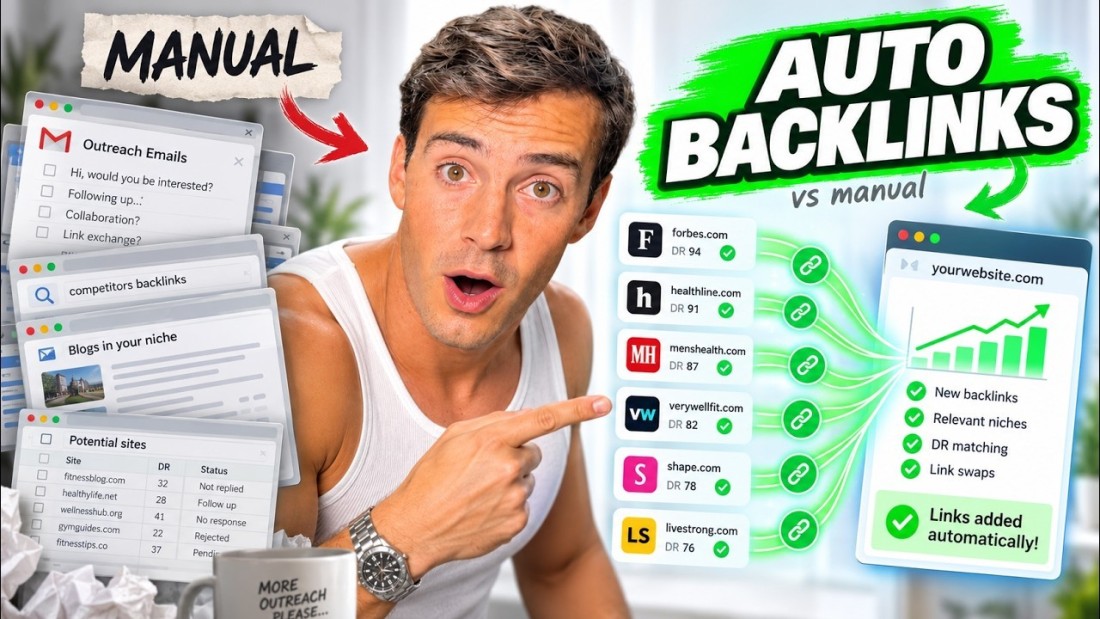
A link swap is two site owners agreeing to link to each other. It's the oldest free link-building tactic there is, and most people do it wrong. They pitch the sites that already rank for their keyword, which are the sites least likely to say yes.
In the video below I show the version I still run by hand: skip the sites that rank, go after the sites that link to the sites that rank, and only the ones that linked recently. I also show the automated version I use alongside it. This article walks through both with the screens from the recording. It adds one check the video skips, which would have stopped me pitching my own example prospect.
A note on dates: the video went up in September 2026, but the screens were recorded in the first week of May 2026. The Ahrefs dates in the frames say so. Every number below is a May 2026 number.
What a link swap is, and where Google draws the line
A link swap (also called a link exchange or reciprocal link) is simple: I link to a relevant page on your site, you link to a relevant page on mine. No money changes hands, which is why it's attractive to small sites that can't afford paid placements.
Google's spam policies name "excessive link exchanges" ("link to me and I'll link to you"), along with partner pages built only for cross-linking, as a link scheme. The word that matters is excessive. A handful of swaps between genuinely related sites, where each link sits in content and helps the reader, looks like the web working normally. A site whose outbound links are mostly swaps looks like a scheme. Everything below is designed to keep you in the first group: few swaps, relevant partners, links inside real content.
Step 1: search the keyword you want links for
Start from the page you want to rank, not from a list of "sites that accept link swaps". In the video the page is Arvow's LLM rank tracker, so I searched best llm rank tracker on Google.
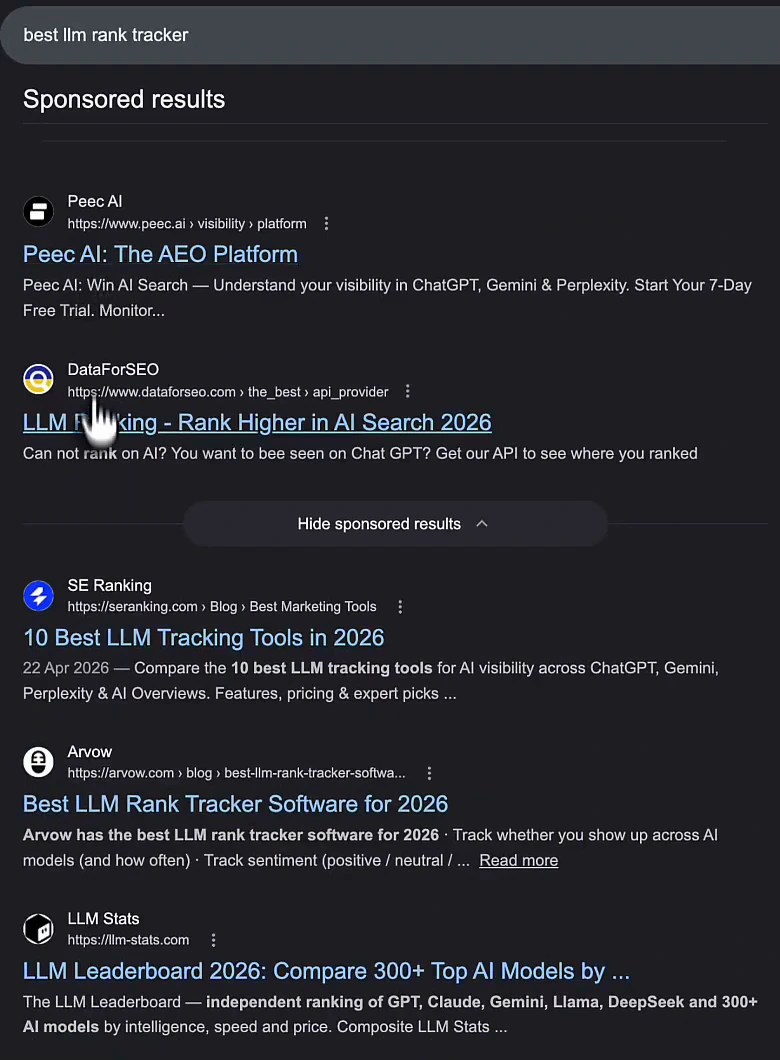
This page shows who you compete with: the organic results and the companies paying to appear. In May 2026 that meant Peec AI and DataForSEO in the ads, and SE Ranking, Arvow's own LLM rank tracker roundup, LLM Stats, Rankshift, SEO Sherpa and Yotpo organically.
Step 2: don't pitch the sites that rank
The instinct is to email the sites on that page. Don't. They compete with you for the exact query, and many are far stronger than you, so a swap would be lopsided even if they were willing.
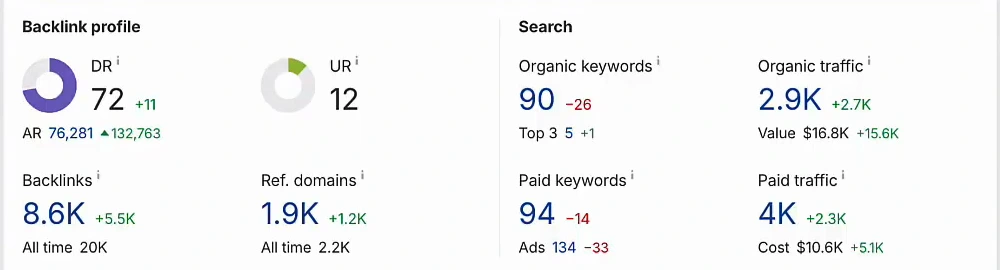
In the video I put it bluntly: a venture-backed company at DR 72 is never going to link to me for free. The same goes for the other names on page one. So they aren't the targets. They're the source list.
Step 3: pull their newest backlinks, in your DR band
Take a site that ranks or advertises for your keyword, open its backlinks in Ahrefs (or any backlink tool), and apply three filters:

- New, last month. A site that linked to a company in your niche nine days ago is actively adding links on this topic. It's far more likely to add another than a site whose last relevant link is a year old. In the demo the first rows were 6 to 13 days old.
- A DR band around yours. arvow.com was DR 55 at the time of recording, so I filtered for DR 15 to 45. A swap has to look fair to the other side: a DR 39 site gets a link from a DR 55 one, which is a good deal for them. A DR 80 site won't reply to that email.
- One competitor at a time. I used dataforseo.com, one of the advertisers on the search above. One domain and one month still produced 1,041 new links to work through.
The logic in one line: you will never get a link from the sites that rank, but you can get links from the sites that link to them.
Step 4: read why each link exists before you pitch
This is the step the video skips. In the recording I pick the top row as my example prospect: DR 39, about 14.6K monthly organic traffic, linked just 9 days earlier. On the numbers, it's a great swap partner. Now read the rest of the row:

The anchor text is German. Translated, it says the keywords you enter are sent to the DataForSEO service, with more details in the privacy policy. The target is dataforseo.com/privacy-policy and the link is tagged NOFOLLOW. This isn't an editorial recommendation. It's a data-processing disclosure from a site that uses DataForSEO's API for one of its own tools. That site links to DataForSEO because its privacy notice legally has to, not because it chose to feature a vendor.
That changes the pitch. "I noticed you link to DataForSEO" doesn't land when the link is a legal notice. The site may still be a fine partner, but you'd pitch it on your content's merits alone.
The next rows in the same export show the other patterns you'll run into:
| What the row shows | What it tells you | Pitch it? |
|---|---|---|
| Article, comparison page type, dofollow, the competitor named in a list ("4. DataForSEO") | An editorial roundup that adds tools. The best kind of prospect. | Yes: ask to be added and offer a relevant link back |
| Nofollow link to a privacy policy or terms page | A customer's legal disclosure, not a recommendation | Only on your content's merits |
| Nofollow link in body content (a DR 42 row in the demo) | They link, but they don't pass equity by default | Lower priority |
| Listing collection linking to dozens of domains (73 linked domains, 154 external links on one row) | A directory, often with affiliate redirects | Usually no: one more listing isn't a swap |
Two columns do most of the work here: the anchor and target URL (what the link is for) and linked domains (how many sites the page links to at all). A page linking to 6 domains gives each link real weight. A page linking to 73 doesn't.
Step 5: the pitch
Once a prospect passes step 4, the email is short. In the video I describe it this way: find their contact details, say you noticed they link to other tools in your space, ask for a link, and offer one back. A version you can adapt:
Hi [name], I came across your [article title]. You mention [competitor] in the [section], and I think [your page] would be useful to your readers alongside it because [one concrete reason]. If you add it, I'd be glad to link to your [their relevant page] from our [your relevant article]. It fits naturally there.
Why it works when it does: you're in the same niche but not direct competitors, and the other side gets a link from a stronger domain than their own. I expect most well-chosen prospects to accept. I didn't show a reply rate in the video, though, so treat that as my expectation, not a measured number. Do it at volume, since each prospect costs one email.
For the broader prospecting and outreach process beyond swaps, see what SEO outreach is and how to run it.
Before you swap: check backlinks against referring domains
Early in the video I pull up arvow.com's own profile to make a point about raw link counts:
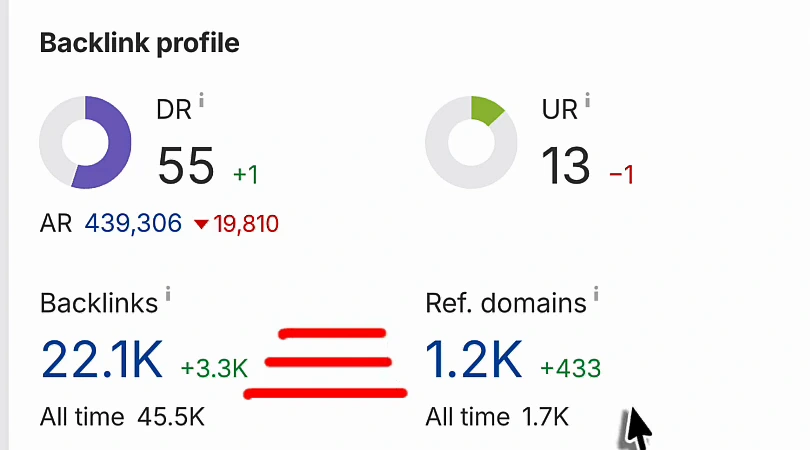
The number that matters is referring domains, not backlinks. The closer a profile gets to one backlink per referring domain, the healthier it tends to be. A wide gap is often, but not always, a sign of spam. Ours was about 18 to 1. I explain that on camera: a public brand attracts scraper links and negative-SEO attempts, and sorting the list by lowest DR shows plenty of links Ahrefs itself tags as spam.
Run the same check on every swap partner. If their profile is thousands of backlinks from a few dozen domains, a link from them may be worth less than their DR suggests. There's more on this trade-off in backlink quality vs quantity.
The automated version: a backlink exchange
The manual method works, but it's slow: filter, read, email, wait, place your side of the swap. The automated version is Arvow's Backlink Exchange. You add your site, and it places links between members' articles, matched by niche and domain rating, as each member publishes.
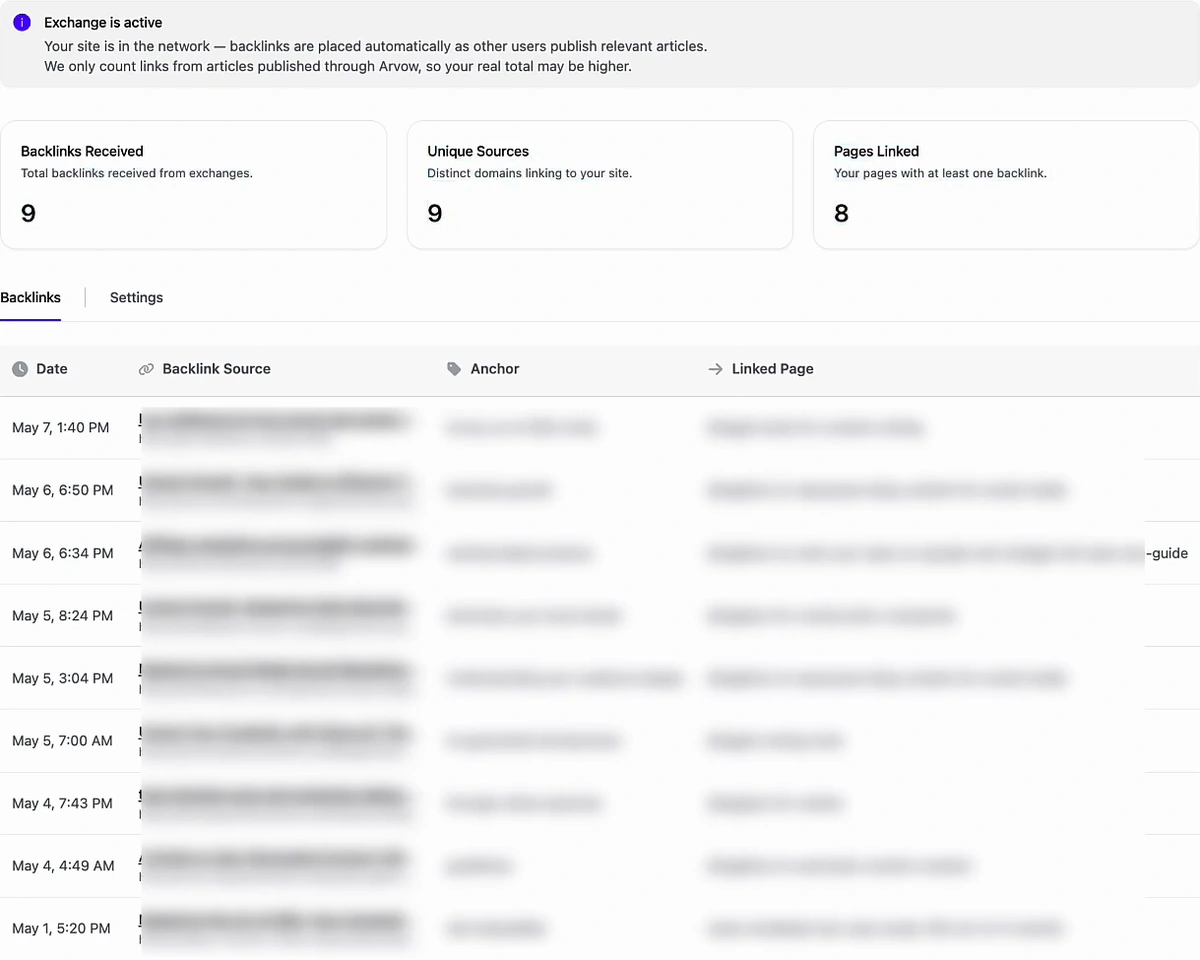
In the video: 9 links in the first week (May 1 to 7), each from a different domain, spread across 8 pages. That's the one-to-one ratio from the previous section, by design. On camera I read out the DRs of four of them: 31, 22, 37 and 18. Here's the DR 31 one:
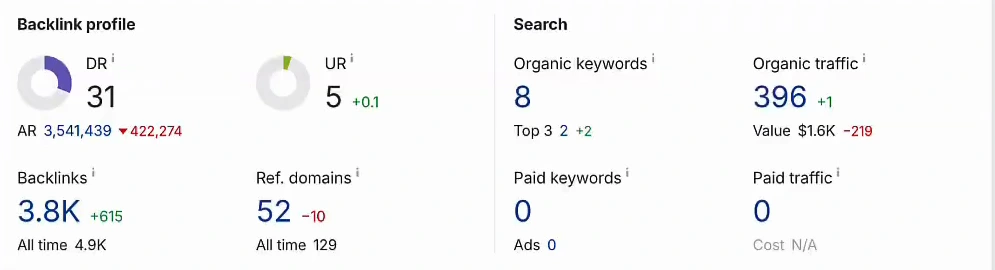
To be fair about this one: it's a real site with real traffic, as I say in the video, but it's small (8 ranking keywords, about 396 visits a month). Its own profile shows 3.8K backlinks from just 52 referring domains, exactly the kind of gap the previous section tells you to watch. That's the trade-off with any exchange. Links arrive without outreach, but each one is only as good as the partner site. The dashboard counts only links from articles published through Arvow, so the real total may be higher.
For a larger sample (24 exchange links, the anchor mix, and how partners are screened), see the backlink exchange case study. For the fully agentic version, with an AI agent doing outreach for you, see AI backlink agent.
Where link swaps fit
I don't use swaps alone. At the end of the video I list what I still run by hand alongside them: niche edits, guest posts and nonprofit sponsorship links, with the exchange as a boost on top. Swaps cost the least money and the most time, which is why steps 3 and 4 matter.
If you're choosing between methods, 13 backlink building methods, ranked compares them, and how to get free backlinks covers the other no-cost options.
The link swap checklist
| Step | Do | Skip |
|---|---|---|
| 1. Pick the query | Search the keyword your target page should rank for | Generic "sites that accept link swaps" lists |
| 2. Source list | Take the sites that rank or advertise on it | Pitching those sites directly |
| 3. Prospects | Their backlinks: New, last month, DR band below yours | Old links; DR far above yours |
| 4. Qualify | Read anchor + target URL, follow status, linked domains, backlinks vs referring domains | Privacy-policy mentions, directories, spammy ratios |
| 5. Pitch | Short email: what they linked, why your page fits, what you'll link back | Swap pages and link-for-link blocks |
| 6. Keep it modest | A few relevant swaps inside real content | Swaps as your main link source |
FAQ
Are link swaps against Google's guidelines?
Excessive ones are. Google's spam policies list "link to me and I'll link to you" exchanges and cross-linking partner pages as a link scheme. Occasional swaps between related sites, placed in useful content, are how sites have always linked to each other. The risk is in the volume and the pattern.
What's the difference between a link swap and a backlink exchange?
A link swap is usually direct: A links to B, and B links to A. A backlink exchange is usually a network. Members' links are placed across a pool, so the site that links to you is often not the one you link to. That avoids the obvious A-to-B-to-A pattern.
What DR should link swap partners have?
Below yours, but not far below. At DR 55 I filtered for DR 15 to 45: close enough to be worth a link, and low enough that the partner sees the deal as fair. Check their traffic and their backlinks-to-referring-domains ratio too; DR on its own misleads.
How do I find link swap partners?
Search your target keyword, take the sites that rank or advertise on it, and pull their newest backlinks. The sites that linked to them in the last month are your prospects, once you've checked why each link exists.
Want swap-style links without the outreach? Join Arvow's Backlink Exchange.
Generate, publish, syndicate and update articles automatically
The AI SEO Writer that Auto-Publishes to your Blog
- Cancel anytime
- Articles in 30 secs
- Plagiarism Free