
Is Blogging Dead in 2026? What The Points Guy Proves (and the News Section Behind It)


Is blogging dead in 2026? I hear it every week, usually in the same breath as "SEO doesn't work any more". In a video I recorded in June 2026 I answered both with one website: The Points Guy, a blog about credit card points and airline miles that its founder sold for eight figures, and whose news section alone was pulling roughly 94,000 Google visits a month. Blogging is not dead. The evergreen guide is harder to rank than it used to be, but a format most sites ignore still works in any niche: a dedicated news section. Here is the evidence from the video, re-checked against the live sites on 1 November 2026, and how to copy the model.
The blog that sold for eight figures
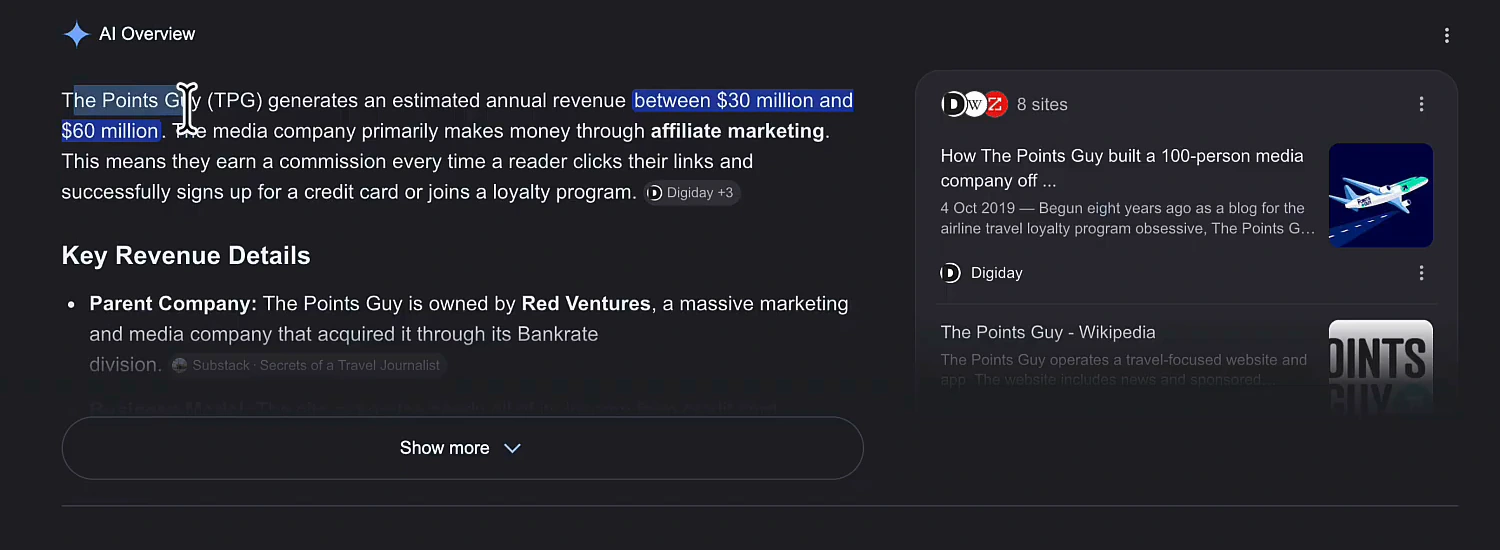
Brian Kelly started The Points Guy in 2010 and sold it to Bankrate in 2012. In the video I say $28 million, the figure Google's "People also ask" box repeats; the price was never disclosed, and Skift, citing Business Insider, puts it at an estimated $20 million. Either way, a blog about reward points sold for eight figures, Kelly stayed on as CEO, and the site now belongs to Red Ventures. Google's AI Overview estimates its annual revenue at $30 million to $60 million, almost all of it affiliate commissions: a reader clicks a card link, gets approved, and the site gets paid.
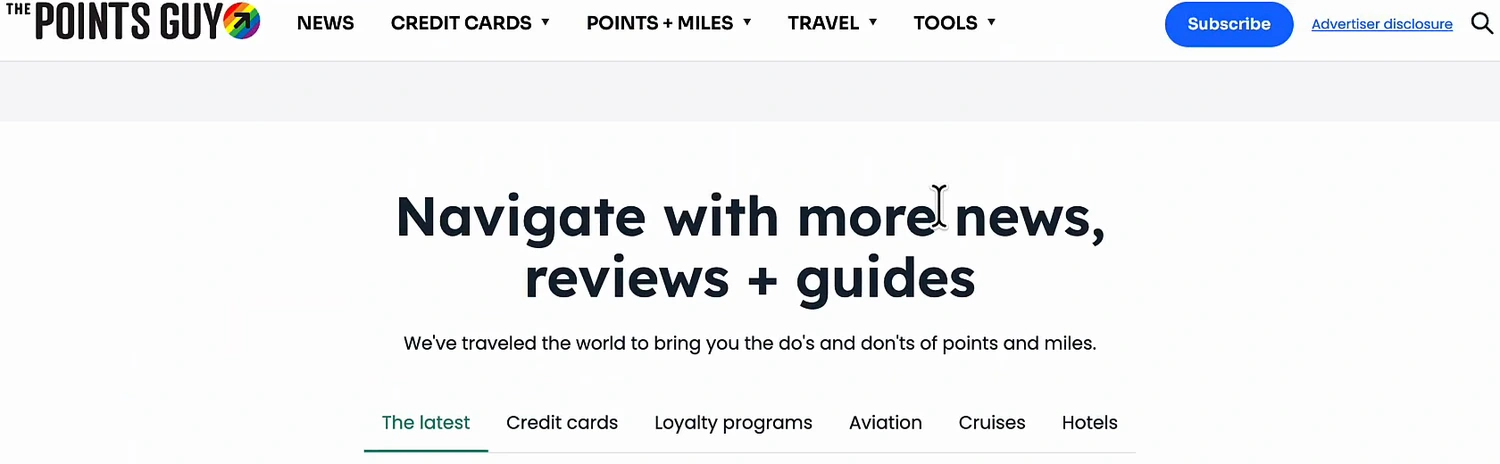
Look at the homepage and it is, as I put it in the video, "just a blog": a navigation bar with News, Credit Cards, Points + Miles, Travel and Tools, a hero that reads "Navigate with more news, reviews + guides", and a carousel of articles. The difference is what sits behind the first item in that menu.
The news section is the lesson, not the guides
Click News and you land on a section with category chips for Hotels, Credit Cards and Airlines and a list headed "Latest news stories". On the day I recorded, the top two were "Delta adds new Bay Area route as it grows Austin focus city yet again" and "Earn MQDs on vacations, hotel stays and rental cars when you book through Delta", both three-minute reads published that morning. Every story lives under /news/, which makes the section measurable as a unit.

I pasted the /news/ path into Ahrefs Site Explorer. The path alone had 21,200 organic keywords and about 94,100 monthly organic visits, worth an estimated $126,000 a month in equivalent ad spend, on a domain with a Domain Rating of 81. It was also showing up in AI answers: pages under /news/ had been cited in roughly 2,000 Google AI Overviews, 2,900 ChatGPT responses and 4,600 Grok responses. Note the red change figure next to the traffic, though: down 28,600 over six months. News traffic is volatile by design, and I come back to that below.
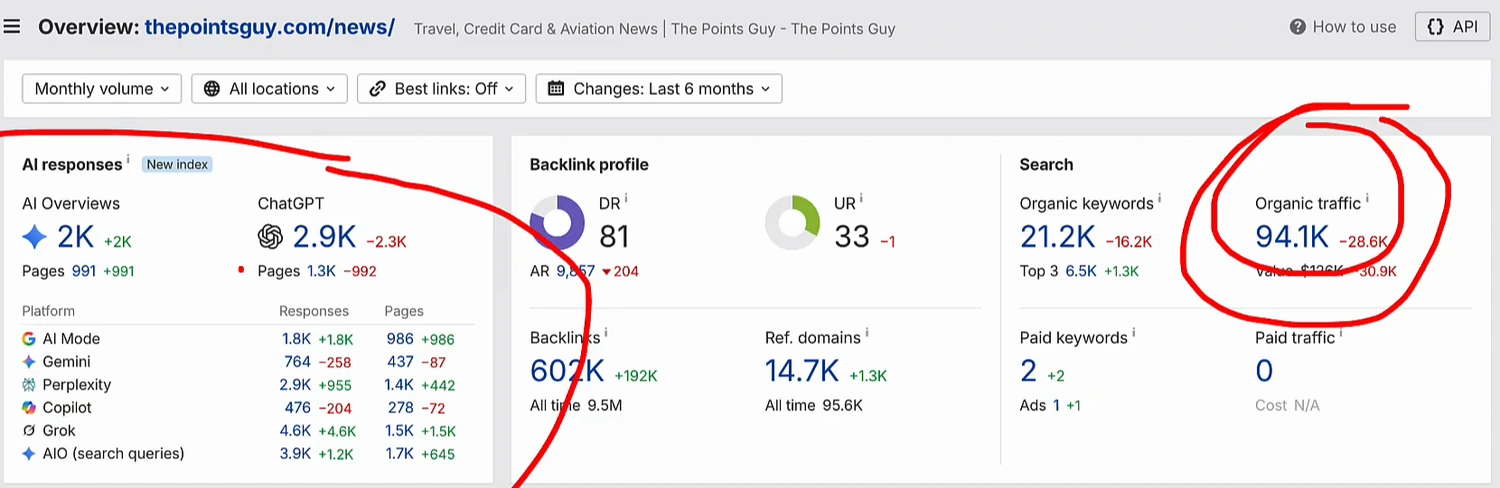
In the video I round that to "almost 100,000 people a month". Two caveats: it is a path, not the site (Arvow's Site Explorer put the whole of thepointsguy.com at 10.5 million monthly US visits in the same session), and it is a third-party estimate, not analytics. The order of magnitude is the point: a section of short, dated stories, on its own, drives more search traffic than most entire blogs.
What a 6,000-visit news page looks like
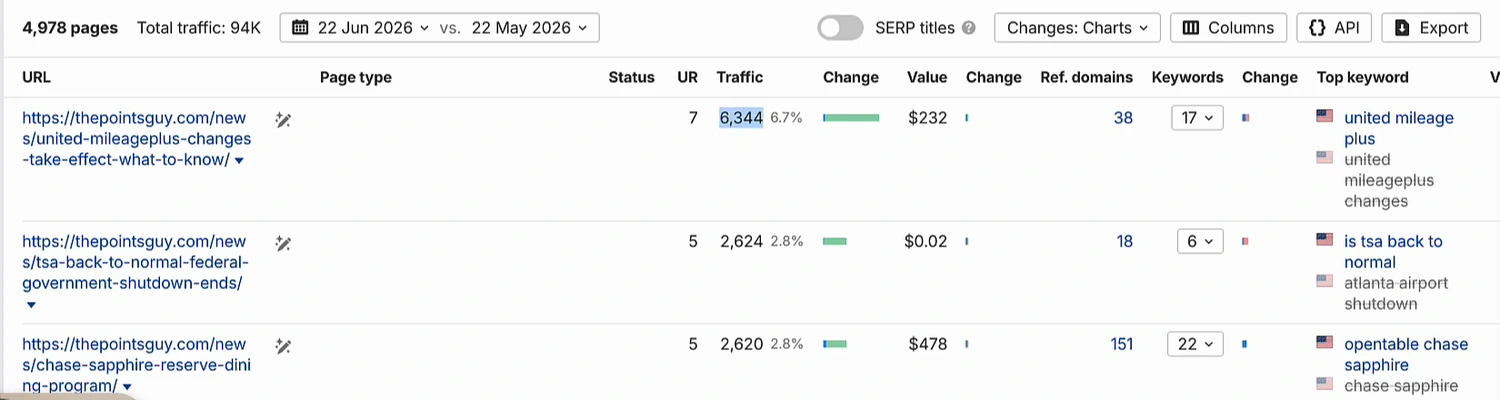
Ahrefs' Top pages report listed 4,978 pages sharing those 94,000 visits. The top row was "United's big MileagePlus program changes are here: What to know", with 6,344 monthly visits, 6.7% of the whole path, ranking for 17 keywords with 38 referring domains. Below it: a piece on whether TSA was back to normal after the government shutdown at 2,624 visits, and one on the Chase Sapphire Reserve dining program at 2,620.
Open the United piece and it is exactly what you would expect: by Sean Cudahy, published 2 April 2026, an eight-minute read of about 1,000 words explaining the MileagePlus changes that took effect that day. Throughout it sit "Learn more" and "rates and fees" links for the United Gateway, Explorer, Quest and Club cards. That is the whole monetisation: news traffic lands on a page that happens to explain which card to hold.

The catch I make in the video is that news decays. A story like this is relevant for weeks or months, then its traffic falls to zero. In June it was the top page; by now it almost certainly is not. The section works because there is always a next story, and because the section as a whole, not any single page, is what ranks and gets cited.
Teslarati: news as the top of an ecommerce funnel
The second example, which I had covered the week before, is Teslarati. The site writes nothing but Tesla, SpaceX and Elon Musk news: a hero story posted "31 seconds ago" when I loaded it and a Latest list from the previous five days. The navigation has News, Tesla, SpaceX, Elon Musk and, in the middle, "SHOP Tesla gear & upgrades".

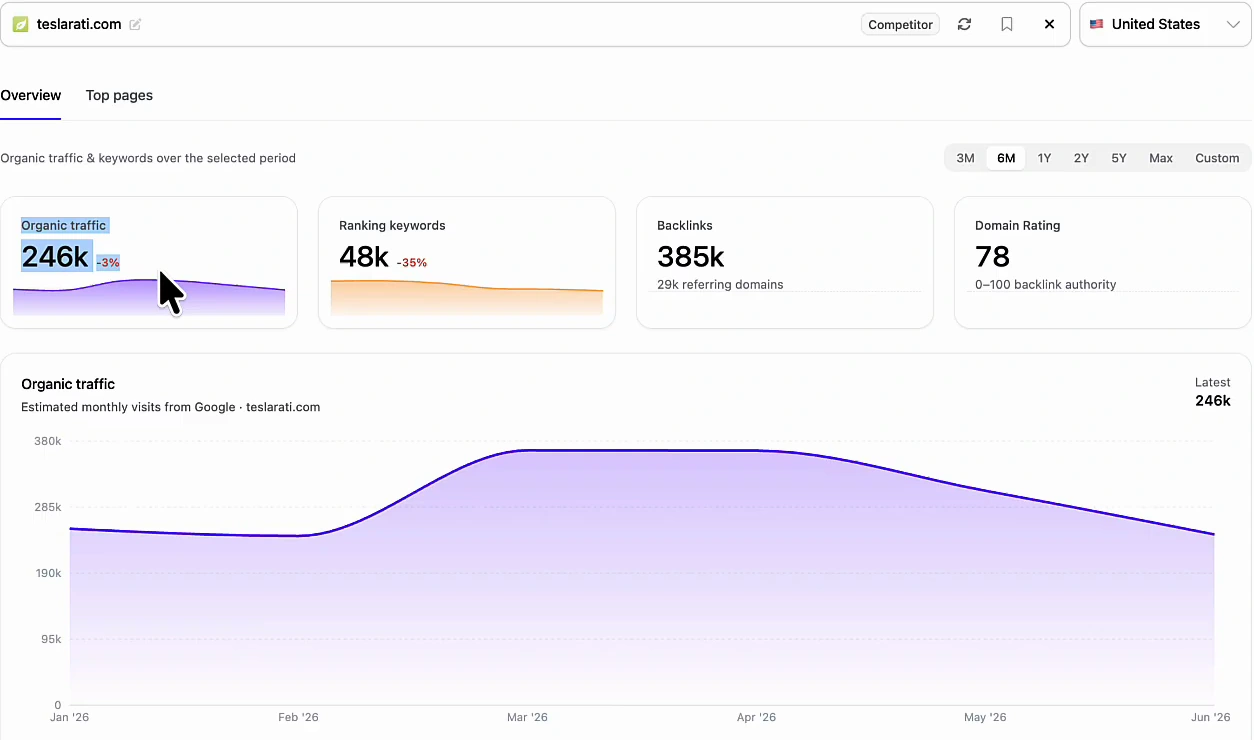
Arvow's Site Explorer put teslarati.com at 246,000 monthly US organic visits, down 3% over six months after a peak near 380,000 in March 2026, with 48,000 ranking keywords, 385,000 backlinks and a Domain Rating of 78. In the video I round this to "almost 300,000 people"; the six-month chart shows why.
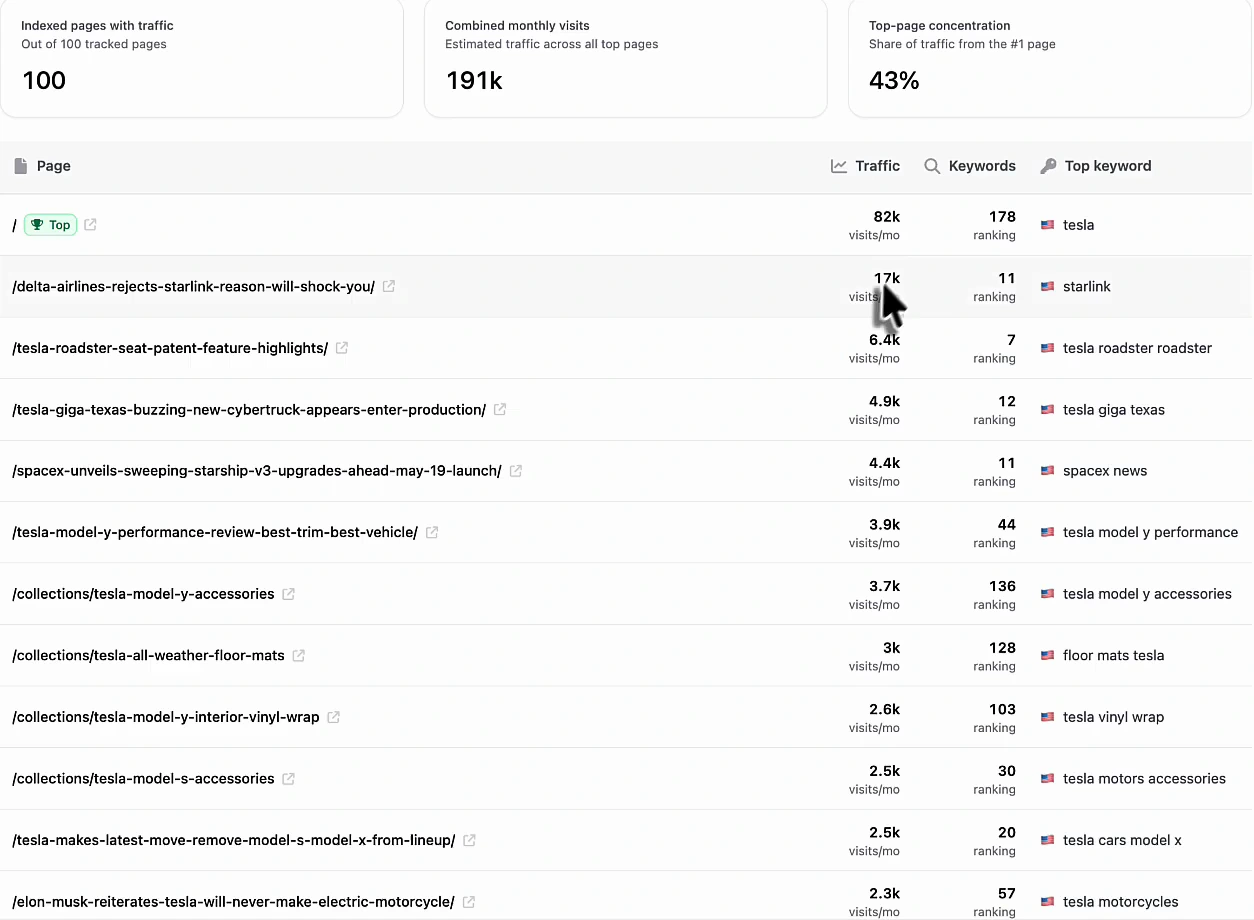
The Top pages tab explains the funnel better than I did on camera. The homepage comes first at 82,000 visits. Then "Delta Airlines rejects Starlink, and the reason will probably shock you" at 17,000 visits a month, ranking for 11 keywords, top keyword "starlink". Then a Roadster seat patent story at 6,400 and a Giga Texas Cybertruck story at 4,900. A few rows down are the pages that take the money: the Model Y accessories collection at 3,700 visits, all-weather floor mats at 3,000 for "floor mats tesla", interior vinyl wrap at 2,600. The 100 tracked pages add up to 191,000 visits, 43% of it from the homepage.
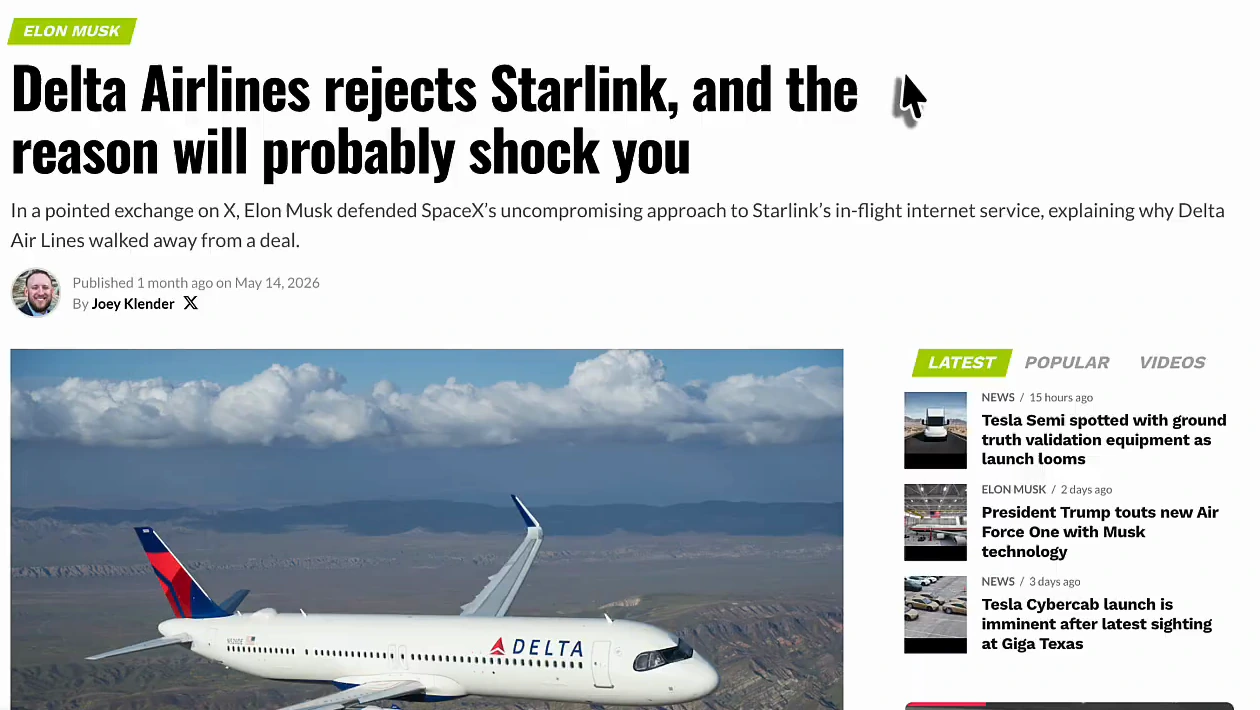
The Delta story is 450 words by Joey Klender, published 14 May 2026, on why Delta chose Amazon's Kuiper over Starlink for in-flight Wi-Fi. A month later it was still the site's biggest page after the homepage; by now others will have replaced it.
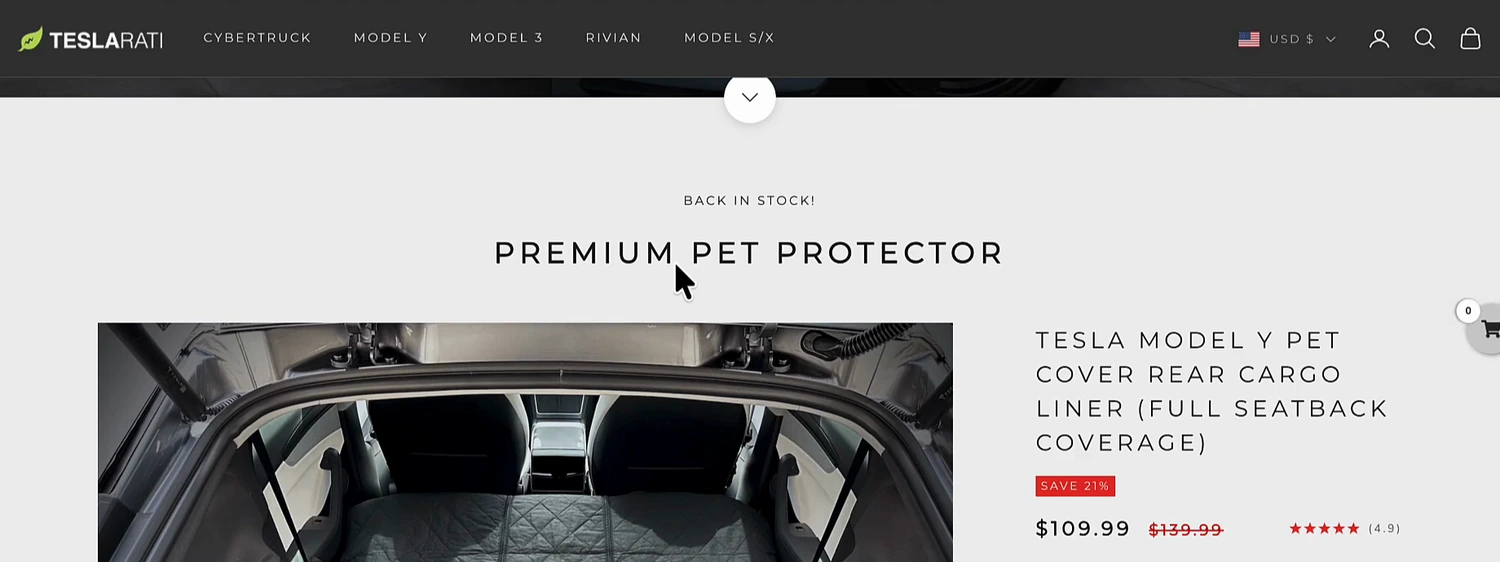
And the shop those readers are sent to: a Model Y pet cover and rear cargo liner at $109.99, marked down 21%, alongside floor mats and vinyl wraps. Someone reading about the Cybercab is, as I say in the video, the perfect person to be shown a Model Y cargo liner.
One correction to what I say on camera. I describe the Delta article as having "calls to action to their products". Re-read on 1 November 2026, the article body has no product links at all; the funnel is the SHOP item in the navigation, the author bio and the collection pages ranking in their own right. That is a weaker funnel than an in-article call to action, and it still makes the collections some of the site's top pages. If you build this, put the product link in the story.
Why AI is not the problem
Both sites publish short, plain news pieces with links to the original sources. AI can write "6 ways to maximize the new Royal Caribbean Visa cards" or a Delta route announcement. What it cannot do on its own is decide what the story is and which product belongs next to it. When AI content fails it is almost always because the input was lazy, not because a machine wrote it. Google has said it does not care who or what produced the page, only whether it adds something to the web. The research and the structure are the difference, which is the argument of our commodity content piece; the evidence that AI-written pages rank is in does AI content rank on Google.
How to apply the news-section model to any niche
The process is simple, which is not the same as easy. Pokemon cards, an agency, software or a store, it works the same way:
- Have something to send the traffic to. A product, a service or an affiliate programme. The Points Guy has no product of its own and lives on card commissions.
- Create a dedicated section. A /news/ path with its own categories, so it can be measured, linked to and cited as a unit.
- Publish short, dated stories about what happened in the niche. Three-minute reads, a clear headline, links to the sources. Both examples publish several a day.
- Put the funnel inside the story. A related product, a card comparison, a quote request. Do not rely on the navigation alone.
- Accept the decay. Each story peaks and dies. The section is the asset; track the path, not the page.
- Automate the pipeline. Research the day's stories, write them, publish them. This is the part Claude Code or an autoblog does well.
We have written the build-out in detail before: how to add an automated news section to your website covers the setup, how a niche news blog can 10x the topical authority of any website covers the ranking mechanism, and why your ecommerce store needs a blog section walks through the Tesla-store version of this funnel. The Claude Code route is in our Claude Code SEO guide.
What I re-checked on 1 November 2026
The video is from June 2026, so I went back to both sites before publishing.
- The Points Guy's news section is still running at the same pace. On 1 November it listed twelve stories dated 25 October to 1 November 2026. The April United MileagePlus story is still live.
- Teslarati is still a news site with a shop in the navigation. The newest homepage story was two hours old; the Delta Starlink story is still live.
- The sale price is reported, not confirmed. I say $28 million; most outlets estimate $20 million; neither party has disclosed it.
- The traffic numbers are June 2026 estimates from Ahrefs and Arvow, and both dashboards showed six-month declines. They prove the model works at scale; they do not promise a number for your site.
If you have read my is SEO dead piece you know I think the easy version of SEO is over. This is the harder version: a site that publishes something relevant every day in a niche it owns. That is what a blog looked like when it sold for eight figures, and it is what still works. The wider numbers are in our blogging statistics for 2026.
FAQ
Is blogging dead in 2026?
No. Evergreen guides are more competitive than they were, but sites built on dated news still grow: The Points Guy's news path alone drew an estimated 94,100 monthly Google visits in June 2026, and Teslarati, a pure news site, drew 246,000.
How much traffic can a news section get?
It depends on the niche. Above, single stories peaked at 6,344 and 17,000 monthly visits before decaying, and the sections carried tens or hundreds of thousands. A smaller niche gives the same shape at a smaller scale.
Will Google penalise an AI-written news section?
Google says it rewards helpful content regardless of how it was produced. What gets penalised is content that adds nothing: rewritten press releases with no sourcing and no angle. Research the story, link the sources, add context.
How do you make money from news traffic?
Affiliate links inside the story (The Points Guy's card offers), your own products (Teslarati's shop), and display ads. The reader is already qualified; put the right offer next to the story.
Want a news section without hiring a newsroom? Arvow's AutoBlog researches the day's stories in your niche, writes them in your voice and publishes them to your site on a schedule, with your products linked in the body.
Generate, publish, syndicate and update articles automatically
The AI SEO Writer that Auto-Publishes to your Blog
- Cancel anytime
- Articles in 30 secs
- Plagiarism Free