
Google's August 2026 Spam Update: 4 Sites That Got Hit Hard (and Why)


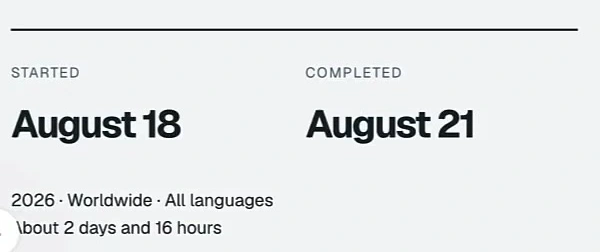
Google's August 2026 spam update rolled out fast — it started August 18 and was done in 2 days and 16 hours, worldwide, in all languages. It was the third spam update of 2026, and Google shipped it without announcing any new spam policies. It didn't need new policies: the sites that got hit were breaking the oldest rule in the book, at industrial scale.
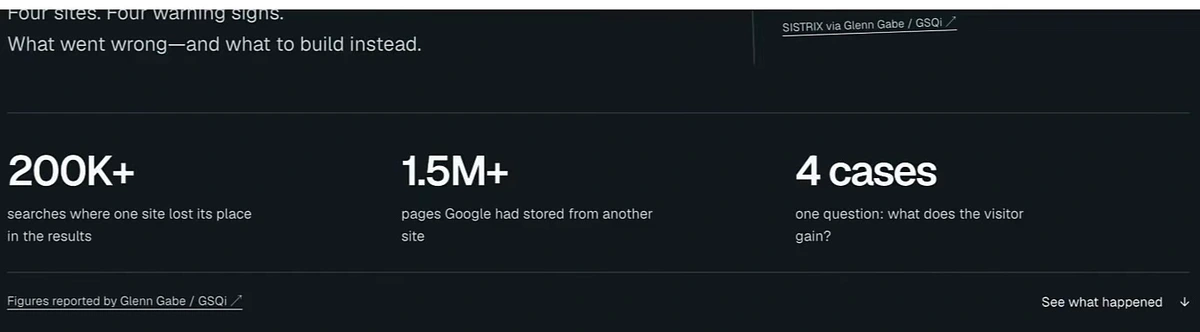
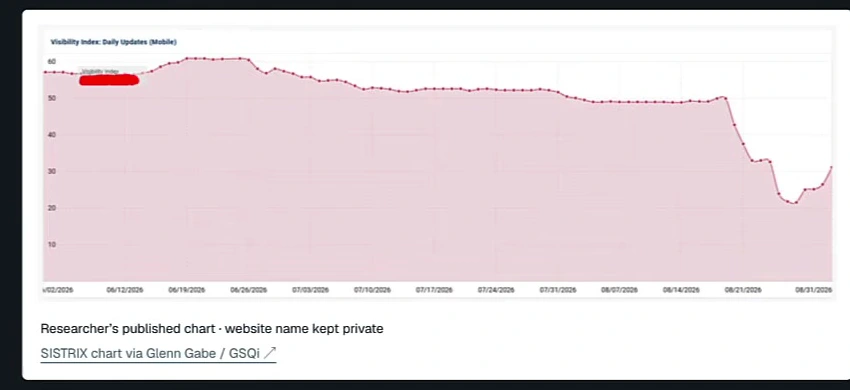
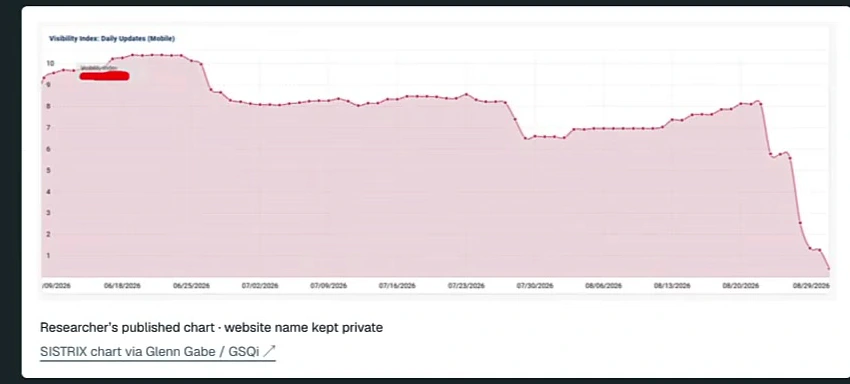
In a walkthrough published this week, Tim The SEO Guru walks through four anonymized case studies of sites the update crushed — with the researcher's published SISTRIX visibility charts (figures reported by Glenn Gabe of GSQi; the site names are kept private) on screen for every one. Between them, the four sites lost visibility on well over 200,000 search terms. This article goes through each case, what the site actually did, and the avoidable mistake underneath it.
Case 1: Lots of pages — but who checked the answers?
The first site lost its place in the results for more than 200,000 search terms. Its playbook: software-generated pages, the same content repeated across different countries, with AI-written text. And the walkthrough is careful about where the blame goes — the AI part is not necessarily the problem — the unchecked answers are. The pages looked helpful while repeating the same weak or wrong answers at scale, on topics like health and money where a wrong answer leads to a bad decision.
The lesson generalizes to every local SEO shop running location pages: a plumber-in-Dallas page and a plumber-in-Miami page can't be the same page with the city swapped. Service pages per area are a legitimate strategy — tailored ones. If a computer repeats the same mistake on thousands of pages, more people see it, and Google now treats the pattern itself as spam. Have someone who knows the topic review the answers before publishing, and make sure the advice actually fits the country or city on the page.
Case 2: Why read a copy of the shop's page?
The second site copied Amazon product details into its own pages and earned money from shopping links. Some product lists didn't even have photos; the added text added nothing. It lost rankings for more than 14,000 search terms.
The distinction the walkthrough draws: the problem is not earning money from a link. Affiliate pages are fine. The problem is giving the reader no reason to visit your page before the shop's page. Repeating the seller's description helps nobody; a useful review answers the questions a buyer still has after reading the listing — your own photos, what you tested, what worked and what didn't, who the product suits. And never pretend you tested something you didn't use.
Case 3: A few good pages could not carry the whole site
The third site had over 1.5 million pages in Google's records — about 85% of them in a software-made section repeating basic product information, wrapped in ads that made browsing difficult. Parts of the site had genuinely useful content, added by real people. It didn't matter: the losses spread across every section, the good ones included.
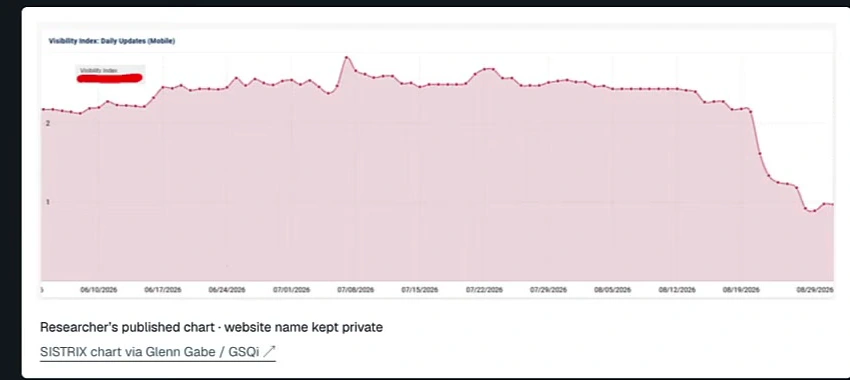
Two takeaways ride on this one. First, a page being stored by Google does not mean it ranks well — 1.5 million counts pages, not people. Second, quality is judged site-wide: a few helpful pages don't fix the rest of the shelves, so audit pages from every part of the site, merge the ones that repeat each other, and improve or remove the ones that help no one. Readers can land anywhere, not just on your best article.
Case 4: The page promised one thing. The click did something else.
The fourth site grew past 250,000 pages, and many didn't provide what the visitor came for — important links sent people to other, riskier sites. Nearly 25,000 search terms fell in position or lost rankings.
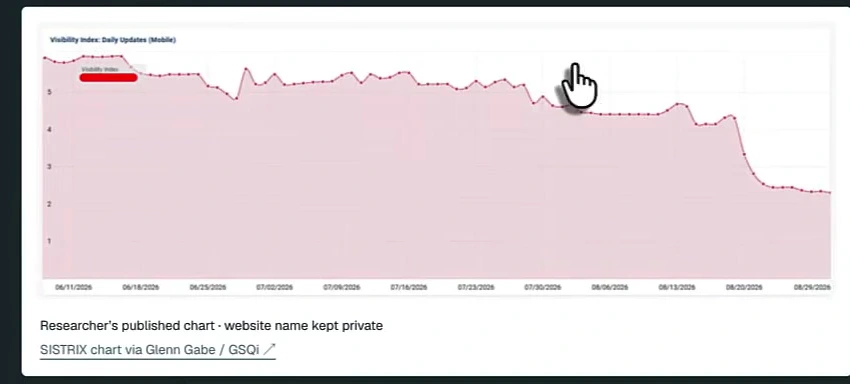
The walkthrough's judgment is that this one looks more deliberate than sloppy — but the fix reads the same either way: make each button do what its label says. Sending someone to another website is not inherently wrong; tricking them, or leading them somewhere unsafe instead of giving them what you offered, is. Test your main links like you test your checkout.
The pattern: make it helpful, then make more
Four different sites, one shared mistake: producing pages faster than anyone checked whether the pages helped. The recap the video walks through compresses the alternative into one comparison — the low-value version of a product page — copied product details, vague praise, a shopping link, nothing showing someone actually used it — against the useful version that shows your photos, says who should pick which model and why, and admits what the product can't do.
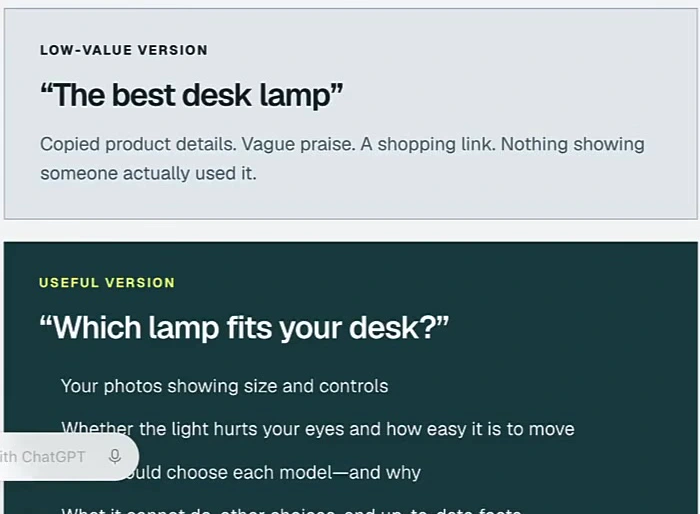
That's also the honest read on what this update means for AI content, and it matches what we found in our own AI SEO case study: scaled content isn't what got these sites hit — unchecked scaled content is. Google keeps rewarding pages that answer the searcher's actual question, which is the same bar AI search engines apply when they decide what to cite.
Scaling content without becoming case study #5
The walkthrough closes with how Tim's own sites produce volume without tripping these wires — using Arvow to generate what he calls non-commodity content: articles built from variable templates tailored to the brand, with the technical layer (meta descriptions, H2/H3 structure, focus keyword, image alt text) handled in the editor — plus the human double-check the video keeps insisting on before anything ships. His claim, for what it's worth: none of his sites took a hit from these spam updates.
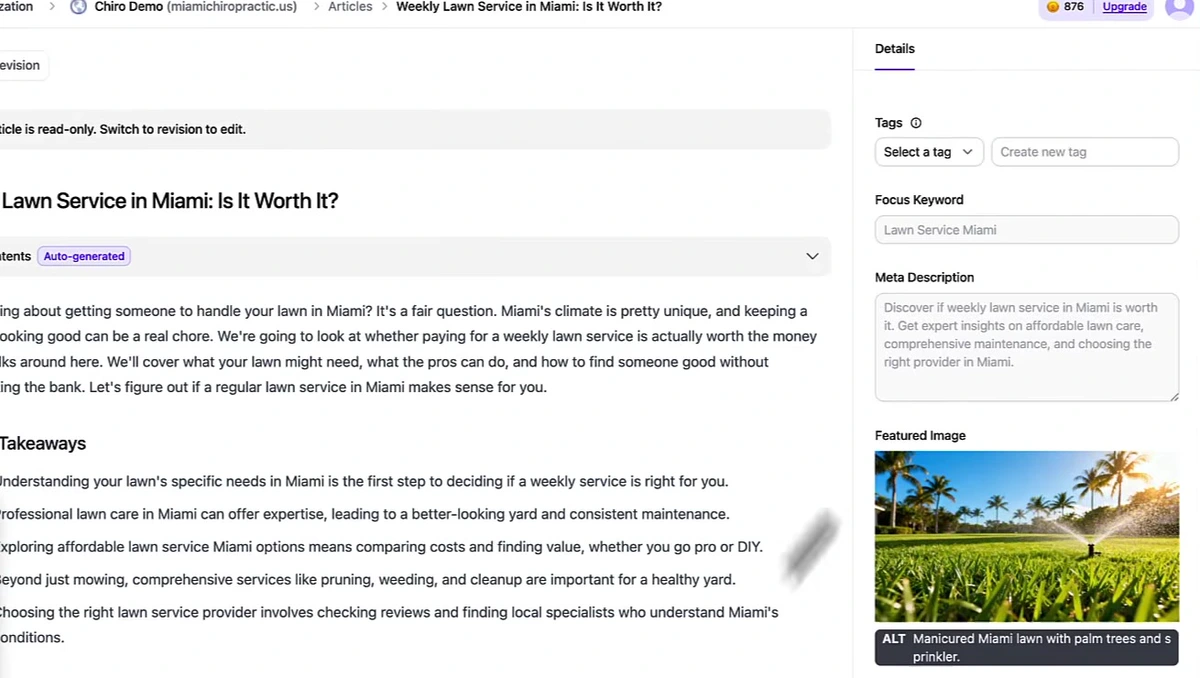
Whatever tool you use, the checklist that falls out of these four cases is short:
- Every answer checked — someone who knows the topic reviews before publishing, especially on health and money topics.
- Location and service pages tailored — not the same page with the city swapped.
- Affiliate pages earn the click — your photos, your testing, who it suits; never fake a review.
- Audit site-wide — merge repeating pages, remove unhelpful ones; a few great pages can't carry a million bad ones.
- Links do what they say — no promise-then-switch, ever.
None of this is new policy — it's Google enforcing the old bar harder, faster, and more often. If you're starting from a clean slate, that's genuinely good news; the fundamentals in our guide to starting SEO from scratch are the same ones that kept sites safe through this update. And if you're scaling, scale the checking along with the publishing — that's the entire difference between the sites that grew and the four charts above.
How to tell if the update hit you
The window to check is tight and that makes the diagnosis easy: the rollout ran August 18–21, 2026. Open Search Console, compare the two weeks after August 21 against the two weeks before August 18, and look at queries, not just totals — a spam-update hit shows up as broad position loss across many queries, like the SISTRIX cliffs above, not a dip on one page. If that's your shape, the recovery path is the unglamorous one: fix the pattern the update targeted (thin variants, copied product text, unchecked answers, misleading links), and expect movement only after Google recrawls and typically at a following update — there is no reconsideration shortcut for algorithmic spam. What you should not do is delete everything and mass-produce a "better" version at the same unchecked speed; that's the publishing speed that left case 3 with a software-made section covering about 85% of 1.5 million pages.
Want volume without the spam-update risk? Arvow generates brand-tailored, SEO-complete articles from variable templates — non-commodity content with the technical layer built in, following the AI SEO blueprint that survives updates like this one.
Generate, publish, syndicate and update articles automatically
The AI SEO Writer that Auto-Publishes to your Blog
- Cancel anytime
- Articles in 30 secs
- Plagiarism Free