
ChatGPT Astra 6 SEO Automation: One Prompt, a Full Content Pipeline (2026)

Thirty seconds of this walkthrough were not made by a video editor. Tim The SEO Guru gave ChatGPT's new Astra 6 a single prompt and a Search Engine Land article, and it returned a finished, narrated, motion-graphics traffic report — no draft, no proof-of-concept, the working version. Then he wired that capability into his whole content operation: SEO articles in, social videos out, scheduled and published on autopilot.
This article maps the full workflow he demonstrates — what each tool does, where the APIs and MCP connections go, and what still needs a human — plus the traffic data his AI-generated clip happens to report, which is its own argument for why the workflow exists.
The one-prompt video, and what it says
The prompt is worth quoting in spirit: take me from idea to finished YouTube video; make it feel professionally edited by a human; 20–30 seconds; no drafts — a finished working version; here's the source article. Astra returned slides like this:
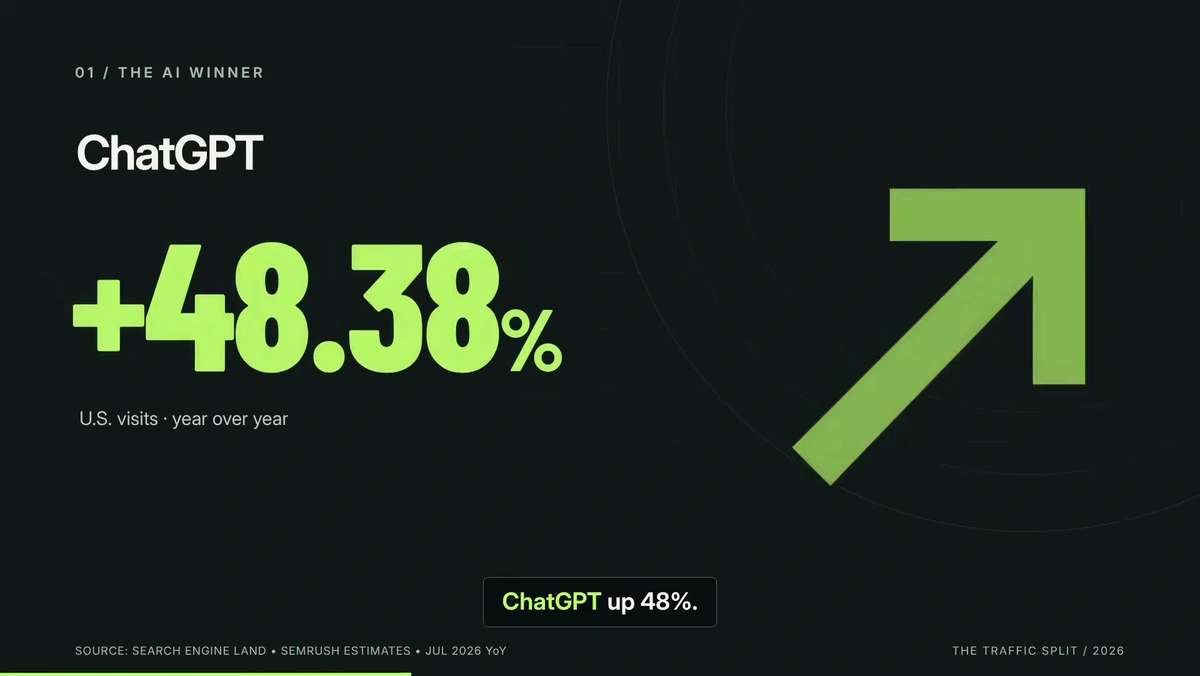
The clip's content doubles as the strategy memo. Per the Search Engine Land data it visualizes: ChatGPT visits up ~48% year over year, Bing down ~50%, YouTube up nearly 37% — website visits, not search market share. The generated video's own closing slide draws the conclusion:
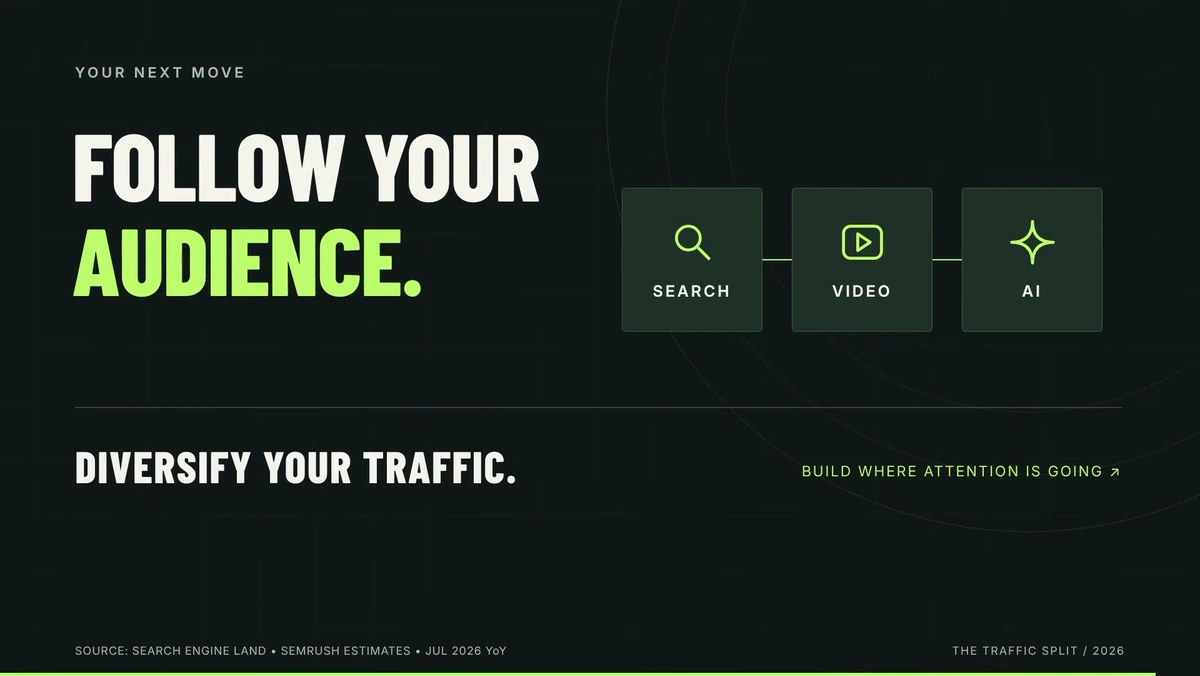
That's the point of automating multi-format content in the first place: the same idea needs to exist as a blog post (search), a clip (video), and citable material (AI answers), because that's where the audience actually went. It's the distribution-side answer to the same shift we track in AI search ranking tips.
Why that prompt worked
Four constraints did the heavy lifting, and they transfer to any generative-video request:
- "Finished, not a draft." Tim explicitly forbade proofs-of-concept — "give me a finished working version." Without it, agentic tools happily hand you scaffolding.
- A humanity bar: "professional, like it was edited by a human" gives the model a quality target instead of a format target.
- A hard length: 20–30 seconds forces editorial compression — the model has to pick the three numbers that matter.
- A grounding source: the Search Engine Land article gives the model real numbers to pull instead of inviting it to invent them — and lets the slides carry a source credit.
One honesty note: "Astra 6" is shown, not explained — the walkthrough treats it as ChatGPT's idea-to-finished-video capability and demonstrates it end to end. Judge it by the output above rather than any spec sheet; the workflow holds regardless of what the capability is called next quarter.
The full pipeline: Arvow → RSS → Astra → Blotato
The system runs in a loop, and each stage is replaceable:
- Arvow writes the SEO layer. Articles generated with the brand connected — website, sitemap, training materials, case studies — so output ships with meta descriptions, H2/H3 structure and alt text. Connected to the site via an integration (or the API), every published article feeds the RSS feed.
- The RSS feed becomes Astra's raw material. Astra pulls the feed — the blog content that already drives search traffic — and turns each piece into video and social content.
- Blotato schedules and publishes. Astra talks to the scheduler through its API or an MCP connection inside ChatGPT, and the calendar fills itself — daily, several times a day, or a week batched at a time.
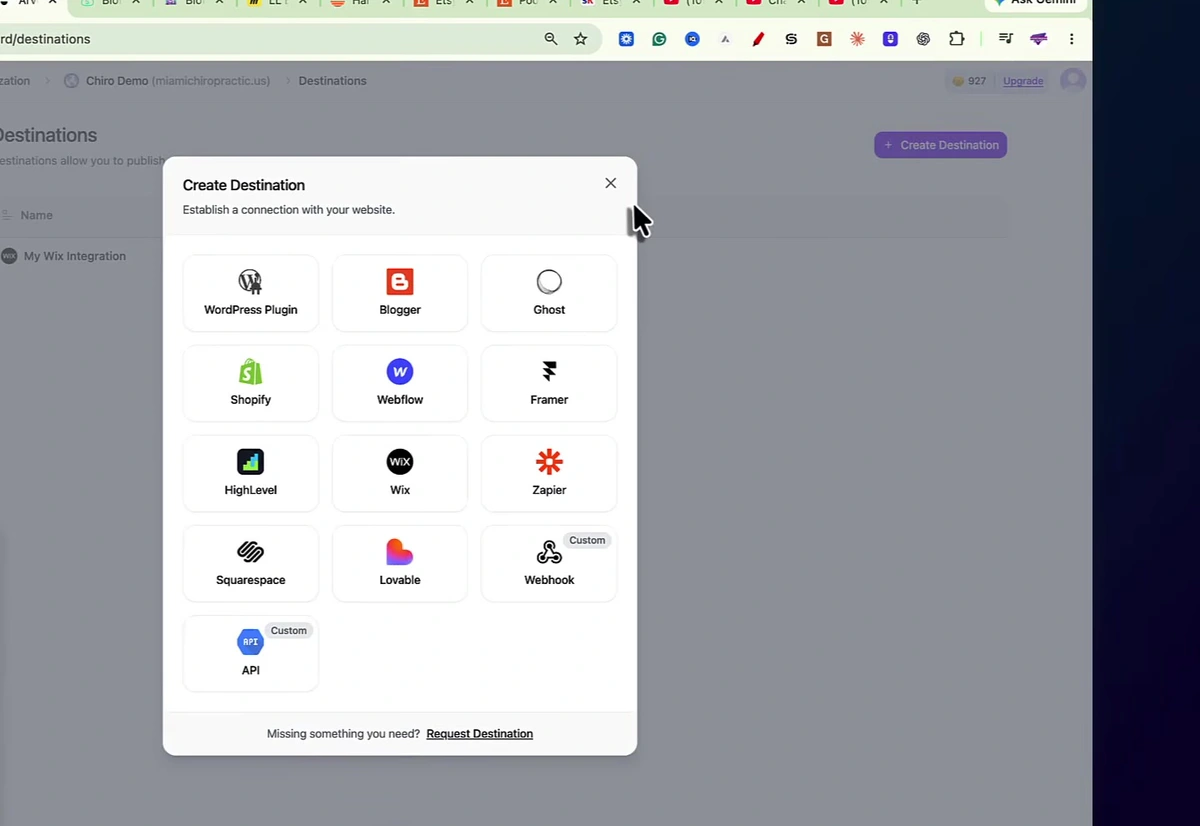
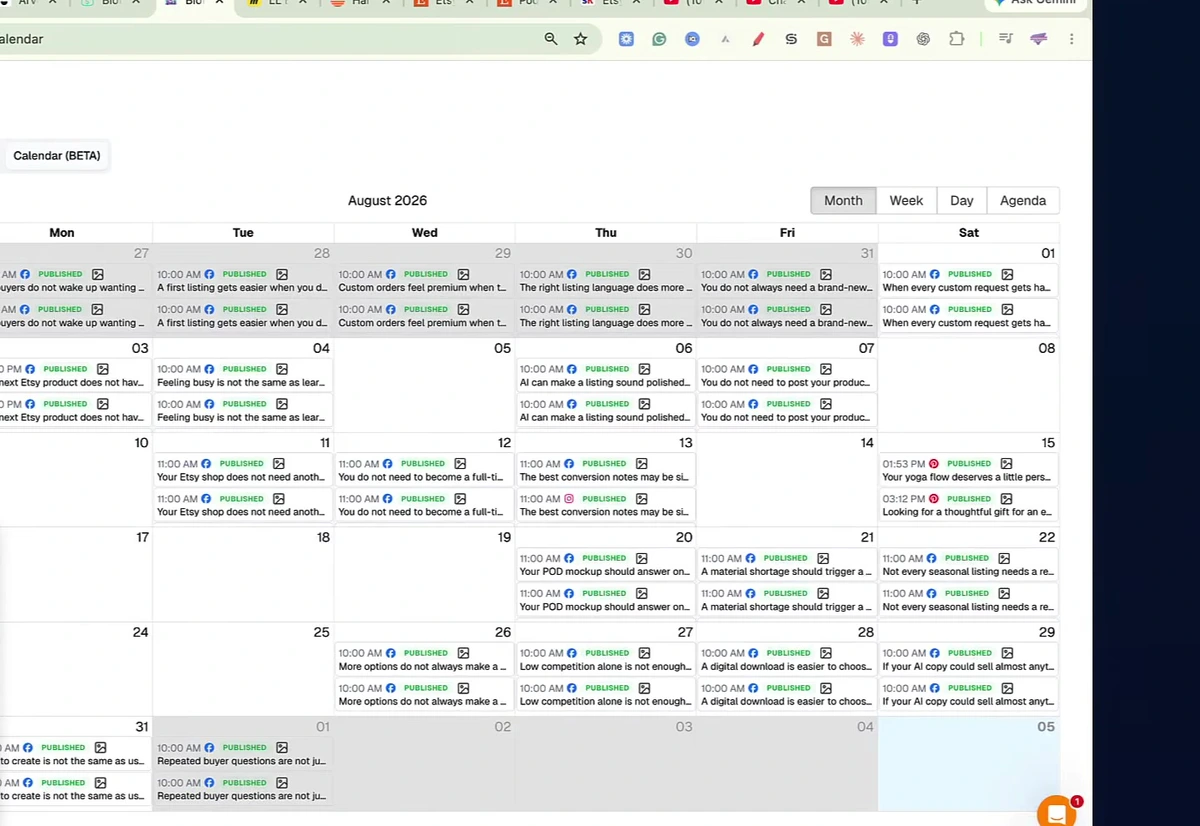
The MCP option is the interesting one for ChatGPT users: instead of gluing endpoints together yourself, you hand Astra the scheduler as a connected tool and tell it what to do in plain language:
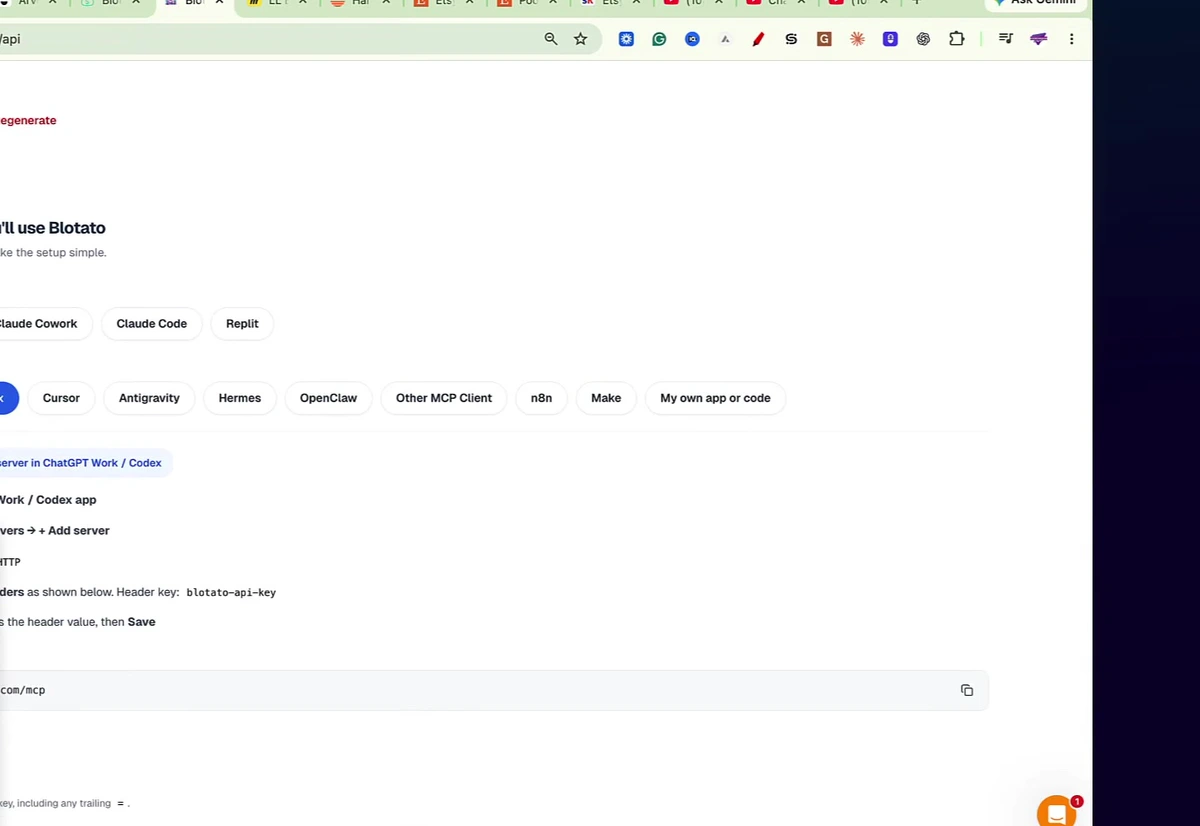
Tim's own read on where this goes: soon you won't leave ChatGPT at all — every app connected, one place to say what you want, the assistant doing the round trips. Whether that lands on ChatGPT, Claude, or something else, the workflow above is what "linked up" looks like in practice today.
Closing the loop: make content where you're invisible
The research half of the loop runs on the same stack. Astra can research the blog topics; Arvow's LLM brand monitor tells you which topics actually matter — it tracks whether your brand shows up (and how it's described) across the big models, prompt by prompt:
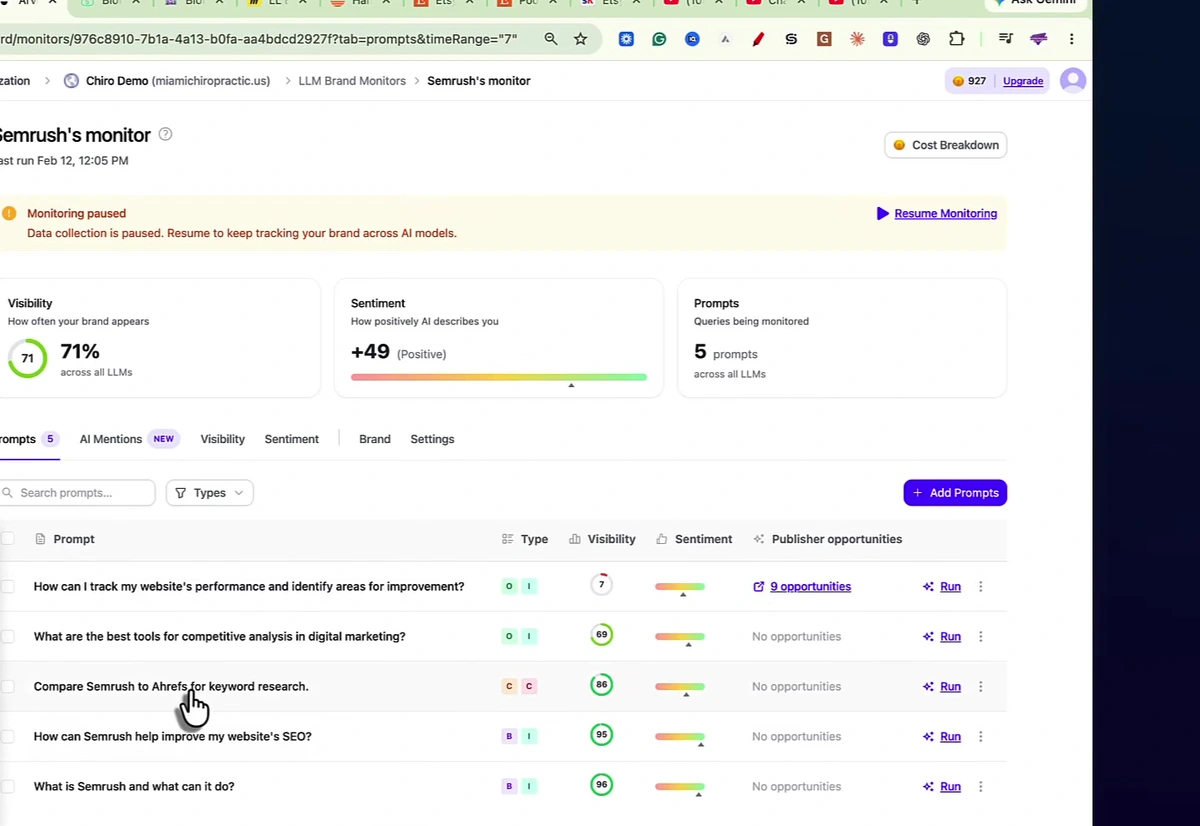
That turns the whole thing into a flywheel: monitor shows a prompt where you're invisible → Arvow generates the SEO article for it → the article hits the RSS feed → Astra cuts it into video and social posts → Blotato ships them → search, video and AI visibility all move together. It's the same close-the-loop tactic our GBP-for-AI-search piece applies locally and the AI SEO blueprint applies site-wide.
What still needs you
Honest inventory from the walkthrough. You still assemble the stack: external schedulers, API keys, integrations — Astra orchestrates, it doesn't replace the tools. You still set the strategy: the prompt quality (Tim's included tone, length, finish-level and the source article) decides the output quality. And the source content still has to be worth syndicating — an automated pipeline distributing weak articles is just the spam-update case study of tomorrow, which is why the input stage being SEO content that demonstrably ranks matters more than any downstream automation.
Want the input side of this pipeline handled? Arvow generates brand-connected, SEO-complete articles, publishes them to your site (WordPress, Wix, Webflow, Shopify, Zapier or API), and gives Astra a feed worth turning into video.
Generate, publish, syndicate and update articles automatically
The AI SEO Writer that Auto-Publishes to your Blog
- Cancel anytime
- Articles in 30 secs
- Plagiarism Free