
How to Get Customers From ChatGPT: Our $2,988 Sale, UTM-Tracked (2026)

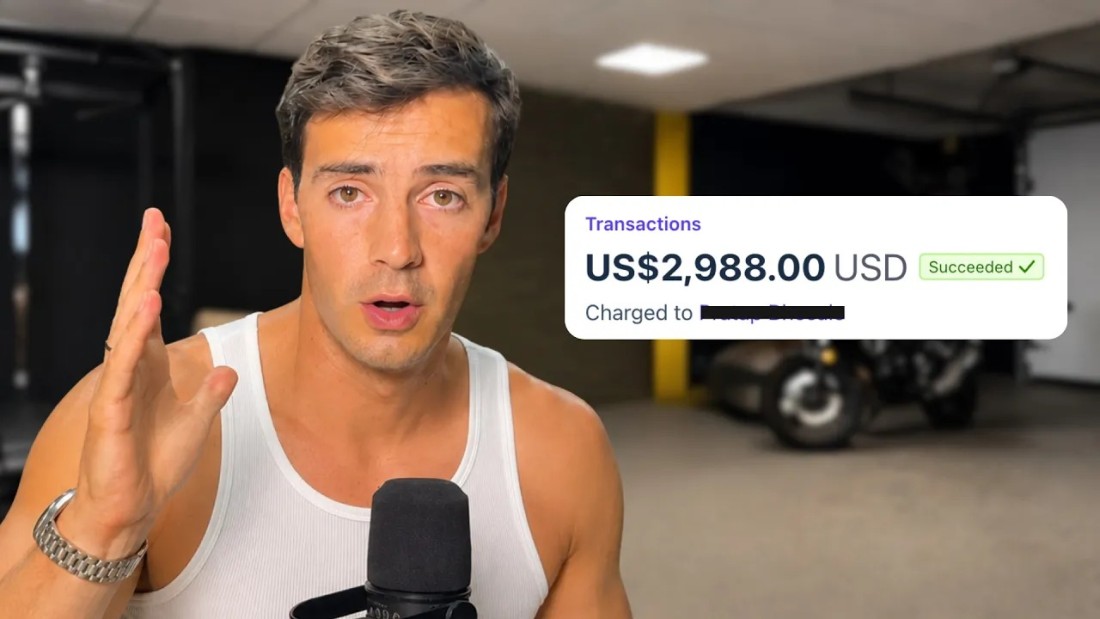
Recently, a stranger asked ChatGPT a question, clicked one link in the answer, landed on a blog post, and paid $2,988 for a yearly SaaS subscription. We know this because the whole journey is in our analytics: the very first URL he ever touched carries utm_source=chatgpt.com, and his email in the customer profile matches the Stripe charge one-to-one.
The part that stings a little: the blog post that earned the citation is, by our own founder's description, AI slop — an article our writer generated eight months ago with no images, no internal links, no video embeds, nothing. This walkthrough unpacks the receipt trail and, more usefully, the repeatable mechanics behind getting customers — not just traffic — from ChatGPT and the other answer engines.
The receipt trail, end to end
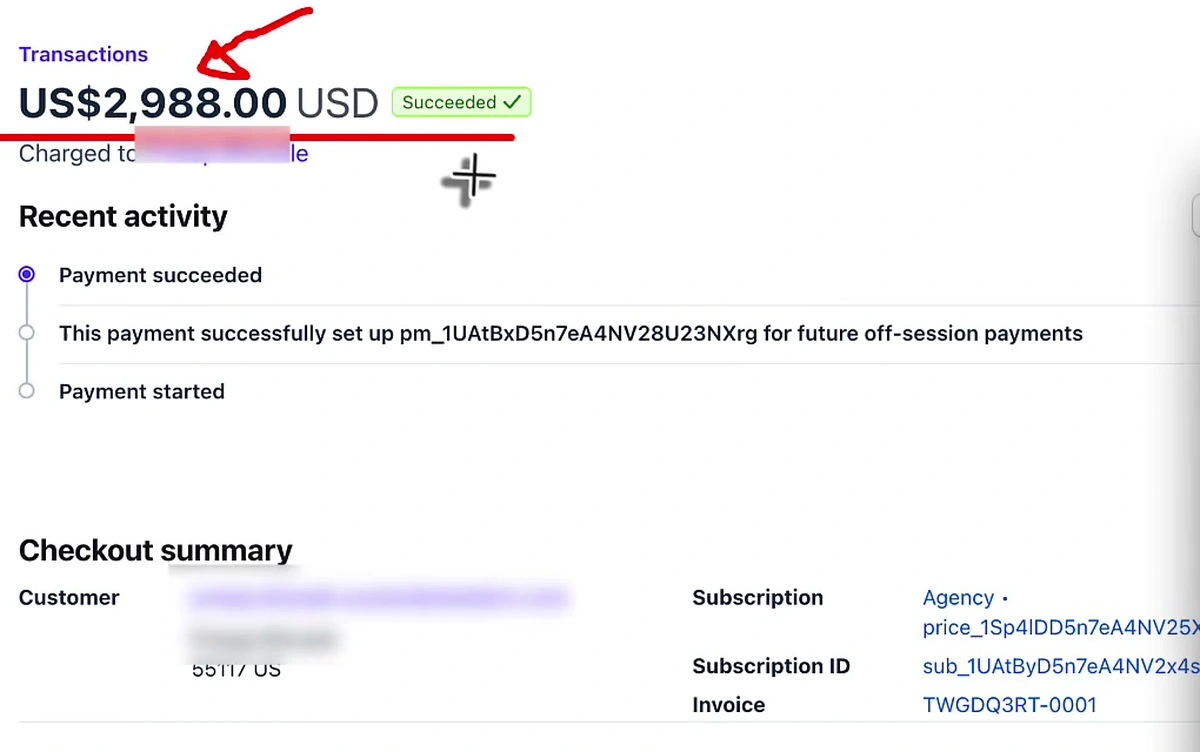
Claims about "AI search revenue" are usually vibes. This one is three screenshots. First, the payment — a $2,988 yearly plan, succeeded, in Stripe:
Second, the attribution. The customer profile in our product analytics stores the first URL every user ever lands on. For this one it's the blog post — with the referral source ChatGPT appends to links it cites:
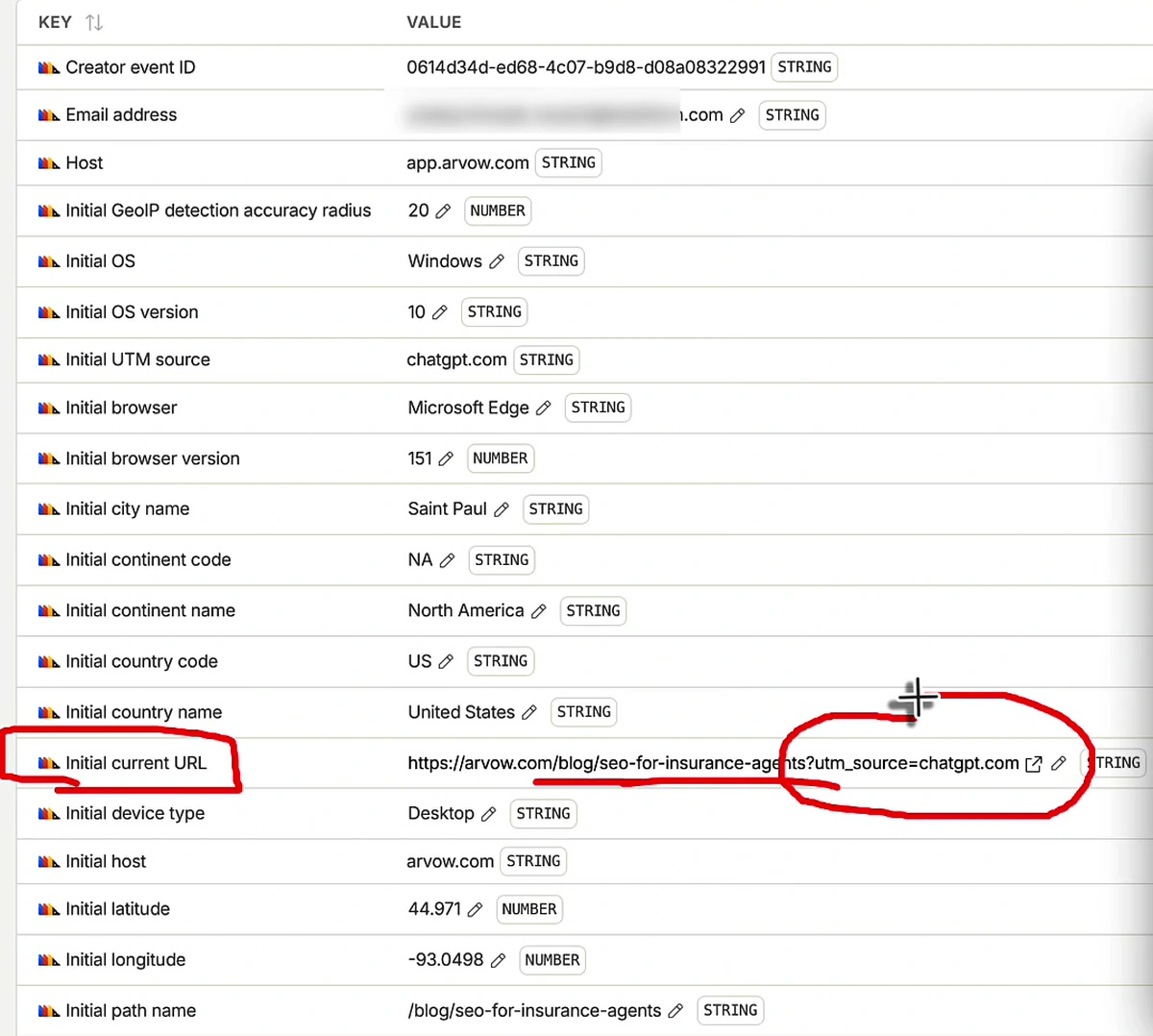
arvow.com/blog/seo-for-insurance-agents?utm_source=chatgpt.com — initial UTM source, browser, city, the lot.Cross-referencing the profile's email against the Stripe customer confirms it's the same person. First contact with the brand: a ChatGPT answer. Outcome: an active paying subscriber. That's the full chain — no modeling, no "assisted conversions" hand-waving. It's the same first-touch discipline we described in our SEO revenue attribution teardown, just with an AI engine at the top.
The page that did it: genuinely unglamorous
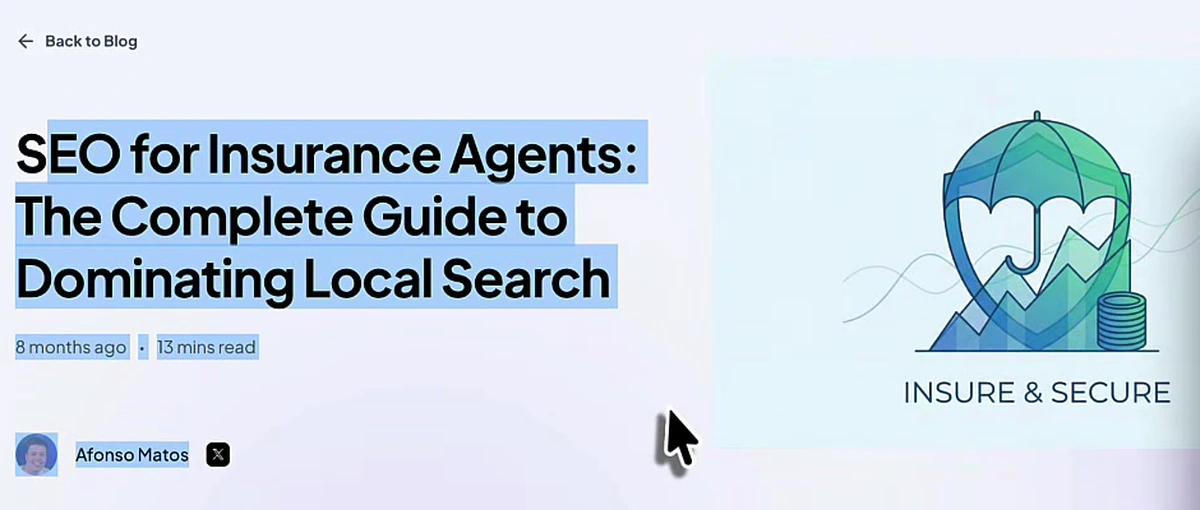
The article is a complete, competent guide to SEO for insurance agencies — and it was generated by Arvow's writer eight months ago, before the writer added internal links, external links, in-article images and videos. Nobody polished it. It sat in the blog, got indexed, and eventually became the page ChatGPT reaches for when someone asks about insurance-agency SEO. Two honest observations follow. Content that answers a niche question thoroughly can earn citations even when it's unpolished. And you'll never know the exact prompt: LLMs expose no keyword-planner equivalent for prompt traffic, so the best you can do is extrapolate the prompts a page could answer — and track those.
Tracking the prompts you can't see
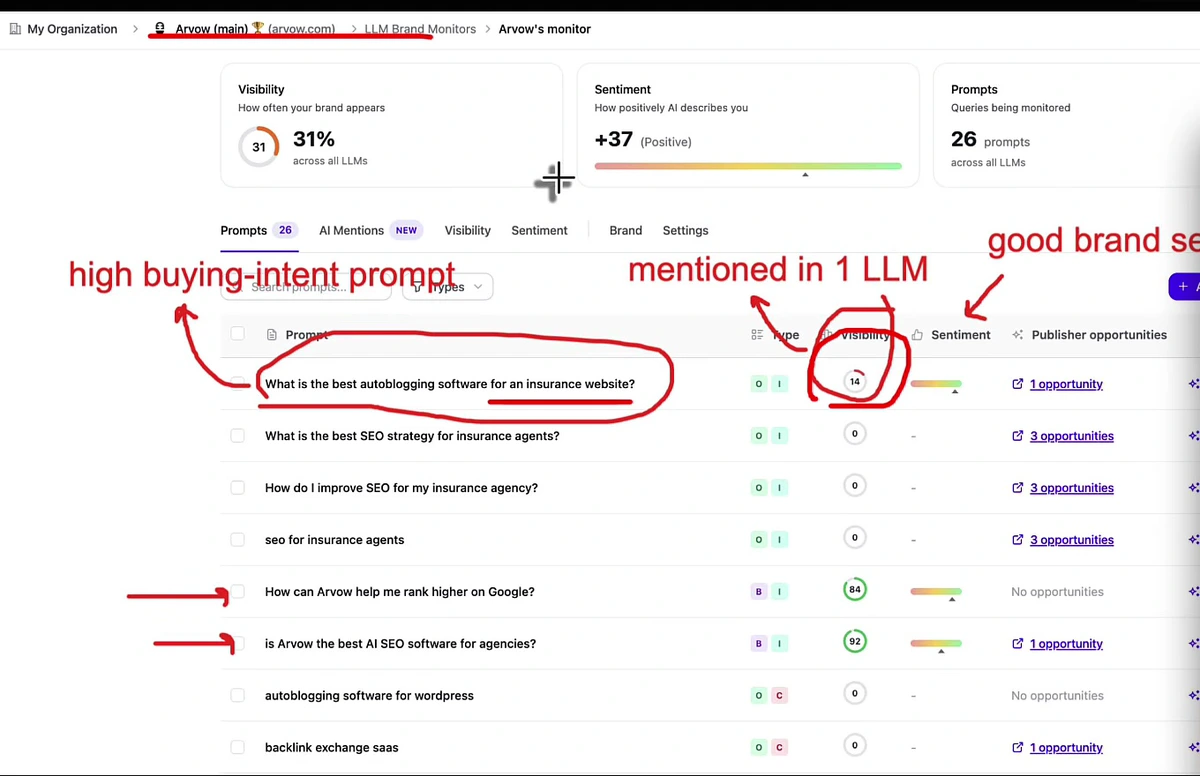
That's the workaround the video demonstrates. You can't read the user's prompt, but you can build the list of prompts your page or brand should appear for, then check each LLM's actual answers on a schedule. The monitor tracks 26 prompts for the brand — some high buying-intent ("What is the best autoblogging software for an insurance website?"), some branded, some category-level:
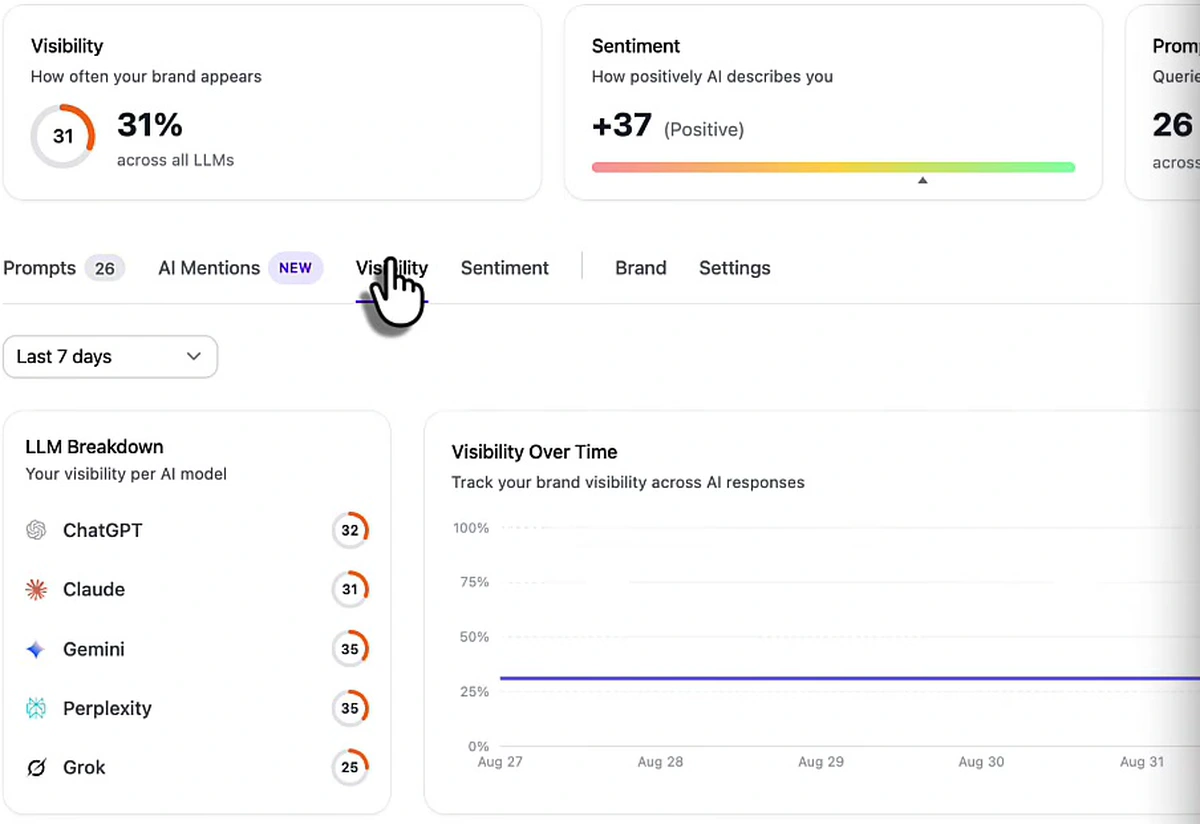
Two things matter beyond the mention itself. Coverage varies wildly by engine — for "best auto blogging software for SEO," the brand shows up in Claude and Gemini and is absent from ChatGPT, Grok and Perplexity; each gap is its own to-do. And sentiment is a separate axis: being mentioned is worthless if the model is trash-talking you (Grok's tone was the weakest of the five at the time of recording), so the monitor scores how positively each engine describes the brand, and the sources view shows you exactly what to fix. We covered the mechanics of moving these numbers in how to increase AI mentions.
The listicle play: get into the sources, get into the answer
Here's the tactical core. When an engine doesn't mention you, open the actual response and look at what it cited. For the autoblogging prompt where we're absent from ChatGPT, the sources are almost all third-party listicles — "The 9 Best Content Automation Tools in 2026" and friends:
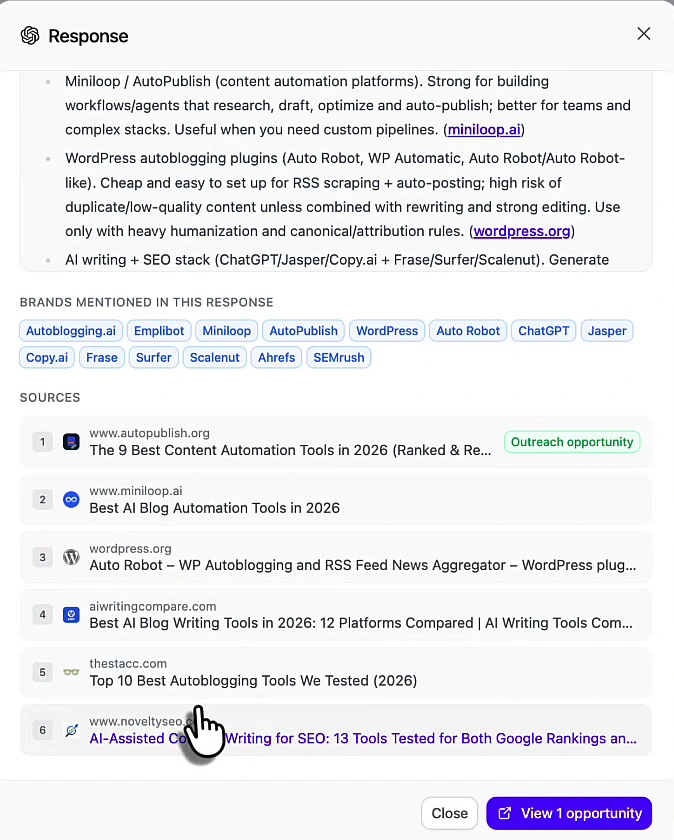
The play writes itself: reach out to the publishers of those listicles and get your brand included — paying for placement where that's what it takes. If the model is assembling its answer from those pages, being on the pages is the shortest path into the answer. It's never guaranteed and never one-to-one, but as Vasco puts it, this is the LLM SEO strategy the team runs for clients right now, and it works because it targets the exact sources a specific engine already trusts for a specific prompt. The philosophy is the one we argued in brand mentions are the new backlinks — except here you're not chasing mentions in general, you're chasing the six URLs one answer is built from.
What one sale does and doesn't prove
Honesty section. This is one tracked customer, not a cohort — the video frames it as proof the mechanism works, not as a conversion-rate claim. The exact prompt is unknowable, so nobody can tell you which phrasing to optimize for; the page's topic is the only signal. And the last step of the funnel did real work too: there's no free trial, but every feature page carries a demo video of the feature actually working, so a ChatGPT-referred visitor could fully qualify themselves before paying — a $2,988 commitment usually needs more than a blog post, and here the product pages were there to close what the citation opened.
The playbook, compressed
- Tag your inbound AI traffic. ChatGPT appends
utm_source=chatgpt.comon cited links — make sure your analytics keeps first-touch URLs, or you'll never connect revenue to it. - Publish complete answers to niche commercial questions. An unpolished but thorough guide to a specific audience's problem earned this citation; polish helps, coverage decides. (Today's version of the writer adds the links, images and videos this page never had.)
- Track prompts, not keywords. Build the buying-intent prompt list for your category and monitor each engine's answers and sentiment on a schedule.
- Chase the sources, engine by engine. Where you're absent, get into the exact listicles that engine cites. Where sentiment is bad, read the sources saying bad things and work on those.
- Cross-check against revenue. A mention that never becomes a first-touch URL in a paying customer's profile is a vanity metric. This one became $2,988.
For the fuller citation-earning checklist — schema, entity consistency, the content shapes engines prefer — our guide on how to get cited by ChatGPT goes deeper on the visibility half; this case study is the proof the visibility half pays invoices.
Want the same loop for your brand? Arvow writes the citable content, tracks your prompts and sentiment across ChatGPT, Claude, Gemini, Perplexity and Grok, and flags the exact source pages worth an outreach email.
Generate, publish, syndicate and update articles automatically
The AI SEO Writer that Auto-Publishes to your Blog
- Cancel anytime
- Articles in 30 secs
- Plagiarism Free