
4 LLM SEO Tips to "Rank" in ChatGPT (for 2026)

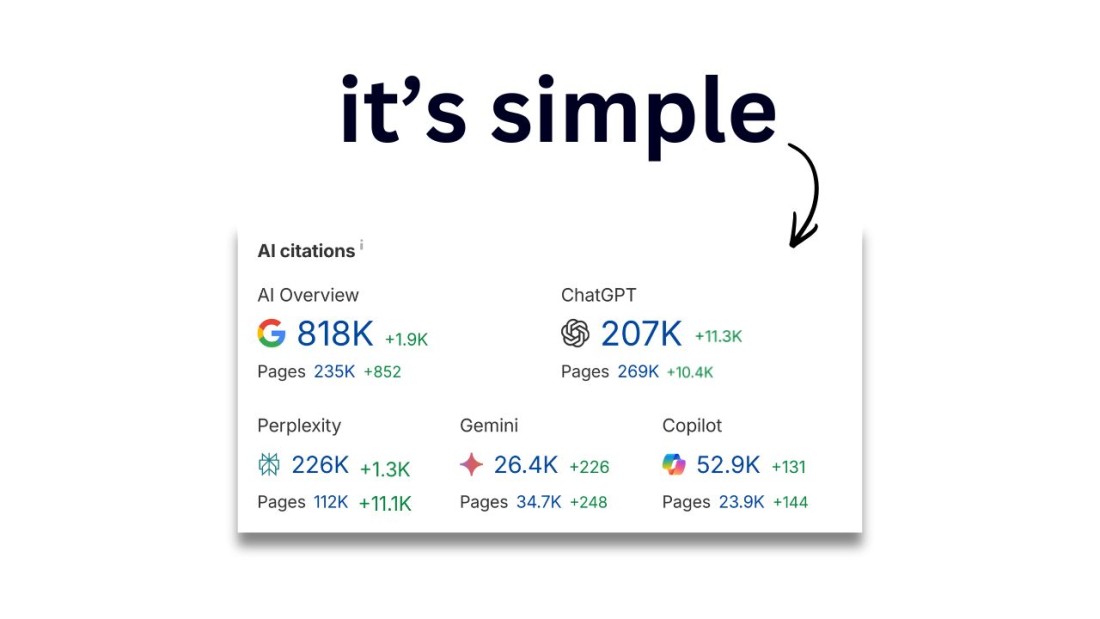
Table of Contents
If you've spent any time trying to figure out how to get your brand mentioned by ChatGPT, you've probably noticed something frustrating: most "GEO" or "AI SEO" advice online is recycled fluff. Generic tips about "creating quality content" don't move the needle.
This post is different. These are 4 LLM SEO tactics we actively use at Arvow to get cited by ChatGPT, Claude, Gemini, Perplexity, and Grok — and most of your competitors aren't doing any of them.
Each tip works across every major LLM. Whether your goal is showing up in ChatGPT's source list, getting recommended in Perplexity, or dominating Google's AI Overviews, the same principles apply.
Let's get into it.
What Is LLM SEO (a.k.a. GEO / AIO)?
LLM SEO — also called Generative Engine Optimization (GEO) or AI Optimization (AIO) — is the practice of optimizing your brand and content so that large language models like ChatGPT, Claude, Gemini, Perplexity, and Grok mention, cite, or recommend you in their responses.
It's distinct from traditional SEO in three key ways:
Traditional SEO | LLM SEO |
|---|---|
Goal: Rank #1 on Google | Goal: Get mentioned in AI answers |
Measures position 1–100 | Measures visibility (% of prompts you appear in) |
Click-through is the metric | Citation + sentiment are the metrics |
Optimizes for keywords | Optimizes for prompts and source citations |
Links between blue results | Recommendations inside generative answers |
The big shift: when someone asks ChatGPT "what's the best AI SEO software for agencies?", they don't see a list of 10 blue links anymore. They see one synthesized answer with a handful of brands recommended — and a few sources cited. If you're not in that answer, you don't exist for that prompt.
Here's how to fix that.
Tip 1: Build AI Search Citation-Based Backlinks
This is a two-in-one tactic, and most of your competitors have no idea it exists.
The premise is simple: every LLM cites sources when it answers. Those sources are usually listicles, statistics articles, or roundups. The brands that get recommended in the answer are almost always the brands mentioned in those cited sources.
So if you can get your brand placed inside the sources that ChatGPT is already citing for a given prompt, you stack the deck — you get a niche-relevant backlink AND you increase your odds of being recommended for that prompt.
How to do it (step by step)
Pick a prompt you want to rank for. For Arvow, an example prompt is "what's the best AI SEO software for agencies?"
Run the prompt in ChatGPT, Perplexity, Claude, Google AI Mode, or Grok.
Click the "Sources" or "Citations" panel. Every major LLM exposes this.
Open every cited source. These are the pages feeding the AI's answer.
Audit which brands they mention. You'll usually see the same 5–10 brands repeated across sources.
Reach out to each source owner. Ask if you can be added to the existing article (paid placement) or commission a new article that includes your brand.
That's the entire play. The sites being cited often don't even know why you're reaching out — many won't track LLM citations at all — which means pricing tends to be reasonable.
Why this works (and why it's a two-in-one)
You're not just buying any backlink. You're buying:
A link from a niche-relevant site (LLMs cite topical authorities, not random blogs)
A link from a page that's actively cited by ChatGPT, Claude, Perplexity, or Grok for a prompt you care about
A link that often comes from a decent DR domain (35+, sometimes 70+) because LLMs favor authoritative sources anyway
Most "link builders" hunt for high-DR domains by spraying outreach. You're doing the inverse — finding the small set of pages already wired into AI answers and getting added to them.
The free version: Medium and other open platforms
You don't always need to pay. Anyone can publish on Medium, Substack, LinkedIn, dev.to, or Reddit. If you write a comprehensive listicle ("Best AI SEO Tools for 2026") that covers your category fairly — and naturally includes your brand — there's a meaningful chance it gets cited by LLMs over time, especially as it earns engagement.
We've seen CMOs of major SEO tools quietly publishing Medium articles for exactly this reason. They're not doing it for traffic. They're doing it for the citation.
How to track which sources LLMs are citing for your prompts
You can't fix what you can't see. We built Arvow's LLM Brand Monitor specifically for this — it tracks whether your brand shows up in ChatGPT, Claude, Gemini, Perplexity, and Grok for any prompt you care about, surfaces the exact sources being cited, and flags sentiment (positive, neutral, negative).
If you'd rather DIY, the manual version works fine: keep a spreadsheet with one tab per prompt, list the cited sources, and update it weekly.
Tip 2: Bulk Generate Citation-Inducing Content
There's a specific type of content that LLMs love to cite. If you produce it consistently, you become a source — and once you're a source, citations compound.
That type is statistics-based content.
Why stat-based content gets cited
LLMs (and humans, frankly) cite statistics for a few reasons:
Neutral framing. A statistics article isn't promoting a brand — it's reporting numbers. That makes it safe to cite without endorsing anything.
Concrete, attributable claims. "73% of marketers report X" is a quotable, verifiable fact. AI models love that pattern because it gives them defensible sentences.
Structured for extraction. Stats articles use tables, percentages, and bullet points — exactly the format LLMs parse cleanly.
Evergreen reference value. A "remote work statistics" page gets cited for years. A blog post about your product features doesn't.
Real example: Arvow's stat-based articles have earned dozens of high-DR backlinks without any outreach. Domains in the DR 28–72 range have linked to them naturally because writers needed a stat and we were the source. Zero dollars spent on link building.
What to bulk-create
Here are the types of stat-based articles that perform best for LLM citations:
Article Type | Example Title | Why It Works |
|---|---|---|
Industry statistics | "50+ SEO Statistics for 2026" | Cited by anyone writing about SEO trends |
Behavior reports | "Remote Work Statistics: How 10,000 Workers Spend Their Day" | Highly citable in HR, productivity, and management content |
Market size data | "AI Software Market Size & Adoption Stats" | Anchor stat for product launches and pitches |
Demographic breakdowns | "Gen Z Buying Habits: 30 Stats Every Brand Should Know" | Evergreen reference for marketing pieces |
Tool/category usage | "ChatGPT Usage Statistics in 2026" | Constantly updated by writers needing fresh data |
How to scale this without burning out
Producing one stat-based article is fine. Producing 100 across every relevant topic in your niche is where citations actually compound — and that's where automation comes in.
Arvow's autoblog feature lets you bulk-generate stat-based articles complete with charts, tables, and proper formatting, then auto-publish them straight to your CMS (WordPress, Shopify, Webflow, Wix, Ghost, Squarespace). You can set a cadence — say, 8 articles per week — and let the system run in the background.
The workflow looks like this:
List every stat-worthy topic in your niche (use a keyword tool or AI to brainstorm).
Set up an autoblog campaign targeting those topics.
Configure cadence (daily, weekly, custom).
Articles publish on autopilot with images, internal links, and structured data.
Backlinks and citations accumulate over weeks and months.
This is the exact strategy we run on arvow.com itself, and it's the cheapest "link building" channel we have.
Tip 3: Track Your Visibility Across Every LLM
You can't improve what you don't measure. This is so basic it sounds like a cliché, but the vast majority of brands have no idea whether they're appearing in ChatGPT, let alone Claude, Gemini, Perplexity, or Grok.
What to track
At minimum, you need to track three things across every major LLM:
Visibility: Does your brand appear in the AI's answer for a given prompt? How often (across multiple runs, since LLMs are non-deterministic)?
Sentiment: When you do show up, is the AI saying positive, neutral, or negative things about you?
Sources cited: Which specific URLs is the LLM citing as the basis for its answer?
Two types of prompts to monitor
Prompt Type | Example | What It Measures |
|---|---|---|
Brand prompts | "Is Arvow legit?" / "Pros and cons of Arvow" | Reputation, sentiment, accuracy of how AI describes you |
Discovery prompts | "Best AI SEO software for agencies" / "Alternatives to Semrush" | Whether AI recommends you to people who don't know you exist yet |
Discovery prompts are where the real LLM SEO game is played. If you only show up when your brand name is already in the prompt, you're not winning new customers from AI search — you're just being recognized by people who already know you.
How to set up tracking in Arvow
Arvow's LLM Brand Monitor handles all of this in one dashboard. Quick setup:
Create a new monitor and add your domain.
Add brand aliases (rebrands, common misspellings, abbreviations — Arvow tracks all of them).
Add the prompts you care about (one-by-one or bulk import via CSV/TXT).
Arvow runs the prompts daily across ChatGPT, Claude, Gemini, Perplexity, and Grok and reports visibility + sentiment + sources.
For a deeper tactical walkthrough, see our guide on how to track ChatGPT brand mentions and our breakdown of prompt tracking for AI SEO.
If you want to compare options, we also did a full breakdown of the 7 best LLM brand tracker tools.
What to do with the data
Tracking is only useful if it drives action. Here's the playbook:
Low visibility on discovery prompts → publish more comparison pages, alternatives pages, and category roundups. Get added to the listicles being cited (Tip #1).
Negative sentiment → identify the cited sources causing it, get the negative ones updated or counteracted with new positive content (case studies, reviews, "trust" pages).
Inconsistent visibility across LLMs → look at which sources each model cites differently. Perplexity loves Reddit and forums. ChatGPT loves listicles. Gemini leans on Google's existing SERP. Optimize per platform.
Tip 4: Don't Produce AI Slop (Unless You're Doing Non-English SEO)
This one's nuanced. Let's be precise.
Google does not penalize AI content. It penalizes low-quality content, AI or human. Google's official position: "the appropriate use of AI or automation is not against our guidelines." E-E-A-T (Experience, Expertise, Authoritativeness, Trustworthiness) is the bar — not authorship.
The same applies to LLMs. ChatGPT doesn't care if a cited source was AI-written. It cares whether the source is authoritative, well-structured, and useful.
The actual rule: in highly competitive English-language niches, generic AI output won't cut it. The bar is too high. You need brand-tailored, knowledge-base-grounded content that includes your unique perspectives, data, and voice.
How to avoid AI slop in competitive niches
The fix isn't "write everything by hand." It's to give the AI enough context to write like you, not like every other AI-generated article.
Arvow's knowledge base feature lets you upload:
Brand documents (PDFs, text files, Word docs)
Product information and positioning
Past blog posts and emails (for tone)
Audio and video files (transcribed and indexed)
Style guides and brand voice notes
The AI reads from this knowledge base when generating articles, which means your output reflects your actual brand voice, your unique data, and your point of view — not generic GPT mush. This is what closes the gap between "AI slop" and "content that gets cited."
The non-English exception
If you're targeting non-English markets, the calculus changes completely.
The competitive bar is dramatically lower because:
Most of the world doesn't speak English. Demand for content in Portuguese, Spanish, Mandarin, French, German, Italian, Greek, and dozens of other languages massively exceeds supply.
LLMs cite sources in the language of the prompt. Type a prompt in Portuguese, get Portuguese sources. There's far less competition for those citation slots.
Many traditional SEO publishers haven't expanded internationally. The opportunity is wide open.
The strategy: take the same content workflow you'd use for English, point it at a non-English market, and you'll often see results in weeks rather than months. Several Arvow customers have built entire businesses on this exact arbitrage.
Arvow generates content in 150+ languages with full localization — country-targeted, locally-aware, with hreflang and schema handled automatically.
Market Approach | Competition Level | Quality Bar | Time to Results |
|---|---|---|---|
English-language, competitive niche | Extremely high | Must be brand-tailored, knowledge-base grounded | 3–6+ months |
English-language, niche/long-tail | Moderate | Decent quality + structured formatting | 2–4 months |
Non-English, major market (Spanish, Portuguese, etc.) | Low | Standard quality | 4–8 weeks |
Non-English, smaller language | Very low | Standard quality | 2–6 weeks |
Quick Recap: The 4 LLM SEO Tips
# | Tip | What It Does |
|---|---|---|
1 | Build AI search citation-based backlinks | Place your brand inside the sources LLMs already cite for prompts you want to rank for |
2 | Bulk generate citation-inducing content | Become a source. Publish stat-based articles at scale that earn citations from humans and LLMs |
3 | Track visibility across every LLM | Measure visibility, sentiment, and cited sources across ChatGPT, Claude, Gemini, Perplexity, and Grok |
4 | Avoid AI slop (in English) — exploit it (in other languages) | Use brand-tailored content for competitive English niches; ride the low-competition wave in non-English markets |
Frequently Asked Questions
How long does LLM SEO take to show results?
Faster than traditional SEO, surprisingly. New citations from LLMs can appear within days of a source being updated, since LLMs re-crawl and re-index frequently. Building a meaningful share of voice across multiple prompts typically takes 6–12 weeks of consistent effort.
Do I need to choose between traditional SEO and LLM SEO?
No — they reinforce each other. Most factors that help you rank on Google (authoritative content, structured formatting, citations from other sites) also help LLMs cite you. The differences are at the margin: LLMs care more about being a clean, neutral, structured source; Google still cares about user signals like CTR and dwell time.
Which LLM should I prioritize?
Depends on your audience. ChatGPT has the largest user base by a wide margin, so it's usually the right starting point. Perplexity is heavily used by researchers and B2B buyers. Google AI Overviews matter if you already rank well on Google. Track all of them — the same content strategy lifts visibility across every model.
Is it worth paying for LLM brand tracking?
If LLMs drive even a small % of your inbound discovery, yes. Without tracking, you're optimizing blind. Free options exist (manual prompt-running in a spreadsheet), but they don't scale past a handful of prompts. Tools like Arvow's LLM Brand Monitor automate it across every major model.
Can AI-generated content get cited by ChatGPT?
Yes — provided it's high quality, structured, and adds something the rest of the internet doesn't. Generic AI rephrasing of existing articles won't get cited. AI content grounded in your knowledge base, with original data, will.
What's the single highest-leverage tactic for getting started?
Tip #1 — citation-based backlinks. It's the fastest path because you're inserting your brand into pages that are already cited. Tips #2 and #3 compound over time; Tip #1 can move visibility within weeks.
Final Thoughts
LLM SEO in 2026 is where traditional SEO was around 2010 — a small group of practitioners are quietly running plays that most brands don't even know exist. The tactics in this post aren't theoretical. They're the same ones we run on arvow.com to get cited by ChatGPT, Claude, Gemini, Perplexity, and Grok, and they work.
Two things matter most:
Become a citable source (stat-based content, listicles, comparison pages, structured data).
Get embedded in the sources LLMs already cite for your target prompts.
Everything else is downstream of those two principles.
Generate, publish, syndicate and update articles automatically
The AI SEO Writer that Auto-Publishes to your Blog
- Cancel anytime
- Articles in 30 secs
- Plagiarism Free