
Prompt Tracking in LLMs for AI SEO (Software)

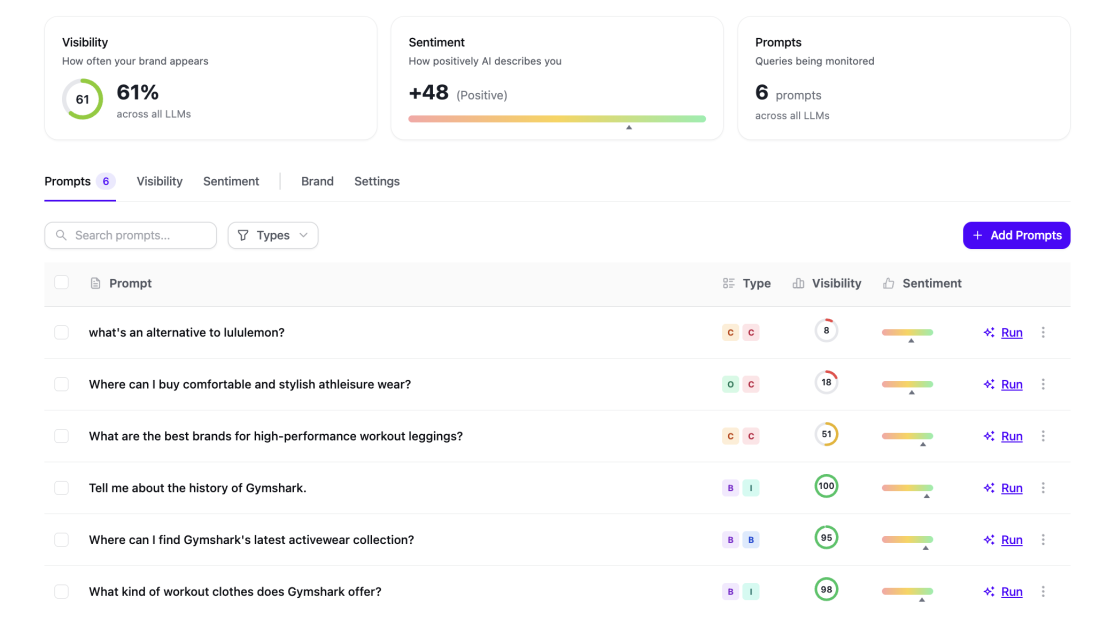
Table of Contents
If you’re doing SEO in 2026, “ranking” isn’t just blue links anymore.
People discover brands through LLMs and AI search experiences (ChatGPT, Claude, Gemini, Perplexity, Grok — plus Google’s AI Overviews / AI Mode). Which means you need to answer two new questions:
Which prompts do I show up for?
When I show up, is the mention positive… or does it hurt me?
That’s exactly what Arvow Prompt Tracking (LLM Brand Monitors) is built for: track your visibility across AI models, track sentiment, and use the data to improve your brand’s “AI SEO” presence over time.
Here's how the prompt rank tracker for LLMs works (in under 60 seconds):
What is “prompt tracking” (and why it matters)
Prompt tracking is the process of monitoring whether AI models mention your brand for specific queries (prompts), such as:
“best AI SEO software for agencies”
“alternatives to [competitor]”
“is [your brand] worth it?”
“best tool for [your use case]”
Unlike traditional rank tracking (where you measure position #1–#100 in Google), prompt tracking measures:
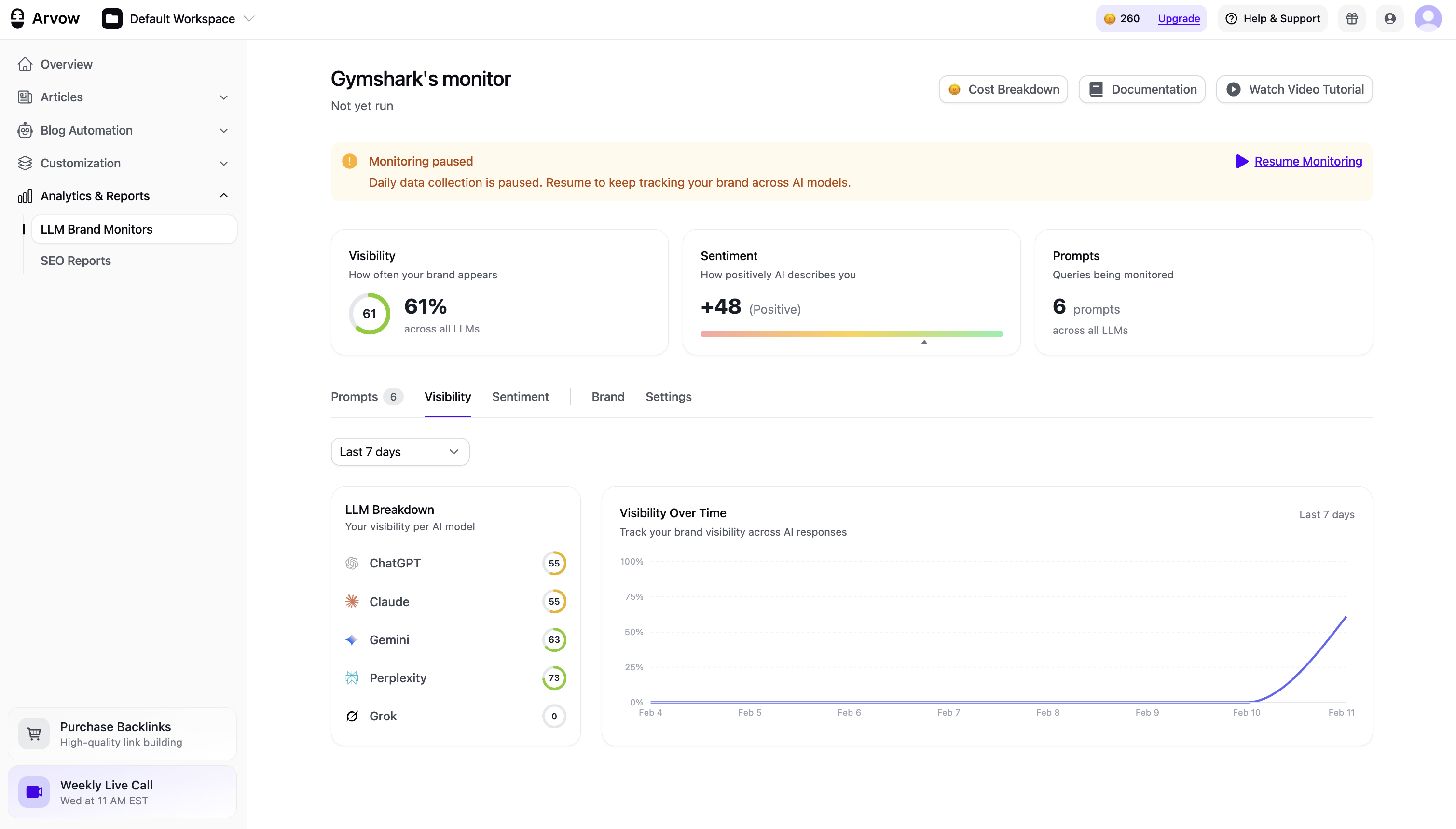
Visibility: do you appear in the response? how often? across which AI models?
Sentiment: is the mention positive, neutral, or negative?
Trends: is visibility/sentiment improving after your SEO/PR/content changes?
What Arvow tracks (at a glance)
Arvow’s LLM Brand Monitor lets you:
Track visibility across multiple AI models
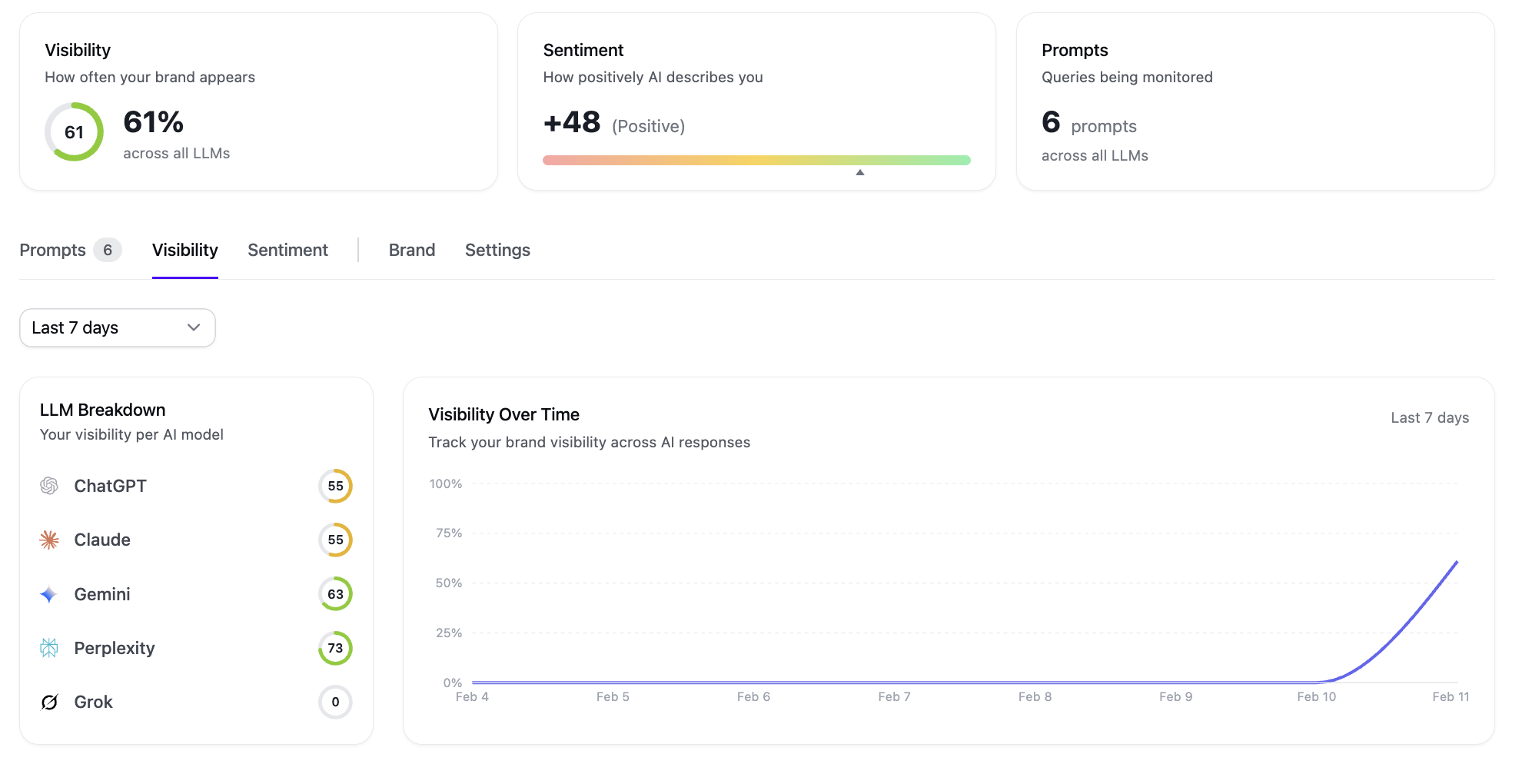
Track sentiment over time (so you don’t just “show up” — you show up well)
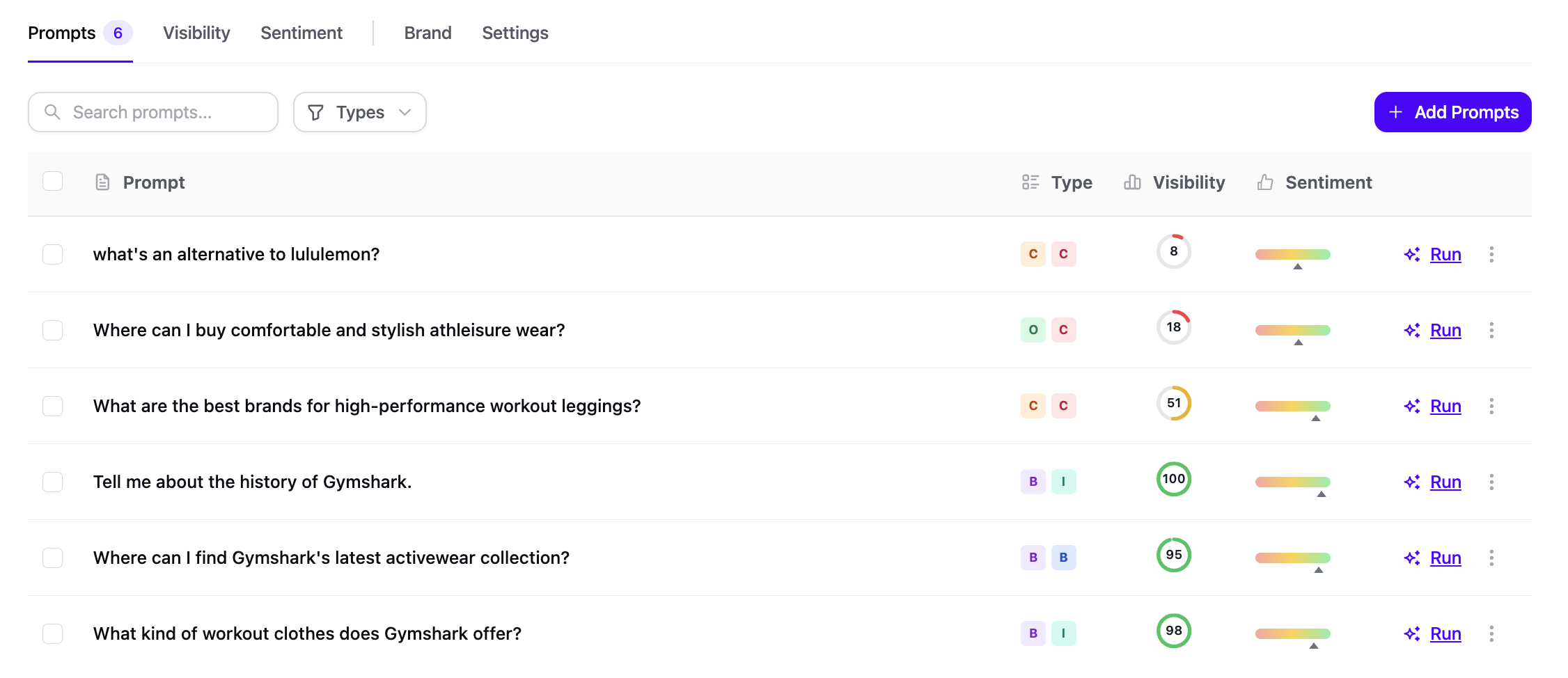
Monitor which prompts you appear for (and which ones you don’t)
Drill into individual responses so you can see why a model mentioned you (or didn’t)
Step-by-step: how to set up Prompt Tracking in Arvow
Step 1) Go to LLM Brand Monitors
Inside Arvow:
Dashboard → Analytics & Reports → LLM Brand Monitors
Create a new monitor
Step 2) Add your brand name + website URL
Pick the brand you want to track (your company, product, or client) and add:
Brand Name (e.g., “Gymshark”)
Website URL (optional, but recommended)
This helps Arvow understand what your brand is and generate better prompts.
Step 3) Add brand aliases (optional, but powerful)
Aliases are alternative ways your brand might be referenced, such as:
Old brand name after a rebrand
Common abbreviations
Common misspellings
Product line variations
Example: “TransferWise” → “Wise”
Step 4) Choose language + description
Set the language your prompts should be written in (and typically the language your customers search in). Add a short brand description (optional) to improve prompt and analysis quality.
Step 5) Add prompts you actually care about
This is the most important part.
You want a mix of prompts:
A) Prompts that include your brand name
These are useful for reputation + sentiment monitoring.
Examples:
“Is [Brand] legit?”
“Is [Brand] worth it?”
“What is [Brand]?”
“How does [Brand] work?”
B) Prompts that do NOT include your brand name
These are what drive new discovery (the real “AI SEO” game).
Examples:
“best [category] software for agencies”
“best tool for [job-to-be-done]”
“alternatives to [competitor]”
“[competitor] vs [competitor] which is better?”
Why this matters:
If your brand only shows up when it’s already mentioned in the prompt… you’re not winning discovery. You’re just being recognized.
Step 6) Create monitor (and choose cadence)
When you create the monitor, Arvow runs the prompts across the AI models you’re tracking.
You can run it:
On autopilot (ongoing tracking), or
Pause it if you only want a one-time snapshot
(Your UI will show a “Monitoring paused / Resume monitoring” banner when paused.)
How to read your results
1) Visibility = how often you appear
Visibility tells you if the model mentions your brand for the prompt set.
You can see visibility:
Per prompt (which prompts you’re showing up for)
Across models (which AI models mention you most)
Over time (trend line)
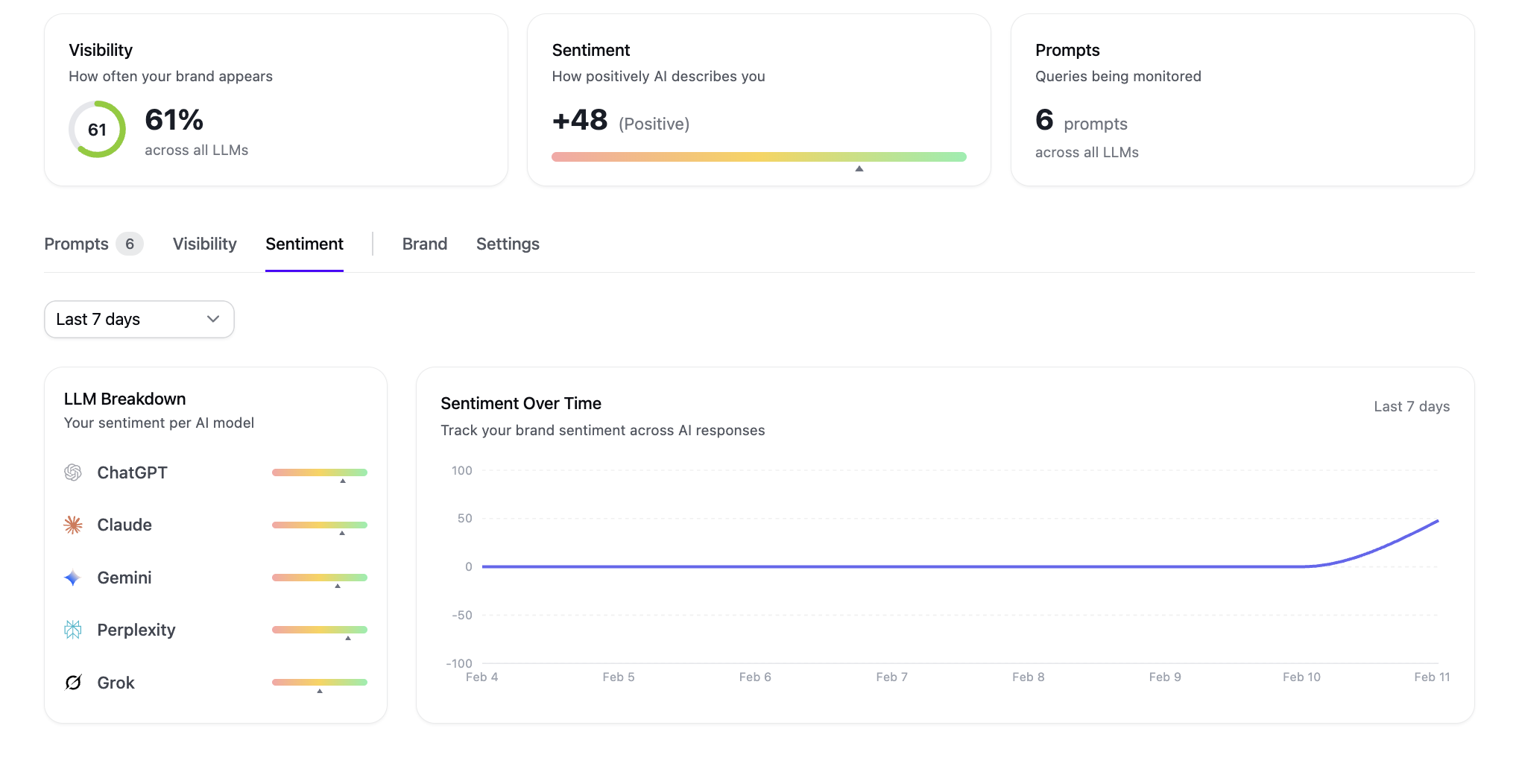
2) Sentiment = how the AI describes you
This is the part most people miss.
It’s not enough to “be included.” If the AI says:
your reviews are bad,
you’re overpriced,
you’re not reliable,
…that’s a negative outcome even if visibility is high.
Drill down: see exactly where (and how) you appear
When you click a prompt, Arvow shows:
The prompt
Visibility %
Sentiment score
A list of responses (so you can inspect what each model said)
Screenshot (Prompt Details modal):
Suggested caption: Prompt-level breakdown: visibility + sentiment + responses you can inspect.
You can then open a specific response and see the content clearly.
The “AI SEO loop”: what to do with the data
Prompt tracking is useless if it doesn’t drive action.
Here’s the simple loop:
If visibility is low (you don’t show up)
Do one (or more) of these:
Publish comparison pages (“You vs Competitor”, “Competitor vs Competitor”)
Publish alternatives pages (“Best alternatives to X”, “X alternatives”)
Publish category pages (“Best AI SEO software for agencies”)
Add clear positioning on your homepage and key pages (what you do, who you’re for, what makes you different)
Get cited/mentioned on relevant sites (PR, partnerships, directories, reviews)
If sentiment is negative
Treat it like reputation SEO:
Identify the complaint theme in responses (pricing, bugs, support, trust, etc.)
Create pages/content that address it directly:
“Security & compliance”
“Pricing explained”
“Case studies”
“Customer reviews”
“What’s changed since 2025”
Fix the underlying issue (obvious, but… that’s the real lever)
Re-run prompts and track sentiment trend
If visibility is high but only on brand-name prompts
That’s a signal: you have brand awareness but not discovery.
Add more non-brand prompts (category, comparisons, alternatives), then build content specifically to win them.
Best prompt templates (copy/paste)
Use these as your starter prompt set:
Brand prompts (sentiment monitoring)
“Is [Brand] legit?”
“Is [Brand] worth it?”
“What do people think about [Brand]?”
“Pros and cons of [Brand]”
“Who is [Brand] best for?”
“How does [Brand] compare to [Competitor]?”
Category prompts (discovery)
“best [category] software for [persona]”
“best [category] tools for [use case]”
“best [category] for small teams”
“best [category] for agencies”
“best [category] for ecommerce”
Alternatives prompts (high-buying-intent discovery)
“alternatives to [Competitor]”
“best alternatives to [Competitor] for [persona]”
“tools like [Competitor] but cheaper”
“free alternatives to [Competitor]”
Comparison prompts (decision-stage)
“[Competitor] vs [Competitor]”
“[Brand] vs [Competitor]”
“which is better: [Competitor] or [Competitor]?”
“best [category]: [Competitor] vs [Competitor]”
Conclusion
AI SEO isn’t vague anymore. You can measure it.
With Arvow Prompt Tracking, you can:
See which prompts you show up for
Track visibility across AI models
Monitor sentiment (positive vs negative)
Prove improvement over time as you publish content, build authority, and fix perception
If you want to win discovery in 2026, don’t just track rankings - track prompts, using Arvow.

Generate, publish, syndicate and update articles automatically
The AI SEO Writer that Auto-Publishes to your Blog
- Cancel anytime
- Articles in 30 secs
- Plagiarism Free