
The Best AI SEO Workflow for Agencies (to Rank Clients #1 in ChatGPT)

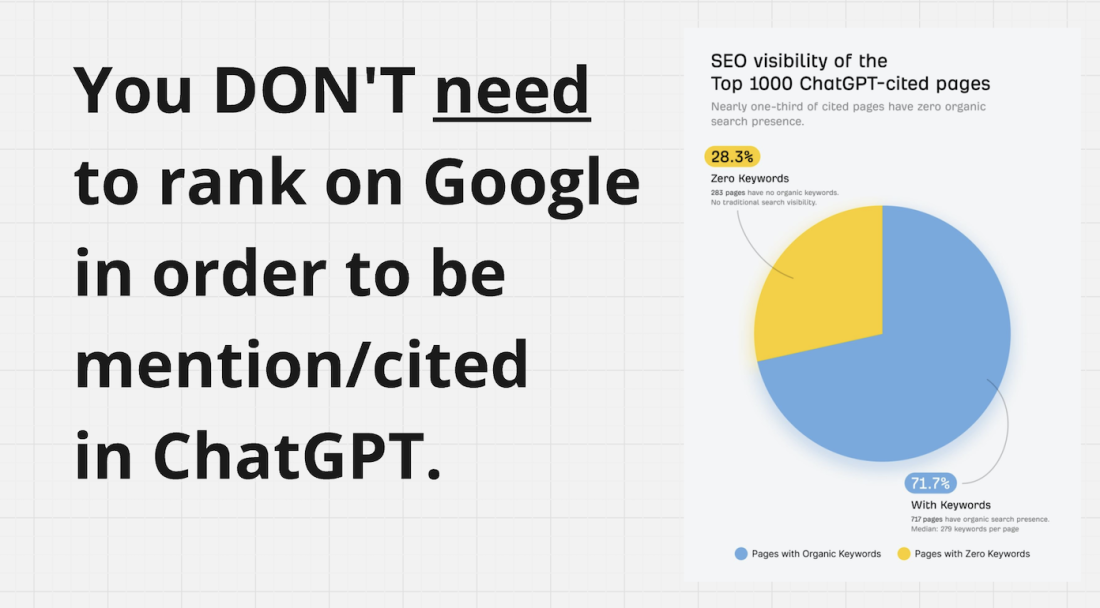
Table of Contents
AI SEO is no longer about just ranking blue links on Google.
If you run an agency today, your clients don’t just want traffic.
They want to be mentioned, cited, and recommended inside ChatGPT, Perplexity, Gemini, Copilot, and Google AI Overviews.
The good news?
There is a repeatable workflow that works.
This article breaks down the exact AI SEO workflow agencies are using right now to rank clients inside LLMs, backed by real examples and case studies.
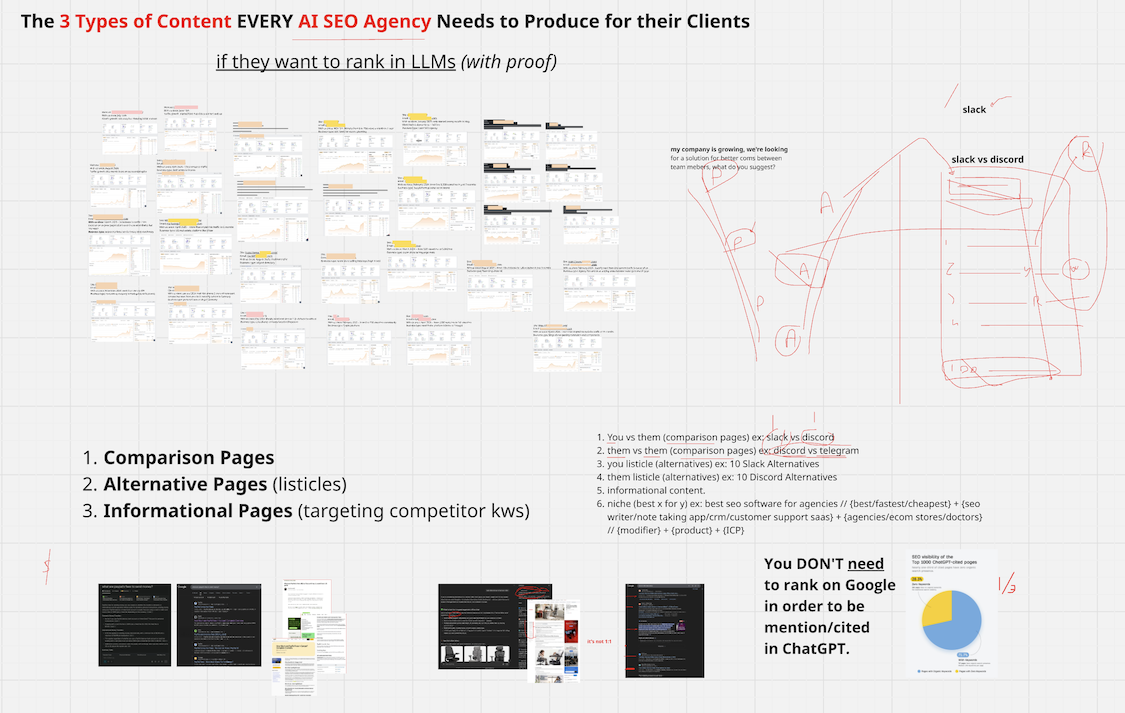
Here's a visual of what we're going to cover:
Why AI SEO Is Different From Classic SEO
Traditional SEO assumes:
Users click 3–4 results
Rankings are linear
Page 1 = visibility
LLMs don’t work like that.
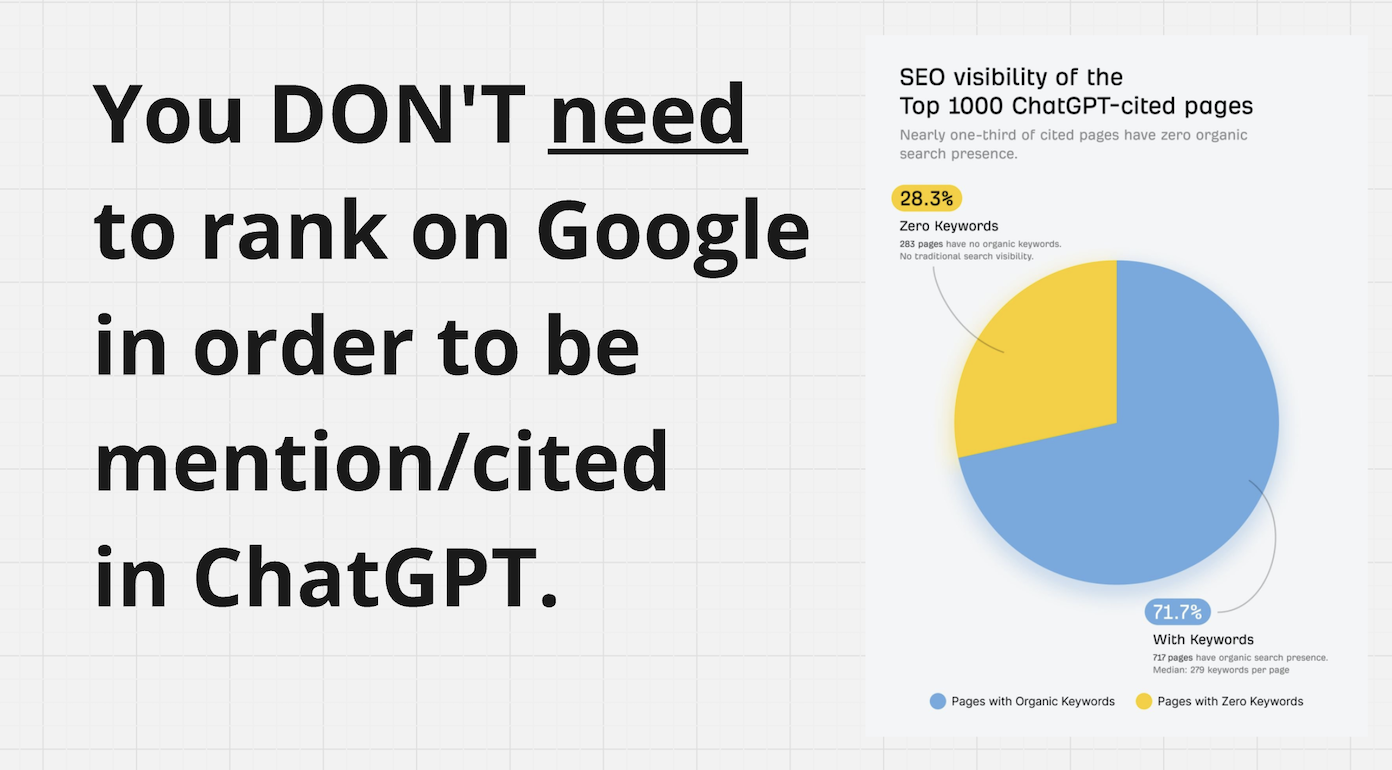
LLMs scan, synthesize, and summarize content from across the web — including pages that don’t rank on Google at all.
Studies show that ~30% of pages cited by LLMs are nowhere near page 1 in Google search.
That changes everything.
The 3 Content Types That Drive LLM Rankings
If your agency only remembers one thing from this article, let it be this:
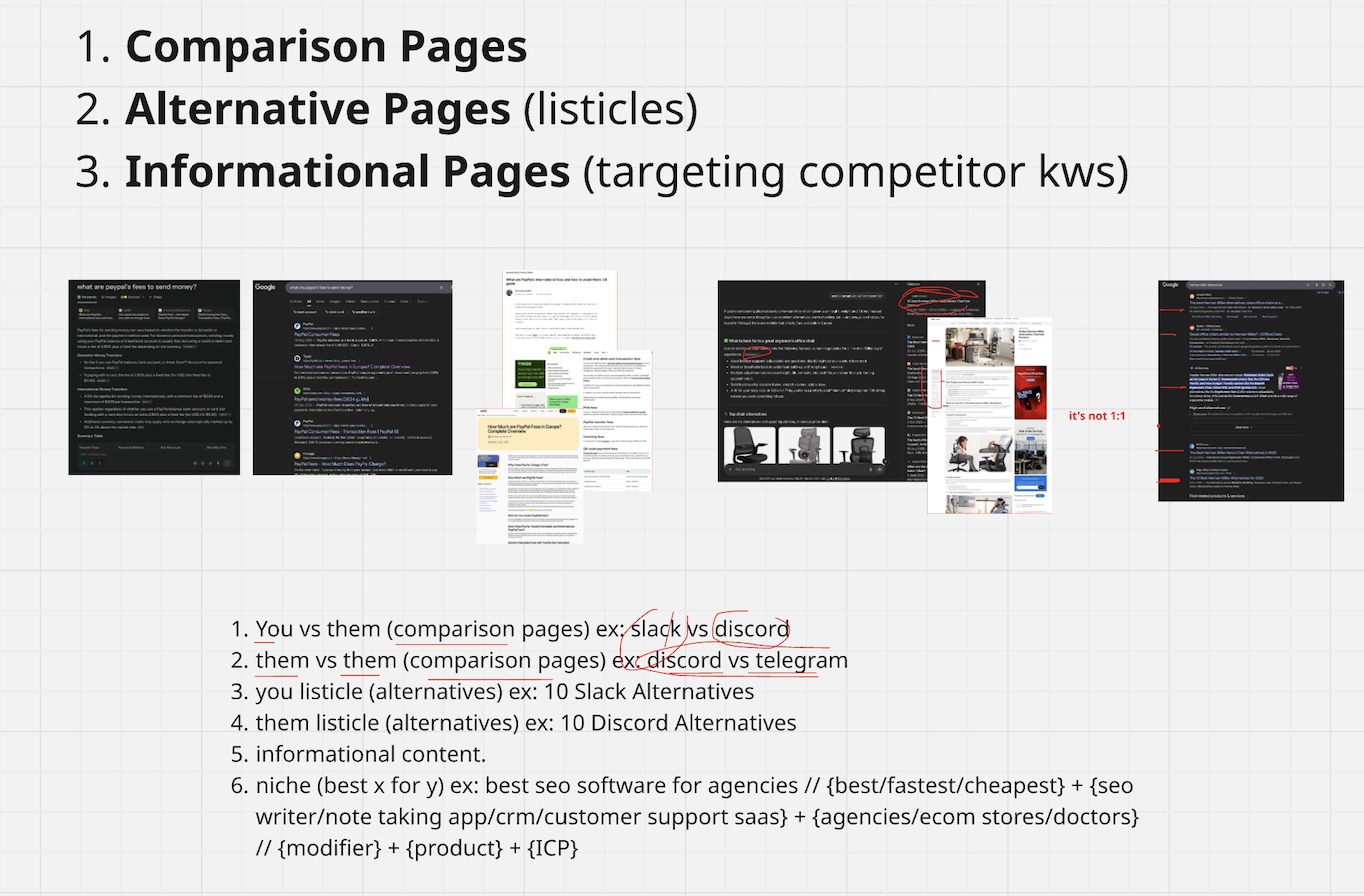
LLMs overwhelmingly cite three types of content.
1. Comparison Pages (The #1 Driver)
Comparison pages dominate AI citations because LLM prompts are conversational:
“Slack vs Discord”
“Kajabi vs Thinkific”
“Best alternative to X”
What to publish
Client vs competitor
Competitor vs competitor (yes, even if your client isn’t mentioned)
Why this works:
You capture bottom-of-funnel intent
LLMs love structured comparisons (tables, bullets, feature lists)
You get cited even when the user didn’t ask about your client directly
Example
“Teachable vs Kajabi”
“Slack vs Microsoft Teams”
“Shopify vs WooCommerce”
Even if the user only knows the competitors, your client gets introduced through the citation.
2. Alternatives & Listicles
Listicles are decision-making machines for LLMs.
Common prompt patterns:
“Best Slack alternatives”
“Top CRM tools for agencies”
“Best AI SEO tools for agencies”
What to publish
“10 best alternatives to X”
“Best tools for Y”
“Top software for [ICP]”
Why it works:
LLMs need ranked options
Lists map perfectly to AI answers
Each item becomes a citation opportunity
This is why alternative pages get cited even when they don’t rank in Google.
3. Informational Pages About Competitors
This one feels counter-intuitive, but it’s incredibly effective.
Write about competitors better than they write about themselves.
Examples:
“What are PayPal fees?”
“How much does Shopify cost?”
“How does HubSpot pricing work?”
Why this works:
Users search for competitors
LLMs need neutral explanations
If your page explains it clearly, you win the citation
This is exactly why Wise outranks PayPal inside AI answers, even though PayPal ranks #1 on Google.
The Modifier Formula That Scales This Forever
Once the core system is in place, scale it with this formula:
Modifier + Product/Service + ICP
Examples:
Best SEO software for agencies
Cheapest CRM for startups
Fastest AI writer for ecommerce
Best accounting software for doctors
This creates months of content ideas from a single client.
What LLM-Optimized Content Looks Like
LLMs consistently favor pages that include:
Clear H2/H3 structure
Comparison tables
Bullet points
Simple, direct language
Internal links
External citations
Contextual images
Short explanatory paragraphs
In other words:
Simple beats clever. Structured beats fancy.
How Agencies Automate This Entire Workflow
Manually producing this content for multiple clients doesn’t scale.
That’s why many agencies use Arvow to automate the entire AI SEO workflow.
With Arvow, agencies can:
Create separate workspaces per client
Input a client URL
Auto-generate:
Comparison pages
Alternative listicles
Informational competitor content
Automatically:
Add internal links
Add external links
Insert images
Publish directly to WordPress
Relevant pages:
Case studies: https://arvow.com/case-studies
LLM brand monitoring: https://arvow.com/llm-brand-mention-rank-tracker
Platform overview: https://arvow.com
Arvow users have reported 38% increases in leads purely from AI citations — not traditional rankings.
Why This Works (Even Without Google Rankings)
LLMs don’t stop at page 1.
If a page answers a refined prompt better, it gets cited, even if it’s buried in Google results.
That’s why:
Small sites beat big brands
Niche pages beat generic content
Structured pages beat “SEO fluff”
The Complete AI SEO Workflow (Summary)
Here’s the full agency playbook:
Step | What to Do |
|---|---|
1 | Publish comparison pages |
2 | Publish alternatives & listicles |
3 | Publish informational competitor pages |
4 | Apply modifier + product + ICP |
5 | Structure content for LLMs |
6 | Automate publishing at scale |
Final Thoughts
AI SEO is not replacing classic SEO.
It’s layering on top of it.
Agencies that adapt now will:
Win LLM citations
Own bottom-of-funnel intent
Future-proof client results
Agencies that don’t…
Won’t even show up in the answers.
If you want to automate this workflow for your clients, you can explore Arvow or book a walkthrough directly from the platform.
Generate, publish, syndicate and update articles automatically
The AI SEO Writer that Auto-Publishes to your Blog
- Cancel anytime
- Articles in 30 secs
- Plagiarism Free