
7 Best AI SEO Rank Tracking Software Options for 2026

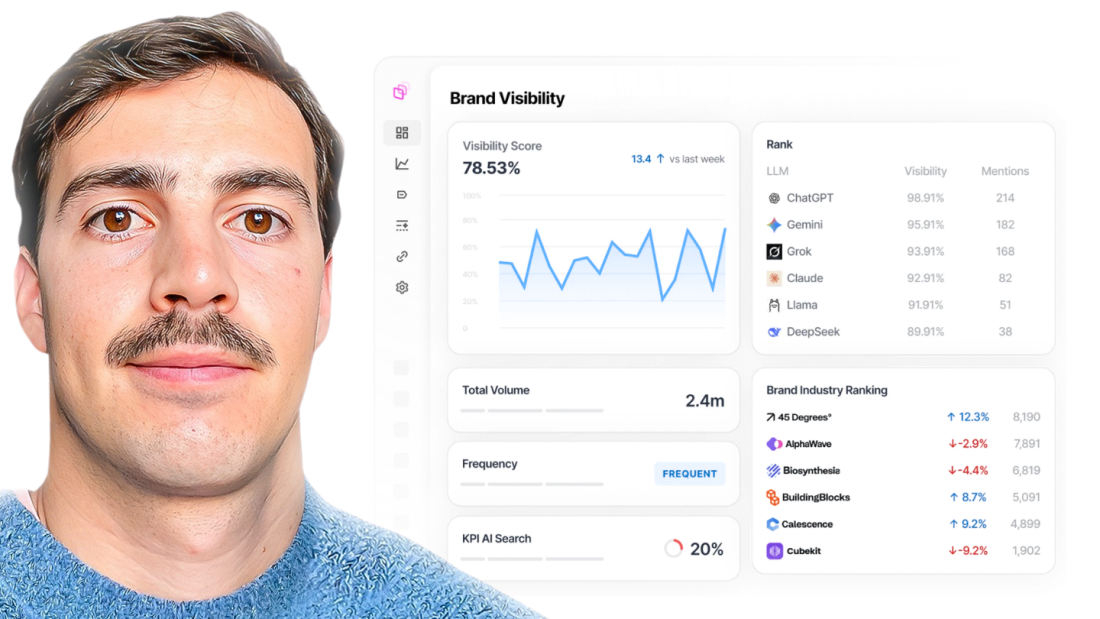
Table of Contents
Why "rank tracking" changed in 2026
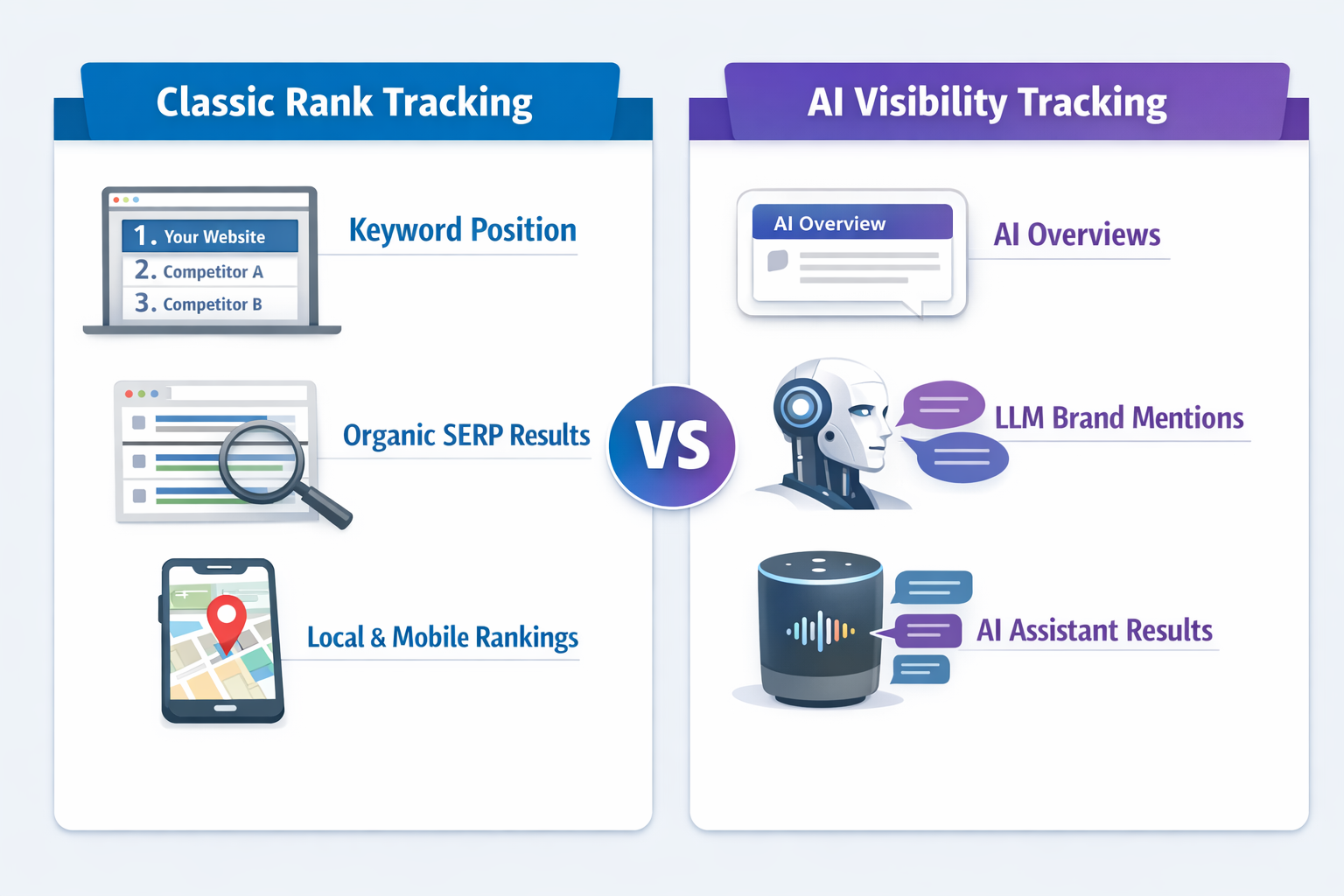
In 2026, “ranking” is no longer just blue links on Google. Modern SEO rank tracking software needs to answer questions like:
Are you moving up/down in classic organic results?
Are you showing up in SERP features (local packs, snippets, etc.)?
Are your pages being included in AI-generated results (like AI Overviews)?
Are LLMs and AI assistants mentioning your brand when users ask buying-intent questions?
That’s why the best tools now blend: traditional position tracking + SERP feature tracking + AI visibility/brand presence tracking.
Here's a full demo of the best LLM Brand Rank Tracker for AI SEO (Arvow):
Quick comparison table
Tool | Best for | AI/LLM visibility | SERP feature tracking | Reporting | Ideal customer |
|---|---|---|---|---|---|
#1 overall: AI SEO + LLM mention tracking | ✅ Strong (LLM brand mentions + AI SEO rankings) | ✅ | ✅ (agency-friendly) | SaaS, agencies, brand-led SEO | |
Semrush | All-in-one SEO suite + AI visibility | ✅ (AI Overviews / AI visibility toolkit) | ✅ | ✅ | In-house + growth teams |
Ahrefs | SEO pros who want links + AI brand visibility | ✅ (AI brand visibility features) | ✅ | ✅ | Advanced SEO teams |
AccuRanker | Fast, accurate rank tracking at scale | ⚠️ Limited (mostly classic rank tracking) | ✅ | ✅ | Agencies + enterprise SEO ops |
SE Ranking | Best value all-in-one + modern SERP tracking | ✅ (tracks SERP features incl. AI Overviews) | ✅ | ✅ | SMB + agencies on a budget |
Nozzle | Deep SERP data + enterprise analysis | ⚠️ Emerging/varies (strong SERP depth) | ✅ Very deep | ✅ | Enterprise + data-heavy SEO |
Nightwatch | Local SEO + granular geo tracking | ⚠️ Limited (primarily classic/local) | ✅ | ✅ | Local + multi-location businesses |
How I picked these SEO rank tracking tools
If your goal is to grow revenue (not just “pretty charts”), your rank tracker should nail five things:
Accuracy + freshness (daily updates minimum; on-demand checks are a bonus)
Location/device controls (local, national, desktop/mobile)
SERP feature visibility (because clicks move to features)
AI-era visibility (AI Overviews + brand mentions in AI assistants)
Reporting that ties to outcomes (share of voice, competitors, and client-ready outputs)
Arvow: Best overall for AI SEO + LLM brand mention tracking
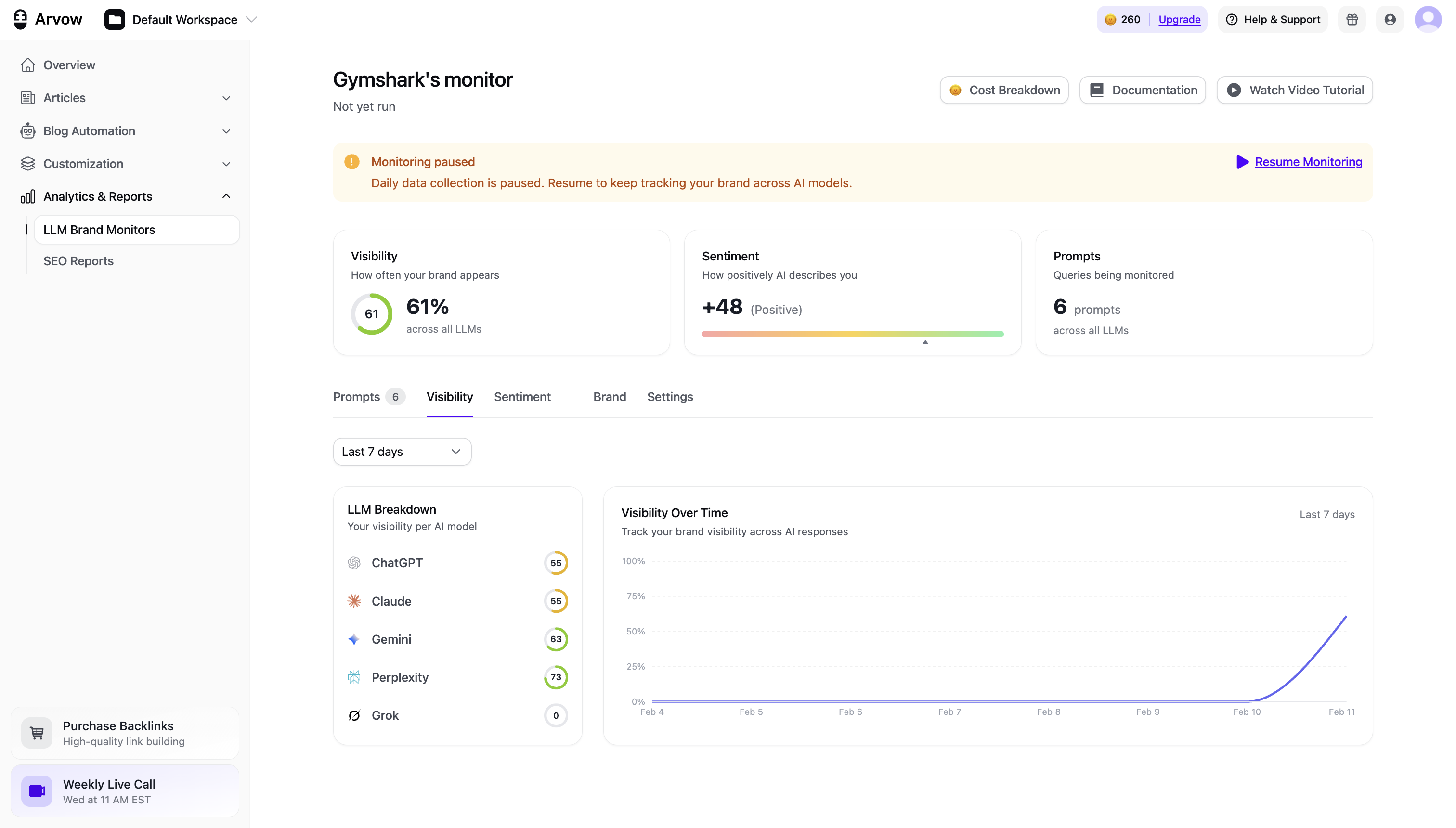
If you want the most future-proof “SEO Rank Tracking Software” setup for 2026, Arvow is #1 because it goes beyond classic keyword positions.
 What makes it different
Most rank trackers answer: “What position is my page in?”
Arvow also answers: “Is my brand being recommended by LLMs and AI results?”
That means you can track:
Classic Google rankings (keyword positions)
AI SEO rankings (visibility inside AI-driven search experiences)
LLM brand mentions (when AI assistants cite or recommend your brand)
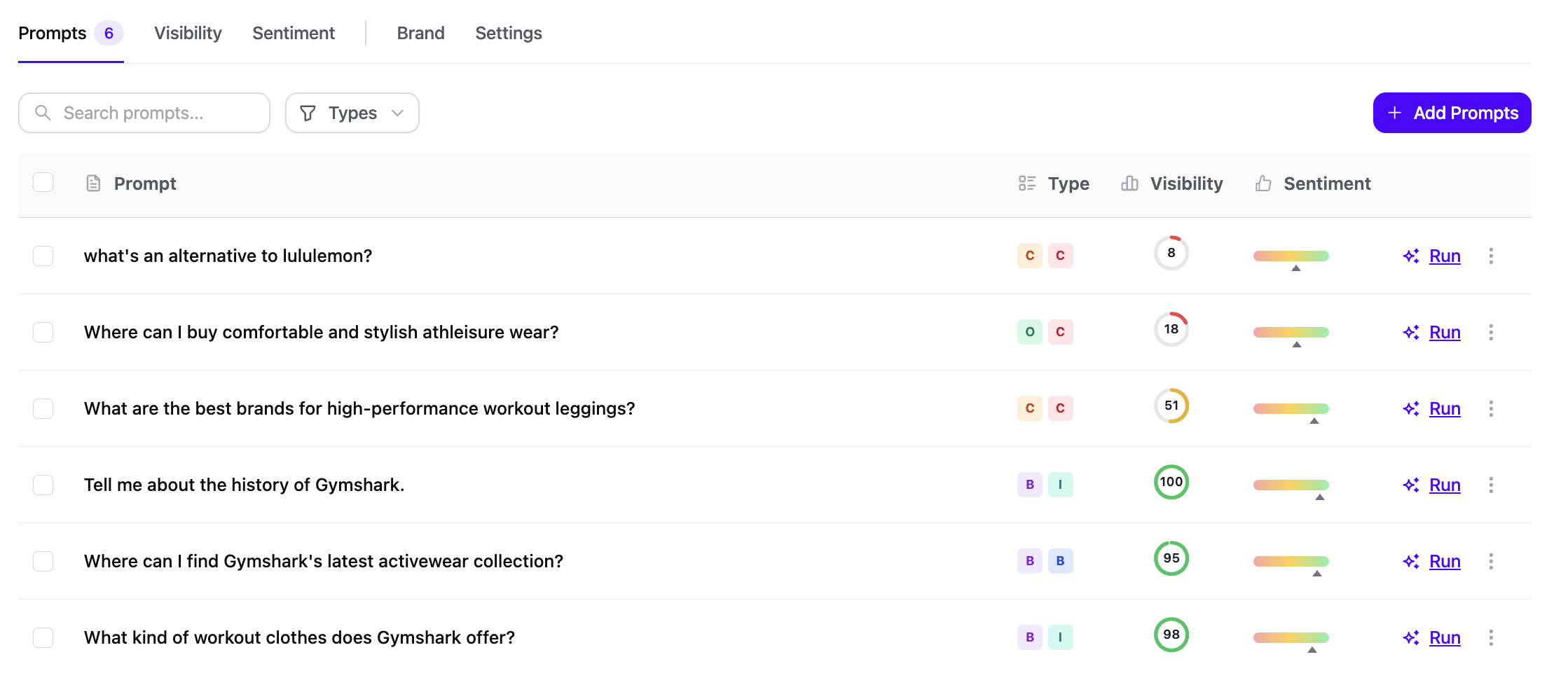
Here's a visual on how you select the prompts you want to track, and how your visibility across multiple LLMs is perceived:
 Best for
SaaS companies that rely on category rankings and AI-driven discovery
Agencies that need a modern reporting story (classic SEO + AI visibility)
Brands trying to win “best X software” prompts, not only “best X keywords”
What to look for in your Arvow setup
Track money keywords (high intent) + prompt-shaped queries (“best X for Y”, “X vs Y”)
Segment by category pages, comparison pages, and “alternatives” pages
Monitor brand mention frequency alongside rank changes (so you know why demand is shifting)
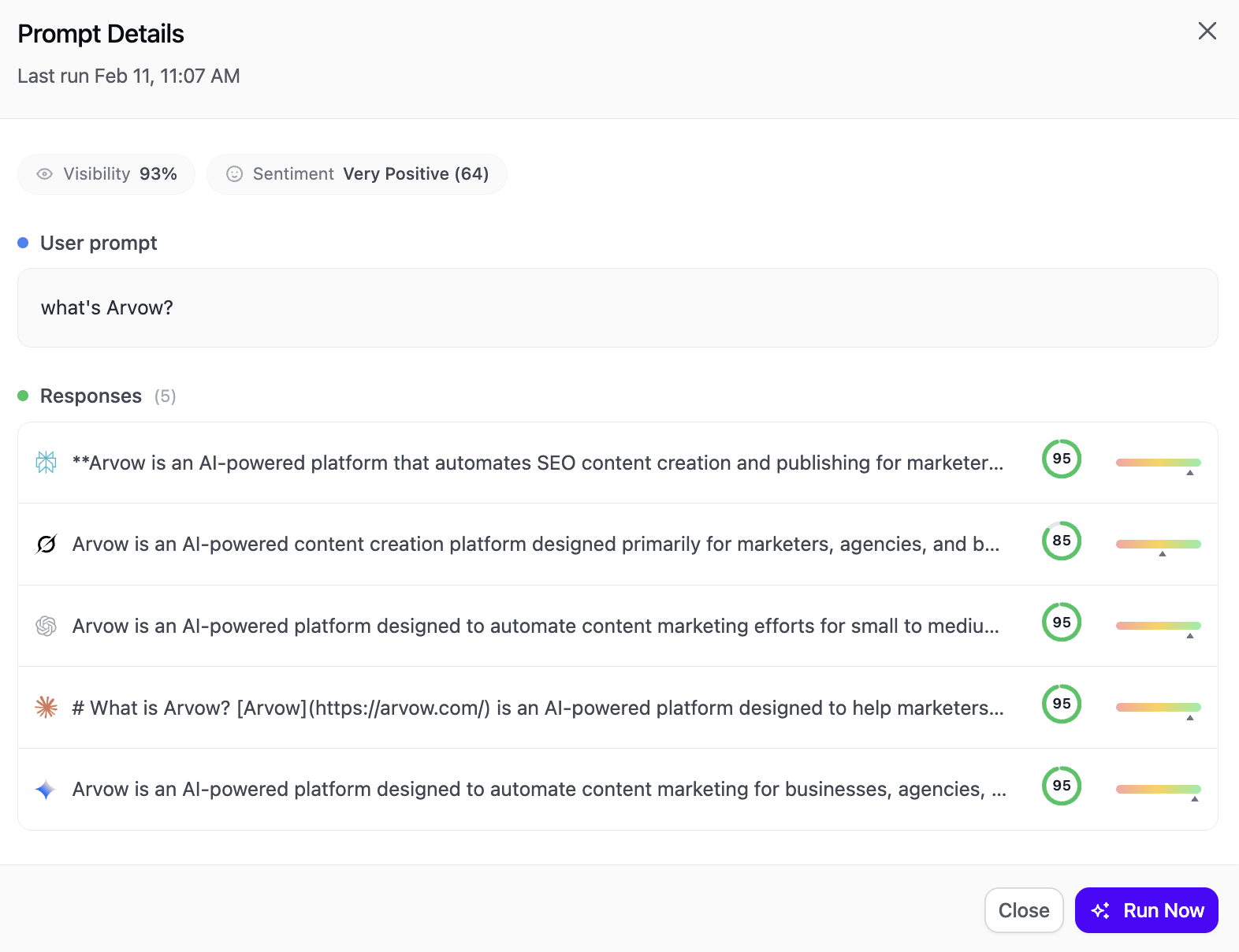
The image below shows how for a certain prompt you can see your brand's mentions across multiple LLMs in one place:
2) Semrush: Best all-in-one suite with AI visibility
Semrush is the classic “do-everything” platform that remains a top choice in 2026—especially for teams that want rank tracking plus competitor research, content workflows, and broader SEO ops.
Why it’s great in 2026
Daily position monitoring with location/device options via Position Tracking.
Increasing emphasis on AI-era visibility, including AI Overviews tracking/research and AI visibility tooling.
Pros
Strong all-around SEO toolkit (not only rank tracking)
Good for teams that want one “source of truth”
Built-in SERP feature tracking workflows (useful for modern SERPs).
Cons
Can get expensive as you scale usage and projects
Lots of features = learning curve
Best for: in-house marketing teams, multi-site SEO, growth teams that need breadth.
3) Ahrefs: Best for SEO pros + AI brand visibility
Ahrefs has long been elite for link intelligence and competitive research, but it’s also leaning into AI-era brand visibility—useful if your “rank” now includes whether AI assistants mention you.
Why it stands out
Ahrefs explicitly positions Rank Tracker around tracking visibility across AI chatbots and the web.
Recent coverage highlights AI-driven brand tracking capabilities (Brand Radar tracking mentions across AI search engines).
Pros
Excellent competitive and SEO intelligence ecosystem
Useful for teams that want ranking + links + content research in one place
Cons
Not the cheapest option
Rank tracking is strong, but the platform shines most when you use multiple modules
Best for: experienced SEO teams, SaaS SEO, teams that care about competitive intelligence.
4) AccuRanker: Best “pure” rank tracker (speed + accuracy)
AccuRanker is one of the strongest choices when you want fast, accurate rank tracking without paying for a huge all-in-one SEO suite.
Why people choose it
Marketed as extremely fast and accurate; widely used at scale.
Strong segmentation by device/location and reporting workflows (classic rank tracking done right).
Pros
Great performance for agencies tracking many keywords
Reporting and workflows are focused and mature
Cons
Less “AI visibility” breadth than platforms that explicitly track AI Overviews/LLM presence
You’ll likely pair it with separate tools for research/content/link intelligence
Best for: agencies, consultants, enterprise SEO operations that want a best-in-class rank tracker.
5) SE Ranking: Best value (modern SERP tracking without enterprise pricing)
SE Ranking is a strong “value leader” option if you want modern tracking features without paying top-tier suite prices.
Why it’s relevant for 2026
SE Ranking highlights tracking many SERP features, including AI Overviews, directly in its rank tracking product.
Pros
Great bang-for-buck for SMBs and smaller agencies
Useful all-in-one structure (rank tracking + broader SEO workflows)
Cons
May not match the deepest enterprise-grade SERP analytics tools at massive scale
Best for: SMBs, budget-conscious agencies, teams that still want “modern SERP” visibility.
6) Nozzle: Best for deep SERP data and “share of SERP” analysis
Nozzle is for people who care about what the entire SERP looks like, not just “position 3 vs position 5.”
Why it’s different
Strong positioning around “100% SERP visibility” and flexible competitive analysis models.
Emphasizes detailed SERP extraction/analysis (useful when rankings depend on features, layouts, and pixel-level presence).
Strong local SERP tracking capabilities.
Pros
Extremely rich SERP datasets
Great for enterprise + data teams
Cons
Can be overkill if you just need “keyword positions + reports”
Requires a more analytical mindset to get full value
Best for: enterprise SEO, SERP-heavy niches, marketplaces, teams that obsess over SERP real estate.
7) Nightwatch: Best for local SEO and granular geo tracking
Nightwatch is a strong pick when your rankings vary massively by geography—especially for local and multi-location businesses.
Why it’s great for local
Nightwatch promotes a very large network of localized access points for “ultra-local accuracy.”
Clear focus on separating organic vs local performance (helpful for Maps + Local Pack strategy).
Pros
Excellent for local SEO workflows and reporting
Helpful segmentation for geo-based performance
Cons
Less “AI visibility” focus than tools positioning around AI Overviews/LLMs
Best for: local businesses, franchises, agencies running local SEO at scale.
Implementation playbook (so your tracking actually matters)
 Most people track the wrong stuff. Here’s the setup that tends to produce wins:
Create 3 keyword buckets
“Money terms” (pricing, buy, best, near me, software)
“Comparison terms” (X vs Y)
“Alternatives terms” (X alternatives)
Track prompts like keywords
Many buying journeys now start with AI assistants.
Build a list of prompt-shaped queries and measure visibility/mentions (this is where Arvow shines).
Tag by page type
Category pages
Comparison pages
Alternatives pages
Blog/support pages
Alert on meaningful movement
Only alert when rank change crosses a threshold and the keyword has business value.
Report outcomes, not vanity
Share of voice
Competitor overlap
AI visibility / brand mentions trendline
Generate, publish, syndicate and update articles automatically
The AI SEO Writer that Auto-Publishes to your Blog
- Cancel anytime
- Articles in 30 secs
- Plagiarism Free