
Black Hat vs White Hat SEO: What’s the Real Difference?

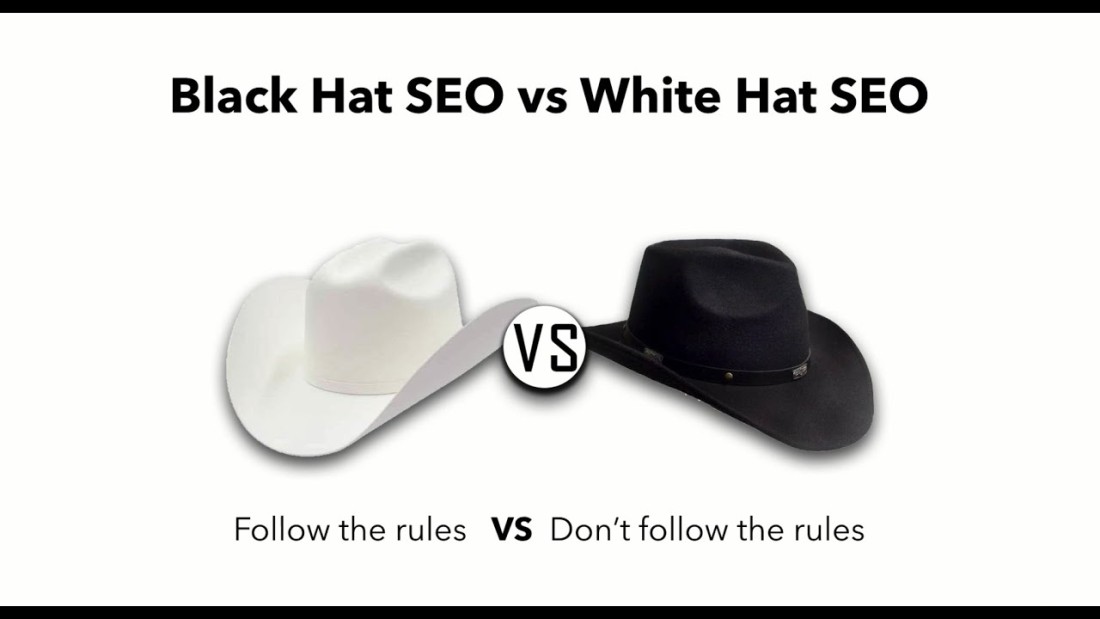
Table of Contents
If you've spent any time in the SEO world, you've probably heard the terms white hat SEO and black hat SEO.
But what do they actually mean? And more importantly — which one should you use?
In this guide, I'll break down the difference between black hat and white hat SEO, explain the risks involved, and show you why many SEOs end up blending both approaches (carefully).
What Is White Hat SEO?
White hat SEO means following Google's official guidelines to rank your website.
When you use white hat techniques, you're playing by the rules. The goal is to improve your rankings without risking penalties.
Core Principles of White Hat SEO
You don't pay for backlinks
You earn links naturally
You avoid manipulative tactics
The idea is simple: If your content is valuable enough, people will link to it naturally.
For example, many websites link to Wikipedia. Why? Because the content is useful, relevant, and trustworthy.
White hat SEO works the same way. You focus on producing content so valuable that others want to reference it.
Why White Hat SEO Is Safe
If you strictly follow Google's guidelines:
You significantly reduce the risk of penalties
Your rankings tend to be more stable long-term
You build a sustainable brand
However, it can take time. You're relying on organic growth rather than shortcuts.
What Is Black Hat SEO?
Black hat SEO is the opposite.
Instead of following all of Google's rules, you bend — or completely ignore — some of them in order to rank faster.
These techniques are usually designed to manipulate search engines rather than provide real value to users.
That said, black hat SEO does not automatically mean you'll be penalized. It just means you're taking on higher risk.
Common Black Hat SEO Techniques
Here are some well-known black hat tactics:
1. Paying for Links
Google explicitly states that buying links violates its guidelines.
Instead of waiting for someone to discover your content and link naturally, you simply pay for backlinks.
This can accelerate rankings — but it increases the risk of penalties.
2. Private Blog Networks (PBNs)
PBNs are networks of websites built specifically to link back to your main site.
They are considered black hat because their sole purpose is to manipulate rankings.
Some SEOs attempt to build "safe" or "hard-to-detect" PBNs — but they are still against Google's terms of service.
3. Keyword Stuffing
This means repeating your exact target keyword excessively in an attempt to rank higher.
Example of bad practice:
"Best SEO tools are the best SEO tools because best SEO tools help you find the best SEO tools."
This is unnatural and easy for search engines to detect.
Instead, a natural approach would be:
Use your main keyword a few times
Mix in long-tail variations
Include brand mentions
Add natural phrasing
4. Hidden or Camouflaged Text
This tactic involves hiding keywords on a page — for example:
White text on a white background
Text hidden behind elements
Users can't see it, but search engine crawlers can.
Google detects this easily, and penalties are common.
5. Buying Fake Reviews
Purchasing reviews on platforms like:
Google Reviews
Yelp
Trustpilot
is also considered a black hat tactic.
It manipulates trust signals and violates platform guidelines.
Does Black Hat SEO Always Lead to Penalties?
No — and this is important.
Using black hat techniques does not guarantee a penalty.
However:
The risk is significantly higher
The impact of penalties can be severe
Long-term sustainability is lower
The more aggressive and excessive the tactics, the more likely you are to get penalized.
Should You Mix White Hat and Black Hat SEO?
Some SEOs choose to mix both approaches.
Why?
Because white hat SEO is safe but slow. Black hat SEO is fast but risky.
A balanced approach can sometimes produce faster results without crossing obvious red lines — as long as you avoid abuse.
However:
Going 100% black hat long-term is extremely risky
Overusing manipulative tactics almost always leads to problems
Sustainability should always be considered
SEO is ultimately about managing risk.
White Hat vs Black Hat SEO: Side-by-Side Comparison
White Hat SEO | Black Hat SEO |
|---|---|
Follows Google guidelines | Breaks or bends guidelines |
Earns links naturally | Buys or manipulates links |
Focuses on user value | Focuses on ranking manipulation |
Lower risk | Higher risk |
Slower growth | Faster (but unstable) growth |
The Bigger Picture: Risk vs Sustainability
At its core, the difference between white hat and black hat SEO comes down to this:
White hat = Long-term brand building
Black hat = Short-term ranking manipulation
If your goal is to build a sustainable business, you need to understand both — even if you choose to stick primarily to white hat methods.
Understanding black hat tactics helps you:
Recognize risky strategies
Avoid accidental violations
Make informed decisions about your SEO strategy
Final Thoughts
SEO isn't just about ranking. It's about building assets that last.
White hat SEO focuses on trust, value, and long-term growth. Black hat SEO focuses on speed and leverage — with added risk.
Knowing the difference allows you to navigate the SEO world intelligently and strategically.
In the end, the best SEO strategy is one that aligns with your risk tolerance, timeline, and business goals.
If you're looking to automate your content creation while maintaining quality standards, tools like Arvow's AI SEO Writer can help you produce high-quality, SEO-optimized content consistently — the white hat way.

Generate, publish, syndicate and update articles automatically
The AI SEO Writer that Auto-Publishes to your Blog
- Cancel anytime
- Articles in 30 secs
- Plagiarism Free