
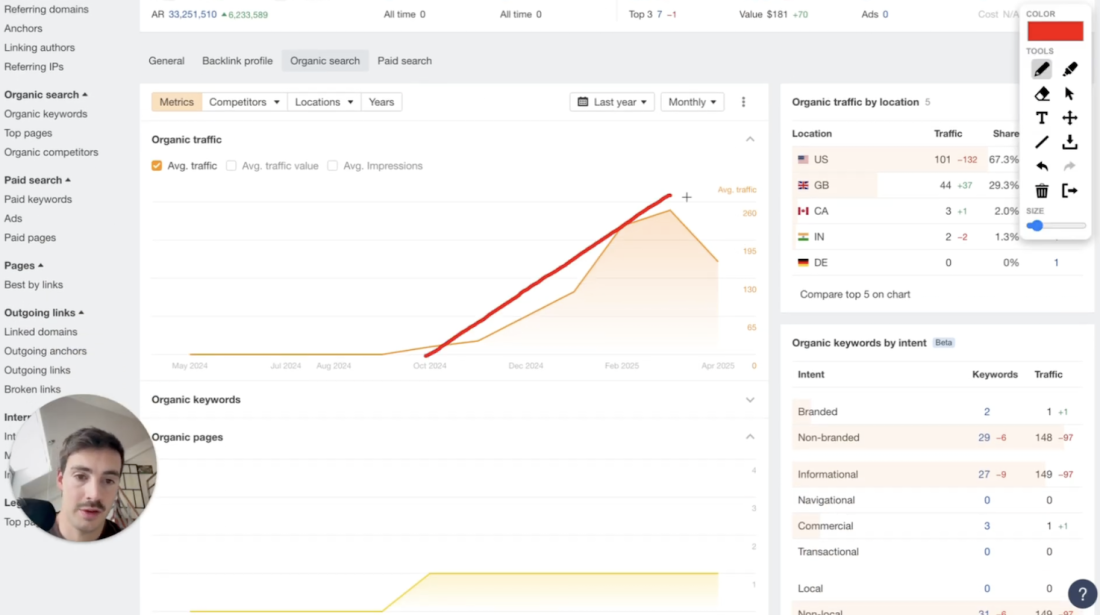
SmarterGlass, a display-panel company, wanted bottom-of-funnel traffic, people actively researching display tech, without writing content by hand. One AI page took them to about 300 monthly visits across 28 keywords, a 300% increase, and it is traffic that converts.
Watch the page broken down and why it ranks.
The goal: bottom-of-funnel traffic
SmarterGlass sells display-panel technology. They did not want vanity traffic, they wanted people actively researching display tech, close to a buying decision, and they wanted it without writing articles by hand.
So they targeted low-competition, long-tail keywords tightly relevant to their product, and let AI do the writing.
The result
One AI-written page now pulls about 300 visits a month across 28 keywords, including “how long do OLED TVs last,” “OLED lifespan,” “OLED longevity,” and it earned a featured snippet, despite a low Domain Rating.

How the page was built
- Intro and key takeaways, SEO-optimized headings.
- Internal and external links, tables and bullets for readability.
- Embedded relevant YouTube videos.
- A sticky CTA and a final CTA block for conversions.
- Generated by Arvow, then left to rank on intent, not authority.
These are not casual readers. They are people comparing display tech, the searches that turn into sales, which is why a modest traffic number is a real business win.
A low Domain Rating didn't stop it. Satisfying the searcher's intent did the ranking.
What you can take from it
- A 300% traffic increase from a single AI page, on 28 bottom-of-funnel keywords.
- Authority is not a prerequisite, a page that best answers the query can outrank stronger sites.
- Chase buyer-intent, long-tail keywords over high-volume vanity terms.
Common questions
Can a low-authority page rank?
Yes. This page ranked and won a featured snippet with a low Domain Rating, because it satisfied the search intent better than the alternatives. Relevance and structure beat raw authority for long-tail queries.
What is bottom-of-funnel traffic?
Searchers who are close to buying, comparing products, checking specs, or researching a specific solution, rather than browsing. It is lower volume but far higher value.
Do you need images to rank?
They help, but this page ranked without in-article images. Strong structure, key takeaways, links, and intent match did the work.
Target the searches your buyers make, answer them best, and authority becomes optional. See how Arvow works.